Copenhagen Maritime Business
Microeconomics and Strategy
About the course
Strengthen your competitive edge in the global maritime industry.
This course gives you a strong microeconomic and strategic foundation to understand how maritime markets really work, from cost structures and pricing dynamics to strategic choices in complex, regulated environments.
You will gain hands-on experience with economic models and analytical tools used to assess risk, regulation, and sustainability impacts, and turn insight into action. By the end of the course, you will be equipped with practical skills that enable well-informed decision-making in demanding, international business contexts.
See the full course description in the course catalogueFacts
Other HD courses
International Trade and Macroeconomics
5 ECTS
Lad dig inspirere
Gå i dybden med artikler og events om relaterede temaer.
Alt skal ikke være en succes for i sidste ende at blive afgørende for strategien
”Museum of Strategic Projects” samler eksempler på projekter, som ikke alle var en succes fra begyndelsen, men som endte med at blive strategisk vigtige. Nogle…
From Sea to Strategy: Mattias Ottosson's Journey with the Blue MBA
Mattias Ottosson, HSE Delivery Manager at Noble Corp., focuses on long‑term safety strategies grounded in Human Organisational Performance and Safety II…
How An MBA Landed Me A Job With One Of The Biggest Danish Pharmaceutical Companies
Healthcare is one of the fastest-growing industries among MBA students. A recent BusinessBecause article highlights how an MBA from Copenhagen Business School …
Cláudia Alves: A Strategic Negotiator Driving Google’s Expansion - “Leadership is about influence, not just hierarchy”
LEAD TEXT TOO LONG
Building strategic confidence in an uncertain world with an EMBA from CBS
In a world marked by complexity and constant change, strategy is about more than grand plans. According to Professor Marie Louise Mors, it requires analytical…
Ledelse handler om relationer
Oplev 7 minutters sammendrag af forelæsning v/ professor emeritus Jan Molin på MMD’s ledelseskonference på Nationalmuseet i 2014. I lyset af den store…
The hidden drivers of the gender career gap
Researchers and business leaders point to parenthood, workplace structures and policy frameworks as drivers of the gender career gap. In Denmark, two-thirds of…
When economic thinking becomes too narrow to explain the real world
When economics is reduced to a single dominant way of thinking, we lose sight of the reality the discipline is meant to explain. A broader, historically…
Corporate innovation has stalled – and AI risks deepening the challenge
Innovation spending is at an all-time high – yet true breakthroughs are becoming increasingly rare. In this article, CBS researcher Giacomo Marchesini explains…
Geopolitics is a core task for businesses – not an afterthought
Trade policy is used as a power instrument, alliances are shifting, and conflicts hit supply chains and markets. That’s why geopolitics is a core task for top…
Explainer: Co-leadership
What does it mean to run a co-led company? And what is the role of the leader? Hear guest lecturer at Master of Public Governance Ann-Christina Matzen An…
Is Your Strategic Toolbox Up to Date?
Navigating the profound geopolitical upheavals shaping the world today demands a solid – and perhaps reinforced – strategic toolbox. But what does this mean in…
What's next? Developing an AI-agile mindset
Exploring the potential shift from learning how to implement AI tools on a day-to-day basis to fostering leadership, teams and organisations that are prepared…
Growing through open innovation
Open innovation is more than collaborative problem-solving – in fact, it can be a pivotal strategic initiative to evolve a business.
The most expensive mistake is not the error, but continuing it
Organisations ignore warnings and persist with failing projects for far too long. This can cost billions, and, in the worst cases, human lives. New research…
Flexible working is changing the workplace – and we’re paying for it with hot desks

Today, 41% of Danes take advantage of the opportunity to work from home. Concurrently, many companies are calling employees back to the office. How are these…
It takes a village: Implementing a new food strategy for a sustainable food system
Denmark has high ambitions for sustainable diets, while the path is clear, no one is taking the lead (yet).
How can service become a differentiator in a highly competitive market?
Putting the customers in the focus sounds obvious and there is no shortage in companies claiming to do so. While it is a huge effort to setup efficient…
Uniqlo has cracked the code to success
Change, evolution and sustainable design isn't just about looking rigidly at the future of innovation, quite the opposite. For one of the world's…
Not everything has to be a success to ultimately be decisive for the strategy
The "Museum of Strategic Projects" collects examples of projects which were not all successful from the beginning, but which ended up becoming…
Skab robuste organisationer til en foranderlig og usikker verden
Hvordan kan danske organisationer og virksomheder, store som små, navigere i en verden, hvor intet er som før? CBS Professor MSO Morten Thanning Vendelø deler…
Podcast: Escaping the Logic of Extraction
The ecological crisis is rooted in how we think. In The Ecology of Ideas podcast, CBS Associate Professor Attila Márton explores how new philosophies can…
Agile and Adaptive Leadership in the 21st Century
In today’s ever-evolving business landscape, leadership is no longer a static concept; it’s a dynamic, agile, and adaptive force that guides organisations…
Danish ports: Expanding the focus from water to land
We can generate much more green growth and profits from our ports but this requires having a shared national vision. Achieving that, in turn, demands an…
When companies adopt robots, they often grow and hire more people
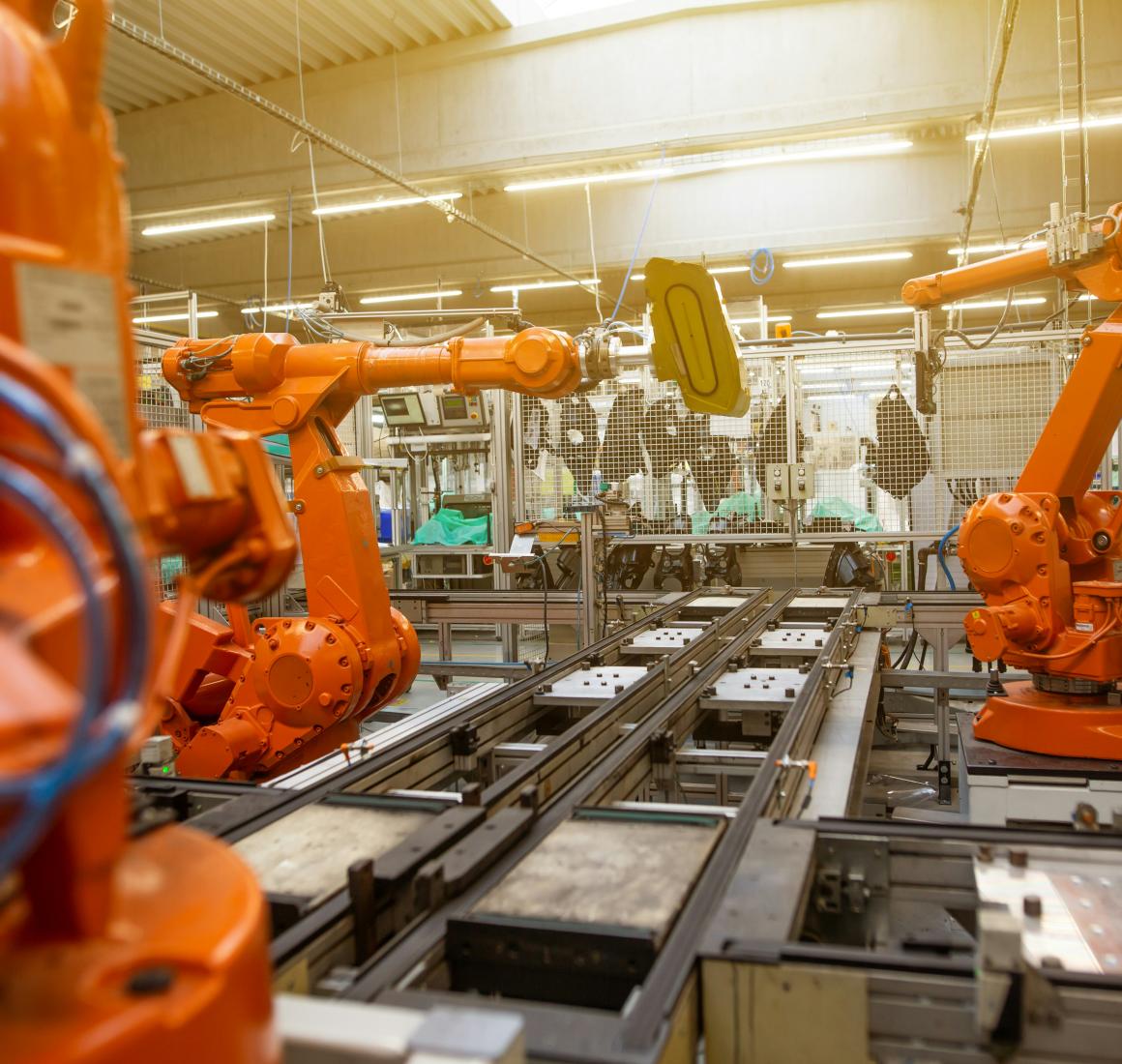
Many people associate robots with layoffs, but a new study from CBS shows that Danish companies that automate often hire more people
Being laid off affects women more severely than men
If women lose their job, the risk of long-term unemployment is markedly higher than for men. It affects mothers severely as they are twice as prone to long…
Immigrants earn less and have limited access to high-paying jobs
On average, an immigrant in Denmark earns 9.2% less than an ethnic Dane. In other parts of Europe and North America, the gap is even wider. This is…
Behavioural investing
Investing isn’t only driven by capital. Inspired by the field of behavioural finance, this event uncovered the hidden biases within both professional and personal investing.
We can learn from China
We are no longer ahead of China. It is not even a draw. We are in fact falling behind, says CBS researcher – and we need to acknowledge that because we need a change of strategy
FIFA World Cup: Who will be the financial winners and losers?
Two financial winners. Three losers. A new sporting structure and a new mixing of sport and politics. A sports economist at CBS takes stock ahead of the World Cup kick-off.