FIFA World Cup: Who will be the financial winners and losers?
Two financial winners. Three losers. A new sporting structure and a new mixing of sport and politics. A sports economist at CBS takes stock ahead of the World Cup kick-off.


Who stands to win the World Cup starting on 11 June? That question is the subject of lively debate at workplaces, cafes and pubs the world over.
But winning the championship is one thing: winning financially is another. According to Associate Professor Battista Severgnini, who researches in sports economics at CBS, there are clear winners and losers.
The definite favourite is FIFA, the International Federation of Association Football, which is on track to achieve its biggest-ever financial gain from a World Cup 4 year period – between seven and ten billion US dollars – a sum more or less equivalent to the annual gross national product of Montenegro.
As always, FIFA is earning money from the sale of rights to the World Cup, in particular broadcasting, sponsorships and tickets. The organisation owns the championship yet pays only part of the costs, with the host countries footing the bill for stadiums and infrastructure.
Expanded business model
“That’s why the World Cup is extremely profitable for FIFA. And this time their business model has been massively scaled up, with 48 countries taking part rather than 32, as at the last championship. The tournament will feature 104 matches, as opposed to 64 previously, leading to the sale of more broadcasting rights and revenue from sponsors,” says Severgnini, who goes on to explain:
“At the same time the final tournament is taking place in North America, with the US as one of the three host countries. It is the biggest sports and advertising market in the world.”
Another difference this time is the way the match tickets are being sold. For the first time FIFA is using market-based pricing, which means that prices fluctuate according to demand. This new system is expected to send prices for popular matches spiralling.
According to European Business Magazine, FIFA has already confirmed that tickets to the final are estimated to reach a price of USD 11,000, which is around seven times higher than the price for tickets to the final four years ago in Qatar.
However, the system is not efficient since for several lower-demand matches, dynamic pricing can encourage consumers to wait rather than buy immediately, weakening early sales.
Another winner
While we can already declare FIFA the financial winner of the championship, Severgnini also expects the companies who have purchased television advertising slots during the matches to perform well financially.
“That might be surprising to some because advertising slots are costly. But the FIFA World Cup is the biggest television event in the world, which means that incredibly many people see the products,” the CBS researcher explains.
As it becomes possible to follow the World Cup on more and more platforms, nearly five to six billion people, i.e. almost two out three people in the world, are expected to follow the championship on television, streaming services and social media, or to simply watch the highlights.
The three losers
However, there are no winners without losers. Severgnini believes the television companies will be among those who can expect to end up in the red.
Previous tournaments show that broadcasters have often lost money on previous tournaments. In the early 2000s soaring prices for broadcasting rights were a major contributing factor to the collapse of the German Kirch Group and DirecTV Latin America.
“Buying broadcasting rights is, on its own, a poor business decision because the broadcaster rarely gains enough new viewers to justify the expense,” says the Italian-born sports economist, adding:
“Extensive research shows that hosting the World Cup is rarely a good investment.” Battista Severgnini
Associate Professor
Investments fail to pay off
There are three host countries: the US, Canada and Mexico.
“Extensive research shows that hosting the World Cup is rarely a good investment. Host countries spend enormous sums on infrastructure and, in some cases, new stadiums, which often are of limited value after the championship and do not recoup their own cost. Moreover, the job increases generated by the event seldom last,” says the CBS researcher.
“What’s more there are significant security costs involved. They rarely get attention but they do make up a major expense in the budget and increase with each World Cup,” he explains.
The reason why countries compete to host the championship, according to Severgnini, is because of the enormous prestige and the political benefits to be reaped both nationally and internationally.
How table tennis paved the way
He emphasises that sport and politics have always been intertwined. When US President Richard Nixon was considering resuming diplomatic relations with China in 1971 after a hiatus of more than 20 years, the first tentative step towards rapprochement was an international table tennis match.
It is also widely accepted that the military dictatorship in Argentina harvested goodwill from hosting the World Cup in 1978. Nonetheless Severgnini points out that the mixing of football and politics has reached new heights at FIFA.
“FIFA almost comes across like an alternative to the UN. The World Cup has become an opportunity to bring together many countries and discuss issues that are essentially not about football but, for example, about geopolitics,” says Severgnini. He points out that during the FIFA Club World Cup last year President Trump received the Italian team Juventus and spoke, for instance, about the conflict in the Middle East.
As is well known, the same American President was also awarded a special peace prize by FIFA. According to the Italian sports economist, the relationship between the world football governing body and politicians is likely to become even closer because both sides stand to benefit.
About FIFA and the economy
- FIFA organises the World Cup and owns all the rights
- FIFA is expected to earn between 7 and 10 billion USD from this World Cup
- The 2022 World Cup in Qatar generated around 7.5 billion USD over the four-year cycle
- The 2026 World Cup marks a clear shift in the business model, with a significantly larger tournament and new ticketing practices
About the researcher
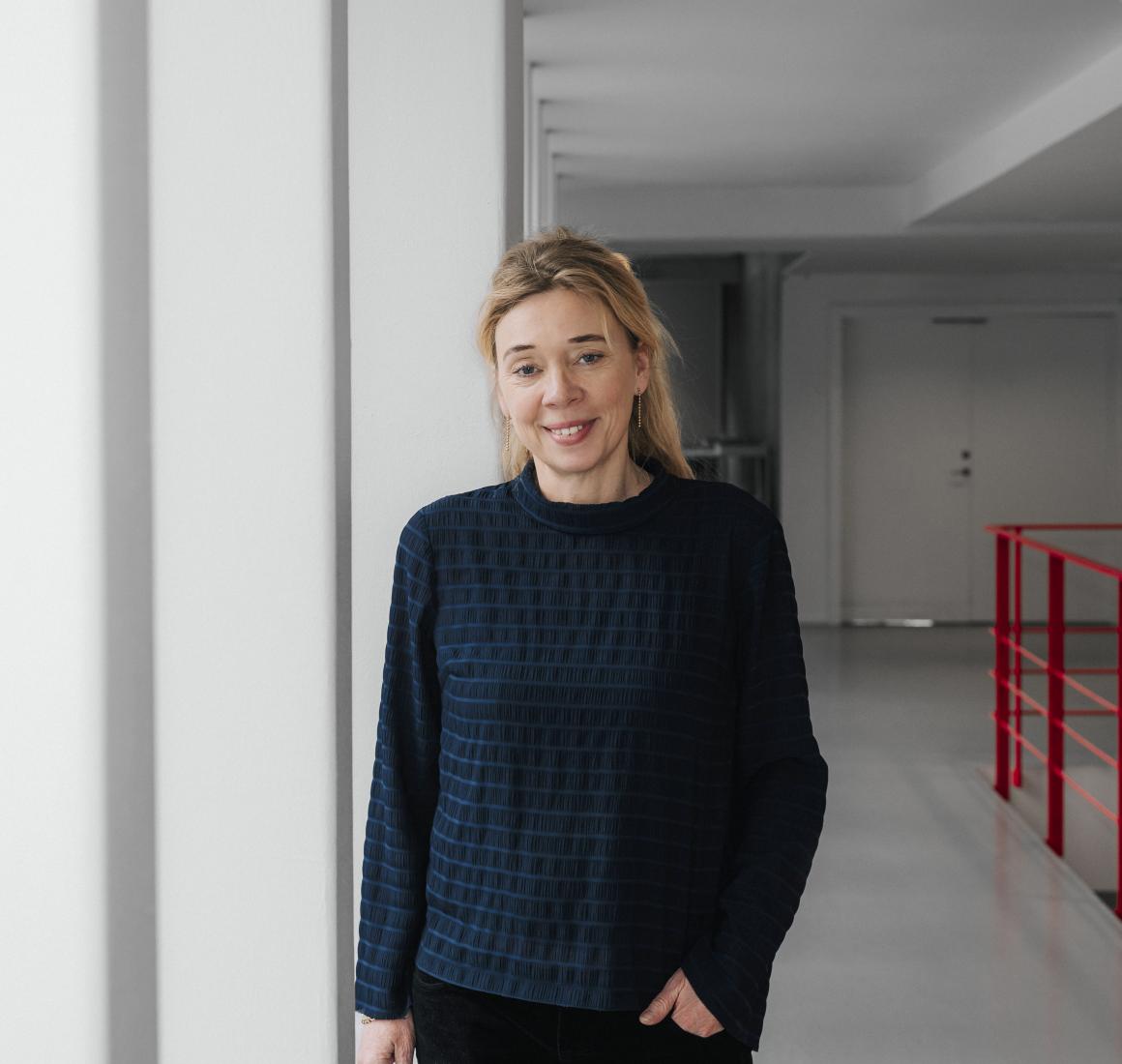
- Battista Severgnini is an Associate Professor at the Department of Economics at CBS.
- His research focuses on long-term economic growth and productivity – including the economics of sport.
- He uses empirical and historical data to study how economic and social outcomes develop over time.
KEEP READING
"Your network is your net worth"

The hidden drivers of the gender career gap

Bridging the Gender Gap in Financial Behaviour: A New Research Initiative
Your gateway to more knowledge
Did you find this content interesting? Sign up for our newsletter and gain access to more of our research findings and events.
With the world’s grand challenges awaiting us, we need to continuously evolve, gain new knowledge and insights, and upskill.
Dive into a world of knowledge by signing up below. You will get:
- Personal event invitations
- Pertinent research-based insights on business and society
- Information about the next intakes of our Executive Education programmes and courses
KEEP LEARNING

Master of Business Development
HD2 International Business

Full-time MBA