Is Your Strategic Toolbox Up to Date?
Navigating the profound geopolitical upheavals shaping the world today demands a solid – and perhaps reinforced – strategic toolbox. But what does this mean in practice? Professors Michael Mol and Grazia Santangelo propose a series of questions that challenge organisations to rethink risk, resilience and strategic positioning.
“Apple is a Chinese company.”
Citing a Financial Times headline, Professor Michael Mol reflects on how geopolitical developments can have far-reaching consequences for companies. Increasingly, firms must contend with a broad range of complex factors if they hope to ensure long-term survival.
A company like Apple, for example, which has spent decades building a strong value chain in China, has in recent years been repeatedly criticised for failing to live up to its social responsibility commitments. This leads Professor Mol to pose three key questions:
- What are the key factors that have contributed to Apple’s heavy dependence on China?
- What are the risks and benefits for Apple of continuing this level of dependency?
- And can we outline a strategy for Apple to manage the geopolitical risks it faces?
Major shifts – major consequences
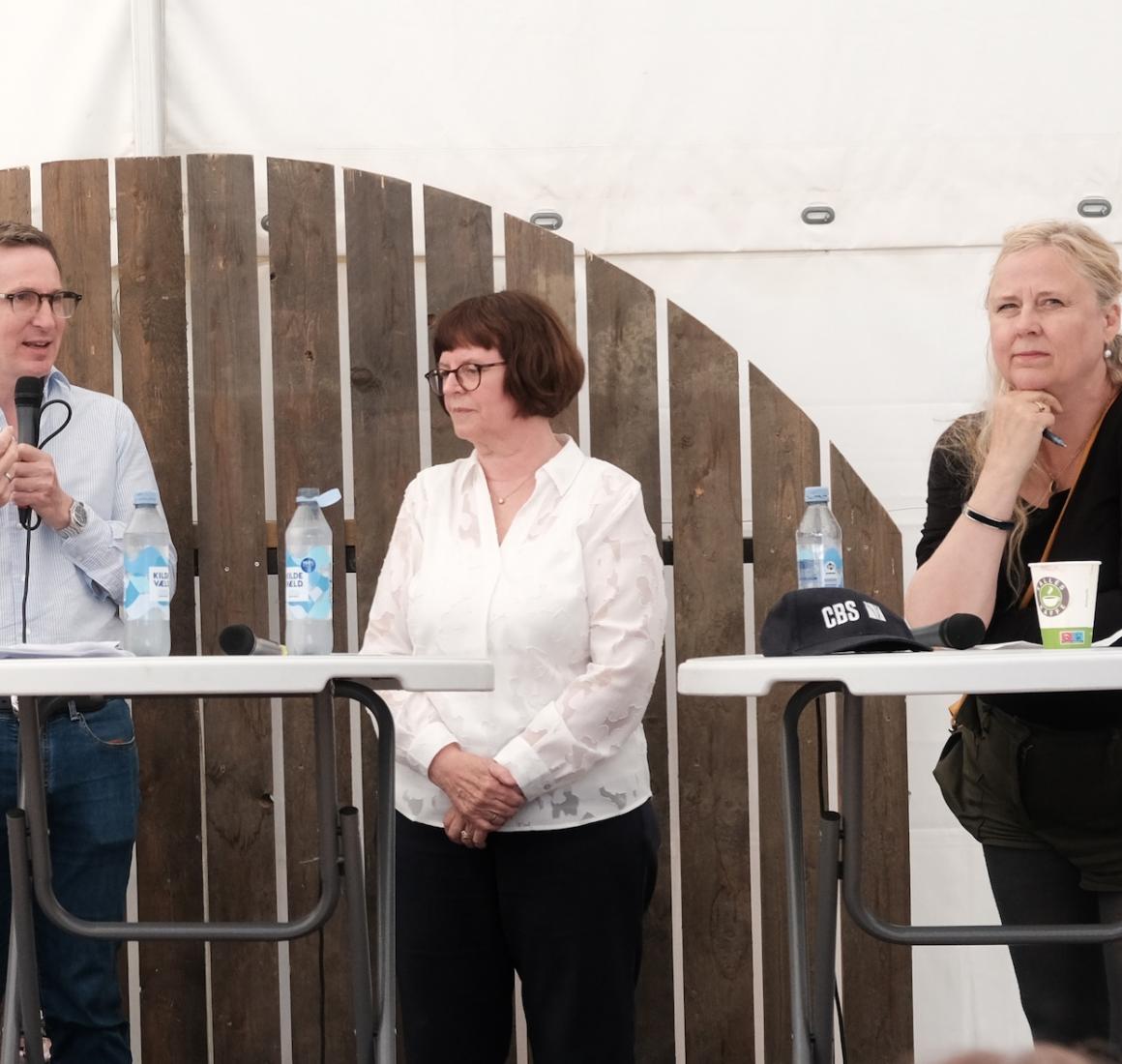
Michael Mol and Grazia Santangelo who are both CBS Professors of Strategic and International Management emphasise that businesses today must navigate an increasingly unstable world, where large-scale geopolitical changes can have widespread implications.
Trade wars, political unrest and clashes of values are forcing businesses to act with heightened strategic precision and flexibility to protect their interests and ensure continuity. As a result, these changes also prompt questions about how well-prepared companies are to handle geopolitical tension, safeguard intangible assets, and develop strategies that promote resilience.
The Apple example made it clear that conflicting values can shape global business dynamics. It is therefore essential for companies to integrate geopolitical risk into their strategic decision-making – on par with considerations such as production costs, quality, supply chains, innovation, intellectual property (IP), branding, and political relationships.
"Failing to address these factors risks leaving companies trapped in crises that could cost them both financially and reputationally," says Professor Mol.
And as Professor Santangelo stresses, many firms would do well to reconsider how they are positioned for the future.
Exit, disengagement, distance
Professor Santangelo points to three strategic options that companies may consider: Exit, disengagement, and strategic organisational distance. Each approach involves trade-offs that companies will weigh differently, depending on their specific risk profiles.
For example, Samsung shut down all of its factories in China between 2019 and 2023 due to mounting political and regulatory risks. Volkswagen scaled back its operations in China in response to the repression of minority groups, and Shell ceased all new investments in Russia after the invasion of Ukraine and began divesting from the market.
In such geopolitical storms, companies cannot rely on a one-size-fits-all model. Instead, they must assess the specific pros and cons of full withdrawal, reduced engagement, or organisational restructuring to create distance.
Get the key insights
Interested in the course Strategy & Geopolitics?
The first step is to build internal expertise
Unpredictability is a defining feature of today’s geopolitical turbulence. As Professor Mol notes:
"Companies respond in different ways – but their choices are anything but trivial. Some companies rely on the passage of time, hoping the dust will settle. Others say one thing and do another. Still others try to localise problems to prevent them from affecting the entire organisation."
Every company must carefully assess its risks before selecting a strategy. But at a minimum, they should have a clearly defined geopolitical strategy – one that accounts for differences between countries, industries and organisational levels. And crucially: how can that strategy be put into action?
As Professor Mol highlights:
"The first step is to build internal expertise and ensure analyses are robust. Second, companies must improve their understanding of risks in both current and potential investments – and temper past optimism where necessary. Third, they must develop and evaluate multiple scenarios, incorporating them into impact assessments and decision-making, whether considering entering or exiting foreign markets."
Another important advice is that firms must use a mix of making direct internal investments and partnerships with other firms to generate value.
"While you can do this inside your own country, an international reach offers scope for much more scaling and growth. This is true on the input side, where investments and sourcing from partners in other countries provide a range of potential benefits such as lower costs, different knowledge bases, and opportunities for innovation. But it is equally true when it comes to selling your goods and services because both foreign direct investment and international trade allow firms to access additional, often larger markets," says Professor Mol, adding:
"If we look at Danish firms for instance, we see that they quickly reach their limits by only focusing on the Danish market. This means that these firms must develop a global strategy to think about how to make engage in trade and foreign investments. The geopolitical turbulence we increasingly see has made it harder to do this effectively."
The current geopolitical climate is clearly much less favourable than it has been over the past few decades, with tensions between countries that for instance include disputes over territory, armed conflicts, trade rules, and new technologies including AI. Leaders face a number of major strategic challenges as a consequence. The outcomes produced by many of their decisions have become much more uncertain, with a lot of downside risk, so how should such decisions be taken going forward?
"Leaders must develop personal skills for this but also provide other people in the organisation tools to handle the impact of geopolitics. Market access may be at risk and supply chains must become more resilient, which also affects how to work with external partners. The innovation pipelines of organisations must become more ‘geopolitics proof’, and financial and legal risks increase. All of this means there is an urgent need to better understand and better handle the impact of geopolitics," says Professor Mol.
Is your strategic toolbox up to date?
So, what does your toolbox contain? Professors Mol and Santangelo close by encouraging leaders to consider the following questions:
- Have you perhaps leaned too heavily on a comfortable, pro-freedom worldview?
- What cognitive biases are preventing you from recognising and addressing geopolitical change?
- How can – and should – you shift those mental frameworks?
- How can you and your organisation sense, adapt to and even leverage geopolitical transformation?
Meet the experts
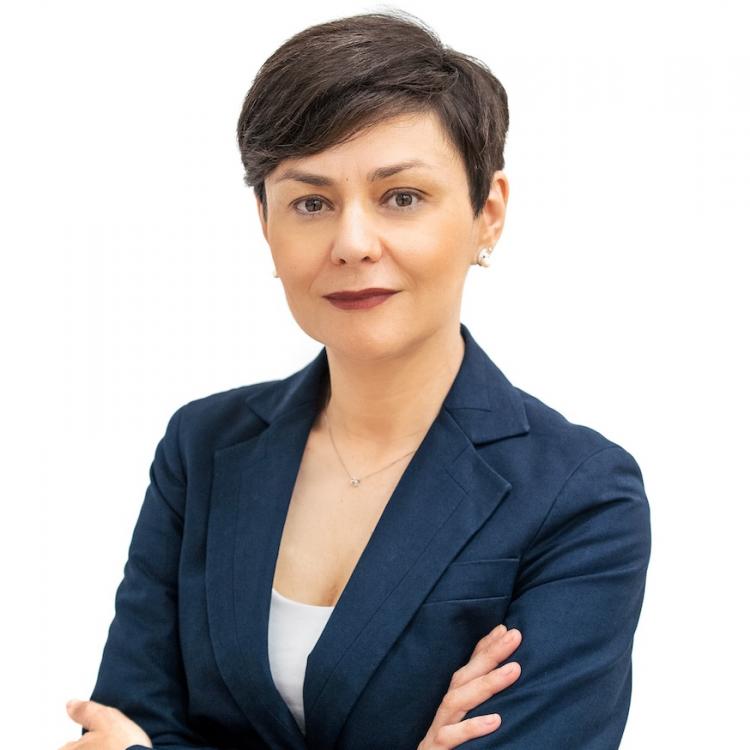
Grazia Santangelo
She is a CBS Professor of Strategic and International Management. She researches across the fields of international business, global strategy, and innovation management. She has studied the evolution of firms’ internationalisation process and how firms strategise on their intangibles, such as knowledge and reputation, across borders.
Her most recent research concerns MNEs strategies in the context of geopolitics and grand challenges.

Michael Mol
He is a CBS Professor of Strategic and International Management. His research focuses on the strategic management of larger firms, with particular interests in innovation, especially management innovation (creation of new management practices) and open innovation, and sourcing strategy, especially offshoring and outsourcing, and strategy in Africa. He tackles these issues from a variety of theoretical and methodical angles. He has won several awards for his research including the prestigious best article award from Academy of Management Review.
KEEP READING

How to Lead Under Extreme Circumstances
A World Without a Centre – Now Companies Must Find Their Own
The leaders of the future are supply chain savvy
Future leadership is calling for These Competencies
Leadership Can Be Painful – But Are We Allowed to Talk About It?
Why we seek "strong" leaders in a crisis – and why we should embrace collective leadership instead
Your gateway to more knowledge
Did you find this content interesting? Sign up for our newsletter and gain access to more of our research findings and events.
With the world’s grand challenges awaiting us, we need to continuously evolve, gain new knowledge and insights, and upskill.
Dive into a world of knowledge by signing up below. You will get:
- Personal event invitations
- Pertinent research-based insights on business and society
- Information about the next intakes of our Executive Education programmes and courses
KEEP LEARNING
Strategy & Geopolitics

Power and Influence