Power is a dirty word - but essential to leadership
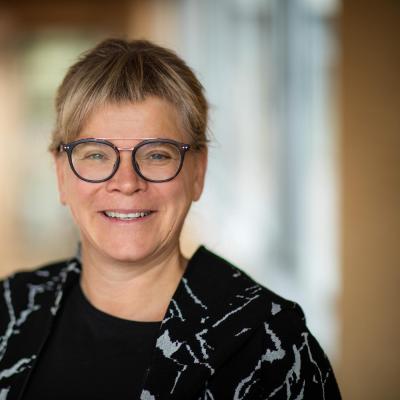
Power is often associated with hierarchy and authority. But according to Professor MSO and organisational researcher Kristina Dahlin, understanding power is less about titles than about understanding how influence works – and how to use it responsibly.
Most of us have experienced it. A carefully prepared proposal fails to gain support, while another idea quickly gathers momentum. A highly skilled specialist struggles to be heard, while someone else seems able to move projects forward with ease. The difference is not always expertise. More often, it comes down to power.
The word "power", however, makes many people uncomfortable, says Professor MSO and organisational researcher at CBS, Kristina Dahlin.
"People want influence, but they don't want power because power is a dirty word."
Kristina Dahlin argues that this reluctance is exactly why organisations need to become better at talking about power. Understanding power is not about learning how to dominate other people or win political battles. It is about understanding how organisations work, why some ideas gain traction while others do not, and how people can create positive change.
Ignoring power does not make it disappear. It simply leaves it to those who already understand how it works.
"Some people are just instinctive power brokers. They are the wheelers and dealers. We don't want to leave it up to them," says Kristina Dahlin.
What is power – really?
Many people equate power with hierarchy. The CEO has power. Senior executives have power. Boards have power. Formal authority certainly matters. But, according to Kristina Dahlin, it is only one source of power. Instead, she encourages leaders to ask a different question.
"The fundamental issue is dependence. Who do you depend on? Who depends on you?"
Those questions reveal something that organisational charts rarely do: where influence lies. Power may come from controlling resources, possessing specialist knowledge, having access to critical information or connecting people across organisational boundaries. Sometimes the people with the greatest influence have no formal leadership role at all.
Kristina Dahlin illustrates the point with a case from a big Scandinavian company. One of the company's largest Swedish dealers had gradually become so important that the company itself had become dependent on the relationship.
Rather than accepting that imbalance, the company chose to end the partnership. The decision was costly in the short term, but it restored the company’s freedom to act. The lesson extends far beyond supplier relationships.
“Whether you are leading a team, managing stakeholders or trying to move an idea forward, understanding where dependencies exist is often the first step towards understanding how power works,” she says.
“The fundamental issue is dependence. Who do you depend on? Who depends on you?” Kristina Dahlin
Professor MSO and organisational researcher at CBS
How do you develop your own influence style?
Recognising power is only the beginning though. The next challenge is learning how to work with it. Many people assume that influence begins with persuasion. Kristina Dahlin sees it differently. Before trying to influence other people, she argues, you need to understand the system you are operating in.
One of the practical tools she recommends is creating a personal power map - an exercise designed to identify the formal and informal relationships that shape decisions.
"Who controls what? What are the critical resources? Who talks to whom? How does information flow?"
Looking at an organisation through that lens often changes how people understand their own role. Influence rarely follows the organisational chart. It flows through relationships, expertise, information and trust. Many people, Kristina Dahlin says, underestimate how much room they have to strengthen their own influence.
Developing that understanding is also a central part of the new CBS Executive Upgrade course Power and Influence, where participants work with practical tools such as personal power maps to better understand how power works in organisations.
Developing your own influence style, therefore, is not about copying charismatic leaders or becoming more outspoken. It begins with understanding where you create value, how decisions are made and where your own sources of influence already exist. That also means challenging another widespread assumption: that expertise alone is enough.
Interested in the course Power and Influence?
This course explores how to use power and influence effectively to understand your environment and achieve your goals. It focuses on getting things done in the real world, where politics and personalities can hinder progress, and is designed for those who want to make things happen despite obstacles. It also emphasises using power responsibly - avoiding its pitfalls and applying it to create positive impact.
Expertise is only valuable if others recognise it
Understanding where power lies is one thing. Turning that understanding into influence is another. Expertise is certainly one source of power. But one of the biggest misconceptions, according to Kristina Dahlin, is that expertise automatically translates into influence.
"Being an expert doesn't automatically give you influence and power. If people don't understand that your expertise is critical, they're going to ignore you," says Kristina Dahlin.
To illustrate the point, she recalls an employee at a Swedish energy company who returned from maternity leave to find that the company's new CEO was planning to replace her.
“To him, she was just another specialist. But she knew something he didn't. Over the years, she had built strong relationships with ministries, regulators and industry experts. When a new tax proposal with major financial implications for the company was about to be published, she was able to access information long before anyone else,” says Kristina Dahlin.
"She walked into his office and said, 'I heard from one of my sources that you wanted the tax proposition.' He realised that she wasn't just an employee and that the only right thing was to keep her in the company. She had built relationships over many years and had access to information that nobody else had. The company later succeeded in influencing the legislation, ultimately saving millions through changes to the proposal.”
For Kristina Dahlin, the story illustrates that power is not simply about what you know. It is also about understanding where your expertise creates value and making sure that value is recognised by others.
The same principle applies to leaders. Recognising expertise is just as important as possessing it. Leaders who understand where knowledge resides and who actively create the conditions for it to shape decisions are often far more effective than those who rely solely on formal authority.
Reflecting on some of the best leaders she has worked with, one characteristic stands out.
"They were talking to people. They were extremely good at listening to what people really needed," she says.
Understanding power, then, is not about having all the answers yourself. It is about recognising who has the knowledge, who holds influence and how different perspectives can strengthen decisions.
How do you use power responsibly?
Understanding power is only half the challenge. The harder question is how to use it responsibly. Power itself is neither good nor bad. Like any leadership tool, its impact depends on how it is used.
For Kristina Dahlin, one of the biggest risks is that leaders gradually stop hearing perspectives that challenge their own assumptions. The more authority they gain, the easier it becomes to surround themselves with people who agree. That is why one of her simplest pieces of advice is also one of her most important.
"Keep naysayers around. Make sure you don't surround yourself by people who just bow to you,” she says.
Responsible leadership, Kristina Dahlin argues, is not about avoiding power. It is about remaining curious, inviting disagreement and recognising that influence carries responsibility.
“Power should help organisations make better decisions - not simply reinforce the views of those already in charge,” she says.
KEEP READING
Is Your Strategic Toolbox Up to Date?

The most expensive mistake is not the error, but continuing it

Career - Unfiltered: Doubt is a natural part of working life and leadership
Your gateway to more knowledge
Did you find this content interesting? Sign up for our newsletter and gain access to more of our research findings and events.
With the world’s grand challenges awaiting us, we need to continuously evolve, gain new knowledge and insights, and upskill.
Dive into a world of knowledge by signing up below. You will get:
- Personal event invitations
- Pertinent research-based insights on business and society
- Information about the next intakes of our Executive Education programmes and courses
KEEP LEARNING

Power and Influence

Leading Strategic Transformation