Uniqlo has cracked the code to success
Change, evolution and sustainable design isn't just about looking rigidly at the future of innovation, quite the opposite. For one of the world's largest clothing manufacturers, Uniqlo, tomorrow's fashion is about being true to the past, receptive to the world around us, and endlessly unimpressed by trends, tendencies and time optimisation.

You don't have to be a fashion expert or a climate activist to realise that the fashion industry has a lot on its conscience. Clothes are overproduced, the quality can be horrible, and all the clothes consumers buy are worn for far too short a time - or not at all. Compared to figures from just 15 years ago, the average consumer buys 60 per cent more clothes each year and keeps them for half as long. And 30 per cent of all the clothes produced are not used at all.
In Denmark, the climate has been on the agenda for a long time, and we were the first country to put fashion's climate responsibility on the agenda with the Copenhagen Fashion Summit initiative 10 years ago, led by Eva Kruse, CEO of Global Fashion Agenda and Copenhagen Fashion Summit. But fortunately, we're not the only nation taking fashion's darker side seriously. On the contrary. Japanese pioneer chain Uniqlo, which opened a store on Strøget in Copenhagen in spring 2019, has already smelled the fuse. Fast Fashion, which refers to fashion trends travelling quickly from the catwalk to retail, needs to slow down.
Fast retailing - slow fashion
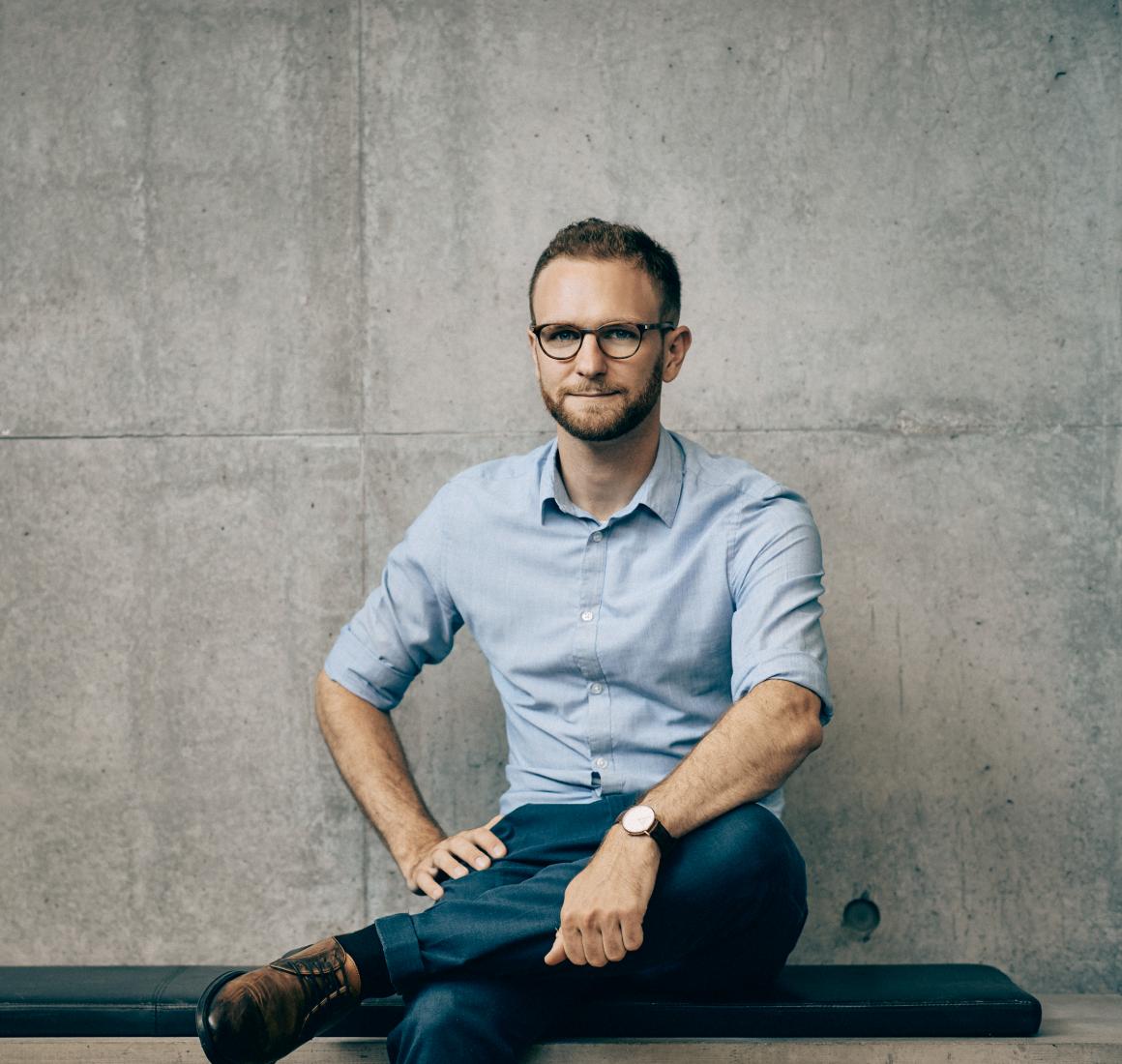
Yuki Katsuta is Group Senior Vice President of Fast Retailing (the conglomerate that owns Uniqlo) and Head of Research and Development at Uniqlo. He smiles warmly in his Tokyo office, which has just been remodelled to meet the company's own sustainability standards and ethical requirements.
Elements such as food waste, sustainable material choices and collaboration with local stakeholders through virtual conferences are being optimised, while maintaining a focus on continuous training of employees in a culture that sees mistakes and individual deviations as the source of healthy development.
Because this isn't a company that delivers products to consumers. This is a group of creative thinkers delivering lifestyle items to billions of individuals in New York and Los Angeles, Osaka, Kyoto and most recently Milan, Stockholm and Copenhagen. That's why Uniqlo doesn't just have a canteen full of miso soup, ramen, wasabi peas and Coke Zero. They also have an impressive library for their employees with a dedicated curator, Tasuku Nakazawa, who ensures that philosophy, art history and fashion lexica can be studied during working hours. So far, there are already more than 3,000 titles in the library, but the collection has the potential to grow to 25,000 titles. And there's a reason for that.
"It has become harder and harder to succeed in the fashion industry. Consumers are becoming more and more informed, and the knowledge they don't already have is very easy to access. Our key to success is that we never look at fashion trends. And in the future, it will increasingly be about focusing on the individual rather than segmenting by consumer type or age. That's why it's so crucial that our employees first and foremost learn to think for themselves," says Yuki Katsuka.
That's why the company invests time in helping their employees to think critically about their own tasks specifically and the common goals in general. "The task is not to chase a zeitgeist anymore. From our perspective, the common motivation lies in looking at each piece of clothing as a necessity that meets a human need, not just an aesthetic play with colour and design. We've had success in markets like China and Scandinavia, where many other big brands often fail, because we always familiarise ourselves with the local culture, the local history and the specific everyday life of a Dane, Swede or Chinese before we enter the market. We must only sell products that our customers will use every single day and for many years to come."
“Now we've become modern by being unfashionable: We don't do anything fast.” Yuki Katsuta
Head of Research and Development, Uniqlo
Sustainability is a design element Uniqlo sets itself apart from other fast fashion brands like Top Shop, Zara and H&M by prioritising quality over consumerism since the brand was founded in 1984. They've never competed on sex appeal with H&M, or the quick copying of runway looks that Zara is known for. They've triumphed by selling cashmere sweaters for the same price their competitors were charging for an acrylic Ditto, and by ensuring their designs were so thoughtful in detail that they catch the eye. Yet so understated in their cuts that fashion editors and self-conscious fashionistas stuck to their favourite cardigan as well as the perfectly fitted stretch jeans, no matter which way the enigmatic compass of fashion ended up pointing.
"We are very Japanese in our approach to design," says Yuki Katsuka.
"We are so serious. And that seriousness translates into care. Everything has to be scrutinised and tested, and our clothes have to be better fitting, more functional, more comfortable. It never stops. Ten years ago, it wasn't fashionable. Now we've become modern by being unfashionable: We don't do anything fast. We work slowly and detail-orientated, which is why we can never follow trends. We can only create clothes that are as relevant now as they will be ten years from now."
Yuki Katsuka recognises that there is a need to look at water consumption, production methods and the amount of clothing produced if the company is to meet future climate requirements. But sustainability needs to be incorporated into the design process just as much.
"It doesn't matter if you produce clothes in organic cotton and polyester from plastic bottles if the customers in the store only use the collection for one season. We need to produce with greater climate responsibility, but we need to produce clothes even more according to the same motto as the Danes produce furniture. We must only make classics that you will love for many years, that become more beautiful with frequent use and that you can repair. The fast fashion is outdated before it hits the store."
Uniqlo
Uniqlo is part of the Japanese fashion group Fast Retailing, the third largest retail group in the world. Tadashi Yanai is the founder, owner and manager of the company. In 2018, the group had a turnover of USD 19 billion. Uniqlo is the largest of the groups seven brands and has more than 3000 stores worldwide.

Nothing is lost in translation
Although Uniqlo has a quintessentially Japanese approach to fashion, with a focus on calm, seriousness and perfection, forget about any prejudices against Japanese culture that Sofia Ford Coppola's hit film 'Lost in Translation' may have left in the Western world. Because you don't have to spend many minutes talking to Uniqlo's Global Creative Director, Shu Hung, to realise that this brand takes constant change and development seriously.
"There are many similarities between Danes and Japanese. Both countries have a tradition of minimalism, of peeling away the unnecessary elements and focusing on how design and function can complement each other. This value will only become more important in the future if we are to consume responsibly, but retain the excitement of what we allow ourselves to buy," explains the New York-based creative director. With a background at international brands like Audi and Nike, Uniqlo's inclusive business model appealed to her.
"In the past, brands had to speak with one voice, one figurehead, one pay off. We've turned that around. We interact with the local community, learn from our employees across time zones, and we make room for a wide range of authentic personalities to embody our brand. In a country like Denmark, our ambassadors are not models or top athletes. They are local enthusiasts who are passionate about gastronomy, music, arts and crafts."
And in case outsiders have any doubts, the creative director makes it clear. If you want to be a pioneer in fashion today, you have to dare to be a quiet but persistent contrarian:
"Even when we do collaborations with big names like Alexander Wang and J.W. Anderson, it's not to be modern. It's to be democratic. It's to give more people access to thoughtful and accomplished design that they will use for a longer period of time," says Shu Hung. She stops herself. She doesn't want to be preachy.
"Well, right now I'm preaching to the converted. Because you Danes already know what it's all about when we say that our motto is 'Simple Made Better'. But that's actually the ideal. Nothing more, nothing less." The legacy of the German Bauhaus school of architecture, which prioritised function over form and opposed superfluous decoration, lives on not only in Scandinavian interiors and Danish homes. By looking to the past, Uniqlo has cracked the code to the future. Democratic, sustainable design should appeal to most, suit everyone and look like modern classics.
Keep reading

Corporate innovation has stalled – and AI risks deepening the challenge

Learning from failure is harder than we think

Has Leadership Fallen for the Entrepreneurial Hype?
Stay updated on MBD
Sign up for our newsletter and receive our newest research, podcasts and event invitations in your inbox. We send out 6-8 newsletters a year.
Keep learning

Master of Business Development
Full-time MBA