Flexible working is changing the workplace – and we’re paying for it with hot desks
Today, 41% of Danes take advantage of the opportunity to work from home. Concurrently, many companies are calling employees back to the office. How are these two trends shaping the workplace of the future? Peter Holdt Christensen, Associate Professor at CBS, shares his insights on hybrid work, office design and the evolving workplace.

Single offices. Rows of desks. An employee lounge. A dark copy room.
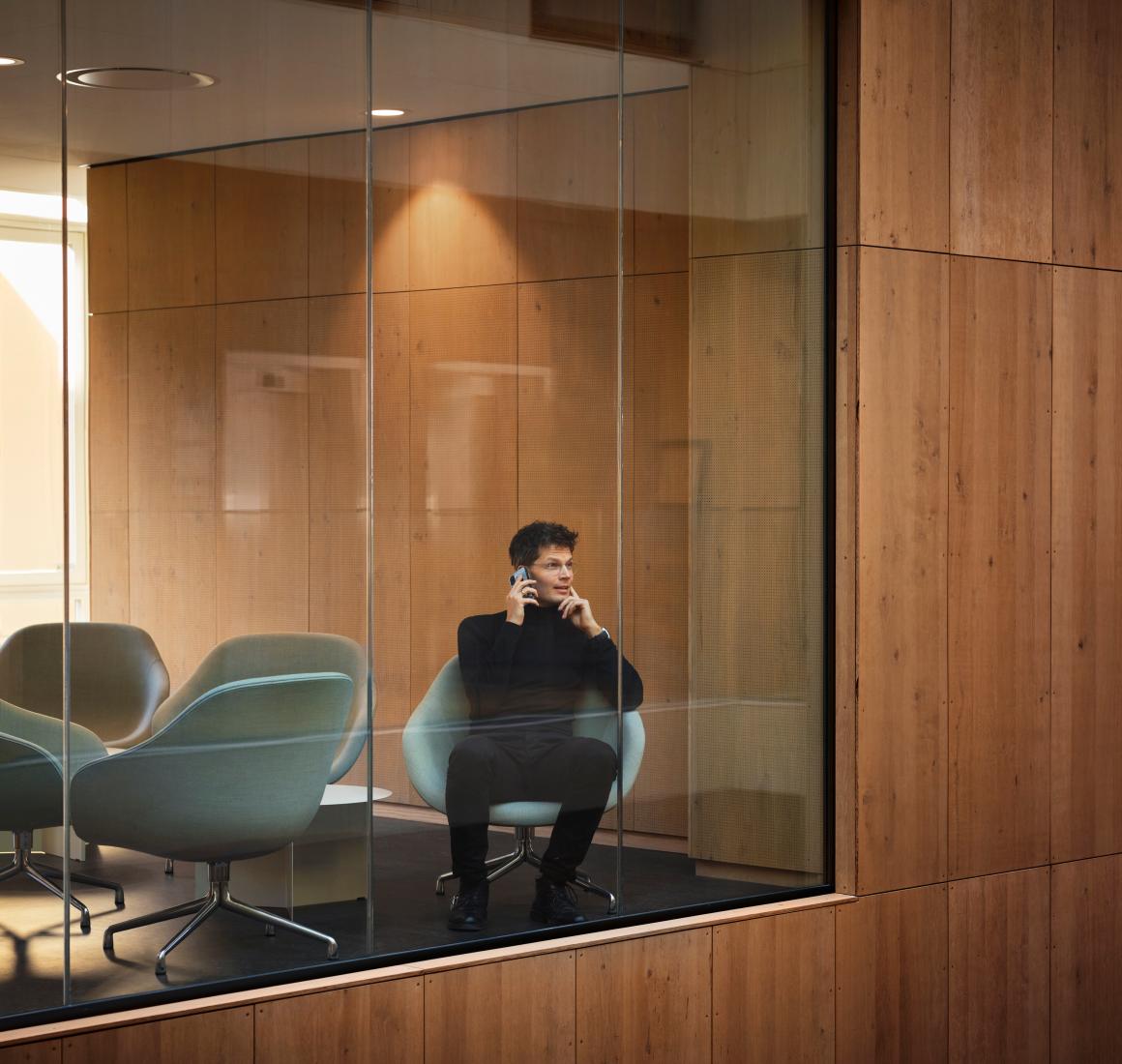
Many people see the design of our workplaces as something fixed and unchangeable, where a few plants and some artwork are the only ways to make the office more inviting.
But in the post-pandemic era, the demand for flexible working has created entirely new and significant requirements for the spaces in which we work. Yet these issues are still not a priority in executive decision-making – or in research.
"In a way, it is somewhat absurd that the spaces we constantly inhabit are perhaps what we devote the least attention to in workplace research," says Peter Holdt Christensen.
Peter Holdt Christensen is an Associate Professor at Copenhagen Business School (CBS). His research focuses on generational leadership, hybrid work and what is known as spaceless organisations – the study of how physical spaces, understood in several different ways, influence how we feel and how we interact with others at work.
Peter frequently visits organisations to discuss workplace design and spatial research. Through this work, he has observed that many leaders adopt an outside-in perspective on physical workspaces. In essence, they view workplace design as an architectural challenge: first the space is created, and then the organisation adapts to it.
"However, there is a growing interest in what we call an inside-out perspective," Peter explains. "Some organisations have begun to consider what workplaces should look like in order to support the way people actually work and what they need from their environment. But compared with many other workplace issues, interest in this area remains relatively limited."
“From a research perspective, it is somewhat frustrating that the conversation is based on ‘what I think’ and ‘what my views are’. It is not based on evidence. And by now there is an enormous amount of knowledge about how these issues actually work, but there is also an enormous unwillingness to listen to that knowledge.” Peter Holdt Christensen
CBS Associate Professor

Less space, more connection
The coronavirus pandemic brought not only a new virus into everyday conversation, but also a new way of working – one that is still evolving. Six years after the pandemic, one in three Danes works from home at least some of the time. As a result, workplace occupancy rates have become a key concern for companies and organisations.
"Organisations are now paying close attention to how many employees are actually present in the workplace during a given day or week. This has led to a greater focus on the cost of square metres and whether workplaces can be designed differently in order to reduce operating expenses."
However, the focus on square metres is not solely about reducing costs. It is also about finding new ways to use the space that already exists.
"There is also a discussion about whether workspaces should serve a different purpose than they did before the pandemic. Put simply, before COVID-19, most people came into the office Monday to Friday, from eight to four, and worked from their designated desk. With more people working remotely, employees may now spend only two or three days a week in the office, meaning they have fewer opportunities to socialise. As a result, there is growing discussion about designing workplaces that support social interaction more actively than before."
As part of this shift, Peter believes that hot desking will become increasingly common in Danish workplaces. While some employees may find the loss of a permanent desk uncomfortable, hot desking can encourage interaction with different colleagues while also helping organisations manage office space more efficiently when occupancy rates are below 100%.
"With two or three days of remote work each week, people simply need to interact in different ways than they did before," says Peter.
About the researcher
Peter Holdt Christensen is an Associate Professor at Copenhagen Business School (CBS), specialising in the organisation and management of modern workplaces. His research focuses on hybrid ways of working, generations in the workforce, and the development of future office environments, exploring how these factors can support employee wellbeing, collaboration and organisational performance.
Learn more about Peter's research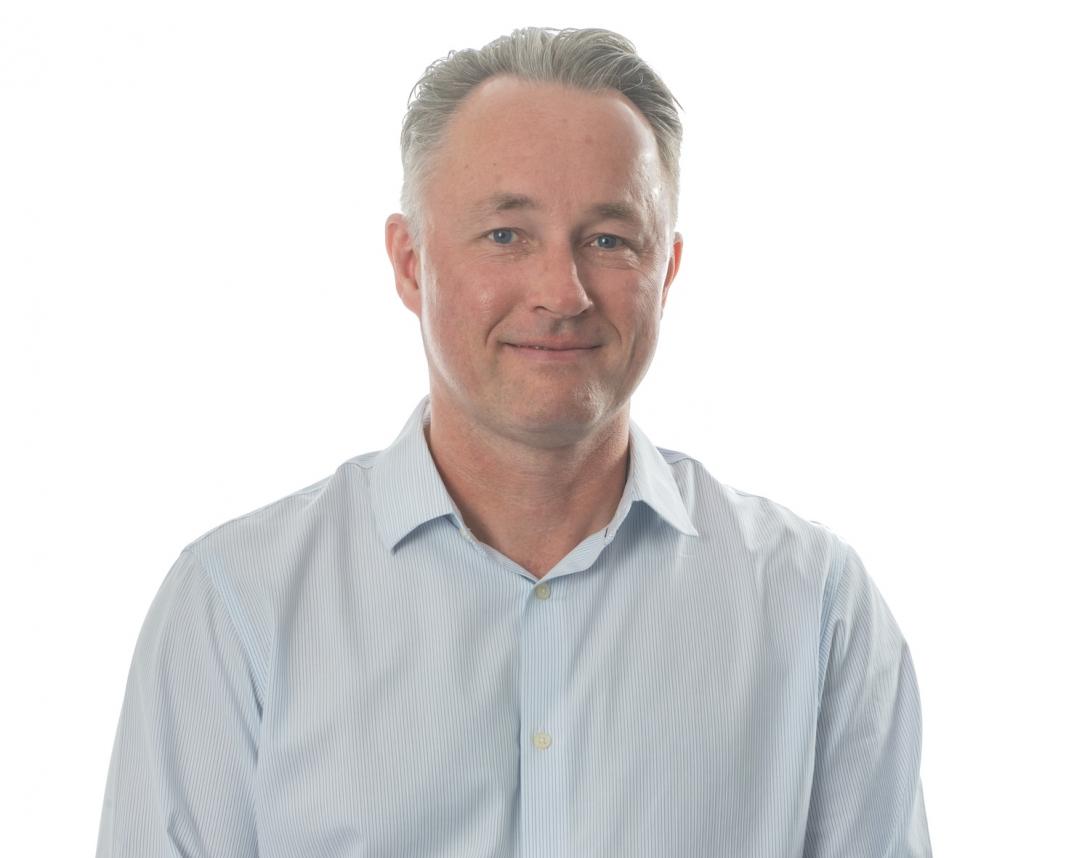
The work-from-home war
In recent years, the media has reported on several major Danish companies, from Novo Nordisk to Maersk, calling employees back to the office on a full-time basis.
Stories like these naturally raise the question: Are we seeing a move away from working from home? According to Peter, the answer is no.
"The trend is not that working from home is being rolled back. Companies such as Novo Nordisk and Maersk may communicate their policies very firmly, but in many cases there is still flexibility to agree on exceptions with your immediate manager. The reason these announcements receive so much media attention is that working life has become more flexible, and as a result, a kind of ‘war’ has emerged around the right to work from home."
According to Peter, this so-called battle over remote work is difficult to navigate because the debate is often driven by personal opinions and expectations rather than evidence. People who have spent 40 or 50 years in the labour market may consider five days a week in the office perfectly reasonable, while younger generations have become accustomed to a more flexible way of working.
"From a research perspective, it is somewhat frustrating that the conversation is based on ‘what I think’ and ‘what my views are’. It is not based on evidence. And by now there is an enormous amount of knowledge about how these issues actually work, but there is also an enormous unwillingness to listen to that knowledge."
“We are still relying on a way of thinking about workplaces that is somewhat outdated. After all, the idea of gathering people together in one place has been with us for more than a century, and it is not something we abandon easily.” Peter Holdt Christensen
CBS Associate Professor
The workplace of the future will be less predictable
So what will the workplace of the future look like? According to Peter, open-plan offices and hot desking are part of the trade-off employees will have to accept in exchange for a more flexible working life.
"Flexibility in how we use office space can be achieved through hot desking and open-plan office environments. The challenge for individuals is that, to a large extent, human beings are territorial by nature. However, research shows that working from home can reduce the immediate negative experience of not having a fixed desk. In that sense, it is the price people pay for having the option to work from home."
In addition, workplaces are likely to be designed less around an individual employee’s computer, desk and personal belongings, and more around the changing needs of multiple employees.
"A workspace is not just somewhere you sit; it is also somewhere you choose to go depending on the task at hand," Peter explains. "For example, some organisations have quieter zones where employees can work without distractions and focus more deeply. During the working day, people will increasingly have the autonomy to choose the part of the workplace that best suits what they are doing."
In short, where you work, when you work, and with whom you work will become far less predictable and structured than in the past. However, according to Peter, many organisations still find it difficult to adapt to this shift.
"That is why we hear about companies reversing course. This is where we see the generational divide or even a generational struggle. Some people think: ‘We have done things this way for 40 years, so why change?’ That may widen the gap between those who have always been part of the workplace and those who are only now entering it. It is a conflict we have seen many times before."
As a result, it may still be some time before hot desks, open-plan offices, lounge areas, quiet zones and informal collaboration spaces become the norm for everyone.
"We are still relying on a way of thinking about workplaces that is somewhat outdated. After all, the idea of gathering people together in one place has been with us for more than a century, and it is not something we abandon easily."
Keep reading
New management strategies for new generations?
Generation Z: better than their reputation
Thrive at Work: Building an Attractive Work Culture
Your gateway to more knowledge
Did you find this content interesting? Sign up for our newsletter and gain access to more of our research findings and events.
With the world’s grand challenges awaiting us, we need to continuously evolve, gain new knowledge and insights, and upskill.
Dive into a world of knowledge by signing up below. You will get:
- Personal event invitations
- Pertinent research-based insights on business and society
- Information about the next intakes of our Executive Education programmes and courses
Keep learning
Organisational Change
HD2 Organisation og ledelse