Building strategic confidence in an uncertain world with an EMBA from CBS
In a world marked by complexity and constant change, strategy is about more than grand plans. According to Professor Marie Louise Mors, it requires analytical depth, critical thinking and the ability to make clear choices – including knowing what not to do. This is the strategic confidence developed through the CBS Executive MBA.

At its core, strategy is about making choices. These choices define not only what a company will do – but also what it will not do. For many participants at the CBS Executive MBA, this is a new way of thinking about strategy – and one that sharpens their ability to prioritise in complex environments, explains Professor Marie Louise Mors:
“When you make a choice, you also have to make a choice about what not to do. Otherwise, you haven't really made a choice.”
Marie Louise Mors teaches the Strategic Management course at the CBS Executive MBA. Since 2012 she has been a faculty member of the Department of Strategy and Innovation at CBS and more than 20 years teaching experience at the MBA level.
According to Marie Louise Mors, one of the other significant mindset shifts for participants comes from realising that strategy is not something that can be reduced to a simple model.
“Strategy is very complex and there is no set formula,” she says.
Instead, strategy requires leaders to work systematically with analysis, judgement and argumentation.
“It’s all about assessing and analysing the relevant market, as well as the competition for strategic positioning. Then managers need to look inside the organisation to identify the core resources and capabilities that firms have that will help them build competitive advantage.”
A strategy is nothing without effective execution
Another key learning during the course is that strategy cannot stand alone as a plan developed at the top of the organisation.
“Strategy without support from the entire organisation cannot be implemented,” Marie Louise Mors explains.
She points to the importance of alignment between strategic direction, the organisation’s structure, and daily practices:
“Without fit between the strategy and the organisation, the strategy will not get implemented,” she says.
Throughout the course, participants therefore work with strategy as something that must be embedded in how the organisation actually operates.
Given the growing complexity and pace of today’s external environment, it has become increasingly important for leaders to carry a strong strategy backpack, Marie Louise Mors says. As a result, the course is expanding to place greater emphasis on external analysis – as well as focusing on resources, capabilities, and organisational alignment for effective implementation.
“We are strengthening the course with deeper industry, market, and competitive analysis, drawing on an economics of strategy perspective. My experienced colleague from the economics department, Professor Marcus Asplund, who has taught at leading international business schools, will join the course to further enhance the analytical depth of the external analysis,” Marie Louise Mors says.
About the researcher
Marie Louise Mors
Marie Louise Mors is a Professor of Strategic and International Management at CBS. Prior to joining CBS in 2012, she was on the faculty at the London Business School and spent time as a post-doc at the Sloan School of Management at MIT. Marie Louise Mors has a PhD in Management (Specializing in Strategy) from INSEAD in Fontainebleau, France.
Read more
Strategy as an ongoing loop
Rather than a one-off exercise, strategy is a continuous process.
“I usually say that strategy is a three-step loop: First set direction, then implement, and finally you re-evaluate and adjust,” Marie Louise Mors explains.
In practice, however, many organisations struggle to maintain this discipline.
“It happens all the time. Companies forget to follow up. Or say they are implementing. But actually, they are doing the same thing as they were doing yesterday. Or they only come back and re-evaluate when the performance starts to suffer.”
Learning from diversity
An essential part of the learning experience of the CBS Executive MBA comes from the participants themselves.
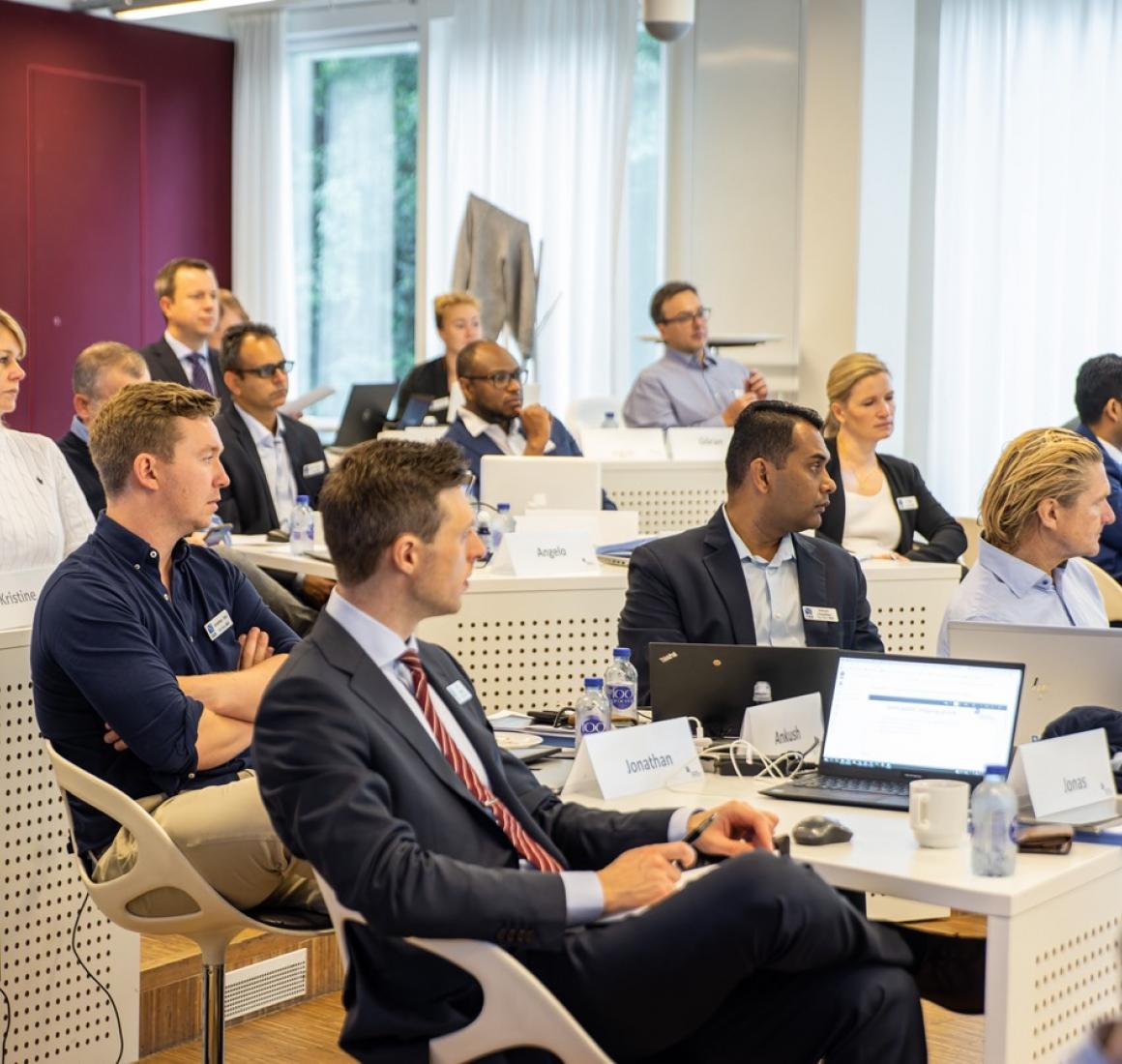
“The strategy course is very interactive with a lot of cases. The participants also come with many years of work experience from different industries and different roles. Not only do they share their knowledge in the classroom, but they are also able to advise each other when they work together in the course,” says Mors.
This diversity strengthens both the learnings, the discussions and the ability to make decisions:
“The diversity of perspectives also ensures they don't get blind angles in their strategic decision making.”
Preparing for increasing complexity
Looking ahead, Marie Louise Mors expects strategy to become even more important as organisations face increasing uncertainty and complexity.
While technologies like AI can support analysis, they do not replace strategic thinking, Mors says referring to a recent research study:
It showed that when evaluating strategic alternatives, AI was inconsistent and biased.
“So, executives still need to be able to evaluate whether the analyses conducted with AI are reasonable. And for this, they still need to understand the theories and be able to apply the frameworks of strategy. The deep analytical reasoning of strategy still falls on managers. But of course AI can help and support the process,” Mors says.
Building strategic confidence
The aim of the CBS Executive MBA is to equip participants with both tools and confidence.
“The course gives the participants an introduction to the theory and a toolbox to work with, so they are equipped to analyse, assess, and develop strategy. This should give them the confidence to work with the strategy tools.”
“But if managers want to remain strategically relevant, they also need to be able to take a step back from their own organisations in order to be able to see the big picture. Therefore they learn a lot from working with different cases and from each other.” Mors says.
At CBS Executive MBA, the strategy course is placed towards the end of the programme. Because other basic skills and frameworks need to be in place before we can think about strategy, she explains:
“Other parts of the programme really come together and align in the strategy course.”
Read more EMBA stories

Navigating Corporate Finance: A Roadmap for Executives

Integrated Strategy Project – bringing everything together
Fresh perspectives: How an EMBA can add an extra career dimension

Bjørn Zabell: Empowering Global Leadership Through CBS Executive MBA
Discover more.
Explore other programmes and courses

Executive MBA

Executive Certificates
Executive MBA in Shipping and Logistics