Department of Digitalization
The Department of Digitalization (DIGI) is the largest European university department dedicated to the social science study of information technology. We focus on how trends and innovations in social science and humanities shape technical capabilities of emerging technologies, and how those technologies can be used in business and society.

About the department (Panel content)
Who we are
We bring together researchers from a wide range of fields to address the most important challenges for individuals, organizations, and society.
50+ experts from multiple disciplines
8 focused research themes
25+ research projects globally
“ At DIGI, we don’t just study technology. We help shape its meaning and impact in the world. Our ambition is to be a visible, critical, and constructive voice in the digital age. ” Andrea Carugati
Head of Department

Digital Transformation Research with Societal Impact
At the Department of Digitalization (DIGI), we explore how digital technologies reshape organisations, markets, and society. Our research engages with some of today’s most pressing challenges by examining how digital transformation influences work, decision-making, innovation, governance, and everyday life.
Our scholars investigate themes such as data-driven organisations, algorithmic decision-making, digital platforms and ecosystems, cybersecurity, digital sustainability, public-sector digitalisation, and the societal implications of emerging technologies. Across these areas, we aim to generate insights that help organisations navigate complexity and design responsible, resilient, and human-centred digital futures.
Collaboration is central to our work. We partner with companies, policymakers, public institutions, and international research communities to ensure that our findings support informed decisions and real-world impact. Through empirical studies and close engagement with practice, we contribute to debates on digital responsibility, inclusion, transparency, and the governance of new technologies.
Our ambition is clear: to produce knowledge that empowers organisations, guides policy, and supports society in making sense of digital transformation. We work to shape a digital future that is innovative and competitive, but also ethical, sustainable, and attentive to human and societal needs.
About us
Strategy
Our strategy is to be the strongest danish and european social science voice in multidisciplinary digitalization research....
This ambition defines a strategy rooted in influence, interdisciplinary excellence, societal impact, and strong European integration—ensuring DIGI is not just participating in, but leading, the conversation on digitalization from a social science perspective.
Built on 50 Years of Socio-Technical Excellence
We build on five decades of socio-technical teaching, international research, and societal engagement—highlighted by our pioneering 1984 launch of the Computer Science and Economy study program.
Guided by Industry Leaders
Our advisory board features leading Danish and international figures in IT and digitalization, ensuring our research stays relevant and impactful.
Committed to Academic Excellence
Our frequent self-evaluations, supported by international research panels, ensure the academic quality and continuous development of the department’s research.
Bitlab
Bitlab at DIGI is CBS’ creative tech space, a hands-on lab where ideas meet technology. From VR sets, 3D printers, and cloud servers to Raspberry Pis, Arduinos, and sensors, Bitlab supports experimentation and innovation. Whether you are exploring digital design, data, or interaction, our team is here to help your project take off.

Research and publications (Panel content)
Research that shapes the digital age
At the Department of Digitalization (DIGI), our research is organized around dynamic, short‑to‑medium‑term themes—typically active for 3–7 years—that reflect emerging trends where digital technologies reshape individual, organizational, and societal life. This flexible structure supports collaboration across disciplines and keeps us at the forefront of innovation. We take pride in producing research that ends up in the most prestigious journals at the intersection of IT and business. Through our faculty’s efforts, CBS ranks #1 in Europe and #4 globally when measuring output in the "Basket of Eight" (Bo8) Information Systems journals.
Our current research covers a broad range of themes, including blockchain, data science and cyber security, digital ecosystems, digital health, digital sustainability, and the digital transformation of work. We also explore topics such as FinTech, learning and skills, mood and digital spaces, and RIOT (robotics, AI, and the Internet of Things). Further areas of focus include sports digitalization, theory of digital themes, and the value of data, reflecting the diversity and depth of our engagement with the digital transformation of business and society.
Publications
See all publicationsjanuar 2026
Value Co-Creation in a Digital Ecosystem
Exploring Autonomous Co-Creation in a Digital Influencer Ecosystem
Go to publication
2026
Transparent Autonomy and Human Work Interaction Design
Elodie Bouzekri

Torkil Clemmensen, Professor
Antony William Joseph
Arminda Guerra Lopes
Adriana Moreno Rangel
José Abdelnour-Nocera
2026
Addressing Global HCI Challenges at the Time of Geopolitical Tensions Through Planetary Thinking and Indigenous Methodologies
Go to publicationOur research themes
Blockchain in Business and Society
Blockchain is one of the hottest and most intriguing technologies currently in the market. Global organizations and governments as well startup companies and investors have all identified blockchain as a revolutionary technology. Blockchain is a transformative technology that can change the deep structure of business organization and the human enterprise at large. Similar to the internet, the blockchain has the potential to disrupt multiple industries by making transactions and processes more efficient, more secure, more transparent, and more democratic. Building on the promising potentials of blockchain, members of the research theme examine how the unique features and the underlying mechanisms of blockchain technology and smart contracts can enable the development of new blockchain-based cryptographic socio-economic systems that underlie thriving business ventures in a wide array of markets.
Members:
- Michel Avital, Professor
- Niels Bjørn-Andersen, Professor Emeritus
- Jan Damsgaard, Professor
- Nina Frausing, PhD Fellow
- Juan Giraldo, PhD Fellow
- Rob Gleasure, Associate Professor
- Jonas Hedman, Professor
- Thomas Jensen, Post doc
- Robert Kauffman, Professor
- Somnath Mazumdar, Assistant Professor
- Rony Medaglia, Professor
- Raghava Rao Mukkamala, Associate Professor
- José Parra-Moyano, Assistant Professor
- Günter Prockl, Associate Professor
- Leonardo Maria de Rossi, PhD Fellow
- Rajani Singh, Assistant Professor
- Chee-Wee Tan, Professor
- Michael Wessel, Associate Professor
- Weifang Wu, Assistant Professor
Further information and inquiries:
Michel Avital
avital@cbs.dk
+45-4185-2037
Data Science and Cyber Security
Data Science and Cyber Security at DIGI brings together technical, organisational, and societal perspectives to understand how data-driven technologies and security practices shape contemporary organisations. The theme examines both the opportunities enabled by advanced analytics and the risks associated with increasingly interconnected digital infrastructures.
Our researchers study how machine learning, predictive modelling, and large-scale data processing can support decision-making, innovation, and operational efficiency. At the same time, we investigate the vulnerabilities, threats, and governance challenges that accompany these systems, from organisational risk management to broader societal concerns about trust, resilience, and digital sovereignty.
Key areas of inquiry include:
- Responsible data science and AI: exploring how analytical models are designed, validated, and integrated into organisational routines.
- Cyber security management and governance: examining how organisations build resilience, respond to threats, and coordinate security across complex ecosystems.
- Human–technology interaction: understanding how employees, teams, and leaders engage with data-driven tools and security protocols.
- Critical infrastructures and systemic risk: analysing how digital dependencies create new forms of organisational and societal vulnerability.
- Ethics, compliance, and regulation: studying how legal frameworks, standards, and norms shape the development and deployment of data-intensive and security-critical systems.
Through empirical research, cross-disciplinary collaboration, and engagement with industry and public institutions, the theme contributes to the development of secure, transparent, and accountable digital practices. Data Science and Cyber Security at DIGI supports organisations and policymakers as they navigate an environment where technological advancement and security challenges evolve in parallel.
Data Studies
Data Studies at DIGI explores how data is generated, structured, governed, and used across organisations and society. The theme brings together perspectives from information systems, sociology, philosophy, organisation studies, and science and technology studies to understand the social, technical, and ethical dynamics that shape data-intensive practices.
Our researchers examine how data becomes a resource for decision-making, innovation, and public governance; how infrastructures such as platforms, algorithms, and sensors mediate data flows; and how norms, regulations, and organisational routines influence the way data is collected, shared, and interpreted.
Key areas of inquiry include:
- Data governance and stewardship: how organisations manage rights, responsibilities, and accountability around data.
- Data work and expertise: how professionals and citizens engage with data, from everyday sense-making to advanced analytics.
- Algorithmic systems and datafication: how digital technologies transform organisational processes, markets, and public services through continuous data production.
- Ethics, transparency, and fairness: how data practices intersect with questions of privacy, equity, trust, and democratic oversight.
- Societal implications of data infrastructures: how large-scale systems shape inclusion, participation, and institutional change.
Through empirical studies and interdisciplinary collaboration, Data Studies at DIGI aims to deepen understanding of how data shapes contemporary life—and to inform more responsible, transparent, and human-centred approaches to data use in both private and public organisations.
Defence Tech, Resilience & Security
TBA
Digital Ecosystems
Digital Ecosystems at Copenhagen Business School, Department of Digitalization
Contemporary digital technology is increasingly infused into all aspects of human existence, giving rise to new kinds of digital ecosystems that are capable of interconnecting across physical, biological, cognitive, industrial, and social boundaries. As a result, digital ecosystems pose unprecedented problems and challenges for research, business, policy, and society as a whole. In response, the “digital ecosystems” research theme seeks new insights and conceptual innovation to better cope with these developments by (1) studying digital ecosystems as the basic unit of analysis and (2) by utilizing ecological thinking as a conceptual lens. In order for this theme itself to be a healthy ecosystem of ideas, we value diversity and heterogeneity in terms of our viewpoints, approaches, theories, and methods. We, therefore, conduct research and generate insights based on a colourful mix of topics, including digital platform-ecosystems and the platform economy, digital strategy and innovation, digital infrastructures and the political economy of digitalization, the internet of things and open source, and many more.
Members and research topics:
|
Associate Professor |
Digital - Transformation and Strategy |
|
Associate Professor |
Digital platform ecosystems; Innovation in digital ecosystems; Decision making in digital ecosystems; |
|
Associate Professor |
Digital ecology of platforms, social memory, and labour; Ecosystemic thinking and digital strategy |
|
Assistant Professor |
Platformization of infrastructures, and infrastructuring of platforms. Migration of installed bases across “ecologies of platforms”. |
|
Professor |
Platformization and service innovation |
|
Associate Professor |
Digital Supply Chains of the Future, Transformation from Supply Chain Management vs Business Ecosystem; Service Ecosystems for Data Driven Services and Services based on IoT |
|
Professor MSO |
Digital Transformation, Digital Platforms and new forms of organizing and competition |
|
PhD Fellow |
Digital Infrastructure Development and Dynamics, Digital Payment Platforms, Global Payment Ecosystems |
|
PhD Fellow |
Offerings as digitalized interactive platforms; creative industry service ecosystems; e-commerce platformization |
|
Associate Professor |
Dynamics and governance within and across platform ecosystems. Strategic and competitive behavior at the platform and user level. |
|
Professor |
Decentralized and self-organized ecosystems. Blockchain-enabled ecosystems. |
|
PhD Fellow |
Dynamics in platform-mediated work; ecologies/ infrastructure in platform work |
|
PhD Fellow |
Digital Payment Platforms, Financial Service Ecosystem, Incentive-based architecture and governance within digital ecosystems |
|
Assistant Professor |
digital technology-enabled innovation within and across organizations, digital platforms, open source software development, digital ventures, computational social science |
|
PhD Fellow |
Human cognition, intelligence and extended cognition in a digital ecosystem, bioecological models of human development |
|
Professor MSO |
The technological enablement of digital ecosystems from a managerial and strategic perspective. Platformization to move from closed systems to open digital ecosystems. Architecture. |
|
Professor MSO |
Digital transformation, platform-mediated work, digital infrastructures. |
|
Associate Professor |
Development or emergence of digital ecosystems in the context of digital entrepreneurship. |
Selected Publications:
- Jetzek T., Avital M. and Bjorn-Andersen N. (2019). “The sustainable value of open government data” Journal of the Association for Information Systems 20(6): 702-734.
- Mäntymäki M., Baiyere A. and Islam A. N. (2019). “Digital platforms and the changing nature of physical work: Insights from ride-hailing” International Journal of Information Management 49: 452-460.
- Rukanova B., de Reuver M., Henningsson S., Nikayin F. and Tan Y. H. (2019). “Emergence of collective digital innovations through the process of control point driven network reconfiguration and reframing: The case of mobile payment” Electronic Markets 30: 1-23.
- Constantiou I., Marton A. and Tuunainen V.K. (2017). “Four models of sharing economy platforms” MIS Quarterly Executive 16(4): 231-251.
- Prockl G., Bhakoo V. and Wong Ch. (2017). “Supply chains and electronic markets - Impulses for value co-creation across the disciplines” Electronic Markets 27(2): 135-140.
- Eaton B., Elaluf-Calderwood S., Sorensen C. and Yoo Y. (2015). “Distributed tuning of boundary resources: The case of Apple's iOS service system” MIS Quarterly 39(1): 217-243.
- Hedman, J. and Henningsson, S. (2015). “The new normal: Market cooperation in the mobile payments ecosystem” Electronic Commerce Research and Applications 14(5): 305-318.
- Manikas K., Wnuk K. and Shollo A. (2015). “Defining decision making strategies in software ecosystem governance” White Paper: Department of Computer Science, University of Copenhagen.
- Kallinikos J., Aaltonen A. and Marton A. (2013). “The ambivalent ontology of digital artifacts” MIS Quarterly 37(2): 357-370.
Research projects / grants:
- Global E-Export of Services (GEES)
- Consistently Optimised Resilient Secure Global Supply-Chains (CORE)
Talks:
- Constantiou I. and Marton A. (2018) The 4 Types of Sharing Economy Platforms. DanskIT Digitalization Webinar Series: Copenhagen, Denmark.
- Marton A. (2018) Making Meaning Dataful. Invited presentation for the Børsen Newspaper Marketing Conference: Copenhagen, Denmark.
- Ekbia H. and Marton A. (2018) The New Division of Labour: A Revised History of Computing. Invited presentation at Google Denmark.
Media:
- “Forsker: Det er meningsløst at indsamle data uden en strategi”, Børsen Newspaper, 28. Sept. 2018.
- “Making Data Meaningful”, Interview with Børsen Newspaper, 28. Sept. 2018.
- “The Not-So-Sharing Economy”, invited blog post for the Business of Society, 9. July 2018.
Contact person:
- Attila Marton (am.digi@cbs.dk)
- Günter Prockl (gp.digi@cbs.dk)
Digital Government
Test
Digital Sustainability
United Nations have formulated 17 Sustainable Development Goals. However, it is hard to imagine that they can be achieved without digitalization. For example, SDG 1 - No Poverty - once a political solution is in place a more fair distribution of wealth can only be delivered via a digital monetary system. Another example is SDG 4 - Quality Education - can only be achieved via digital means if we are to supply even the most remote villages with quality edition services, and it can only scale via digital means. Similarly, most of the remaining SDG can only be achieved with digital solutions.
An illustrative example of how digitalization is leading the way is Blockchain. Blockchain will transform most business sectors in the coming years. In global trade, blockchain can help companies become more sustainable while also enhancing their competitiveness. In short, blockchain technology supports increased efficiency, transparency, and trust for global supply chains. It can be utilized to authenticate the product and verify that raw materials originate from a sustainable source. At the other end of the product lifecycle blockchain can support the recycling so that it is done sustainably. Along the supply channels blockchain supports an effective distribution and trade. These are all in line with UNs sustainable development goals (SDG 9: Industry, Innovation, and Infrastructure; SDG 12: Responsible Consumption and Production; SDG 13: Climate Action).
The concurrent digital revolution and ambitions for a sustainable transformation in the 17 SDG's are currently the driving force of societal change for the global community. Advancing the digital agenda as leverage to achieve the SDG's covers many realms: infrastructure development, knowledge, innovation, and circular economic growth, to name a few. There research areas as blockchain and Internet of Things have become critical means to the sustainable development agenda and promise vital contribution to the achievement of the goals.
In order to contribute to a sustainable research agenda, members of the research team examine how digitalization accelerate and enable the realization of the Sustainable Development Goals. Furthermore, the research team will teach and disseminate their knowledge to build understating and digitally powered sustainable competencies for students, decision-makers, organizations, and society.
Research topics with a digital sustainability focus:
- Blockchain
- IoT
- Digital Money
- Education Quality
- Circular Economy
Founders:
Jan Damsgaard, Professor
Thomas Jensen, Assistant Professor
Rony Medaglia, Professor with Special Responsibilities
Raghava Rao Mukkamala, Associate Professor
Associated projects:
Advancing Blockchain for Danish Design
Selected journal publications:
- Medaglia, R & Damsgaard, J (2020), "Blockchain and the United Nations Sustainable Development Goals: Towards an Agenda for IS Research" . PACIS 2020 Proceedings. 36.
- Mazumdar, S., Jensen, T., Mukkamala, R. R., Kauffman, R., & Damsgaard, J. (2021) Do Blockchain and IoT Architecture Create Informedness to Support Provenance Tracking in the Product Lifecycle?. In Proceedings of the 54th Hawaii International Conference on System Sciences (pp. 1497-1506). Hawaii International Conference on System Sciences (HICSS).
Reports:
- Blockchain for Transparency, Traceability, and Sustainability: Insights from the Danish Design and Trade Industry (2021)
Link: https://blockchainbusiness.dk/wp-content/uploads/Rapport_Sp%C3%B8rgeskemaABCD.pdf
Digital Transformation of Work
Digital Transformation of Work Research Theme at Department of Digitalization
Digital technologies transform how, where, and when work gets done. New forms of work, also known as “smart work”, are characterized by spatial and temporal flexibility supported by technological tools that provide employees with the best working conditions to accomplish their tasks. Our research within the theme of Digital Transformation of Work focuses on the profound and accelerating transformation of business activities, processes, competencies, and models that are initiated to fully leverage the changes and opportunities of digital technologies and their impact across society in a strategic and prioritized way, with present and future shifts in mind.
Digital transformation of work includes new practices in which services and products are produced differently by use of crowds, machines, artificial intelligence, and algorithms. Furthermore, traditional labour law meets digital platforms and the gig-economy. Similarly, meaningful work and employment is considered a scarce resource.
Research Topics
- Digital transformation of public sector work (e.g., what happens when more decision power is delegated to machines?)
- Crowd work and new models of work (e.g., can we imagine a future crowd workplace in which we would want our children to participate?)
- Design of new work practices (e.g., how do we design ICT, physical space, and HR practices to support new ways of working?)
- Flexible & mobile work (e.g., what are the expectations towards being constantly available?)
- Lived experiences with digital work (e.g., what does being a digital nomad feel like?)
- People analytics or data-driven approach to managing people at work (e.g., what are the long-term consequences of being managed by algorithms?)
Members
- Michel Avital, Professor
- Abayomi Baiyere, Associate Professor
- Mads Bødker, Associate Professor
- Torkil Clemmensen, Professor
- Ioanna Constantiou, Professor
- Helle Zinner Henriksen, Associate Professor
- Tina Blegind Jensen, Professor
- Anoush Margaryan, Professor
- Jacob Nørbjerg, Associate Professor
- Mari-Klara Stein, Associate Professor
- Maren Gierlich-Joas, Assistant Professor
- Timothy Charlton-Czaplicki, PhD Fellow
- Nicola Ens, PhD Fellow
- Stig Nyman, PhD Fellow
External Collaborators
- João Baptista, Associate Professor, Warwick Business School
- Dubravka Cecez-Kecmanovic, Professor, UNSW Business School
- Uri Gal, Associate Professor, The University of Sydney Business School
- Riitta Hekkala, Assistant Professor, Aalto University
- Gazi Islam, Associate Professor, Grenoble Ecole de Management
- Jean-Charles Pillet, PhD Scholar, Grenoble Ecole de Management
- Daniel Schlagwein, Associate Professor, The University of Sydney Business School
- Carsten Sørensen, Associate Professor (Reader), LSE
Selected Journal Publications
- Jensen, T. B., & Stein, M. K. (2021). Designing a digital workplace: Introducing complementary smart work elements. Journal of Financial Transformation, 52, pp. 42-53.
- Clemmensen, T., Hertzum, M., & Abdelnour-Nocera, J. (2020). Ordinary user experiences at work: a study of greenhouse growers. ACM Transactions on Computer-Human Interaction (TOCHI), 27(3), 1-31.
- Ranerup, A., & Henriksen, H. Z. (2020). Digital Discretion: Unpacking Human and Technological Agency in Automated Decision Making in Sweden’s Social Services. Social Science Computer Review
- Baptista, J., Stein, M. K., Klein, S., Watson-Manheim, M. B., & Lee, J. (2020). Digital Work and Organisational Transformation: Emergent Digital/Human Work Configurations in Modern Organisations. Journal of Strategic Information Systems, 29(2), 101618.
- Gol, E. S., Stein, M. K., & Avital, M. (2019). Crowdwork platform governance toward organizational value creation. Journal of Strategic Information Systems, 28(2), pp. 175-195.
- Margaryan, A. (2019). Workplace learning in crowdwork: Comparing microworkers’ and online freelancers’ practices. Journal of Workplace Learning, 31(4), pp. 250-273.
- Margaryan, A. (2019). Comparing crowdworkers’ and conventional knowledge workers’ self-regulated learning strategies in the workplace. Human Computation, 6(1), pp. 83-97.
- Stein, M. K., Newell, S., Wagner, E.L., & Galliers, R.D. (2019). Datification, Accountability and the Pursuit of Meaningful Work Among Academics. Journal of Management Studies, 56(3), pp. 685-717.
- Mäntymäki, M., Baiyere, A., & Islam, A. N. (2019). Digital platforms and the changing nature of physical work: Insights from ride-hailing. International Journal of Information Management, 49, pp. 452-460.
- Busch, P. A., Henriksen, H. Z., & Sæbø, Ø. (2018). Opportunities and challenges of digitized discretionary practices: a public service worker perspective. Government Information Quarterly, 35(4), 547-556.
- Roto, V., Clemmensen, T., Väätäjä, H., & Law, E. L. C. (2018). Designing interactive systems for work engagement. Human Technology, 14(2).
- Bødker, M. (2017). “What else is there…?”: reporting meditations in experiential computing. European Journal of Information Systems, 26(3), pp. 274-286.
Funding and Industry Collaboration
- Digital Nomadism: How IT Enables New Forms of Working and Organizing, Australian Research Council (2019-2022)
- Organizational and Managerial Issues of IS in Remote Work in Elisa (2014-2019)
- E-ledelsesudvikling af fremtidens ledere, i-Lead, Industriens Fond (2017-2021)
- ICT-enabled Transformation of Work, Timyo (2017-2019)
Conferences and workshops
- ICIS 2019 track on “Future of Work” (co-chairs: Damien Joseph, Nishtha Langer and Mari-Klara Stein)
- 5th and 6th Changing Nature of Work (CNoW) workshop at ICIS 2017, Seoul, Korea and ICIS 2018, San Francisco, USA (co-chaired by Mari-Klara Stein and João Baptista)
- ECIS 2018 track on “Digital Organization, Work, and Beyond” (co-chairs: Michel Avital, Mari-Klara Stein, Carsten Sørensen)
Talks
Helle Zinner Henriksen
- “Digital transformation of work – your new colleague could be a robot” at CBS Alumni meetup in Singapore, September 30th, 2019
- ”Det professionelle skøn når forvaltningen bliver mere og mere digital” [The role of professional discretion in the digital administration] at Områdeudvalget for Kontoruddannelser til den Offentlige Forvaltning, May 15th, 2019
- “Dating the AI Society: Work Life, Skills and Diversity” panelist at the Copenhagen TechFestival, September 6th, 2018.
- “Digitaliseringen i det offentlige - hvad vil det kræve af medarbejdere, ledere og arbejdspladser?” [Public sector digitalization – what does it require from employees, managers and the workplaces?] at Altingets Digitaliseringsnetværk, May 2nd, 2017 http://www.altinget.dk/arena/netvaerk/digital
- “Industry 4.0: End of education?” at ENIC/ NARIC, June 26th, 2017 http://www.enic-naric.net/annual-meeting-of-enic-and-naric-networks.aspx
- “Ny teknologi i socialt arbejde og digitaliserbar lovgivning” [New technology in social work and digitized legislation] at Socialrådgiverdagene, November 1-2nd, 2017 http://www.socialraadgiverne.dk/wp-content/uploads/2017/10/2017-11-01-02-Socialraadgiverdage-2017-PROGRAM.pdf
Tina Blegind Jensen
- Digital Transformation of Work, keynote at IRIS/SCIS CONFERENCE 2018, Aarhus University, Denmark
- “Smart arbejde understøttet af digital teknologi – er det smart?” [Smart work enabled by digital technology – is it smart?] at CBS’s Uddannelsesadministrative Seminar, October 26th, 2017.
Mari-Klara Stein
- “IT Implementations in the Workplace: Managing Uncertainty and Ambiguity” at Sundhedsfaglig festival Sjællands Universitetshospital, September 7th, 2017
Further Information
Tina Blegind Jensen
E: tbj.digi@cbs.dk
M: +45 24794372
Education (Panel content)
Our contribution to programmes and courses
Teaching profile
CBS is a teaching-heavy business university, where much of our time is dedicated to research-based teaching. Ideally, we teach what we research in, and research what we teach. At DIGI, we aim to be among the first departments to apply advanced IT and digital tools in the classroom—both for exploration and exploitation.
Programme responsibility
The Department of Digitalization is responsible for a wide portfolio of programmes and courses across CBS, from bachelor to executive level. We coordinate two bachelor programmes, three master programmes, and contribute to a broad range of bachelor and master electives, graduate diplomas, and the Master of Business Development.
Bachelor programmes
The HA(it.) programme provides you with a broad understanding of the opportunities and challenges businesses face in relation to IT. You will gain the tools to select, develop, and implement IT systems that take into account the company’s business and organisational context.

HA(it.) - erhvervsøkonomi og informationsteknologi
HA(it.) giver dig en bred forståelse for virksomheders muligheder og udfordringer inden…
Master programmes
CBS offers a range of MSc programmes that explore how digital technologies and data shape business, management, and society. Whether focusing on information systems, data science, or digital innovation, these programmes equip students to bridge technical and organisational domains — combining analytical skills, strategic insight, and an understanding of how technology can drive business transformation.

MSc in Business Administration and Information Systems
In the MSc IT Programme you will understand the dynamic relationship between IT management, organ…

MSc in Business Administration and Data Science
The MSc DSC equips you to combine programming and advanced analytics with solid business understanding…

MSc in Business Administration and Digital Business
On the MSc DIB you’ll learn how digital tools like AI, data, and new platforms transform companies, organisations…
Being a PhD at DIGI
The Department of Digitalization runs a successful Ph.D. program with more than 20 Ph.D. fellows currently enrolled. Department of Digitalization (DIGI) focuses on digitalization in business and society. DIGI strives to collaborate with industry and society through engaged scholarship while pursuing rigorous research that explores the fast-moving pace and radical innovation and social change that characterizes digital phenomena.
The aim of our Ph.D. program is to produce Ph.D. candidates at a high international level. In addition to learning how to conduct research at an international level, students will acquire a broad theoretical and methodical insight into both the socio-technical and computational fields depending on the chosen research project. The socio-technical research projects draw mostly on the social sciences (information systems, management, economics, psychology, sociology, etc.). The computational research projects draw on data sciences, design science, and computer science.
See the call for positions here.
Interested in a PhD Fellowship at DIGI?
Passionate about shaping the digital future? Join DIGI’s PhD line spanning research from socio-technical perspectives to data and design science.
Join us
Being a PhD at DIGI
The Department of Digitalization runs a successful Ph.D. program with more than 20 Ph.D. fellows currently enrolled. Department of Digitalization (DIGI) focuses on digitalization in business and society. DIGI strives to collaborate with industry and society through engaged scholarship while pursuing rigorous research that explores the fast-moving pace and radical innovation and social change that characterizes digital phenomena.
The aim of our Ph.D. program is to produce Ph.D. candidates at a high international level. In addition to learning how to conduct research at an international level, students will acquire a broad theoretical and methodical insight into both the socio-technical and computational fields depending on the chosen research project. The socio-technical research projects draw mostly on the social sciences (information systems, management, economics, psychology, sociology, etc.). The computational research projects draw on data sciences, design science, and computer science.
Current enrolled PhD's
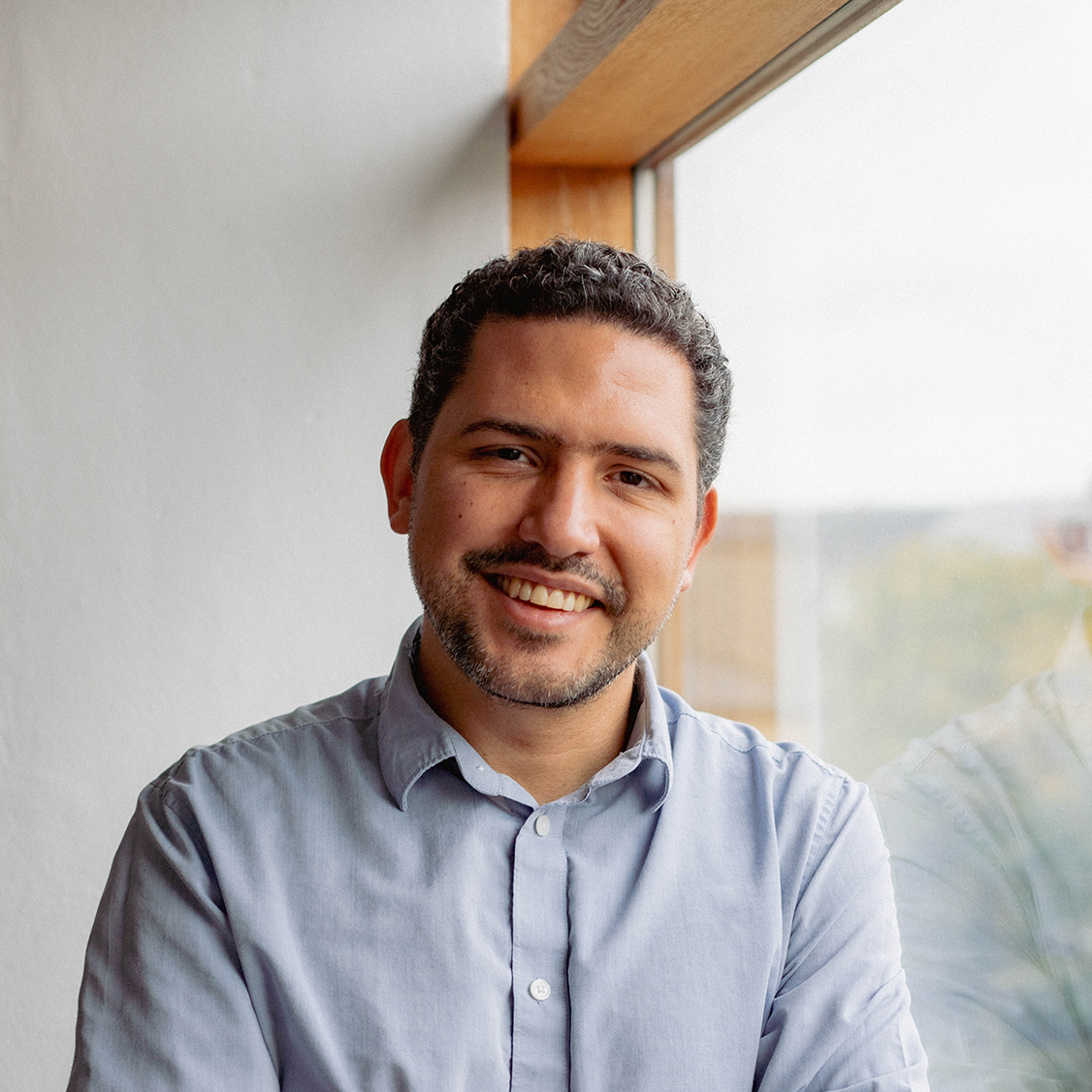











PhD at the Department of Digitalization
At the Department of Marketing, we are committed to offering research-based education that meets high international standards. Our PhD programme provides candidates with a strong foundation in the key theories and methods of marketing, as well as in the specific research areas of their affiliated clusters. These competencies are developed through a series of core PhD courses designed to support both disciplinary breadth and academic depth.
Each PhD student is assigned at least two supervisors — one serving as the primary supervisor — who provide academic guidance and support in relation to coursework, teaching responsibilities, and research development.
Interested in a PhD with us?
Employees (Panel content)
Working at DIGI
DIGI is an interdisciplinary research environment at Copenhagen Business School that brings together scholars, PhD fellows and administrative staff around a shared interest in digital transformation.
We explore how digital technologies shape organizations, markets and society, and we do so in close collaboration across research areas and roles.
All DIGI members are located in the same building at CBS at Howitsvej 60 at Frederiksberg.
This proximity creates a strong sense of community and provides daily opportunities for collaboration, exchange and professional development.
Our employees







Life at DIGI
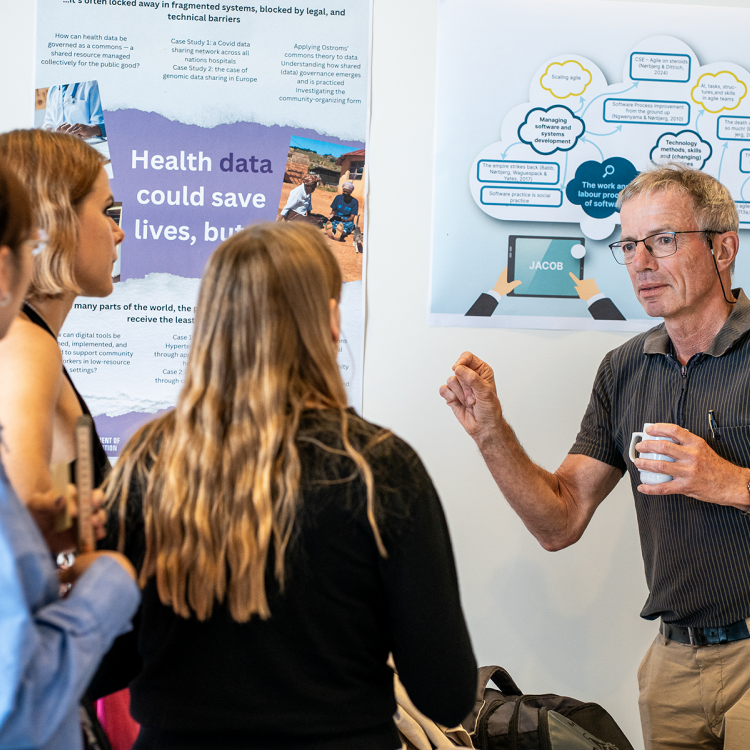
Administrative staff and researchers work together to coordinate teaching, research projects and outreach activities.
This collaboration ensures both structure and flexibility in a workday that is often varied and evolving.

The administrative team supports this work and contributes to creating a coherent and efficient learning environment.
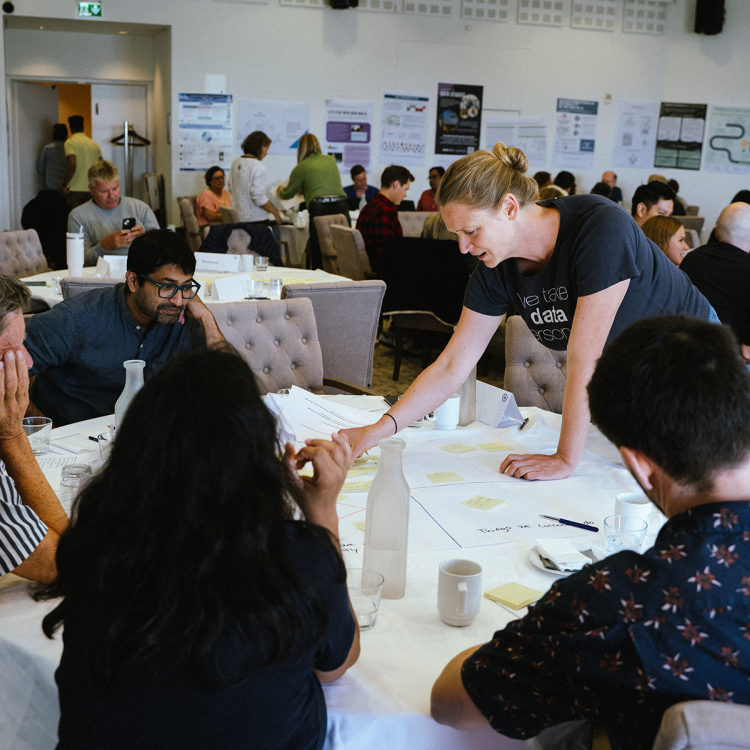
Some weeks are filled with seminars, visiting scholars and student activities; others are quieter and focused on writing and analysis. Across all activities runs a shared commitment to curiosity, dialogue and continuous learning.
Join DIGI
DIGI is always open to collaboration.
We welcome visiting researchers, postdocs and PhD students who share our interest in digital transformation and who value an open, international research culture.
Learn more about current opportunities through the CBS job portal or reach out to explore potential partnerships.