Navigating uncertainty: How shipping can turn turbulence into transformation
As global shipping faces high sea and shifting trade currents, leaders need the mindset, technology and strategic foresight to chart a steady course, according to Associate Professor Martin Jes Iversen, CBS, and William Eduard, Director at KPMG ESG Advisory Services.
Global shipping sails in turbulent waters: Trade disruptions, shifting alliances and geopolitical shocks are forcing companies to act fast - and to act smart:
“Disruption has always been both a challenge and an opportunity,” says Associate Professor Martin Jes Iversen of Copenhagen Business School: “The real question is how to turn volatility into tangible opportunities.”
William Eduard, Director at KPMG ESG Advisory Services, adds:
”Companies that integrate advanced technology across their operations - from AI orchestration layers to quantum-inspired optimisation - will not only be able to navigate uncertainty but also unlock new opportunities for efficiency, resilience and sustainable value creation.”
The paradox of delay
That said, the road to these opportunities is paved with both paradoxes and lessons from history. For instance, Martin Jes Iversen points to what he calls the ‘paradox of delay’ – meaning that when geopolitical events disrupt global supply chains, customers suffer from longer lead times and higher costs, yet shipping companies often record exceptional earnings:
“That is a strange and uncomfortable truth. When world trade slows down, the cost of transport goes up — and the companies that can control capacity suddenly make money from scarcity rather than scale.”
But that situation, he stresses, is not sustainable:
“The question is how you translate short-term windfalls into long-term competitiveness. If the customer’s pain becomes your profit, you are building on shaky ground.”
From history - from the oil crises of the 1970s to the container shortage during the pandemic - we can learn how geopolitical shocks have repeatedly reshaped maritime business models:
“The winners are those who manage to transform crisis profits into innovation. That could mean investing in fleet technology, building digital infrastructure or aligning more closely with customer needs,” Martin Jes Iversen says, adding that the practical challenge for today’s companies is to act before the next disruption hits - by using periods of high freight rates to modernise fleets, strengthen data integration, and deepen customer partnerships rather than defend the status quo.
He also notes that the current decade resembles the 1970s in one crucial way:
“The global order is fragmenting again. Instead of one integrated trading system, we’re seeing the emergence of competing blocs. That changes the very geography of shipping - not just the routes, but the relationships between ports, suppliers and cargo owners.”
Get the key insights
What does geopolitical uncertainty mean for the shipping industry? Hear what Martin Jes Iversen and William Eduard have to say.
From geopolitics to strategy
If geopolitics once defined the external environment of shipping, it is now becoming part of the strategic core. Companies must learn to anticipate not just market shifts but political ones - and to build flexibility into every part of the organisation.
That is where William Eduard sees the next frontier:
“Adaptability, efficiency and resilience are essential to navigating unpredictable times. Adaptability keeps us ahead, efficiency drives smarter operations, and resilience ensures continuity - if and when it is grounded in strong capabilities and systems.”
William Eduard’s focus is on how technology can underpin these capabilities:
“Most companies already have Salesforce, SAP or similar systems - each with its own AI layer on top. That works fairly well, but what’s really interesting is when you build an AI orchestration layer that connects them all into one data pool. Suddenly, every function - from finance to operations to HR - can interact with AI through a single, structured layer.”
This, he argues, is where strategy meets technology. Companies that want to stay agile need to break down data silos, train decision-makers to use AI insights and build cross-functional teams that can act fast on shared intelligence.
The result is more than just automation:
“It’s efficiency - in computation and in human capital,” William Eduard explains:
“New employees can get up to speed faster. Decision-making improves because the organisation shares one set of data. That’s how you create not just digital tools but organisational intelligence.”
Quantum efficiency and the power of scale
If AI represents the next step in operational coherence, quantum-inspired optimization could redefine what efficiency means altogether.
“Quantum computing uses mathematical principles that have existed for decades,” explains William Eduard, “But the computational power is beyond anything we’ve had before. Problems that would take years to solve can now be cracked in minutes.”
The potential for the shipping industry is enormous, he says:
“With quantum-inspired optimisation, fleet positioning and logistics planning can be recalculated in real time. That’s how you turn unpredictability into performance.”
At the same time, Martin Jes Iversen reminds us that scale has always been the defining force in maritime history, but not always a guarantee of progress:
“Shipping’s great technological leaps have often been about controlling scale. Steam, containers, digitisation have all expanded the playing field. But technology only creates value when it’s linked to strategy and purpose.”
From compliance to competitiveness
For William Eduard, resilience is as much about mindset as about models:
“We work with a simple framework: Control what you can. Influence your partners and customers. Monitor what happens geopolitically so you can adapt faster.”
That thinking also applies to ESG, he says:
“Many companies treated ESG as compliance. But when we reframe it as a business opportunity - finding the investments that reduce both emissions and costs - it changes everything. It’s not about green fuel anymore. It’s about green dollars.”
Turning turbulence into transformation
For both Martin Jes Iversen and William Eduard, the future of shipping lies in connecting technological capability with strategic clarity: “Efficiency alone is not a strategy,” Martin Jes Iversen warns: “You need to connect it to purpose and long-term value creation.”
William Eduard agrees: “The goal isn’t to predict every crisis, but to build systems - human and digital - that can adapt when it happens.”
As Jes Martin Iversen concludes:
“Shipping has always been about movement - not just of goods, but of ideas and innovation. The companies that thrive will be those that treat uncertainty not as a threat, but as a resource.”
Meet the experts

Martin Jes Iversen
Associate Professor and Vice Dean of International Education, CBS. MPA Professor in Maritime Economics, Singapore Management University
Martin Jes Iversens research focuses on strategy and innovation in modern Danish shipping, with empirical studies of companies such as Norden and Østasiatisk Kompani. He explores how firms adapt to changing market conditions and how strategy and innovation is embedded in a broader interest in private enterprise, state relations and the evolution of modern capitalism.
Martin is the author of several books on shipping, and serves on the boards of The EAC Foundation, Fionia Maritime Academy (co-founder) and Udsyn & Indsigt.
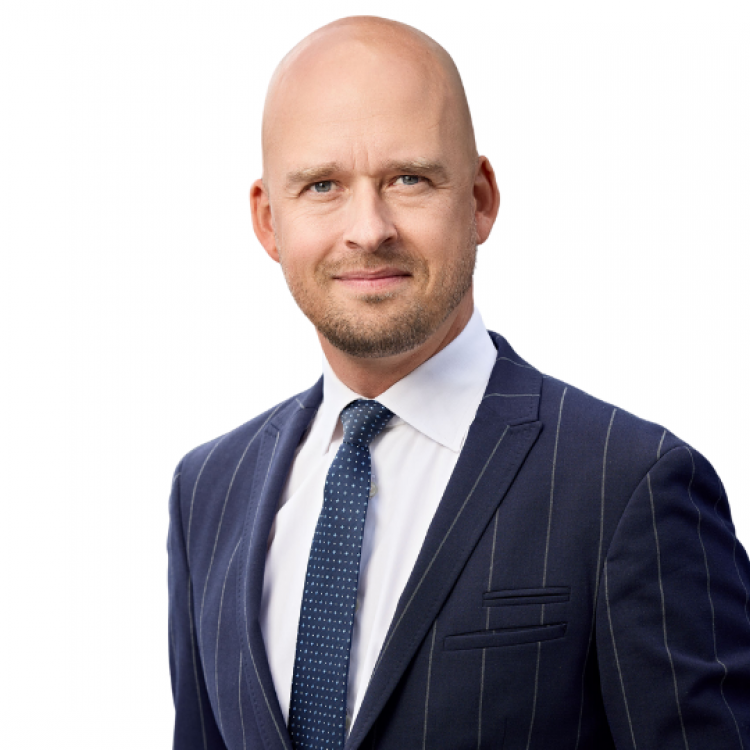
William Eduard
William Eduard specialises in ESG strategy and transformation, advising shipping and transport clients on operational optimisation and strategic challenges. With nearly a decade of experience in dry bulk and chemical tanker industries and seven years in investment banking covering transport equities, he brings deep insight into business value drivers and industry-specific issues. William holds an MBA from Copenhagen Business School, an Executive Certificate in Sustainable Strategies from the University of Cambridge and Graduate Diploma in Finance from Copenhagen Business School.
These insights were shared at a CBS Executive Education event
Explore our offering of events here
KEEP READING

Is Your Strategic Toolbox Up to Date?

Were chief executives of the past also expected to act in an unpredictable world?
The leaders of the future are supply chain savvy
We can learn from China
Your gateway to more knowledge
Did you find this content interesting? Sign up for our newsletter and gain access to more of our research findings and events.
With the world’s grand challenges awaiting us, we need to continuously evolve, gain new knowledge and insights, and upskill.
Dive into a world of knowledge by signing up below. You will get:
- Personal event invitations
- Pertinent research-based insights on business and society
- Information about the next intakes of our Executive Education programmes and courses
KEEP LEARNING

HD2 Maritime
Executive MBA in Shipping and Logistics