Companies must improve their take-back strategies
A growing demand for sustainability and lower resource consumption requires new organisation in companies or partnerships with external actors.

Companies play a vital role in creating a sustainable future, and take-back programs are one of the most effective ways in which they can contribute.
Yet only about 10% of the materials used in production come from recycled products, while as much as 90% of the materials used in production are new. Things can obviously not go on like this.
“There are two basic ways to go around take-back strategies, where you either pursue the functional or material value of the products.” Torben Pedersen
Professor at CBS
To develop knowledge and methods to help companies, we research how companies can transform their organisation and supply chain so that the potential of take-back is maximised. The research is carried out together with a number of ambitious companies experimenting with take-back programmes such as Danfoss, Grundfos, Novo Nordisk and Windowmaster.
Experience shows that it is difficult to get proper scale and a viable business model in take-back programs. An important reason is that it places great demands on companies to create consistency between the take-back strategy and the companies' operational organisation. The company is often not 'tuned' to handle and implement a take-back strategy in practice.
Two strategies to choose from
Take-back programs are particularly challenging because of organisations' current "one-way design" where they extract, produce, consume and throw away. Take-back means that companies must take on activities that are new to them.
There are two basic ways to go around take-back strategies, where you either pursue the functional or material value of the products. The functional value strategy means that the products are collected for repair and upgrade so that they can come back to the market again and be reused. The material value strategy means that products are collected and crushed so that the basic materials are utilised in recycling.
The two strategies place very different demands on companies and how take-back is organised most effectively.
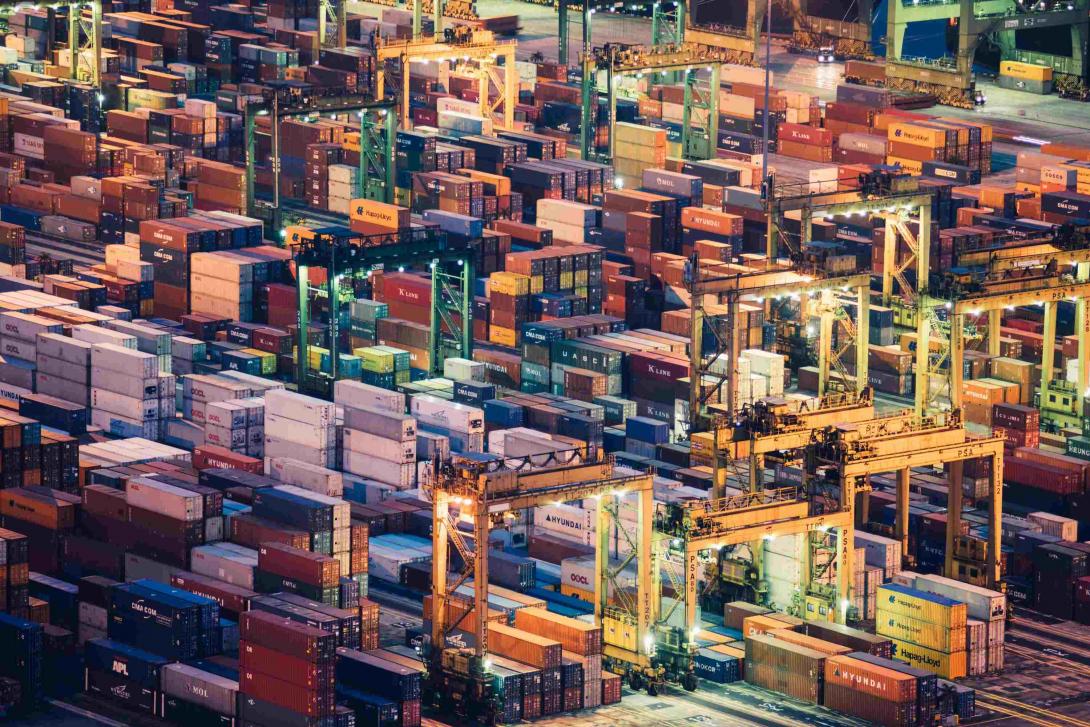
Upcoming event: Ports as Global Value-Creators
This engaging seminar will challenge the traditional view of ports as mere infrastructure providers and introduce a dynamic perspective where they are instead seen as active participants in value-creation processes.
Functional strategy
A functional value strategy typically places high demands on internal organisation and resources. For example, companies must have the capacity to disassemble products and test, replace or upgrade components to preserve their identity and function.
This requires knowledge of the different product variants that are returned and which components are included in these. Here, a simple thing like serial number can be a challenge because organisations' IT systems do not accept the reuse of a serial number at the product or component level.
Another challenge is KPIs, which typically support low inventory binding, where take-back of products increases inventory binding.
Material strategy
Conversely, the material value strategy places great demands on partnerships with external actors such as logistics companies and waste management specialists. A typical challenge for companies is to find partners for large-scale recycling, just as it is not straightforward to ensure data and quality throughout the chain to avoid accusations of greenwashing.
While the functional value strategy is about building new internal competencies, the focus of the material value strategy will be to establish an ecosystem with external partners that handle the majority of the take-back program.
“There is no doubt that the implementation of take-back programs is a challenge, but it is a challenge that cannot be ignored.” Rasmus Jørgensen
Postdoc., Department of Strategy and Innovation at CBS
The functional value strategy is mainly about internal competencies, as the company itself knows the different product variants best and is therefore best equipped to upgrade and guarantee the function and quality of the products. In the material value strategy, the products will be degraded into their original material such as plastic, glass and metal, which will typically be used in other products where the requirement for purity of the materials is less. Here, logistics and waste management companies will be central to the take-back programme.
An adamant task
There is no doubt that the implementation of take-back programs is a challenge, but it is a challenge that cannot be ignored. The development of a take-back programme is simply a daunting task, as more and more companies will be forced by legislation, customers, suppliers and investors to initiate take-back programmes.
However, the choice of strategy depends on several factors, including the characteristics of the product, existing competencies, risk appetite, capital and market requirements
LEADERSHIP IN FOCUS
KEEP READING
CBS researcher: “The EU will be caught between the US and China – and unless we take drastic action, it will come at the expense of our welfare”

Creating Traceability in Textile Production
Managing Global Supply Chains in an Era of Turbulence

How can service become a differentiator in a highly competitive market?
We can learn from China
Your gateway to more knowledge
Did you find this content interesting? Sign up for our newsletter and gain access to more of our research findings and events.
With the world’s grand challenges awaiting us, we need to continuously evolve, gain new knowledge and insights, and upskill.
Dive into a world of knowledge by signing up below. You will get:
- Personal event invitations
- Pertinent research-based insights on business and society
- Information about the next intakes of our Executive Education programmes and courses
Keep learning

Strategy & Geopolitics

Master of Business Development

Green shipping and Port Management

International Shipping Governance