Department of Organization
The Department of Organization explores organizational processes and challenges from a problem-oriented, interdisciplinary social science perspective, focusing on the role of transforming business with society through research, teaching and outreach.

About the department (Panel content)
Who we are
At the Department of Organization, we engage with business and society through our research and teaching to address pressing challenges and contribute to public problem solving. We communicate actively about our research findings and strive to be innovative in our teaching of students. Organizing for a responsible society is a prime driver, and we invite you to a dialogue about common challenges
80 researchers
13 administrative staff
125 external lectures
Insights, News and Articles


About us
Strategy
There are five interconnected areas upon which IOA will focus on strategically in the coming years:
(1) We explore important societal challenges and address them from the vantage point of the department’s research areas,
(2) We seek external funding in relevant places that will enhance our research agenda
(3) We communicate about our research to relevant stakeholders in organizations.
(4) We teach in original ways and in areas of importance to CBS and we keep exploring the masters (kandidat) reform and the changes it brings,
(5) We take care of each other and foster a safe and healthy work environment
Head of Department
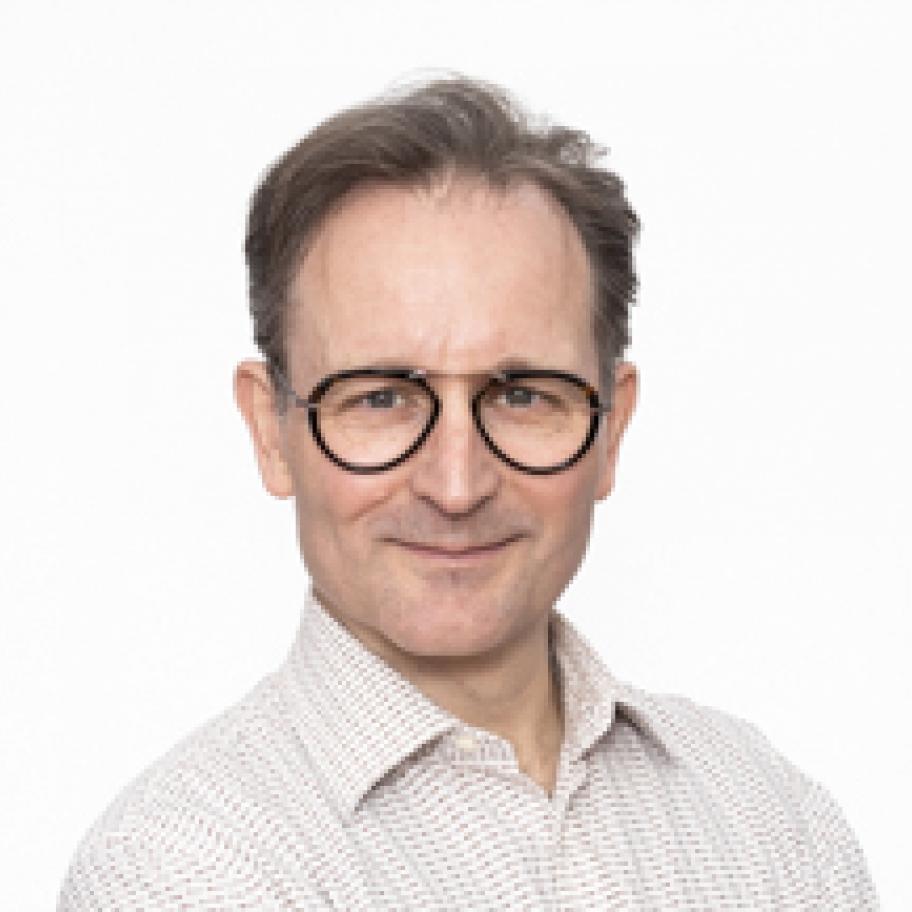
“At the Department of Organization, we engage with business and society through our research and teaching to address pressing challenges and contribute to public problem solving. We communicate actively about our research findings and strive to be innovative in our teaching of students. Organizing for a responsible society is a prime driver, and we invite you to a dialogue about common challenges”
Carsten Greve, Head of Department
History
Since its establishment in 1953, the department has been a leading international research environment for organization theory and organization studies. Since then, the department has expanded its focus to integrate research on organizing as it relates to political economy, as connecting organizations to how societies are governed and replicated is important. We strive to maintain and extend this heritage by prioritizing ambitious collaborative research projects, recruiting and developing talent, and collaborating with international research institutions, public and private organizations and industries, as well as with our students.
The department was established by Torben Agersnap and colleagues in 1953 as Department of Organization and Work Sociology – IOA (the A stands for ’arbejdssociologi’ in Danish). In 2007, the name was shortened to Department of Organization, but kept the abbreviation ’IOA’.
Being an External Lecturer at IOA
“Research communication is a natural extension for us from doing research and teaching students. Our department has a tradition for collaborating and working with practice to addressing society’s problems. Engaging, exploring and empowering are our keywords.” Carsten Greve
Head of Department

Events at IOA


Societal impact
We focus on how interdisciplinary approaches to organizing can help address important and grand challenges. In a nutshell, we employ our research-based knowledge on organizations and organizing practices in a political-economic context to explore and analyze problems and issues that matters for life in organizations in society
We have a Research Communication prototype that focuses on exploring, engaging and empowering.
Our research spans private companies, public institutions, and NGOs, contributing to more inclusive, transparent, and resilient organizational practices.
Collaboration and Outreach
At IOA, we collaborate with private and public sector partners and academia to address societal challenges. Through research, teaching, and outreach, we share knowledge, foster dialogue, and work toward organizing for a more responsible and sustainable society.
Academia
At IOA we collaborate with Academia to address societal challenges.
Public Sector
We collaborate with public sector partners
Private Sector
We collaborate with private sector partners
Organising Green Transition
Sustainability is a core principle at the Department of Organization (IOA), shaping our research, teaching, and daily practices. We aim to contribute to society by exploring how organizations can be governed responsibly in response to global challenges. IOA supports CBS’s Green Transition Initiative and seeks new ways to drive sustainable change. In 2023, faculty initiated a mapping of sustainability-related research, which was funded and expanded in 2024. This grassroots project highlights IOA’s proactive role in advancing the sustainability agenda—within CBS and beyond.
Our mission is to sustain and grow IOA’s momentum in sustainability. We aim to keep CBS and IOA’s community engaged and aware of our department’s transformative potential. Through seminars, teaching cases, master classes, and collaborative research, we explore how sustainability can be embedded in organizational life. This growing portfolio of activities invites students, researchers, and professionals to take part in shaping a more responsible future. On this site, you’ll find a curated overview of IOA’s sustainability efforts—demonstrating how academic research can support the green transition.
Organising Green Transitioning
Everyday practises
IOA is an international department with high activity and travel. To reduce its climate impact, IOA follows a strict sustainability policy: minimize air travel, prioritize eco-friendly transport and vegetarian catering, and support remote participation
Green news
IOA researchers contribute to the green transition through publications, panels, workshops, and teaching. Recent highlights include articles on sustainability, climate leadership masterclasses, and international debates on green governance and post-growth futures. You can read more here:... Indsæt link
Sustainability mapping
In 2023, IOA mapped it’s sustainability-related research and teaching. Results showed that 12.6% of IOA courses relate to green transition, and 34 staff contributed to 83 green publications from 2018–2022. The mapping highlights IOA’s growing role in sustainability and climate-focused education and research. Indsæt lin
Organisation and the ecological crisis - a lecture series
This is a series of public lectures in which connoted scholars present research addressing the ecological crisis and organization. Speakers focus on their research’s concrete suggestions for how we can better organize and / or on the impact of their work for new and more productive forms of scholarly societal engagement today. The lecture series serves as a platform for discussion, networking, and collaboration among scholars, educators, students, and experts.
20. October 2026 from 15:00-17:00
Lecture 7: How to organize academic collaborations in an ecological crisis.
This session takes the form of a panel discussion rather than a traditional lecture. We have invited directors of research centres that address the ecological crisis from different disciplinary perspectives and through different forms of collaboration. The aim is to learn from their experiences in building and leading interdisciplinary research initiatives. Each panellist will: (1) introduce the research centre they direct, including its purpose and organizational structure; (2) explain how the centre organizes collaboration across disciplines and with practitioners outside academia; and (3) reflect on what has and has not worked in their efforts to build successful and impactful collaborations.
Speakers
- Professor Steffen Dalsgaard: IT University Centre for Climate IT
- Professor Frida Hastrup: University of Copenhagen Centre for Sustainable Futures and Green Solutions Centre
- Professor Michael Z. Hauschild: Danish Technical University’s Centre for Absolute Sustainability
- Associate Professor Barry Ness: Lund University Centre for Sustainability Studies
September 23, 2026, from 15:00-17:00
Lecture 6: How to be(-come) a climate economic expert?
In a recent paper, Troels Krarup and Peter Karnøe demonstrate how, for more than three decades, the Danish Economic Councils have consistently opposed all forms of support favoring green energy technologies such as wind power and instead advocated a uniform carbon tax as the most efficient instrument for achieving climate and environmental goals. Significantly, while the councils’ advice has remained the same, wind power has transformed the energy system. In this seminar, the authors take their critique of the Danish Economic Councils as a point of departure for a discussion of expertise and the ecological crisis. Critiquing economic expertise is somewhat commonplace; offering an alternative economics less so. The seminar takes up the more difficult task that follows from their critique, reflecting not only on possible suggestions for an alternative economics, but also their own expert positions.
The talk will draw extensively on the article ‘Carbon tax, not subsidies: three decades of Danish economic council advice against green industrial policy’. Troels Krarup, Peter Karnøe. Socio-Economic Review, Volume 24, Issue 3, July 2026, Pages 1689–1707, https://doi.org/10.1093/ser/mwag028
Troels Krarup is an Associate Professor at the Department of Planning at Aalborg University (Copenhagen Campus) working on the role of markets in the governance of the European energy transition.
April 13 2026, 15-17
Lecture 5: Individual Climate Action with Impact: Five Climate Superpowers to SHIFT the System
Speaker: Kimberly Nicholas, Professor of Sustainability Science, Lund University Centre for Sustainability studies.
Most people know climate change is a problem and want to help solve it. But too few are taking high-impact climate action, using their limited time and resources effectively to really make a difference. In this hands-on talk, Kimberly Nicholas shares her new personalized climate action guide, focusing on a handful of key actions within five “climate superpowers”: Citizen, Professional, Investor, Consumer, and Role Model, to bridge between individual and system change. Developed in partnership with Project Drawdown, The Super High-Impact Initiative for Fixing Tomorrow (SHIFT, https://jointheshift.earth/) helps people understand the power in their context – what roles they play, what resources they have – and then prioritize actions that punch above their weight. The lecture will include insights on some of the most high-impact individual climate actions and get the audience started on their own climate action journey using hands-on exercises.
March 18 2026, 15-17
Lecture 4: Can we all be Climate Killjoys? On Critique, Complicity, and Collective Action
Speaker: Laura Horn is Associate Professor in Political Economy at RUC, and an activist with Scientist Rebellion.
What are the tensions, trade-offs, and possibilities for solidarity in being both scholar and activist? In this talk and discussion, I will reflect on experiences and examples of climate-related civil disobedience actions in Denmark, as well as my own positioning as scholar activist. As TR/shop steward, I am closely familiar with forms of collective action and solidarity within Danish institutions, but also aware of their limits. Where does this leave me, and us, in this time when the world is burning and the university as critical institution is under attack?
October 1 2025 15:00-17:00
Lecture 3: Can Economics Be Ecological?
A Dialogue with Inge Røpke In this seminar, Inge Røpke – Denmark’s first professor of ecological economics – will reflect on what we can learn from the trajectory of ecological economics.
The seminar will cover three main themes: (1) What happens to economics when we add “ecological”? How ecological economics has attempted to redefine the foundational building blocks of the discipline. (2) What has been the trajectory of ecological economics in Denmark? Røpke will reflect on her own experience – both as an academic and as a public figure – and the successes and failures of advancing ecological economics in a Danish context. (3) Why we need to pay attention to sufficiency. Røpke will discuss how sufficiency should become a political and societal goal if we are to develop an ecological economy.
May 13 2025 15:00-16:30
Lecture 2: Silent Storm: How Business Schools Can Find Their Climate Voice
Pratima (Tima) Bansal is a Professor and Canada Research Chair of Business Sustainability at the Ivey Business School, Western University (London, Canada).
Are business schools helping to solve the climate crisis or perpetuating business models that accelerate it? Management scholarship generally rewards theoretical contributions over real-world impact. With clear evidence that the climate crisis has exceeded planetary boundaries and with many businesses retreating from their net zero carbon commitments, I propose that business schools need to play a central role in not just theorizing change, but catalysing climate action through transdisciplinary and multifunctional dialogue. Business schools need to not only build scientific models but integrate that knowledge into practical tools. These tools need to be developed in dialogue with practice, not independent to it. I argue that management scholars are uniquely positioned to foster dialogues between corporations, scientists, and policy makers, yet doing so requires scholars to shift from focusing on puzzles to focusing on problems.
March 2026 from 15:00-16:00
Lecture 1: In praise of (indicative) planning
Cornel Ban, associate professor, Department of Organization, Copenhagen Business School
Jacob Hasselbalch, associate professor, Department of Organization, Copenhagen Business School
In this lecture, Cornel Ban and Jacob Hasselbalch draw on a recent paper, ‘Green economic planning for rapid decarbonization’ published in the journal New Political Economy, to defend the urgency of bringing planning back to political and academic priority. The argument will unfold in three steps. (1) It has become increasingly obvious that the ecological crisis will not be sufficiently addressed with market-based coordination. We necessitate more and better planning. Academic and political debates, however, are often paralyzed with the opposition between socialist central planning and capitalist decentralized markets. The historical conundrum the ecological crisis poses is how to better plan in the context of contemporary capitalism. (2) We revise two different traditions which have demonstrated how planning can successfully work in advanced capitalist democracies. First, the tradition of indicative planning: state economic planning conducted in response to market failures in countries such as the Netherlands, Denmark, and Japan. And second, planning in large corporations such as Ikea, Toyota or Walmart. (3) The lecture ends with an agenda for how to bring planning to the center of research and practice of economic organization.
Podcasts at IOA
Organisationers verden (in Danish)
In this podcast we explore the development of organizational theory – from classical to more recent perspectives on learning, decision-making, and entrepreneurship.
CBS Sustain
This podcast series explores the green transition across sectors like food, energy, and public services. Researchers share insights on turning climate goals into action, offering guidance and inspiration for businesses, institutions, and public leaders.

Centres and research groups in the department
We have 2 centres and 4 research groups
Centre for Organization and Time (COT)
Centre for Organizational Research on Impact (CORI)
Organizations, Markets and Governance (OMG)
People and Organizing (PnO)
Research, Innovation and Organization (RIO) Group
WETO – Work, Expertise, Technology and Organization
Research and publications (Panel content)
Our research
At the Department of Organization (IOA), our research focuses on the processes of organizing and their societal consequences. We adopt a problem-oriented, business-in-society approach to explore how organizations function, evolve, and influence broader institutional and market dynamics.
Our primary research areas include:
- Organization and time
- Organization and impact
- Organization, markets and governance
- Organization, research and innovation
- Organization and people
- Organization, work, expertise and technology
Through empirical curiosity, methodological rigor, and critical thinking, we aim to generate value by producing actionable insights that help organizations navigate complexity, foster innovation, and respond to societal needs.
Impact in society
We contribute to solving societal challenges by:
- Investigating how organizations adapt to economic, technological, and political shifts
- Exploring the governance of markets and institutions
- Enhancing understanding of human relations and daily work practices
- Addressing issues of power, inequality, and sustainability
Our interdisciplinary team draws on traditions from sociology, political economy, anthropology, social psychology, philosophy, and science and technology studies, enabling us to set academic agendas and inform public debate both nationally and internationally.
Publications
See all publicationsdecember 2026
Linked Opacities: How Fragmented Transparency Regimes Undermine Accountability in the Extractive Sector
In: Critical Perspectives on Accounting. 104, 1045-2354, 17 p.
Journal article

december 2026
Validation of the Danish Psychosocial Questionnaire (DPQ) in a Swedish Healthcare Context
In: BMC Health Services Research. 26, 1472-6963, 14 p.
Journal article
Alexander Agrell
Susanne Tafvelin
Thomas Clausen
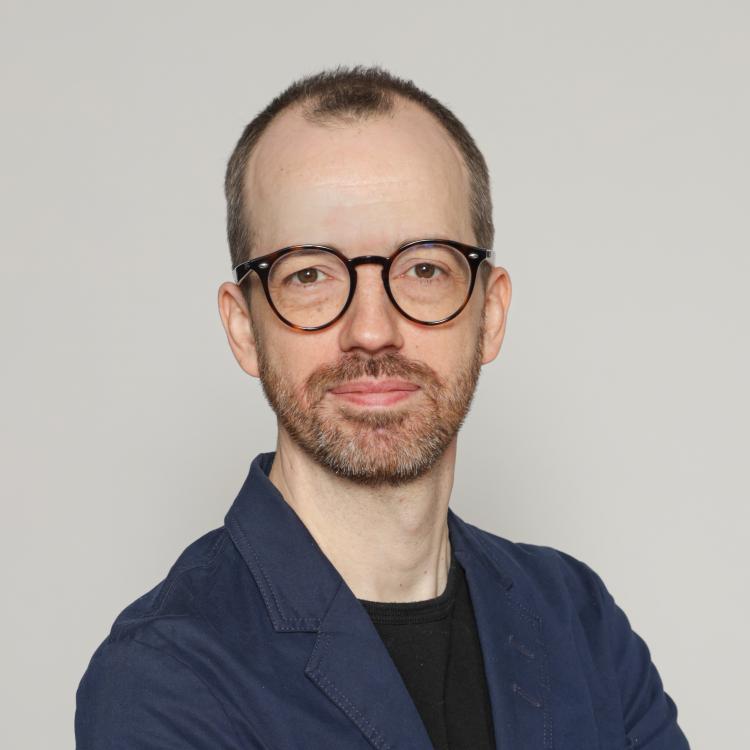
Johan Simonsen Abildgaard, Associate Professor
Jens Wahlström
Robert Lundmark
8. oktober 2026
Mange forskere viger bort fra Israel-Palæstina-debatten
In: Politiken, 2026-10-8, p. 5-6
Contribution to newspaper - Feature article
Our research groups and Centres
Organizations, Markets and Governance (OMG)
OMG brings together scholars in political economy, economic sociology, geography, and organization studies. The group explores how markets are shaped and governed across levels. Research includes national and transnational cases using qualitative and computational methods, as well as seminars. text
People and Organizing (PnO)
At PnO, we explore how people shape and are shaped by organisational life. Through practice-oriented, qualitative research, we address real-world challenges in collaboration with professionals. Our work bridges academic insight and societal impact, focusing on everyday experiences, dilemmas, and change
WETO – Work, Expertise, Technology and Organization
WETO explores how work, expertise, and technology shape and are shaped by organizational life. Using qualitative methods and social theory, we study how technologies and expert knowledge influence power, coordination, and authority across sectors like energy, agriculture, and healthcare
Center for Organizational Research on Impact (CORI)
CORI was established in 2023 to support CBS’ impact agenda and to create synergy among several larger grants allocated to its core members. Members of CORI conduct organizational research on various relationships between academia and its societal stakeholders.
Research, Innovation and Organization (RIO) group
The Research, Innovation and Organization (RIO) group is a collective of scholars at the Department of Organization (CBS) studying the organisation of research and innovation across public and private spheres.
Center of Organization and Time (COT)
The Centre for Organization and Time (COT) explores how organizational actors experience and enact time — and how time, in turn, shapes organizations and society
Leadership Centre
.
Externally funded projects
AI Triage in Pregnancy and Postpartum
Innovationsfonden
Public National
PI: Professor Frans Bevort
Start date: 01/05-25, End date: 30/04-28
Algorithms, Data and Democracy (ADD)
Velux og Villum fonden
Private National
PI: Professor Leonard Seabrooke
Start date: 01/04-21, End date: 28/02-31
Build. Res. on Artificial Intelligence for Innov.
DFF - Danmarks Frie Forskningsfond
Public National
PI: Professor Megan Tobias Neely
Start date: 01/02-25, End date: 31/01-29
CLONE
Velux Fonden
Private National
PI: Professor Christoph Houman Ellersgaard
Start date: 21/06-22, End date: 31/01-28
DERISK: How Firms Navigate De-Risking Regimes
Research Counsil of Norway
Public International
PI: Professor Johann Ole Willers
Start date: 01/09-25, End date: 31/08-29
Documenting Workplace Inequality
Carlsberg Fondet
Private National
PI: Professor Lasse Folke Kikkert Henriksen
Start date: 01/01-25, End date: 31/12-27
Forening af en økosystembaseret (EcoCorp fase 2)
Velux Fonden
Private National
PI: Professor Lise Nederland Justesen
Start date: 01/11-25, End date: 30/10-29
Governing Green Transition
Danida Fellowship Centre
Public National
PI: Professor Peter Byrjalsen Gammeltoft
Gæsteforskerophold på SCANCOR - Weatherhead center
Otto Mønsted Fond
Private National
PI: Professor Lise Nederland Justesen
Start date: 28/08-25, End date: 07/12-29
Magtudredningen 2.0
Uddannelses- og Forskningsstyrelsen
Public National
PI: Professor Nanna Mik-Meyer
Start date: 01/01-23, End date: 31/12-28
Making distant future actionable
Novo Nordisk Fonden
Private National
PI: Professor Majken Schultz
Start date: 01/01-21, End date: 30/06-25
Mapping Alternative Knowledge (MAKRO)
Carlsberg Fondet
Private National
PI: Professor Oddný Helgadóttir
Start date: 01/04-24, End date: 31/03-27
NAVIGATOR
Horizon Europe (HE)
EU
PI: Professor Eleni Tsingou
Start date: 01/03-23, End date: 28/02-27
Nye introduktionsforløb og borgernære karriereveje
Arbejdstilsynet
Public National
PI: Professor Johan Simonsen Abildgaard
Start date: 01/02-25, End date: 31/01-27
OMF gæsteprof. 2024 Ulla Eriksson-Zettequist
Otto Mønsted Fond
Private National
PI: Professor Signe Lise Vikkelsø
Start date: 01/04-21, End date: 28/02-31
Org af somatiske behandlingsforløb
Carelink Fonden
Private National
PI: Professor Kirstine Zinck Pedersen
Start date: 04/03-25, End date: 30/10-27
Organisering af psykisk sygdom og kræftbehandling
Kræftens bekæmpelse
Private National
PI: Professor Kirstine Zinck Pedersen
Start date: 01/01-26, End date: 31/12-28
Phd International research
SDC Danmark
Public National
PI: Professor George Alan Irwin
Start date: 01/09-23, End date: 31/08-26
Plasten I det cirkulära samhället
FORMAS
Public International
PI: Professor Jacob Adam Hasselbalch
Start date: 01/12-21, End date: 30/11-26
Politiets håndtering af ofre for partnervold
Rådet for Offerfonden
Public International
PI: Professor Elisabeth Naima Mikkelsen
Start date: 01/12-23, End date: 30/11-26
Record Keeping in frontline work (RECORD)
Danmarks Frie Forskningsråd - DFF
Public National
PI: Anne Mette Møller
Start date: 01/08-24, End date: 31/01-27
Straid Sexual Transgression in Aid Humanitarian
Danmarks Frie Forskningsråd - DFF
Public National
PI: Professor Morten Thanning Vendelø
Start date: 01/09-23, End date: 21/12-26
The impact of big funding
Novo Nordisk Fonden
Public National
PI: Professor Jane Bjørn Vedel
Start date: 01/04-23, End date: 31/12-29
The implications of large-scale grants
Carlsberg Fondet
Private National
PI: Professor Jane Bjørn Vedel
Start date: 01/09-2, End date: 31/08-26
The Politics of Time
DFF- Danmarks Frie Forskningsfond
Public National
PI: Professor Miriam Feuls
Start date: 01/12-25, End date: 31/11-28
TITAN
Velux Fonden
Private National
PI: Professor Eva Boxenbaum
Start date: 14/09-25, End date: 30/08-26
Education (Panel content)
Our programmes
IOA offers research-based teaching and supervision at all educational levels. Bachelor, Master, PhD and Executive Degrees are considered to be equally important.
Our teaching fosters change agents through research-based, action-oriented pedagogy. We integrate external lecturers via a DVIP strategy and ground teaching in current departmental research. Key areas include organization theory, HRM, leadership, and methodologies.
We aim to develop analytical, critical, and responsible practitioners. Teaching is coordinated by Associate Professor Emil Husted. Quality is ensured through CBS’ Assistant Professor Programme. Our approach blends theory, reflexivity, and practical relevance.
Bachelor Programmes
IOA is offering the following research based Bachelor programmes:

HA i projektledelse
HA(psyk.) - erhvervsøkonomi og psykologi
BSc in International Business and Politics
BSc in European Business
Department of Organization also provides comprehensive teaching materials that support and enrich the European Business program, ensuring students have access to relevant resources throughout their studies.
European Business is a business economics program with a specialization in European affairs. We take Europe as our starting point because solutions to the challenges faced by Danish companies require knowledge of European economics, an understanding of the importance of cultural diversity in Europe, as well as familiarity with political institutions and processes at both the EU and member state level
Master Programmes
IOA is offering the following research based Master Programmes:

MSc in Economics and Business Administration in Strategy, Organisation and Leadership
Cand.soc. i Human Resource Management
Cand.merc.(psyk.) - erhvervsøkonomi og psykologi
MSc in International Business and Politics

MSSc in Public Management and Social Development
Cand.merc. - People and Business Development
Department of Organization also provides comprehensive teaching materials that support and enrich the Cand.merc. People and Business Development program, ensuring students have access to relevant resources throughout their studies.
People and Business Development gives the candidates the keys to understand why and how the organization’s people and human capital becomes the key drivers of business development and transformation in modern organizations.
The people strategies and human capital tools including talent management, people analytics, competence advancement, rewards and compensation are core elements in coping with today’s business challenges like agility, digital transformation and sustainability.
The People and Business Development aims to develop candidates who equipped to do data- and theory based analysis of the highest level and aiming at three specific areas of interest. The concentration is based on the analysis that modern people strategies and human capital, needs to focus on context, value and change in order to make the management and staff working with human capital able fulfil their potential as business partners and change agents.
Executive education
IOA is offering the following research based Executive Programmes:

Master of Public Governance
Master of Management Development
HD2 Organisation og ledelse
Our PhD programmes
Strong academic community
At IOA, PhD students join a vibrant and supportive research environment. You become part of an international, interdisciplinary community with access to close supervision, peer feedback, and strong methodological training.
A culture of care and curiosity
We combine high academic standards with a collaborative culture. You’ll be encouraged to think critically, work independently, and engage in research that matters—across themes like organization, governance, sustainability, and technology.
Being a PhD student at IOA
Many IOA PhD graduates pursue careers in academia at universities and research institutions in Denmark and abroad. Alumni from the Department of Organization hold positions as researchers, lecturers, and professors, contributing to teaching and research within the field of organization studies.

Impact and career paths for our PhD students
Academic and international career paths
Many IOA PhD graduates pursue careers in academia—at leading institutions in Denmark and abroad. Alumni hold positions at, e.g.:
• King's College London
• IT University of Copenhagen
• Max Planck Institute, Cologne
• Freie Universität Berlin
They contribute cutting-edge research on organizations, governance, and societal challenges.
Bringing research into practice
Our industrial PhDs and other alumni often move into roles in public institutions, consultancies, and global companies:
• VIVE – The Danish Center for Social Science Research
• Novo Nordisk
• Sydbank (ESG)
• Genmab
They use their analytical, methodological, and strategic skills to drive research-based innovation in real-world settings.
PhD programmes within organisation
How to apply
All applications must be submitted through CBS’ online recruitment system. The specific requirements, such as project description, academic transcripts, and CV, are listed in each call. Carefully follow the instructions in the job posting.
Deadline
Each PhD call includes a fixed deadline, which is stated clearly in the job posting. Late applications are not considered. If no open calls are listed, you may wait for the next round or consider applying through externally funded projects.
The application
Your application should typically include:
• A project description (5 pages max)
• CV and academic transcripts
• List of publications (if relevant)
• Documentation of English proficiency
See detailed guidelines under each vacancy.
Programme structure
IOA’s PhD programme is typically a 3-year full-time scheme. It includes:
• Independent research
• PhD courses (30 ECTS)
• Teaching obligations
• International research stay
• Participation in department activities
More details via CBS PhD School.