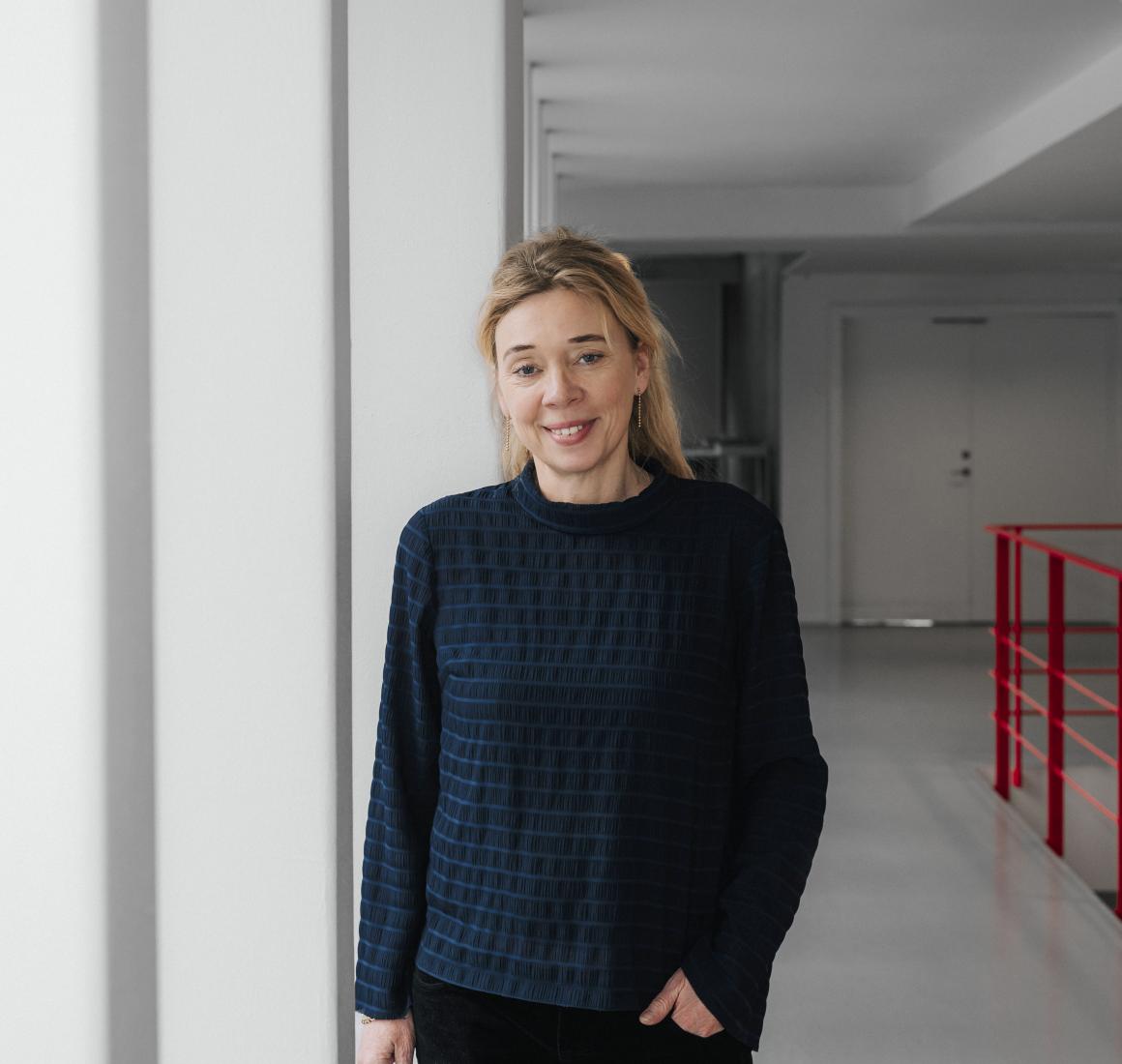
Fired and freed
Fired. For many of us, just the word is filled with shame, worry and taboo. Because in a time when we often equate our job title with our identity, a redundancy can seem terrifying. But it doesn't have to be. Quite the opposite. Meet the CEO, the TV host and the sports director who have all experienced a layoff as a liberation.

"Fear is only something we create in our heads," states Lars Sander Matjeka. There is no shame or concern in his voice, no need to cover up when he is asked about his very public sacking as CEO of the media company Aller. A dismissal that took place in January 2020. Lars Sander Matjeka took over as chief executive of Aller Media in March 2017, and he helped to increase the number of subscribers and turn deficits into profits in the first part of his employment. But disagreement about the future strategy and an unexpectedly bad account in 2019 put an abrupt end to his time in the crisis-stricken media company.
“Change is not dangerous. That's where all the development lies. If we don't welcome change, then we stand still and then we degenerate," says Lars Sander Matjeka, who at the age of 48 and in the middle of a pandemic spoke with liberating optimism about what so many fear most; to lose their jobs.
“Shortly after my dismissal, a journalist asked me how I felt about going from being a top manager to being nothing. 'Nothing'? I didn't understand that question at all. After all, CEO was just a small part of a large whole. There are people for whom the job has become their entire identity, but that's not the case for me. I love my work, but most of all I love being human. Father, husband, writer, friend, columnist, brother, son and board member.”
It didn't take long from when the layoff hit until the pandemic sent large parts of Denmark home. And while many cursed the year 2020, Lars Sander Matjeka has insisted on looking at the shared and personal challenge with a softer perspective.
"From the start I made it clear to myself that I wanted to get the best out of this period. It must not just be a line of thought on the way from one occupation to another. I used the time to feel and do what felt good. I could dedicate myself to homeschooling my children, walking the dogs by the water, meditating, writing a book. I used the time to be present in life," he says.
"We talk a lot about top athletes needing to recover. But we don't talk enough about the fact that top managers need it too. I wish more people could take a long break from their regular job without it having consequences. The dismissal confirmed for me that big changes help shape us as people. And that they always lead you to a better place than the one you came from. My attitude to life is that there is always something good, enriching and valuable to be found in every situation if we look for it.”
It always pays to stand up for yourself
However, Lars Sander Matjeka did not only use the time to look into and cultivate his family. He also spent time cultivating his professional network.
"I feel more relevant, 'connected' and stronger now than before. I was fired and I chose to come out and be very open about that. One of my personal values is honesty. Everything is on loan, and so is that type of job," says the former director, who has not finished managing.
“I would like to join a company that needs a transformation. Where I can stand for a clean-up, a development and light the light in the eyes of others. And then it must be a place where there is agreement between my values and the company's values. It always pays to stand up for yourself - even if it comes at a price. I was fired from Aller, but I stood up for myself. I have also maintained that I must not take the best job first. And I've had to turn down jobs in industries that I didn't feel I could credibly measure up to."

"I am the most fired coach - and the one who has been bought the most times"
The last time Troels Bech left a job, he quit. As sporting director of Brøndby IF, the balance between work and family life was difficult to maintain, but he did it. Despite the fact that he and his wife have a total of eight children together, and his working weeks far exceeded the 37 hours. Troels Bech was effective. Too efficient, he now thinks in the razor-sharp light of hindsight.
“Efficiency is a double-edged sword. Because that is the key to managing a busy job and having a large family at the same time. But you also end up in colossal speed blindness, and it costs something to make all decisions in a race all the time. You don't get time to feel for yourself, and when you can't feel for yourself, neither can others," says Troels Bech.
"When you are a coach and sports director, you live with an extreme drive for performance, where efficiency is praised. You must constantly surpass the last performance and you must constantly be better. The reward was that you felt good enough in the measurable exposed world. But at the same time it is easy to lose sight of yourself.”
Troels Bech has rediscovered that perspective after he quit his job and traveled the world for nine months with his wife, their eight children, a girlfriend and two motorhomes.
"I am the most fired coach in Denmark - and also the most bought. I have tried both four times. It shapes one as a manager that you have an average coaching time of 16 months in each club, and at the same time there can be a large turnover among the players. Everything is so changeable, so a dismissal is also far less dramatic on a personal level, even if it is extremely exposed in public, and you have to deal with yourself in full display," says Troels Bech.
You don't just have to learn from your mistakes
Troels Bech has been successful in keeping his eyes on the ball. Also when it came to his personal career. Therefore, he has not seen it as a personal failure when a dismissal forced him in a new direction.
“When you experience adversity, you can't just 'learn from your mistakes'. My advice would be that you also examine your successful periods. What did you do right? How did you create a success? And then you have to learn something about your own reaction to a layoff. The first time I was fired, I turned it very much on myself: 'What kind of person am I? Am I a failure? Will I ever be hired again?' It was an immature reaction," recalls Troels Bech, who acknowledges that it came because the firing took place with great public attention.
"I am not an all-important factor for Danish cultural life, but there are still opinions about whether I have too many fatty cheeses in my shopping basket when I stand in line at the supermarket. Being a football coach means that you are obliged to be on all the time. You are public in a way that can only be matched by actors and politicians. Therefore, suddenly being without a job can feel like a severe loss of identity. I haven't really felt it because I have been employed again quite quickly. But I would not actually recommend that model. Many believe that they can recover in two or three weeks, but it takes more time to get deeper into yourself. I have lacked the much-needed breaks for restitution in a subject where there is rarely time for reflection.”
As a manager, it is a big problem when there is no time for deep reflection, Troels Bech believes. Because then there will be too many decisions that are made on the basis of repetitive thoughts and familiar routines.
“The more you are in a centrifugal force of work, the more the same thoughts will repeat themselves. The long breaks that give real perspective are the ones that can be counted in months. Something happens on the other side of the break. I have experienced that twice after layoffs and again now here, when I myself quit my job at Brøndby IF. The logic you operate by when you're in a bubble of busyness seems so far away when you're on the other side. It loses its enchantment. You come to question your own beliefs: Why should the mood in the whole family be affected by whether my team plays a draw on a grass field on Sunday?”
Stop doing, start being
Since quitting his job at Brøndby IF, Troels Bech has made it a new habit to question his own beliefs. Throw them up and look at them. It was hard to achieve in the world of football, where everything was about the next win, and where he had to hire an employee to think abstractly for him because he could barely find 30 minutes of undisturbed thinking time in an 80-hour work week.
“I gave it so much gas in a subject where tunnel vision can very easily occur. I chased the target, but didn't get to look at all the side roads. I don't want to call it a hamster wheel, it has such a negative connotation: But I had to stop the wild ride to get back to myself.”
It was his wife, the artist Nille Bech, who opened his eyes to a new path. She woke him up one night and said, that now it had to stop:
“We must not keep doing until we know who we are to be. Many end up letting the work or your chores shape who you are, and Nille made me aware that it should be your goals that shape what you do."
'Stop doing, start being' became the couple's new mantra. They didn't want to let everyday life or their things own them - they wanted to take ownership of their own life and destiny. They would travel the world with all their many children to find a home of their own.
“We had no savings. Just a little equity in the house and then we sold a lot of stuff. And then we had a mental surplus in the account. We simply believed that the universe is generous and that everything works out. It seemed more frightening to continue as we used to," Troels Bech disarms any skepticism that such an impressive project might face.
“I am not advocating that people sell their homes or quit their jobs. But I am advocating that we make time for those rejuvenating breaks with a leave or vacation longer than three weeks. Hold the break from a position you have chosen yourself with strength and conviction. It is often after a period of stress and hardship that you get fired, so maybe we should be better at getting layoffs and hardships in advance."

"I wasn't just my chair at DR"
Journalist and TV host Anja Bo was not surprised when her dismissal from DR came, because it was just one element in a larger round of dismissals in which no one could feel safe. Therefore, she also did not fall into sadness over losing a job she loved. Because she was convinced that there was a golden opportunity in the fact that she was being pressured to make a decision about her future working life.
“I learned a lot from being fired. But most importantly: I learned my own worth. I wasn't just my chair at DR, I was a qualified, talented person who was in demand," says Anja Bo, who today works as an independent consultant, lecturer and moderator.
"I was privileged because I quickly got a lot of offers for lectures and assignments, and therefore I never really experienced the feeling of unemployment. I just said 'yes' to the things that sounded fun and challenging. Also things that I had not tried before.”
It was a steep learning curve. Because even though Anja Bo knew everything about how to manage a debate and put together an engaging lecture, she now also had to learn how to be her own sales consultant and producer. She had to learn how to price herself and put together an offer.
“It was a big eye-opener. Like many others, I thought I was best in a place where I could lean on the leaders. But what I discovered was that I could now quality-assure all my own work, and I got rid of stultifying middlemen. And the doubts I had about whether my skills were needed at all were quickly put to rest. There are a surprising number of companies that need an external, impartial person who can point out blind spots and mediate a debate journalistically.”
Today, Anja Bo is busier than ever. But that was not a given, as she was without a job from one day to the next.
“When I lost my job, I started by focusing on whether the most important elements in my life were in place. And they were. There was no reason to panic, because I was happy and capable, and I have both a good husband and cute children. We were healthy and well. So the foundation was in place, and the identity crisis averted. But because I hadn't quit myself and liked my job, it wasn't painless. Fortunately, I am good at handling crises. I don't sit down and cry; I think instead: 'What do I do now?'".
After all, MU interviews are rarely about the employee's development
The journalist also discovered that it wasn't just her role on television that could do anything. It was herself.
"As employees, we often come to trust the management a little too much. After all, MU conversations are rarely about the employee's development, but rather about us having to be convinced to agree to yet another crazy task or follow a new strategy. It suits my anarchist mind well that I don't have to conform anymore. My task now is to challenge the familiar. When I go into collaborations today, I can ask: What do they really want? What are the goals and what should we try to change on the way there? I am very little conformist, and at the same time I have a well-developed geekiness, which means that I can take on professionally demanding tasks and prepare myself enormously for them.”
For Anja Bo, the unwanted dismissal has been a blessing in disguise. Most of all because she experienced that she gained new ownership over her personal skills – they did not disappear with the company or her dr.dk email.
“That discovery gave me a huge sense of 'empowerment'. The dismissal gave me greater self-esteem and a huge sense of community on top of that. The encouragement from my network was enormous, and I was invited into new professional communities and conversations that I would otherwise never have been a part of.”
But wasn't there something she would have liked to have done without?
“I would have liked to not have met the boss who fired me in the swimming pool. I was completely naked while she was fully clothed because she just had to drop off her child for swimming. But actually it was a very good picture of the situation - I was undressed, open and ready for something new. Maybe that experience was alright too…”
Keep reading

When CEOs cry – Psychological safety and emotional leadership
Becoming a responsible leader
Stay updated on MBD
Sign up for our newsletter and receive our newest research, podcasts and event invitations in your inbox. We send out 6-8 newsletters a year.
Keep learning
Master of Business Development
Executive MBA