Bridging the Gender Gap in Financial Behaviour: A New Research Initiative
Financial decisions have become more privatised, as we now have more information and greater access to these decisions than ever before. Data shows there is a significant gap between men's and women's finances – a gap CBS Professor Arna Olafsson, set to explore, with the hope of creating enough knowledge to minimise these differences in the future.

In a world where financial decisions are increasingly individualised, people are faced with more financial choices than ever before - ranging from consumer credit to investments and savings plans. These choices are crucial for shaping one's financial future. However, research indicates that a persistent gender gap remains in financial behaviour. Women are, for instance, less likely to participate in risky asset markets and if they do participate, they invest a smaller share of their financial portfolio in risky assets. Women thereby do not take advantage of the equity premium to the same extent as men.
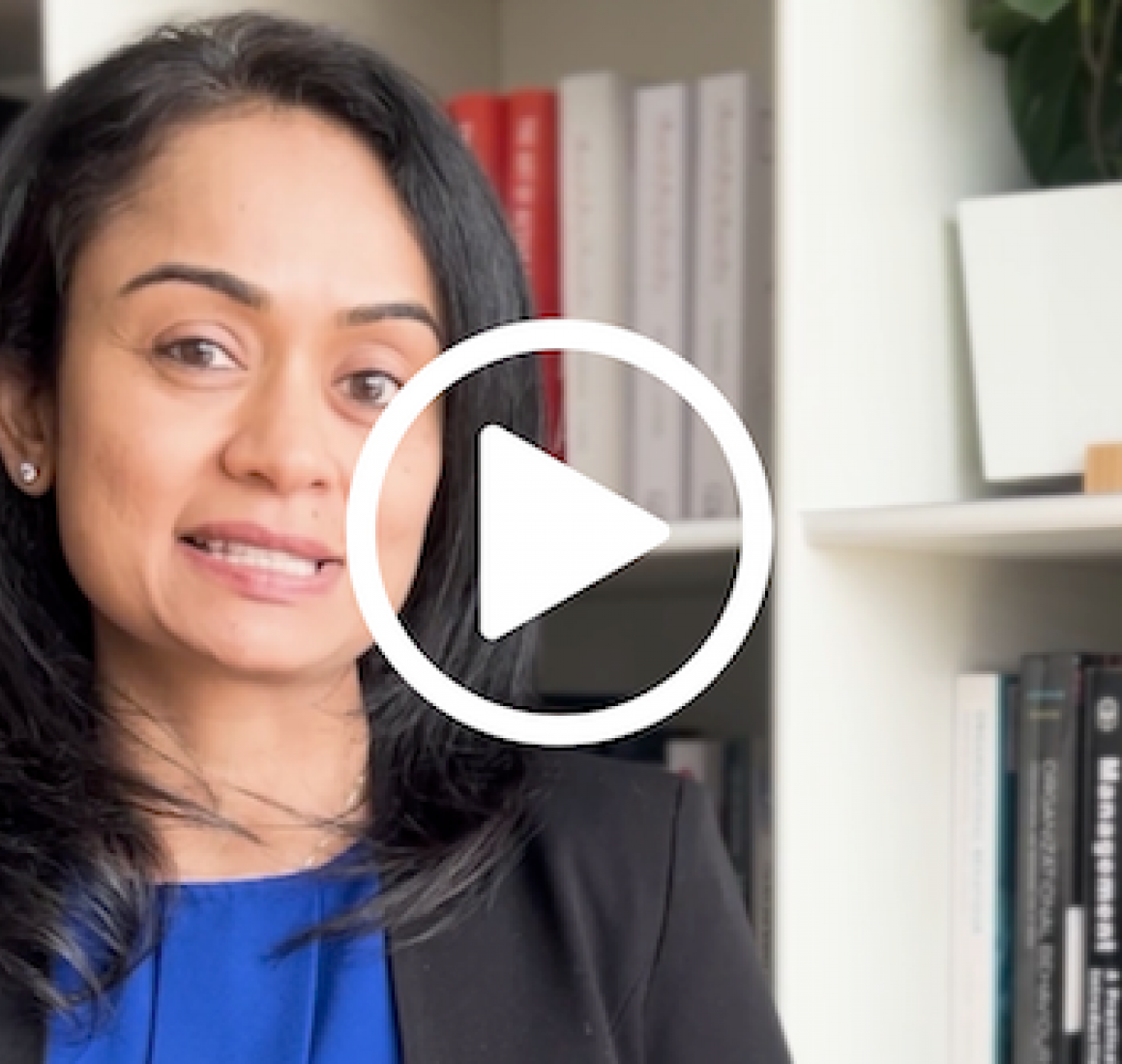
Arna Olafsson, Associate Professor of Finance at CBS and a leading researcher in household finance, is set to change the narrative surrounding these gender differences. As part of a groundbreaking five-year-long research initiative, Arna aims to identify the driving factors behind the financial gender gap - factors that are not yet well understood – which can create the foundation for future policies that can lead to a more equal financial future for all. The extensive research will collect data on every possible parameter in an effort to create a 360-degree understanding of the financial choices in relation to societal factors and life events in the effort of determining when and why the gap between men and women arises.
Parenthood: A Defining Moment in Financial Decisions
A major component of Arna’s research will focus on the role that life events, particularly parenthood, play in shaping financial choices. Previous studies suggest that men and women exhibit similar financial behaviours before becoming parents, but after parenthood there is a distinct shift in women’s financial behaviour.
“Parenthood is a significant turning point for many women,” explains Arna. “It’s not until they become mothers that we see a real shift in their financial priorities.”
For many women, the arrival of children appears to bring a major shift in focus towards immediate family needs, such as child-rearing expenses. As a result, women often reduce their exposure to financial risks and seem to prioritise securing stability for their families over long-term wealth-building strategies.
“Women, after they become mothers, tend to have a sharp drop in their investments and savings,” says Arna. “Their financial behaviour becomes more conservative, and they’re less focused on financial investments.”
In contrast, men tend to maintain their financial strategies after becoming parents, often continuing to prioritize long-term investments, such as stocks or other assets. “Men don’t experience the same shift in their financial behaviour after parenthood. They stay more consistent with their investment strategies, while women reduce their involvement in risky asset markets and draw down their savings,” Arna says.
“Financial behaviour reflects broader social structures. By studying these patterns, we can design policies that help reduce inequalities and ensure that everyone - regardless of gender - has the tools they need to succeed financially.” Arna Olafsson
Associate Professor of Finance at CBS
The Role of Technology in Changing Financial Decisions
As the financial landscape evolves, so too does the way people manage their finances. In recent years, the rise of fintech platforms has made financial decision-making more accessible, enabling individuals to track spending, compare financial products, invest, and better understand their financial behaviours. This digital shift has the potential to play a significant role in narrowing the gender gap in financial decision-making.
Arna sees this as a key focus area. “As financial technology becomes more accessible, it allows individuals to track their spending, understand their financial situation, make more informed decisions, execute investments, and gives them almost instant access to consumer credit,” she explains. “We do not know much about whether these technological changes may decrease or exacerbate the financial gap through men and women’s differential use of financial technology.”
New financial platforms enable individuals, regardless of gender, to access the same financial information but there may be a gender difference in how they use this to access information and in the way they utilise the improved information they receive. Arna believes that the increased transparency financial technology provides could potentially help reduce the gender disparities in financial behaviour by empowering individuals to make smarter choices about their investments and overall financial health. A great part of this could be to demystify the complexity of investing, as it does not have to be very difficult to participate in the financial markets. But it is also possible that it may exacerbates inequalities. This is why it is important to track early on how this is influencing the financial choices of men and women: "It is possible to influence the evolution through various evidence-based interventions. But for that we need the evidence," says Arna.
The Bigger Picture: Financial Equality and Inclusion
Arna’s research on gender differences in financial behaviour is not only an academic pursuit—it is also a step toward creating a more equitable financial system. By understanding the root causes of the gender gap, Arna believes that researchers can help create policies that promote greater financial equality and inclusion.
“Financial behaviour reflects broader social structures,” she explains. “By studying these patterns, we can design policies that help reduce inequalities and ensure that everyone—regardless of gender—has the tools they need to succeed financially.”
As the research progresses, Arna hopes it will lead to a better understanding of how financial behaviours differ between men and women and help develop policies that encourage greater participation in the financial system. The findings from these studies could prove instrumental in creating a more inclusive financial environment for both men and women.
Growing Collaboration Between Academia and Financial Institutions
In addition to technological advancements, Arna’s research also highlights the growing collaboration between academia, financial institutions, and policymakers. These partnerships are crucial for developing a more nuanced understanding of financial behaviour and for creating policies that better serve both men and women.
Arna has been involved in several such collaborations and notes that banks are beginning to see the value in working with researchers to better understand their customers. “Banks are realising the importance of collaborating with researchers to design products that meet the diverse needs of their customers,” she explains. “This collaboration benefits society by enabling financial institutions to better tailor their offerings and ensure that products work for both men and women.”
Arna’s new research is made possible through collaboration with the largest bank in Iceland, Landsbankinn. In the Nordic countries, including Denmark, Sweden, and Norway, researchers have been using data from tax records for a long time to study financial behaviours while in recent years they rely more and more on data through collaborations with fintech companies and financial institutions. She says the same trend is taking place in the rest of Europe and that she believes that this trend of collaboration will continue to grow. “We’re seeing more banks partner with researchers, not just in the Nordics, but across Europe,” she says. “It’s a win-win: financial institutions gain valuable insights into consumer behaviour, helping them to better tailor their products and services to the needs of their consumer, while researchers gain access to data, they use to generate new knowledge and shape future policies. Financial institutions also value the opportunity to contribute to the general good through knowledge creation.”
Keep reading

FIFA World Cup: Who will be the financial winners and losers?

110 years of voting rights – where does equality stand today?

Being laid off affects women more severely than men

Cash or card?

Where Did the Apology Go?
Explainer: Meritocracy
Your gateway to more knowledge
Did you find this content interesting? Sign up for our newsletter and gain access to more of our research findings and events.
With the world’s grand challenges awaiting us, we need to continuously evolve, gain new knowledge and insights, and upskill.
Dive into a world of knowledge by signing up below. You will get:
- Personal event invitations
- Pertinent research-based insights on business and society
- Information about the next intakes of our Executive Education programmes and courses
Keep learning

Behavioural Finance

International Business Finance

Master of Business Development

Executive MBA