Create safety through clarity: Co‑leadership requires courage and structure
With 500 employees spread across more than 50 teams – and not a single traditional manager – Clever is Denmark’s largest co‑led organisation. Here, we share four insights that have made a real difference for them – and which may inspire you to take the step towards a more involving way of organising work.
Clever is Denmark’s largest charging operator. They are also one of the most radical examples of a co‑led organisation, both nationally and internationally.
As CEO and co‑founder of Clever, Casper Kirketerp‑Møller was the driving force behind creating the co‑led organisation. Today, he serves as Chief Commercial Officer at Andel, which has merged Andel Energi, Clever and the technology company Watts. Lykke Jeppesen is responsible for co‑leadership at Clever. Meet them both below, where they share their perspectives on how to handle four central aspects of co‑leadership.
1: Co‑leadership is not the same as self‑leadership
Casper Kirketerp‑Møller: “We initially called it self‑leadership. But we soon realised that it created the wrong association – of being self‑willed. It’s not about being able to do whatever you want. So we renamed it co‑leadership, because it’s about leading yourself and others. What mustn’t be misunderstood is that co‑leadership is not a free‑for‑all. The whole essence is freedom with responsibility – but anchored in clarity. Without clarity, you cannot feel genuinely empowered.”
Lykke Jeppesen: “Autonomy and trust only work because we trust that we always seek input and enrich our decision‑making. The purpose I work within in my team is part of a larger purpose across the entire organisation. When you understand that, it also dispels the idea that co‑leadership is chaotic or anarchic. No – co‑leadership is actually structured, and it’s built on a sense of connectedness throughout the organisation.”
How Clever is organised
Clever has no departments and no traditional managers. Instead, they operate with roles, teams and circles.
A role is held by an individual. There are both professional and organisational roles. The professional roles relate to operational tasks, while the organisational roles can include anything from responsibility for wellbeing, pay, recruitment or finance.
A team typically consists of 4 to 12 colleagues who share the same purpose – for example increasing awareness of Clever, advising business customers or supporting private customers over the phone. The team is the everyday workplace and the “manager”. It is the team that decides whether someone should be hired or dismissed. It is with someone in the team that salary is negotiated. And it is the team you go to if you need to discuss your wellbeing.
A circle consists of colleagues from different teams and is either project‑based or cross‑functional. This also means that project‑based circles dissolve once the project is completed. Clever has, for instance, had a parental‑leave circle responsible for defining parental‑leave policies, and a pay circle defining principles and processes for salary adjustments.
2: Farewell to the parent–child dynamic
Lykke Jeppesen: “I believe that regardless of whether we come from being an employee or a leader, there is a dynamic we need to unlearn when transitioning to co‑leadership. This dynamic can resemble a parent–child relationship, where there is a fundamental assumption that an employee is not mature enough to bear responsibility, and therefore a leader must exercise a form of control. This can create a self‑reinforcing effect, where employees relinquish responsibility and initiative because trust and freedom are lacking. In co‑leadership, there is freedom with responsibility. It can feel challenging if you are used to having a leader make decisions for you. But remember, you are not alone – you are leading together with your team.”
Casper Kirketerp‑Møller: “The important thing about co‑leadership is that you cannot hand your reality over to your manager. If something is difficult, you are responsible for solving it. You can receive all the help you need from colleagues, but you cannot simply pass your reality on. Some see this as a huge opportunity to shape their working lives, while others find it difficult – because why is there no one who can just fix it for them?”
3: Difficult conversations
Casper Kirketerp‑Møller: “One thing has surprised me enormously: people are not particularly good at having conversations with one another. If something feels difficult, we’d rather avoid it. We asked colleagues at Clever: What is the hardest part of co‑leadership? It’s the difficult conversation. Because in co‑leadership you cannot give orders but lead together, conversations become an incredibly powerful tool — but a challenging one. In Denmark, despite being a relatively direct culture, we are not in the habit of engaging in difficult conversations. As a result, issues tend to grow, feelings get squeezed, and even more opinions begin to circulate.”
Lykke Jeppesen: “To get good value from a difficult conversation — for example about a colleague’s task performance — it’s crucial that we meet each other with curiosity and with the belief that we are all doing our best and trying to understand one another. At the same time, it is important that we are clear. If we don’t have the courage to be clear, we actually create more insecurity and even worse conditions for improving the situation. This is not easy — it’s something we practise continuously, and something we will never fully master. For instance, we train it through role‑play based on fictional scenarios.”
4: Roles, rotation and levels of engagement
Lykke Jeppesen: “Beyond your professional role, we also have a number of co‑leadership roles that we distribute among the team to enable us to lead the team together. These are all the tasks that would normally sit with a manager. We re‑nominate these roles again and again, so it isn’t the same person carrying them forever. A role is nominated to the person we believe has the greatest competence, potential and motivation for it. For many, it’s an opportunity for development — a chance to step into an area of leadership where they can build new skills and take on responsibility within the team that goes beyond their professional role. Some people at Clever don’t feel drawn to taking on such a role, but still thrive within co‑leadership and contribute in other ways to taking shared leadership responsibility in their role.”
What does the research say?
Research on co‑leadership is a growing field. Tobias Berggren Jensen holds a PhD in co‑leadership and is the author of the book “Less Hierarchy, More Leadership - Paths to the Self‑Leading Organisation.” He teaches at the course "Co‑leadership" at CBS Executive Education, and here he shares his perspective on the insights from Clever - and what the research tells us about them.
“Research has also examined whether co‑leadership is for everyone. Not through empirically grounded studies in organisations as radically self‑leading as Clever, for example. But there are theoretically based assumptions and a few studies. My discussions with co‑led organisations have shown that in some cases, it may actually be the leaders who struggle the most to unlearn traditional managerial behaviour and who therefore leave the organisation,” he explains.
One study indicates that self‑leading organisations tend to be better suited for top performers, while others are more likely to leave the organisation.
“But there is a need for more substantial research. Because when you introduce new leadership concepts, we know from change‑management research that there will always be some who don’t come along. In co‑leadership, it can be beneficial to allow space for the fact that not everyone needs to take on an organisational role. This opens the door for different employee profiles within co‑led teams, where not everyone must have the skills or ambition to work with recruitment, finance or people management. But if it turns out that certain employees drop out during the transition to co‑leadership, we need to take that perspective seriously and understand what it reflects. At the same time, it’s difficult to find any system that works for everyone. Hierarchy doesn’t either.”
The difficult conversation is an area that requires further research, because it becomes even more important in co‑leadership — both within teams and between teams and circles. When more people are part of leading and setting direction, clarity is essential. And if conflicts and friction aren’t brought to the surface, clarity and shared direction disappear, says Tobias Berggren Jensen:
“Difficult conversations can be constructive if handled well, but they can also be destructive and undermine collaboration if they aren’t. Some co‑led organisations emphasise allowing someone to raise an objection if they cannot accept a decision — in which case the decision isn’t made. But there can be a tendency for this to happen rarely. Because do people dare to challenge the team and bring that diversity of perspectives that helps push and develop one another? It’s interesting to explore how you create space for that.”
KEEP READING

Leading with nature: How?

When leadership quality declines, employees’ depressive symptoms increase
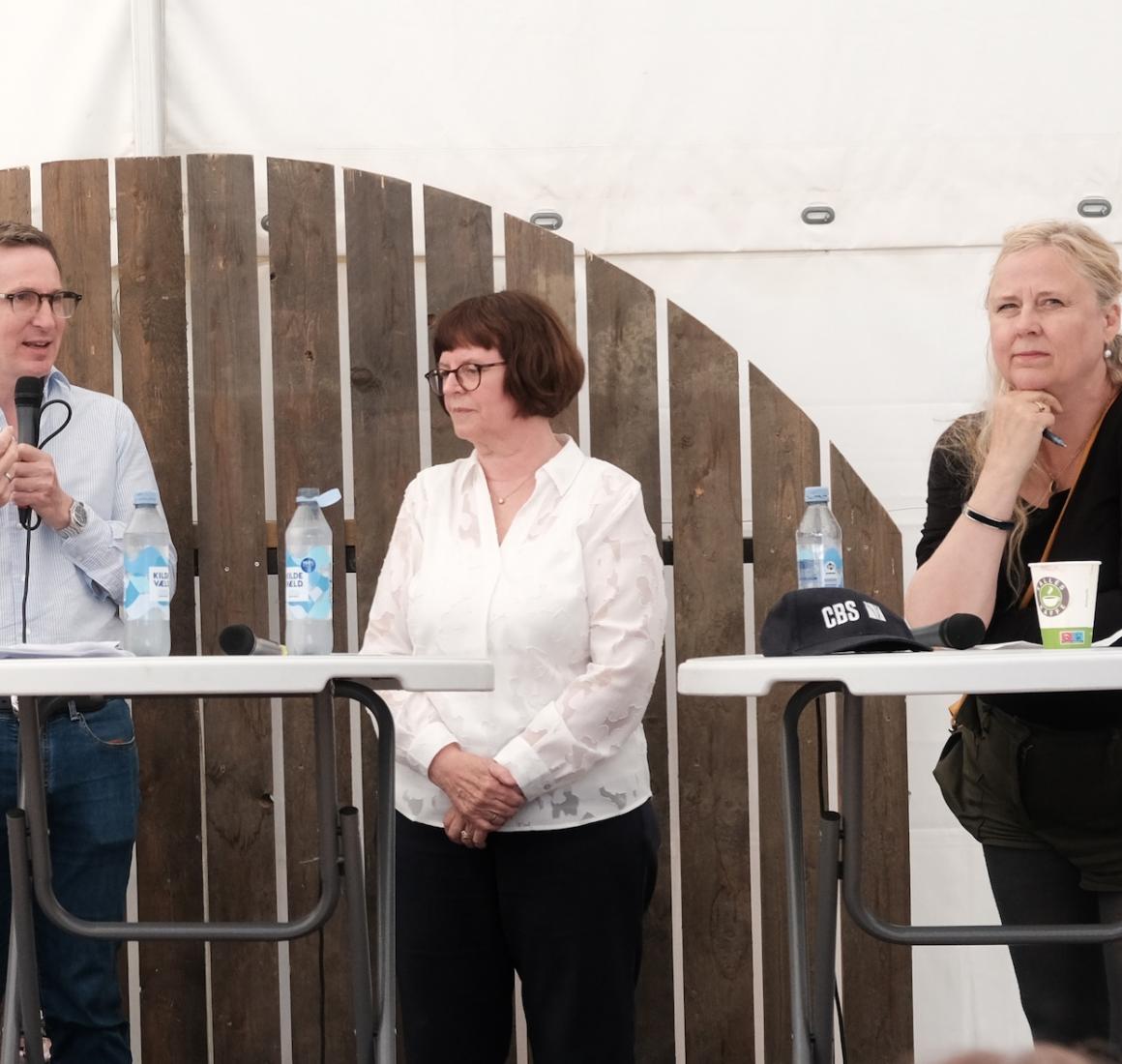
Leadership Can Be Painful – But Are We Allowed to Talk About It?

Four common features of sustainability-driven companies
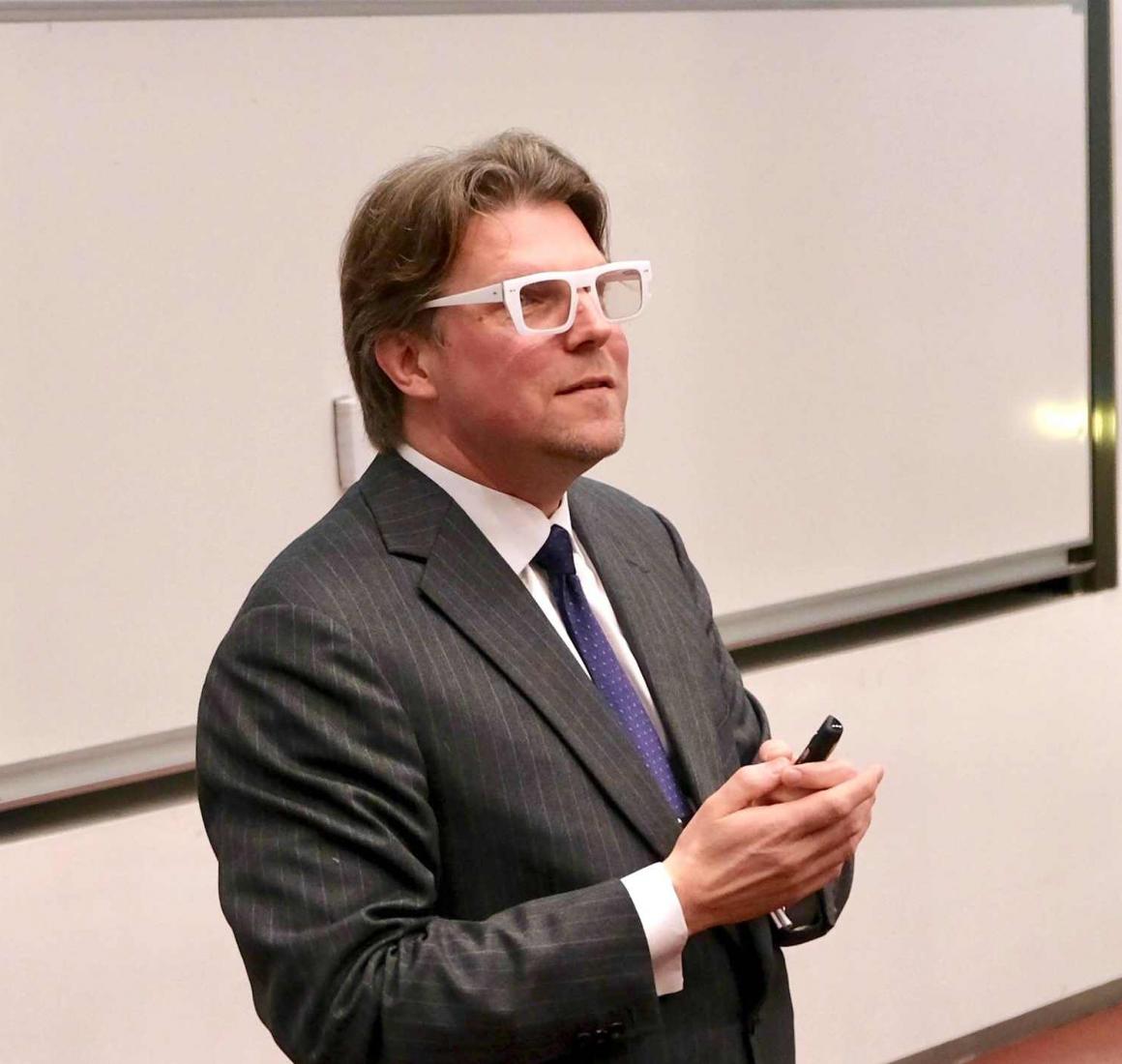
ESG Dynamics – Balancing Principles and Responsible Finance
Your gateway to more knowledge
Did you find this content interesting? Sign up for our newsletter and gain access to more of our research findings and events.
With the world’s grand challenges awaiting us, we need to continuously evolve, gain new knowledge and insights, and upskill.
Dive into a world of knowledge by signing up below. You will get:
- Personal event invitations
- Pertinent research-based insights on business and society
- Information about the next intakes of our Executive Education programmes and courses
KEEP LEARNING

Full-time MBA

Green shipping and Port Management

People, Performance and Strategic Renewal