Leading with nature: How?
Businesses are shifting from doing less harm to doing more good for nature. Net-positive biodiversity is becoming the goal — not just reducing damage, but contributing to the renewal of ecosystems. What's driving this shift in how businesses relate to nature? Why is it important for companies to take responsibility for nature? Where do you begin?


At a recent CBS Executive Education event, Professor Majken Schultz, postdoctoral fellow Jonathan Feddersen, and Simon Boas Hoffmeyer, Global Head of Sustainability & ESG at Carlsberg Group, explored these questions: discover their insights in the video below, and dig deeper with the column that Majken and Jonathan recently wrote in Børsen.
Key insights directly from the experts
The video is in Danish with English subtitles
Takeaways from our event:
- Nature’s dynamics are deeply local and multi-scale, which means solutions must be adapted — not copied.
- Leading with nature requires rethinking scale — deepening impact over time and place, rather than simply replicating fixed models.
And yet, important questions remain:
How do we define nature and biodiversity in a corporate setting?
What parts of nature should businesses take responsibility for?
And when is it time to take bold steps — even when the solution isn’t perfect?
This is just the beginning of a much-needed, exciting conversation inside organisations.
These insights were shared at a CBS Executive Education event
Explore our offering of events here
Majken Schultz and Jonathan Feddersen also recently shared their views on the topic in Børsen in a monthly column brought by CBS Leadership Centre that provides current and research-based perspective on the challenges facing leaders.
Jonathan and Majken write about how companies are actively engaging with the distant future – with a particular focus on the green agenda. The column is based on their research in collaboration with Ørsted, Arla, and Novo Nordisk, as part of the project 'Making Distant Futures Actionable.' The Centre is funded by the Novo Nordisk Foundation.
An increasing number of businesses are committing to what is known as net-positive biodiversity or nature-positive goals. This means that the company’s activities not only restore biodiversity but also have a positive impact on future biodiversity. This requires companies to engage in specific, biodiversity-enhancing solutions. For example, Carlsberg and Arla are experimenting with regenerative farming, Ørsted is establishing artificial reefs, and VELUX is involved in reforestation efforts.
Why are we seeing a new approach to nature?
Businesses' new approach to nature marks a shift from merely mitigating biodiversity loss to actively developing biodiversity-enhancing solutions. This shift is driven by two main factors. First, the severe global biodiversity crisis has created an increasing awareness that urgent action is needed – business leaders, policymakers, researchers, and environmental organisations all recognise that nature will not restore itself. Second, it is nearly impossible in most industries to avoid biodiversity damage entirely, which makes compensatory actions essential to achieving net-positive outcomes.
“It is nearly impossible in most industries to avoid biodiversity damage entirely, which makes compensatory actions essential to achieving net-positive outcomes” Majken Schultz, Jonathan Fedderson & Simon Boas Hoffmeyer
Three questions for business-driven nature restoration
Although businesses’ engagement in nature restoration is a very positive development, it raises a number of new and challenging questions that leaders must address:
1. What nature do we want to restore?
Calls for “more nature” are appealing, but the reality is far more complex. Should we restore ecosystems to a pre-industrial state? Or should we embrace new, human-made landscapes that serve both nature and business interests? Without transparent governance and clear guidelines from policymakers, businesses must make these decisions on their own – often in a way that aligns more with their strategic interests than with long-term ecological needs.
2. How do we restore nature?
There is a fundamental tension between the scales at which businesses and ecosystems operate – both in terms of time and space. Ecosystem-based management prioritises a holistic, long-term approach and favours broader nature restoration projects such as protected natural areas and national parks, as seen in the Green Tripartite Agreement. In contrast, businesses prefer specific biodiversity-enhancing solutions with clear, measurable results that are easier to report and communicate. A need that is only growing, particularly with the increasing requirements for reporting.
3. What is the role of innovation?
Businesses' impact on nature is becoming an increasingly important competitive factor. Biodiversity contributions have started to be included in public tender processes - as seen in the 2024 offshore wind auction which failed to attract any bid - and new reporting standards are allowing companies’ biodiversity efforts to be compared and ranked. This creates an incentive to develop new, innovative biodiversity-enhancing solutions. However, it remains an open question how innovation, competition, and politically defined minimum requirements will interact to create the right drivers for business engagement.
The future of organisations’ biodiversity efforts
Going forward, there is a need for frameworks that ensure that businesses' biodiversity efforts align with the long-term survival of ecosystems – without undermining their international competitiveness. This requires new governance frameworks that balance businesses' innovative potential and need for measurability with the integrity of ecosystems. Policymakers and civil servants cannot manage this alone – international collaboration between businesses, researchers, and nature conservation organisations is essential. There are many actors involved, and it is certainly a risk that leaders may become ovewhelmed by the many diverse demands and directions, thereby lowering their ambitions.
“There is a need for frameworks that ensure that businesses' biodiversity efforts align with the long-term survival of ecosystems – without undermining their international competitiveness.” Majken Schultz, Jonathan Fedderson & Simon Boas Hoffmeyer
We see promising examples in the offshore wind industry, which illustrates what is needed:
- Clear standards and measurement methods – Just as CO₂ emissions have standardised measurement and reporting mechanisms, biodiversity restoration requires robust frameworks to evaluate businesses' claims. Without these, we risk both a lack of common direction and "nature-washing". Ørsted's launch of a biodiversity measurement framework, inviting input and feedback from interested parties, is a good initiative in this regard.
- Incentives for systemic solutions – Governments should encourage businesses to contribute to large-scale, scientifically grounded restoration projects rather than just rewarding isolated efforts. Strictly protected natural areas and coordinated restoration projects are often more effective than individual corporate initiatives. The Danish government's decision to include the coexistence of marine ecosystems and offshore wind in the newly established "Havnaturfonden" ("The Marine Nature Foundation") is a step in the right direction.
- Cross-sectoral collaboration – Companies must work together with nature conservation organisations, researchers, and policymakers to ensure that their biodiversity efforts are ecologically sound. In the offshore wind industry, the Offshore Coalition for Energy and Nature (OCEaN), which brings together developers and environmental organisations, is a promising example.
We are at a crossroads. Businesses have the financial capacity, innovative power, and scale to drive meaningful biodiversity restoration. But without clear guidelines and larger collaborations, there is a risk that companies’ efforts will be fragmented, short-term, or even harmful.
While governments must set the overarching frameworks, businesses must recognise that nature is an integral part of their business model and operations. After centuries of either attempting to protect themselves from or control nature, it is time for businesses to (re)learn how to organise in harmony with nature’s rhythms and needs.
Meet the experts

Majken Schultz
Since 1996, Majken Schultz has been a Professor of leadership and organization at Copenhagen Business School. She has led the research project Making Distant Futures Actionable: Innovating for a Zero-Carbon Future. In addition, she is actively involved in the Danish business world and has held several board positions since 2000, including chairperson of the Carlsberg Foundation.

Jonathan Feddersen
Jonathan Feddersen is a postdoctoral fellow at CBS, studying how time, place and materiality shape sustainable innovation. He is currently collaborating with Ørsted on nature-based solutions aimed at becoming biodiversity net-positive by 2030. His research is part of the project Making Distant Futures Actionable: Innovating for a Zero-Carbon Future.
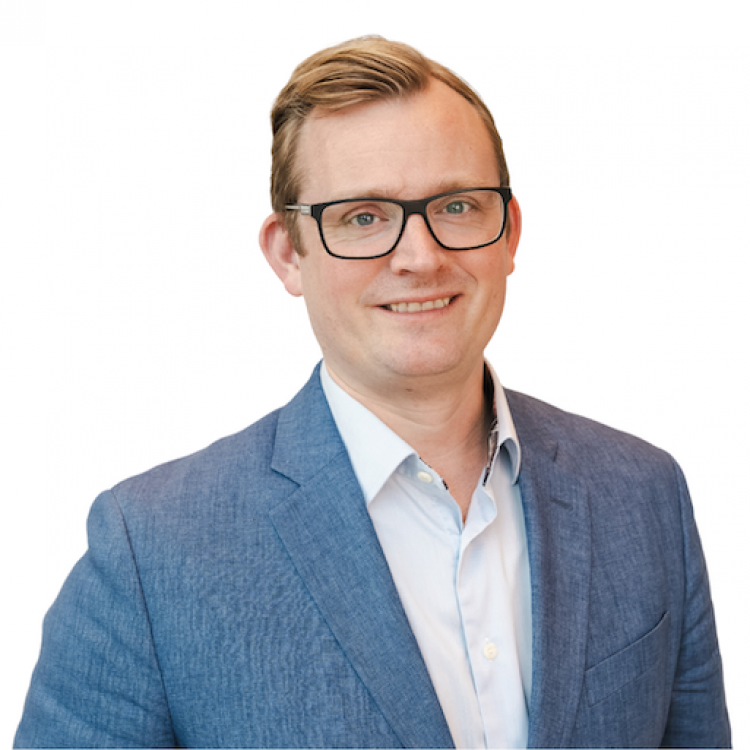
Simon Boas Hoffmeyer
Simon Boas Hoffmeyer is Global Head of Sustainability & ESG at the Carlsberg Group. He holds overall responsibility for the brewery’s initiatives within areas such as climate action. He played a key role in launching the current ESG programme, Together Towards ZERO & Beyond, which sets out a series of clear and ambitious targets for CO₂ reduction, lower water consumption, and the use of regenerative farming practices for Carlsberg’s agricultural raw materials.
LEADERSHIP IN FOCUS
KEEP READING

Podcast: Profiting from Sustainability
Responsible leadership fails the test – again
Future leadership is calling for These Competencies
Your gateway to more knowledge
Did you find this content interesting? Sign up for our newsletter and gain access to more of our research findings and events.
With the world’s grand challenges awaiting us, we need to continuously evolve, gain new knowledge and insights, and upskill.
Dive into a world of knowledge by signing up below. You will get:
- Personal event invitations
- Pertinent research-based insights on business and society
- Information about the next intakes of our Executive Education programmes and courses
KEEP LEARNING
Master of Business Development

Master of Public Governance
Managing Innovation