Co-leadership doesn’t mean the end of hierarchy
Delegating responsibility does not mean giving up the right to intervene. Even in a co-leadership organisation, leaders may sometimes need to overrule employees, highlighting one of the biggest challenges of co-leadership, according to CBS Professor Nicolai Foss.

Imagine that, as a leader, you give an employee the authority to make an important decision in your organisation. You tell them that you trust their expertise and judgement. But once the employee has made the decision, you disagree with it and believe it could potentially harm the organisation. So what do you do?
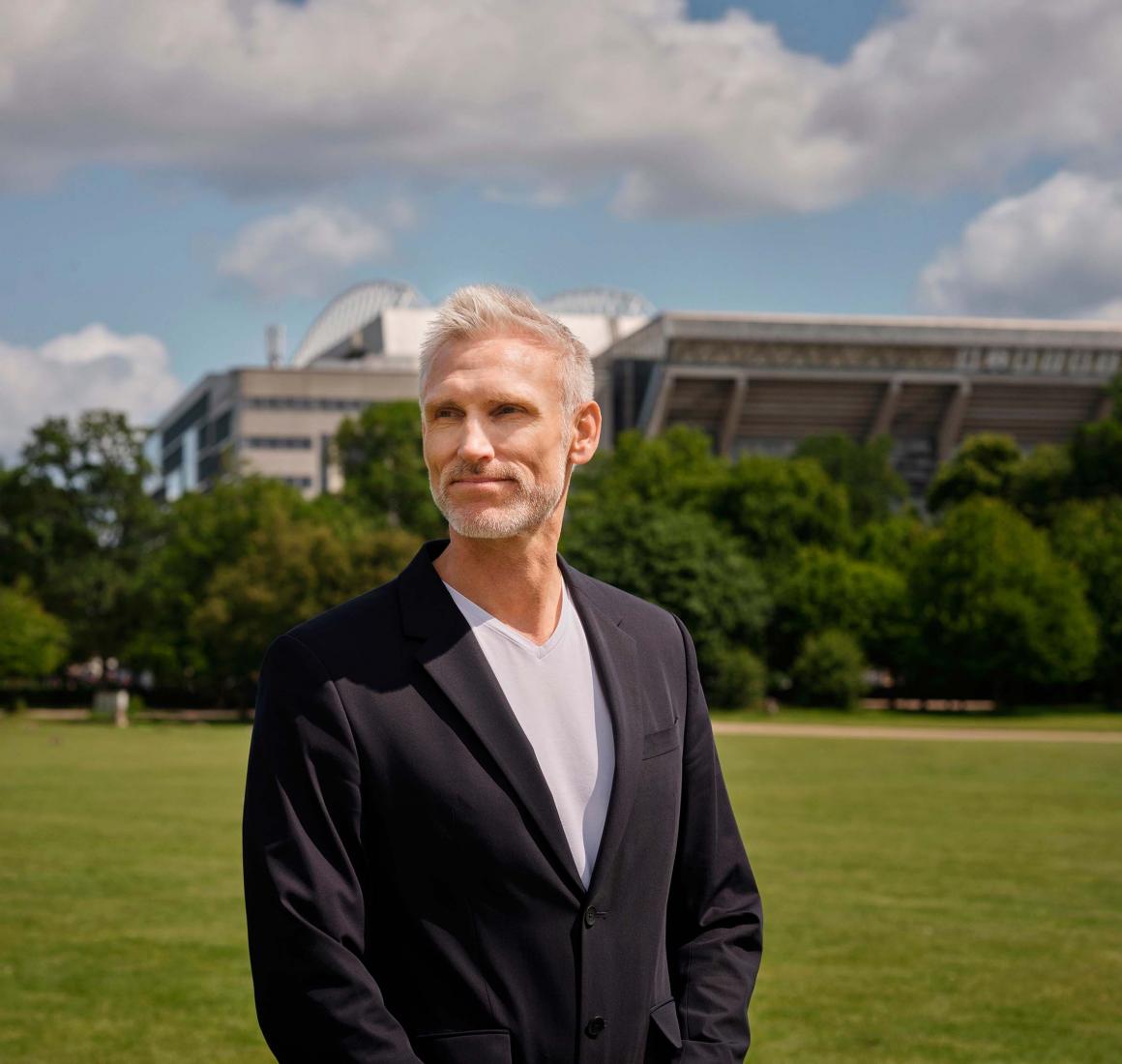
If you step in and reverse the employee’s decision, you undermine the autonomy you promised them. If you let the decision stand, you risk having to live with a decision that is bad for the organisation. According to Nicolai Foss, Professor at CBS’s Department of Strategy and Innovation and author of the book Why Managers Matter, this dilemma is one of the clearest examples of why co-leadership can be challenging.
“It highlights one of the biggest challenges of co-leadership. Even if, as a leader, you have delegated responsibility to an employee, there may be situations where you simply have to overrule them. There is no way around that, because ultimately, it is the leader who is responsible for the organisation,” he says.
Nicolai Foss stresses that he is not opposed to co-leadership, but he calls it an illusion to believe that co-leadership eliminates the need for central leadership altogether. In his view, there are several situations and circumstances within an organisation where co-leadership falls short.
“For example, this may be the case when sudden and unpredictable changes affect several parts of the organisation at the same time. Things can quickly become turbulent and chaotic unless there is a leader who steps in, takes the initiative and coordinates the response. Conversely, decision-making authority can be delegated to employees when dealing with more predictable matters,” he says.
Listen to the podcast Vejen til Medledelse
Here you can find all seasons of the podcast (in Danish), including an episode featuring CBS Professor Nicolai Foss. You can also find the episodes on your preferred podcast platform.

All organisations are hierarchical in one way or another
Nicolai Foss stresses that when implementing co-leadership, it is crucial to be clear about who has the authority to make which decisions. If this is not clear to everyone in the organisation, things can quickly go wrong.
This was, among other things, what happened at Oticon in the 1990s. In 1991, Lars Kolind introduced a radically flat management structure, giving employees a high degree of freedom and decision-making authority. The move helped save the financially struggling company.
However, the company became a victim of its own success. As it grew, its workforce multiplied, making it increasingly difficult and costly to coordinate tasks across the organisation without clear structures in place. Informal hierarchies emerged, and management began interfering in employees’ work to a much greater extent than they had originally been led to expect. This ultimately led to a major crisis, forcing the company to scale back its co-leadership model in order to regain control of the organisation.
“When designing an organisation, you have to determine: Who has the authority to decide what? And the answer can vary considerably within the same organisation. An employee with specialised knowledge may know far more about a specific task than their manager and should therefore have considerable decision-making authority. Elsewhere, tasks may be so closely interdependent that decisions need to be coordinated centrally,” says Nicolai Foss.
He points out that it is a major misconception to view co-leadership as a free and innovative form of organising that stands in stark contrast to more traditional hierarchical leadership.
“Hierarchical leadership is often perceived as authoritarian and negative. But the truth is that all organisations are hierarchical in one way or another. That hierarchy may be flat, or it may be steep,” he says.
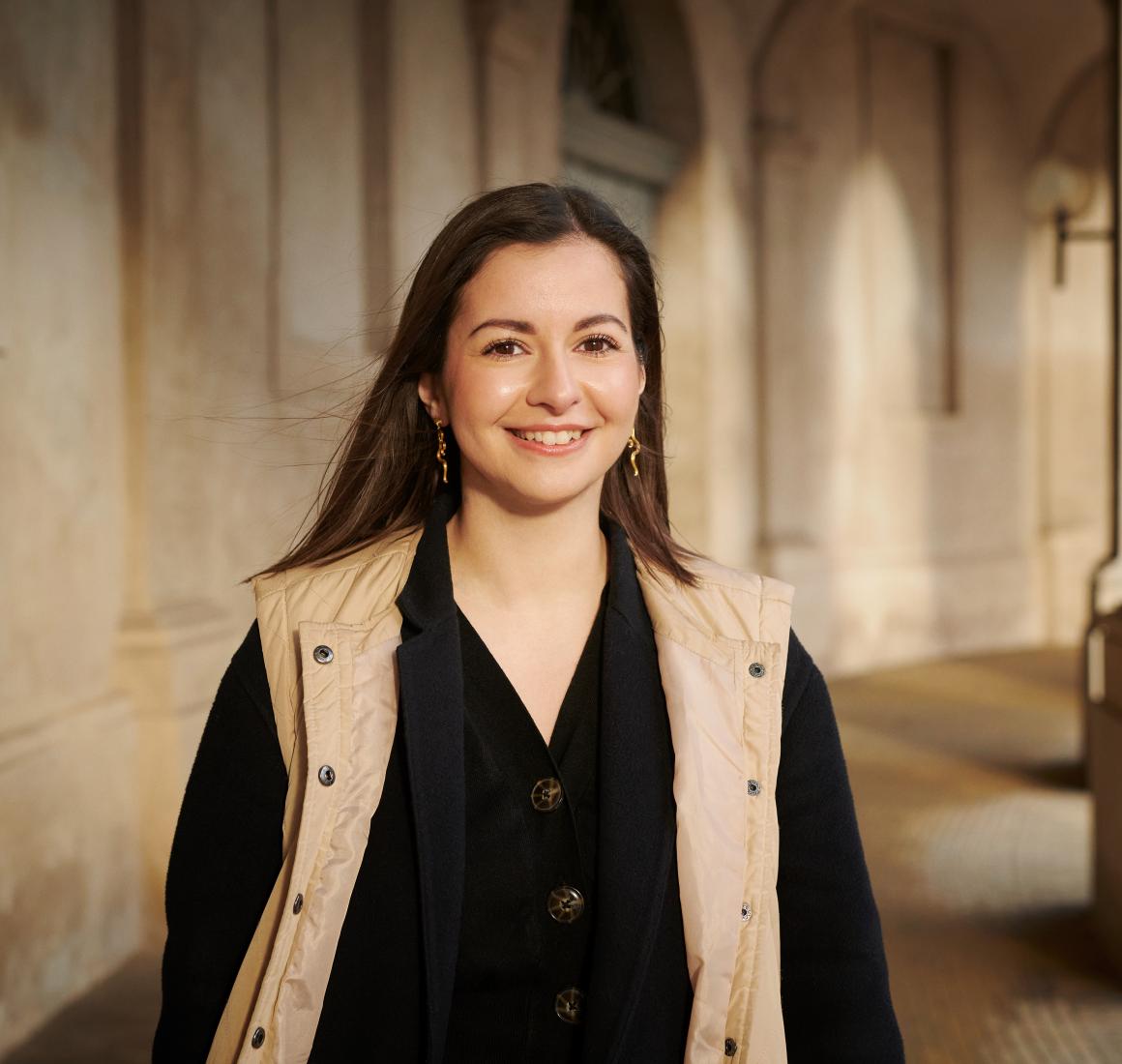
“Co-leadership is often highly formalised. But many people misunderstand this because they associate self-leadership with something more along the lines of: ‘What do I feel like doing today?’ But that is not how it works. Things would quickly become very chaotic without clear frameworks and direction.” Tobias Berggren Jensen
Postdoc at CBS
Freedom can require plenty of rules
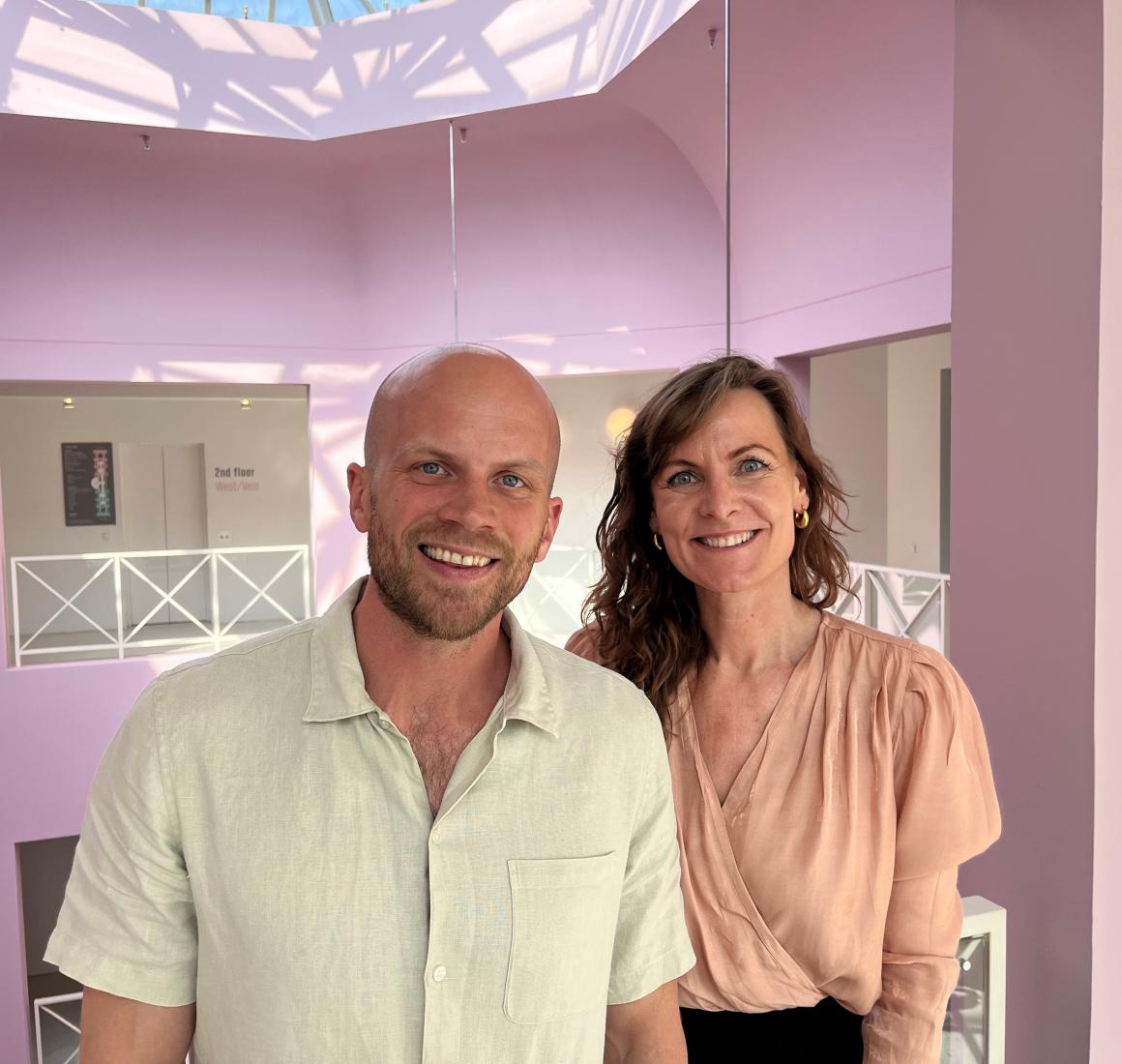
Tobias Berggren Jensen, a postdoc at CBS who teaches the course 'Medledelse' and hosts the CBS podcast 'Vejen til medledelse', agrees that situations such as a merger or a major round of redundancies can be difficult to manage through broad co-leadership processes. But that does not mean co-leadership cannot still have a valuable role to play. According to him, a co-leadership organisation is not one in which everyone has to be involved in every decision all the time.
“There are still decisions that rest with leaders or former leaders, and others that rest with the teams. The important thing is to be transparent about this so that no one is in any doubt,” says Tobias Berggren Jensen.
This points to one of the paradoxes of co-leadership. While co-leadership may easily evoke images of organisations with fewer rules and greater freedom, the reality can look rather different.
“When the boss no longer automatically leads the meeting, sets the agenda and follows up on decisions, it becomes even more important to clarify who does. So it is no coincidence that some researchers refer to co-leadership as bureaucracy 2.0, with Max Weber’s bureaucracy being 1.0,” says Tobias Berggren Jensen.
In some co-leadership organisations, traditional leadership responsibilities are divided into clearly defined roles that employees take on. One person facilitates the meeting, another is responsible for the agenda, while a third ensures that decisions are documented and communicated. This can come as a surprise to some employees who may otherwise have understood co-leadership to mean having the freedom to decide most things for themselves.
“Co-leadership is often highly formalised. But many people misunderstand this because they associate self-leadership with something more along the lines of: ‘What do I feel like doing today?’ But that is not how it works. Things would quickly become very chaotic without clear frameworks and direction,” says Tobias Berggren Jensen.
Take the course 'Medledelse'
Co-leadership is an organisational model that is gaining ground in both public and private organisations as a way to create effective decision-making processes and more dynamic ways of organising. This course (in Danish) will provide you, as a leader, with both an understanding of and practical insights into how you can create a more co-leadership-oriented organisation.
Discover what you’ll gain from the course
Does co-leadership work in every situation?
For Nicolai Foss, a key question is how far the co-leadership model can be taken. He points out that the more employees’ tasks are interdependent, the greater the need for coordination. A crucial principle, therefore, is to place decision-making authority where the relevant knowledge lies, he says. At the same time, it is important not to forget that management often holds a different kind of knowledge: an overview of the organisation as a whole.
“If employees are better equipped to handle a particular task than their manager, then the manager needs to delegate it to them. But that does not mean the manager’s leadership responsibilities disappear. Perhaps the most important overarching principle of co-leadership is to ask: Who has the relevant knowledge in this particular situation?” says Nicolai Foss.
Not all organisations are equally suited to implementing co-leadership, according to Nicolai Foss. There may even be differences within the same organisation. One example could be a functionally structured manufacturing company. Here, it would probably be easier to implement self-leadership in research and development departments than in production units.
“If, for example, you are manufacturing a pharmaceutical product using a highly linear production process, it can be difficult to give employees a great deal of autonomy,” says Nicolai Foss.
However, he points out that there are examples of organisations with a high degree of interdependence that have successfully introduced self-leadership. One is Morningstars Tomatoes, a Californian company with 10,000 employees that produces tomato paste for ketchup and has succeeded in giving its employees a high degree of autonomy.

“They started in 1970, and my own interpretation is that it works because their product is very simple and their production processes are equally straightforward. When everything is transparent, it is possible to give people the freedom to organise themselves,” he says.
While Nicolai Foss believes that co-leadership works best in organisations with no more than a few hundred employees, Tobias Berggren Jensen is reluctant to put a specific upper limit on it. He agrees that size and complexity make co-leadership more challenging, but research in this area is still limited, making it difficult to determine its exact potential in larger organisations.
“As part of a research project, I have seen co-leadership in practice at the EV charging operator Clever, which has 500 employees, and in a medical department at Horsens Regional Hospital, which had around 300 employees, including doctors, nurses and administrative staff. And although Nicolai, when he talks about it not working in large organisations, is probably referring to the very largest, there are at least examples showing that it can work in contexts characterised by both interdependent tasks and a scale that requires coordination and leadership,” says Tobias Berggren Jensen.
He also points to the Job-, Aktivitets- og Kompetencecenteret (JAC) in Gentofte Municipality as an example of a workplace where employees have considerable influence over decision-making. Here, the approach is less formalised, with teams largely developing their own ways of organising their work. In many other organisations, such as Børns Vilkår, which has also implemented co-leadership, the approach is based on a more formalised system of roles and procedures.
“Shadow hierarchies also exist in traditional organisations. Just because the leader has the final authority does not mean that power cannot be distributed systematically among employees.” Tobias Berggren Jensen
Postdoc på CBS
Not everyone wants to co-lead
It is important to understand, says Tobias Berggren Jensen, that co-leadership does not necessarily take power away from management. A CEO’s words can still carry considerable weight, even if the organisation has removed traditional management titles. Informal hierarchies can also easily emerge among employees. But in his view, that is no reason to abandon efforts to distribute power differently.
“Shadow hierarchies also exist in traditional organisations. Just because the leader has the final authority does not mean that power cannot be distributed systematically among employees,” says Tobias Berggren Jensen.
But what about employees who do not want that power? The principle of co-leadership is based on the assumption that employees want autonomy, freedom and responsibility. Yet some people thrive far better with a clear leader and clearly defined tasks. So, does co-leadership actually suit one type of employee particularly well and another less so?
“At first glance, you might say that co-leadership is better suited to proactive, autonomous employees. But tasks can be just as clearly defined in a co-leadership organisation, where roles and responsibilities are often highly formalised. The challenge for the organisation, then, is to create a culture with room both for the subject-matter expert who has no desire to lead and for the employee who wants to help facilitate and lead meetings,” says Tobias Berggren Jensen.
Read more

Create safety through clarity: Co‑leadership requires courage and structure
Explainer: Co-leadership

Why Collective Leadership Should Be on Your Radar
Your gateway to more knowledge
With the world’s grand challenges awaiting us, we need to continuously evolve, gain new knowledge and insights, and upskill.
Dive into a world of knowledge by signing up for our newsletter. You will get:
- Personal event invitations
- Pertinent research-based insights on business and society
- Information about the next intakes of our Executive Education programmes and courses
Learn more

Medledelse

Master of Public Governance
Master of Management Development

Master of Business Development