After AI: Are Education and Adaptability the New Superpowers of the Job Market?
Artificial intelligence is transforming our education system—from exams and essay writing to the skills students are expected to master. But the challenge is not only how we measure learning. We must also ask how we develop the capacity to learn when the answer is always just a prompt away. And what will the core competencies of the near future be?

Today, some see AI as a threat to academic rigour and independent thinking. Others view the technology as a tool that can help students improve the quality of their work. Both perspectives hold some truth, and point to a fundamental transformation of both the education system and the job market it is designed to serve.
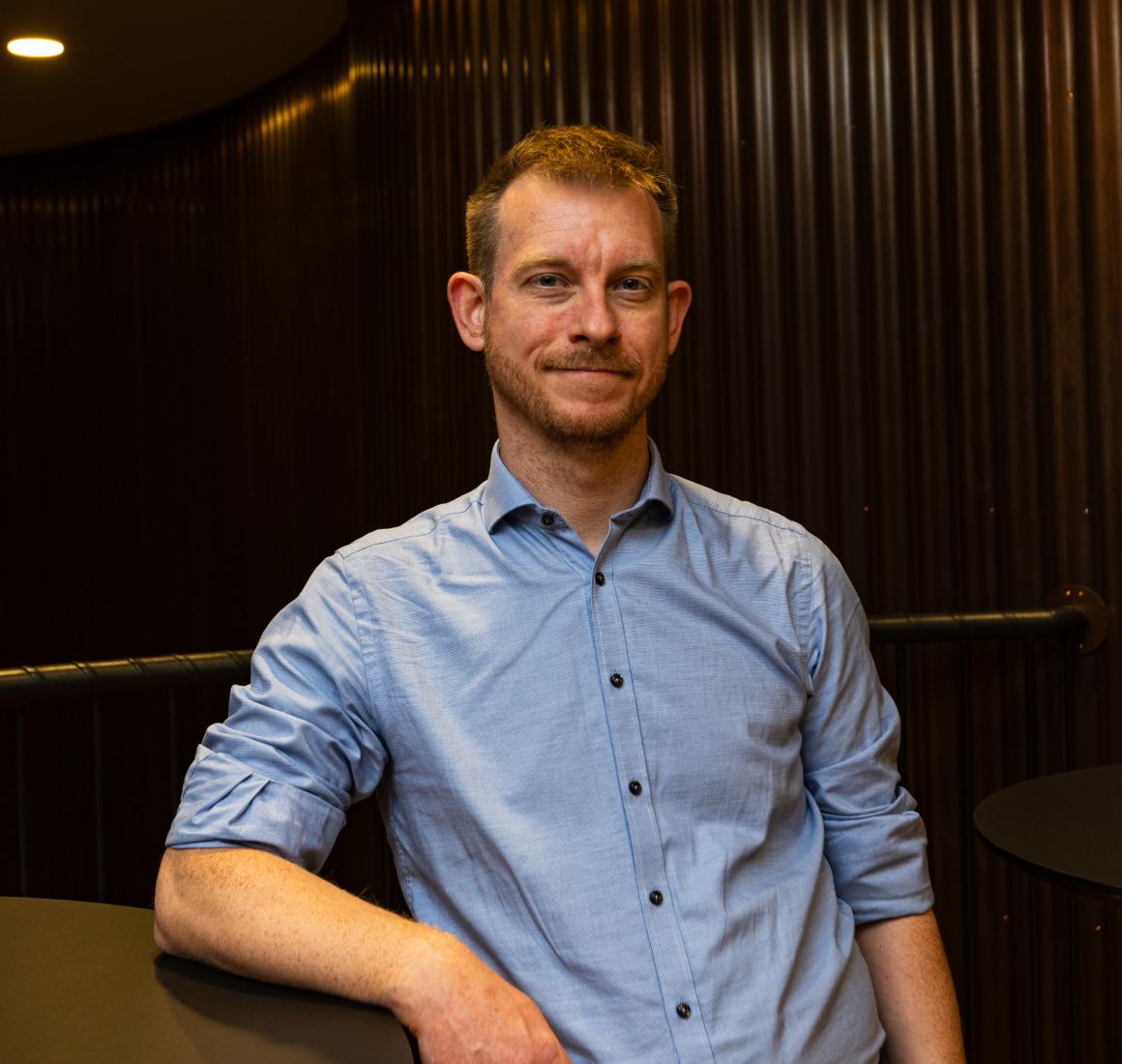
Nima Sophia Tisdall is an investor at Nordic Makers, founder of Blue Lobster, and a CBS graduate from 2019. She is concerned that entry-level jobs—typically the first positions graduates take after completing their studies, where extensive experience is not required—will be automated and disappear from the horizon of newly qualified candidates.
“I meet a great many people who have just graduated and done everything right. Then they enter a job market that looks completely different, and one that will remain that way. We therefore owe our young people an honest conversation about what the future job market looks like and what we are doing to help them gain access to it.”
According to Carsten Scheibye, Associate Professor and Vice Head of Studies for the HD programmes at CBS, AI is also changing the conditions for what both students and employees can expect from higher education.
“Just a few years ago, the tacit agreement with the business community was that, when students graduated from CBS, we had trained them for a specific job, profession, or industry. That is a promise that is becoming increasingly difficult for CBS and other educational institutions to keep.”
“I believe we are facing an opportunity to rethink many processes and get to the heart of what it is we actually want to teach.” Nima Sophia Tisdall
Investor at Nordic Makers, founder of Blue Lobster, and CBS alumna

Should AI Be Kept Out of the Classroom?
The skills that provide access to the labour market are changing. According to Nima, this requires, among other things, an understanding of AI and how the technology works—much like one needs to understand calculators in order to perform calculations. But according to Anya Eskildsen, CEO of Niels Brock, it is just as important for future students to develop a simple yet distinctly human ability: the capacity to think.
“We need to teach young people how to think, so they can use AI to become better. This requires us to distinguish between competencies and cognition. Competencies are the ability to solve specific tasks, but they are built on cognition—the ability to understand, analyse, make decisions, and learn new things. Education should therefore not focus solely on skills, but on developing judgement and critical thinking. Students should work with open-ended problems that require them to investigate, argue, and make choices. AI can support this work, but it cannot replace human judgement. Without knowledge and critical thinking, you can neither ask the right questions nor evaluate the answers.”
And Anya’s concern about AI’s potentially detrimental effects on learning is not unfounded. A survey conducted among 9,000 primary and secondary schools in England found that two out of three teachers believe students’ ability to think critically and creatively is declining. As a result, Anya also proposes a solution in which AI is kept out of the classroom, much as mobile phones have already been banned in many schools.
“In reality, school is a place where people should be allowed to develop their abilities and learn from their mistakes. We therefore need to keep certain things out of that space in order to train the ability to reflect independently and ask the right questions—not least so that the AI agent you may one day develop can be built properly.”
“A good salesperson can build relationships, listen, and show genuine interest in the person standing before them. That is part of a commercial education in the broadest sense - and a competence that AI cannot take over.” Anya Eskildsen
CEO of Niels Brock

Small Talk on the Curriculum
Nima sees the rise of AI as an opportunity to rethink our education system so that it focuses less on whether a student earns top marks for an essay and more on whether they are able to communicate the knowledge it contains. She also believes it is important for new generations to be adaptable and willing to learn new things again and again.
“I believe we are facing an opportunity to rethink many processes and get to the heart of what it is we actually want to teach,” she says.
For Carsten Scheibye and Anya Eskildsen, AI is changing the requirements for what an education should provide its students. For them, it is now broad-based education and personal development that take centre stage.
“We should, if possible, focus even more on the competencies that shape, educate, and further develop people in these changing and turbulent times,” says Carsten. “For example, how we build relationships, how we develop empathy, how we understand other people, and how we understand business processes.”
Anya agrees.
“We also need to be clear about what we mean by education and personal development. At a business school, it is also about being able to interact effectively with other people. That is why we have small talk on the curriculum. Not for the sake of conversation itself, but because good business begins with trust. A good salesperson can build relationships, listen, and show genuine interest in the person standing before them. That is part of a commercial education in the broadest sense—and a competence that AI cannot take over.”
“Try looking at the entire Danish education system in relation to AI and consider what kind of broad-based education, personal development, and other competencies people should develop throughout their years in school.” Carsten Scheibye
Associate Professor and Vice Head of Studies for the HD Programmes at CBS

Welcome to Brave New World
To ensure that these formative competencies can flourish, Nima, Anya, and Carsten also urge politicians to take the arrival of AI in the education system seriously.
“It could have enormous consequences for society if we do not take it seriously, and it is also a tremendous opportunity if we embrace it and work actively with it,” says Nima.
Carsten agrees, calling on policymakers to think on a larger scale.
“Try looking at the entire Danish education system in relation to AI and consider what kind of broad education and other competencies people should develop throughout their years in school.”
Despite concerns about the decline of critical thinking, a shortage of jobs for recent graduates, and growing pressure on traditional examination formats, Carsten hopes that young people will encounter an education system that introduces them to a brave new world.
“I believe that throughout the education system, and for those graduating now, we need to inspire them with the idea that curiosity about what is happening around them is a motivation in itself. And we need to equip them to seize the fantastic opportunities of tomorrow that, I believe, await them.”
Keep reading
Explainer: How to work with AI
Artificial intelligence is evolving rapidly – and it is transforming the way we work. Christian Hendriksen, Assistant Professor at CBS, explains why it can…
Up or out? A career with AI as a companion
How can you utilise AI if you haven't tried it? Get an insight into the opportunities Artificial Intelligence can create in companies and organisations here and now.

Career – Unfiltered: I am good enough
Beyond the polished CV and career milestones, working life is full of doubt, detours and dreams. The article series 'Career – Unfiltered' offers a…
Your gateway to more knowledge
Did you find this content interesting? Sign up for our newsletter and gain access to more of our research findings and events.
With the world’s grand challenges awaiting us, we need to continuously evolve, gain new knowledge and insights, and upskill.
Dive into a world of knowledge by signing up below. You will get:
- Personal event invitations
- Pertinent research-based insights on business and society
- Information about the next intakes of our Executive Education programmes and courses
Keep learning

HD1
En bred økonomisk efteruddannelse. Uddannelsen er relevant for alle - uanset baggrund - som ønsker at træffe bedre økonomiske velfunderede beslutninger i deres organisationer.

Virksomhedens økonomiske planlægning
Forstå regnskabet og bliv bedre til at planlægge. Kurset giver dig regnskabsmæssig forståelse for virksomhedens resultat, likviditet og økonomiske position.
Erhvervsøkonomi og forretningsforståelse
Du bliver bedre til at analysere markedet, forstå dine kunders efterspørgsel og identificere hvad konkurrenterne gør.

Master of Business Development
Executive degree for those passionate about creating new, innovative solutions and want to take responsibility for elevating and developing the business – for those who want more.