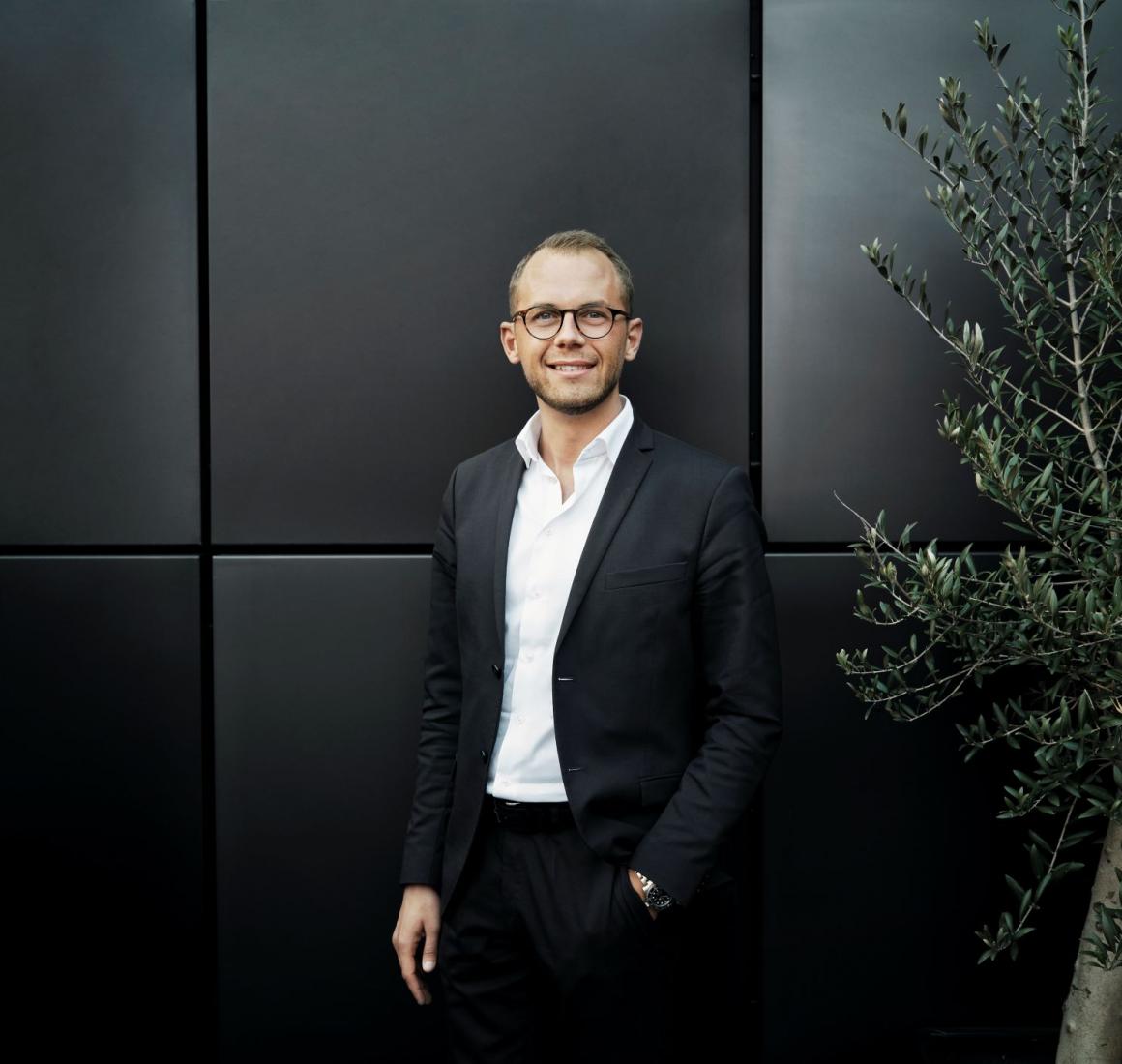
You need to be less of a manager and more of a human being
The flexible work life places new demands on you as a manager. Consider two perspectives, one from a City Administrator and another from an MPG lecturer, highlighting the increasing importance of not only professional management but also effective people management. These skills are essential for attracting and retaining highly competent employees.
We need much more human leadership
Christine Brochdorf is City Administrator in Egedal Municipality, where many of the municipality's workplaces are experimenting with flexible ways of working.
"Our efforts for the flexible workplace started when corona was just a beer. We started with the world's dumbest question: What does it take for us in Egedal Municipality to become better at recruiting and retaining employees. All answered: Higher wages. And hence the world's dumbest question. Something else also became evident over time: the possibility of flexibility and of organising one's own working life.
The entire effort to create flexibility is based on dialogue. You cannot make models that fit 150 different workplaces in a municipality. It's about as many degrees of freedom as possible. It can go up if you are in dialogue. Day-to-day flexibility is not as great in home care compared to what it is for an academic. But e.g. in home care there is the possibility of long shifts and thus working fewer days a week. It can be harder for an academic to work that way.
The management task consists of far less professional management and personnel management and much more people management. That is to be able to facilitate a dialogue between employees. You have to be able to accommodate something as a leader in order to be in that dialogue and to be able to create a perception of justice, despite the fact that everyone cannot get the same all the time. My managers have the black belt in shift planning and in financial and professional management. The new challenge is having to be in dialogue with employees about their lives. We are not trained or educated in that at all as leaders.
It is important to us that the flexible workplace does not become a town hall project. It must be a working method for all workplaces throughout the municipality. Eg. spent a day in dentistry talking about how they each wanted to work and how it matched their core task. That conversation resulted in 4.5 hours longer opening hours for citizens per week. That's a great way to go about it. In other cases, it can be inappropriate for the citizens: for example, it can be difficult for employees in residential care or other care professions with very long shifts, because one's fuse naturally becomes shorter when one is tired. In return, they can get flexibility, which consists of types of exercise during working hours, varying shifts, leave or other.
Trying to solve a problem also creates new ones. Therefore, everything stands and falls with the leader. The point is that we are different as people, and therefore we must be able to grasp the individual's wishes and needs. It is the management of the future.
After a hard time for especially the front-line workers in daycare centers, schools and nursing homes/home care, sickness absence is increasing. It is a reaction to a hard period with corona. Then I had to look at the normal KPIs, we had to stop the experiment with the flexible workplace. But I don't intend to do that now. I believe with all my heart that the traditional way of working 37 hours a week for 50 years of our lives is dead. We must dare to seize our intuitive desires and needs to create a new working life, otherwise the epidemic of stress-related illnesses in Denmark will continue. We have to deal with it now.”
We talk about freedom in a new way - and it is interesting for the leader
Anders Raastrup Kristensen is an independent consultant and external lecturer at CBS. For more than 10 years, he has researched and taught on e.g. MPG in the balance between family and work life, management of self-directed employees and strategic management.
"There has been a shift in how we talk about freedom. From the classic, liberal concept of freedom – free from the interference of others – to freedom today being the freedom to realize oneself. It is also interesting for managers. Because the manager must have two different discussions with the employee. But can you as a manager speak into the employee's private life and ask: What do you want with your life? Many employees would actually like to have those discussions with their manager.
In terms of management, three things are important in flexible working life:
- Saying: My door is always open and you can come in to me – it doesn't work when the employee works remotely. Here, as a leader, you have to step in much more actively and define yourself as a leader.
- You must be more systematic in your management. Do you get to talk to everyone? Otherwise, some may go under the radar.
- You must be less of a manager and more of a human being.
It is exciting to talk about flexibility in an organizational perspective. For example, a 4-day working week is used as a way to give the employees something, while at the same time entering into a dialogue about how to give the citizens something, e.g. increased opening hours. But the framework for our work fits the old way of organizing ourselves. And both buildings and legislation can be difficult for us. For example, collective agreements must be rethought in order for flexible working life to succeed.”
KEEP READING
Transformation in organisations
Responsible ownership is the key to sustainability in business
Building inclusive cultures in the workplace
Do companies cut wages or lay off workers during an economic crisis?
The conscientious employee pays the price for freedom
Your gateway to more knowledge
Did you find this content interesting? Sign up for our newsletter and gain access to more of our research findings and events.
With the world’s grand challenges awaiting us, we need to continuously evolve, gain new knowledge and insights, and upskill.
Dive into a world of knowledge by signing up below. You will get:
- Personal event invitations
- Pertinent research-based insights on business and society
- Information about the next intakes of our Executive Education programmes and courses
Keep learning

Master of Public Governance
Executive MBA
Full-time MBA