Department of Operations Management
BOLD IN IDEAS, STRONG IN PRACTICE

About the department (Panel content)
Who we are
140+ Employees
50+ Partners
CBS Maritime
News and Events


“At the Department of Operations Management, we work together across different areas to find new ideas that help solve real problems in how companies operate.” Carsten Ørts Hansen
Head of Department

Our department
Strategy
Our vision is to be bold in ideas and strong in practice! It is our ambition to question and debate the boundaries of our many disciplines. This plurality allows for an unparalleled level of cross-disciplinary exchange of research ideas and in this interaction foster a strong, visionary intellectual environment.
See the box below to view the full strategy.
Events
The Department of Operations Management at CBS hosts a wide range of academic and professional events — including PhD defenses, thematic forums, workshops, and conferences within supply chain management, sustainability, pricing, and operations. These events foster knowledge sharing, networking, and collaboration between researchers, students, and industry partners.
History
The Department of Operations Management was established in 1998 and has since developed into a central research and teaching environment at CBS within operations, management, and economic decision-making processes. The department is characterized by a strong empirical approach and an interdisciplinary focus that brings together disciplines such as operations management, innovation, performance management, and supply chain management. Through close collaborations with companies and institutions, the department strives to combine visionary ideas with practical relevance.
We make a difference: Making an Impact Across CBS, Industry, and Beyond
At the Department of Operations Management, we turn rigorous research into practical solutions that address complex operational challenges. By collaborating with other CBS institutes, such as CBS Maritime, engaging with businesses, and participating in international research networks, we create knowledge that drives innovation, supports decision-making, and inspires positive change locally, nationally, and globally. Our teaching and research prepare students and organizations alike to navigate complexity and make a meaningful difference.
Information for part-time teachers
Department of Operations Management Strategy 2021
Our focus areas
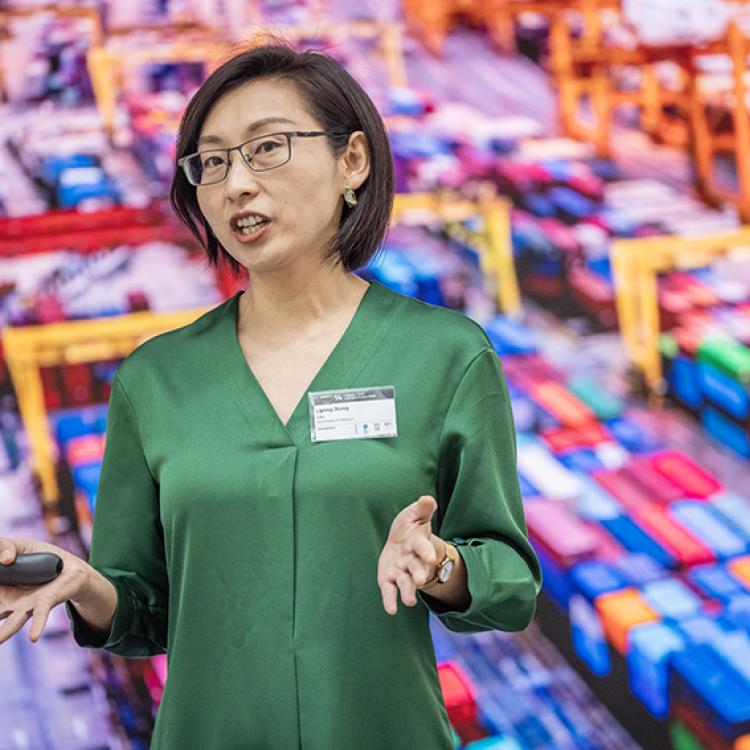
Operations Management
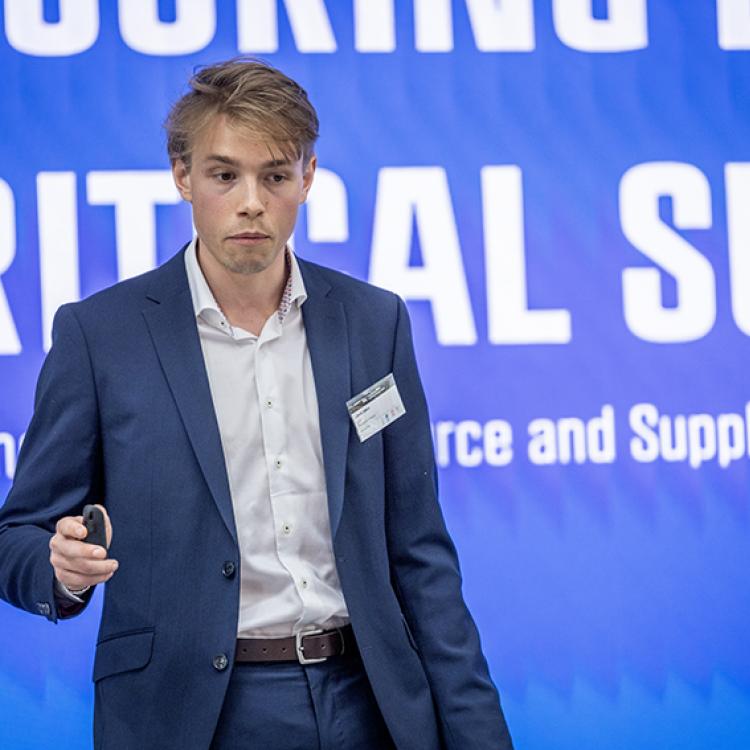
Operations Management (production management in manufacturing and service companies) concerns the company’s organization of its production. This includes Just in Time, Lean, Agility, MRP and other production principles. We’re especially involved with production conditions in networks, the connection between production conditions and supply chain activities, and, not least, in the question about how production strategy & condition relates to company strategy.
Managerial Economics
Managerial Economics analyzes cost-revenue relationships, investments and forecasting. We’re concerned with pricing, cost structures and investing as decision points for managers. By modeling decision situations, we want to bring the boundaries, within which managers make decisions, to the forefront. Because the central questions of managerial economics are how managers perceive these boundaries and how the marginal effects of their decisions unfold.
Performance Management
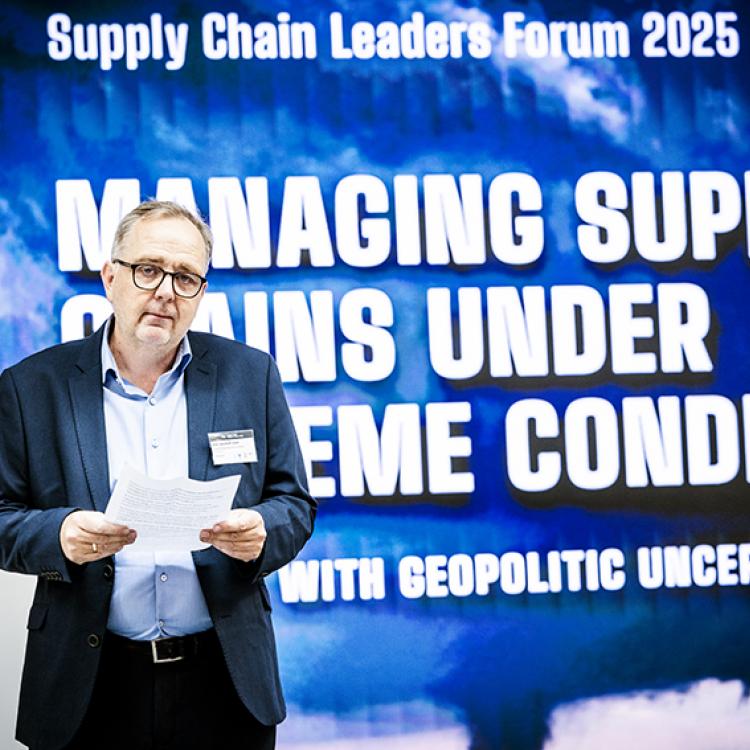
Performance Management concerns itself with budgeting and result measurement; it tackles the development and application of numbers in planning, coordination and motivation. We look into information systems and the design of coherent planning & reporting systems. We are also concerned about how the choice of calculation mechanisms can make a company’s economy transparent.
Supply Chain Management
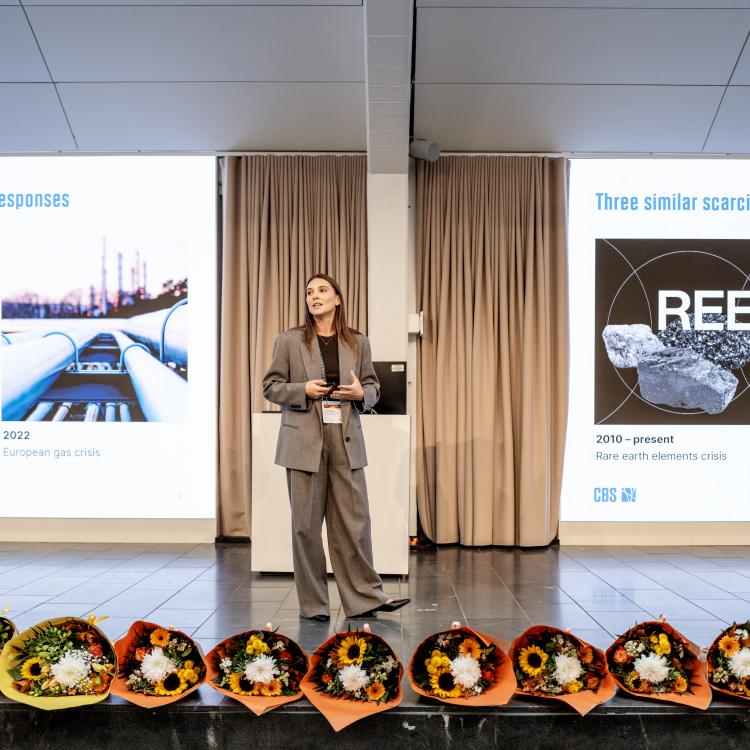
Supply Chain Management (logistics) looks at the flows of commodities and information between companies. We’re concerned about the different roles companies can have in a supply chain and the big questions stemming from those roles: How is labor divided between companies? How can management of the entire supply chain can take form? How do activities develop as a part of supply chain relations?
Innovation Management
Innovation Management focuses on the development of new products and processes. These often run across companies. We are especially interested in the management-related activities needed to facilitate progress. Central here, is asking the question about what management-related mechanisms and technologies are relevant and how these function in practice?
Event carousel


Research and publications (Panel content)
Our research
The Department of Operations Management explores the managerial and operational challenges of decision-making and economics. With a vision to be bold in ideas and strong in practice, we challenge the boundaries of our disciplines and foster a dynamic, cross-disciplinary research environment.
Our work is grounded in strong empirical analysis and shaped by a balance between academic research and close collaboration with corporate and institutional partners. This ensures that our insights remain both rigorous and relevant.
Our research spans Managerial Economics, Performance Management, Supply Chain Management, Innovation Management, and Operations Management. We examine how managers make decisions, how organisations measure performance, how supply chains function, how innovations unfold across companies, and how production systems are organised and aligned with business strategy.
Through this integrated approach, we aim to contribute new ideas while strengthening practical solutions for the challenges organisations face.
Externally funded projects
Inkubationslegater til Maritime Iværksættere ved Copenhagen Business School (CBS)
Type: Private (National)
Funder: Den Danske Maritime Fond
Department: Department of Operations Management
Status: Running
Start Date: 01-04-2025
End Date: 31-07-2026
Blue Denmark
Abstract: No description available.
Type: Public (National)
Funder: Innovationsfonden
Department: Department of Operations Management
Collaborative partners: University of Southern Denmark, Danmarks Rederiforening, Technical University of Denmark
Status: Running
Start Date: 01-05-2014
Blue Denmark - Inno+ projects
Abstract: No description available.
Type: Private (National)
Funder: Den Danske Maritime Fond
Department: Department of Operations Management
Status: Running
Start Date: 01-09-2014
Finished projects
Innovative Sustainable Urban Last Mile: Small Vehicles and Business Models (i-SMILE)
- A public, international project funded by the Nordic Council of Ministers and conducted in collaboration with Hanken School of Economics.
- Hosted by the Department of Operations Management, it focused on advancing research within its thematic scope. The project ran from September 2020 to August 2023 and has now been completed.
Supply Chain Resilience in Small and Medium-Sized Danish Production Firms
- A national, privately funded project supported by Industriens Fond with partners from the University of Southern Denmark and Universität Bremen.
- Based in the Department of Operations Management, it addressed key challenges within its research focus. The project ran from April 2021 to March 2023 and is now completed.
Visiting Professorship – Vinit Parida
- A national, privately funded project supported by Otto Mønsteds Fond and anchored in the Department of Operations Management.
- It contributed to advancing research in its designated area and strengthening academic capacity. The project ran from November 2022 to November 2024 and is now completed.
Visiting Professorship – Elena Giovannoni
- A national, privately funded project supported by Otto Mønsteds Fond and hosted by the Department of Operations Management.
- Its work focused on advancing research and strengthening academic collaboration in its field. The project was active from November 2022 to November 2024 and is now completed.
Managing Organizations at Night as a “State of Exception”
- A public, international project funded by Vetenskapsrådet and conducted with Lund University, hosted by the Department of Operations Management.
- It explored managing organizations at night as a “state of exception,” examining hospitals, production, service industries, and city management. The project ran from January 2022 to December 2024 and is now completed.
Our strategic initiatives
To support coherence between the CBS strategy, the OM strategy, and ongoing research activities, the department advances research through strategic initiatives aligned with institutional priorities.
AODM (Panel content)
Accounting, Organizations and Decision-Making
About the initiative
AODM is a research hub at the Department of Operations Management that brings together faculty working on management accounting and decision-making. Our research explores how financial and non-financial measures—such as productivity, quality, innovation, sustainability, risk, and services—shape organisational practices and decision-making.
We use qualitative methods like interviews and ethnographies and draw on insights from the social sciences. Our work focuses on how management accounting interacts with broader management practices across organizations.
AODM unites researchers studying performance management, AI, risk, and creative industries, sharing a curiosity about how accounting influences managerial work. We are among Europe’s largest centers for qualitative management accounting research, organizing conferences, workshops, and hosting visiting scholars.
For inquiries or collaboration, please contact Christian Huber (chu.om@cbs.dk).
Research Theme
1. Decision-making and the future: We explore how management accounting directly and indirectly influences decision-making in organisations.
2. Valuation and justification: We study the social and organisational processes through which management accounting shapes the valuation and justification of entities and efforts.
3. Economizing and organizing: We research how management accounting defines the ideals and qualities of economic actors and entities and helps connect and coordinate organisational activities
4. Risk and decision-making: We research how risks are (re)constructed for decision-making and how organisational attention is distributed through risk and accounting measures.
More information about our research themes will follow in due course.
Activities
Members of AODM organize a number of conferences and workshops both at CBS and internationally. Below is a selection of our activities.
Seminars at the Department of Operations Management
- Every two weeks, a brown bag seminar on management accounting is held. This is primarily targeted at OM faculty with an interest in current research in management accounting. The seminar alternates between presentations of early research drafts and open sessions which discuss current developments in the field of AODM.
- Guest researchers are invited for presentations.
Workshops & Conferences
- Annually, the GMARS (Global Management Accounting Research Symposium) conference is organised together with the University of New South Wales and the Michigan State University. In 2021, CBS functioned as principal host, and we plan to do so again in 2024. Jan Mouritsen, Christian Huber, Allan Hansen are members of the organising committee.
- The MASOP (Management Accounting as Social and Organisational Practice) workshop is co-organised by Allan Hansen. The location of the workshop circulates between locations of which CBS is one. The 2023 event is hosted by the University of Innsbruck, Austria.
- In July 2022, a workshop on Risk and Decision-Making, which is also the inaugural event of the Organising Risk Group was organised by Anestis Keremis and Christian Huber.
Adjacent Workshops
- AODM is involved, via Christian Huber, in the organization of the biannual PreGov (Predictive Governance) workshop series, which is an interdisciplinary workshop on artificial intelligence, governance, and decision-making.
- AODM is involved, via Christian Huber, in the organisation of the biannual QMARG (qualitative management accounting group) workshops, a network event for qualitative management accounting researchers in the northern countries in advanced career states.
Selected Publications
Ahmad Abras; Muhammad Al Mahameed / The Rise and Fall of Institutional Entrepreneurship in Islamic Financial Reporting Standardisation Projects
In: Accounting Forum, 10.4.2022
Allan Hansen / The Purposes of Performance Management Systems and Processes : A Cross-functional Typology.
In: International Journal of Operations and Production Management, Vol. 41, No. 8, 2021, p. 1249-1271
Anatoli Bourmistrov; Jan Mouritsen / Guest Editorial : Accounting for Sustainable and Smart Cities.
In: Journal of Public Budgeting, Accounting & Financial Management, Vol. 34, No. 5, 2022, 6 p., p. 577-582
Aziza Laguecir; Bernard Leca; Élise Berlinski / Souveraineté et évaluation académique : Une histoire de virgule en sciences de gestion.
In: Revue Francaise de Gestion, Vol. 48, No. 305, 2022, p. 103-117
Brian Anthony Burfitt; Jane Baxter; Jan Mouritsen / Separating and Integrating Non-financial and Financial Measures : A Case Study of a Sporting Organization Playing the Value-in-kind (VIK) Game.
In: Accounting, Auditing and Accountability Journal, Vol. 33, No. 8, 2020, p. 1871-1907
Christina Boedker; Kar Ming Chong; Jan Mouritsen / The Counter-performativity of Calculative Practices : Mobilising Rankings of Intellectual Capital.
In: Critical Perspectives on Accounting, Vol. 72, 10.2020
Christian Huber; Nadine Gerhardt; Jacob Reilley / Organizing Care during the COVID-19 Pandemic : The Role of Accounting in German Hospitals.
In: Accounting, Auditing and Accountability Journal, Vol. 34, No. 6, 2021, p. 1445-1456
Christian Huber / Whereof One Cannot Speak ... A Comment on Vollmer (2019)
In: Qualitative Research in Accounting and Management, 5.7.2022
Christopher S. Chapman; Anja Kern; Aziza Laguecir; Gerardine Doyle; Nathalie Angelé-Halgand; Allan Hansen; Frank G.H. Hartmann; Céu Mateus; Paolo Perego; Vera Winter; Wilm Quentin / Managing Quality of Cost Information in Clinical Costing : Evidence across Seven Countries.
In: Journal of Public Budgeting, Accounting & Financial Management, Vol. 34, No. 2, 2022, p. 310-329
Dane Pflueger; Martin Kornberger; Jan Mouritsen / What is Blockchain Accounting? : A Critical Examination in Relation to Organizing, Governance, and Trust.
In: European Accounting Review, 15.12.2022
Elise Berlinski; Marianne Strauch; Quentin Plantec / Hyperloop, une mythologie de marchés
In: Revue Francaise de Gestion, Vol. 48, No. 304, 5.2022, p. 65-88
Ivar Friis; Allan Hansen; Tamás S. Vámosi / Digitalisering og performance management : Om Big Data og algoritmers betydning for performanceevalueringer.
In: Revision & Regnskabsvæsen, Vol. 91, No. 12, 12.2022, p. 12-19
Ivar Friis; Allan Hansen; Tamás S. Vámosi / Performance management og sustainability : Design af økonomisk bæredygtige incitamenter for klimaet.
In: Revision & Regnskabsvæsen, Vol. 8, No. 2022, 8.2022, p. 17-23
Ivar Friis / Preservation of Incentives Inside the Firm : A Case Study of a Quasi-market for Cost-based Transfer Pricing .
In: Journal of Management Accounting Research, Vol. 32, No. 2, 9.2020, p. 137–157
Jacob Reilley; Nathalie Iloga Balep; Christian Huber / Making the User Useful? : How Translation Processes Managerialize Voice in Public Organizations.
In: Financial Accountability & Management, Vol. 36, No. 4, 11.2020, p. 401-419
Jan Mouritsen; Isabel Pedraza-Acosta; Sof Thrane / Performance, Risk, and Overflows : When Are Multiple Management Control Practices Related?.
In: Management Accounting Research, Vol. 55, 6.2022
John K. Christiansen; Jan Mouritsen / Learning from the Ambiguous Past with Project Reviews
In: International Journal of Managing Projects in Business, Vol. 14, No. 1, 2021, p. 179-204
Katrine Schrøder-Hansen; Allan Hansen / Performance Management Trends : Reflections on the Redesigns Big Companies Have Been Doing Lately.
In: International Journal of Productivity and Performance Management, 7.3.2022
Kim Soin; Christian Huber / Compliance and Resistance : How Performance Measures Make and Unmake Universities.
In: Organization, 30.12.2021
Lars Balslev; Sof Thrane; Ivar Friis / Information Technology Systems Implementation and Processes of Integration and Disintegration : Case Study Evidence from Air Greenland.
In: Journal of Accounting and Organizational Change, Vol. 18, No. 3, 2022, p. 419-439
Lichen Yu; Jan Mouritsen / Accounting, Simultaneity and Relative Completeness : The Sales and Operations Planning Forecast and the Enactment of the ‘Demand Chain’.
In: Accounting, Organizations and Society, Vol. 84, 7.2020
Lukas Löhlein; Christian Huber / The End of Audit : Spectacle and Love in the Audit Society.
In: Qualitative Research in Accounting and Management, 13.7.2022
Martin Jarmatz; Sof Thrane; Giulio Zichella / Kontrol af prisfastsættelsen via udvikling af prispolitikker
In: Revision & Regnskabsvæsen, Vol. 89, No. 1, 2020, p. 52-57
Michael Güldenpfennig; Kim Sundtoft Hald; Allan Hansen / Productivity Improvement and Multiple Management Controls : Evidence from a Manufacturing Firm.
In: International Journal of Operations and Production Management, Vol. 41, No. 6, 2021, p. 991-1017
Muhammad Al Mahameed; Ataur Belal; Florian Gebreiter; Alan Lowe / Social Accounting in the Context of Profound Political, Social and Economic Crisis : The Case of the Arab Spring.
In: Accounting, Auditing and Accountability Journal, Vol. 34, No. 5, 2021, p. 1080-1108
Muhammad Al Mahameed; Umair Riaz; Lara Gee / From Unrequited Love to Sleeping with the Enemy : COVID-19 and the Future Relationship between UK Universities and Professional Accounting Bodies.
In: Accounting Research Journal, Vol. 35, No. 3, 2022, p. 427-445
Yves Habran; Jan Mouritsen / Making Intensity of Efforts the Same : Commensuration Work in Target-setting Practices.
In: European Accounting Review, Vol. 31, No. 3, 7.2022, p. 603-627
Yves Habran; Satoko Matsugi; Jan Mouritsen / Mediating Relations between Financial and Operational Concerns when Structural Interdependencies Are Significant : The Development of Pseudo Micro-profit Centres at Kitanihon.
In: Management Accounting Research, Vol. 53, 11.2021
Participants
Allan Hansen (Associate Professor), Christian Hendriksen (Associate Professor), Christian Huber (Associate Professor, Organizer), Ivar Friis (Professor, PhD), Jan Mouritsen (Professor), Kai Inga Liehr Storm (Associate Professor), Katrine Schrøder-Hansen (Assistant Professor), Poalo Trevisan (Assistant Professor) og Sof Thrane (Professor with Special Responsibilities)
AI and DM (Panel content)
Artificial Intelligence and Decision-Making
Approaches and Goals
We take a perspective from interpretative accounting research, critical management studies, and the sociology of quantification to investigate the relation between AI and decision-making. This initiative aims at relating the specificities of contemporary AI quantifications – which can be equated to machine learning, a set of quantification algorithms that produce predictive scores on some future possibilities. The initiative aims at understanding how AI quantification influence managerial decisions modify organizational structures.
Research Themes
We divide our work in three related sub questions:
(1) How are the data collected and processed in relation to their subsequent use? What type of representation of the quantified entities do they offer.
(2) How are these quantifications made sense of in practice? How are they handled, and what beliefs do different actors invest in them in practice? How does the practice impact back the quantifications.
(3) What is the relation in between the hopes that led to the adoption of such local decision-systems based on quantifications and the modifications that organizational actors perceive?
Key Activities
- Co-organization of the workshop series on Predictive Governance (PreGov), joint with the Helmut Schmidt University Hamburg, Weizenbaum Institute Berlin, Bielefeld University.
- Co-organization on subthemes at the Annual Colloquium of the European Group of Organizational Studies (EGOS). For this year’s subtheme, please see: https://www.egos.org/jart/prj3/egos/main.jart?rel=de&reserve-mode=active&content-id=1658501434997&subtheme_id=1637466365714
- Including a wide network of researchers outside CBS (e.g. Martin Kornberger https://www.wu.ac.at/eim/team/martin-kornberger/, Matteo Ronzani, Elena Giovannoni
- Ongoing research activities such as empirical data collection, and presentation of working papers at international research conferences such as EGOS and the annual forum of the European Accounting Association.
Selected Publications
Anatoli Bourmistrov; Jan Mouritsen / Guest Editorial : Accounting for Sustainable and Smart Cities. In: Journal of Public Budgeting, Accounting & Financial Management, Vol. 34, No. 5, 2022, 6 p., p. 577-582
Aziza Laguecir; Bernard Leca; Élise Berlinski / Souveraineté et évaluation académique : Une histoire de virgule en sciences de gestion. In: Revue Francaise de Gestion, Vol. 48, No. 305, 2022, p. 103-117
Dane Pflueger; Martin Kornberger; Jan Mouritsen / What is Blockchain Accounting? : A Critical Examination in Relation to Organizing, Governance, and Trust. In: European Accounting Review, 15.12.2022
Élise Berlinski / Debate: The Multiple Paradoxes of Meta and Mark Zuckerberg Paris : The Conversation Media Group 1.3.2023 Net publication - Internet publication
Elise Berlinski; Marianne Strauch; Quentin Plantec / Hyperloop, une mythologie de marchés In: Revue Francaise de Gestion, Vol. 48, No. 304, 5.2022, p. 65-88
Élise Berlinski / The Multiple Paradoxes of Meta and Mark Zuckerberg In: Irish Examiner, 15.3.2023 Contribution to newspaper - Comment/debate
Huber, C. & Scheytt, T. (2018). Pitfalls of algorithmic control and their implications for support systems: Algorithmic control as a threat to accountability. In: Weidner, R. & Karafillidis, A. (eds.) Konferenzband (Proceedings) zur Dritten Transdisziplinären Konferenz Technische Unterstützungssysteme, die die Menschen wirklich wollen, Hamburg, 205-212.
Participants
The Accounting, Organizations and Decision-Making initiative is driven by a team of experienced professors.
The team includes:
Christian Huber, Associate Professor (Principal Organizer) - Department of Operations Management
Elise Berlinski, Assistant Professor - Department of Operations Management
Jan Mouritsen, Professor - Department of Operation Management
Reimagining SCM (Panel content)
Reimagining Supply Chain Management
Involvement in the Initiative
The team includes:
Andreas Wieland - Associate Professor
Philip Beske-Janssen - Assistant Professor
Christian Hendriksen - Assistant Professor
As part of the research, the team regularly has talks or presentations.
Above all, the Initiative is a space for collaboration and creativity. The aim of the Initiative is to develop supply chain management theory.
Approach and Goals
To challenge conventional approaches in supply chain management, the team is pursuing a research agenda that combines theoretical rigor with practical, societal, and ecological relevance. The team aims to make new theoretical contributions that can better capture the complexity of supply chains and how they interact with the rest of the world, as well as to conduct empirical studies that refine supply chain theory. Our ultimate goal is to contribute to the development of sustainable supply chain management practices.
Activities
Several article recently coauthored by Andreas Wieland reinterpret supply chains as social-ecological systems and resilience in terms of persistence, adaptation, and transformation. One of our recent achievements is the publication of an article by Amanda Bille and Christian Hendriksen that relates to the Initiative. The article entitled “Let us get contextual: Critical realist case studies in supply chain management” presents a novel framework for understanding the dynamics of supply chains and offers insights into how they can be managed more effectively. In the future, we plan to continue our research and to share our findings through talks and presentations at conferences and other events.
Selected Publications
Bille, A., & Hendriksen, C. (2022). Let Us Get Contextual: Critical Realist Case Studies in Supply Chain Management. Supply Chain Management: An International Journal. https://doi.org/10.1108/SCM-03-2022-0119
Wieland, A. (2021). Dancing the supply chain: Toward transformative supply chain management. Journal of Supply Chain Management, 57(1), 58–73. https://doi.org/10.1111/jscm.12248
Wieland, A., & Durach, C. F. (2021). Two perspectives on supply chain resilience. Journal of Business Logistics, 42(3), 315–322. https://doi.org/10.1111/jbl.12271
Wieland, A., Stevenson, M., Melnyk, S. A., Davoudi, S., & Schultz, L. (2023). Thinking differently about supply chain resilience: what we can learn from social-ecological systems thinking. International Journal of Operations & Production Management, 43(1), 1–21. https://doi.org/10.1108/IJOPM-10-2022-0645
Sustainability as a Service Offering (Panel content)
Sustainability as a Service Offering
About the Initiative
Understanding the multifaceted, integrated nature of products, services, and data has become essential for competitiveness. Leveraging capabilities and insights into P+S+D integration enables firms to configure value systems and resources that skilfully combine and integrate products, services, and data.
In a world where service is the norm these capabilities present opportunities to embrace new competitive priorities. In particular, firms are embracing sustainability as a service differentiator in response to the UN Compact Goals and the ESG agenda, and in recognition of their societal responsibilities. Similarly, there is an increasing interest in subscription- and outcome-based business models as alternative payment options. “Sustainability as a Service Offering” present major growth opportunities for Danish firms. The strategic initiative is based on a desire to understand how “Sustainability as a Service Offering” can successfully be leveraged as a competitive response in a changing world, which raises important questions for managers and researchers.
Related research disciplines include (but not limited to):
- Servitization and product service systems
- Modularity
- Pricing
- Ecosystems
- Platforms
- Business model innovation
- Circular economy
- Service operations management
Activities
We hold a wide range of activities, such as:
- Research seminars
- Visiting professors and scholars
- Research collaborations with international universities
We hosted the exciting EurOMA Service Operations Management Forum 2025, March 13-14, 2025, at CBS.
Recent Publications
1. Raja, J., Neufang, I.F., and Frandsen, T. and Golgeci, I. (2024) “Working through frame incongruences: A process perspective on (re)framing for digital servitization,” Technovation, Vol. 129, 102891. https://doi.org/10.1016/j.technovation.2023.102891
2. Shen, L., Shi, Q., Parida, V. and Jovanovic, M. (2024) “Ecosystem orchestration practices for industrial firms: A qualitative meta-analysis, framework development and research agenda,” Journal of Business Research, Vol. 173, 114463. https://doi.org/10.1016/j.jbusres.2023.114463
3. Burin, H.P., Fogliatto, F.S. and Hsuan, J. (2023) “The electricity market in Brazil: A multilevel perspective of sector agents for liberalization to residential consumers,” Energy for Sustainable Development, 76, 101289. https://doi.org/10.1016/j.esd.2023.101289
4. Davies, P., Bustinza, O.F., Parry, G. and Jovanovic, M. (2023) “Unpacking the relationship between digital capabilities, services capabilities, and firm financial performance: A Moderated Mediation Model,” Industrial Marketing Management, Vol. 115, p. 1-10. https://doi.org/10.1016/j.indmarman.2023.09.005
5. Engås, K.G., Raja, J. and Neufang, I.F. (2023) “Decoding technological frames: An exploratory study of access to and meaningful engagement with digital technologies in agriculture,” Technological Forecasting and Social Change, Vol. 190, 122405. https://doi.org/10.1016/j.techfore.2023.122405
6. Jovanovic, M., Bustinza, O.F., Davies, P. and Glenn Parry, G. (2023) “The interplay of product modularity, service types, and servitization depth on firm performance: A moderated mediation model,” Production Planning & Control. https://doi.org/10.1080/09537287.2023.2286276
7. Karatzas, A., Papadopoulos, G., Stamolampros, P., Raja, J. and Korfiatis, N. (2023) “Front- and back-end employee satisfaction during service transition,” International Journal of Operations and Production Management, Vol. 43, No. 7, p. 1121-1147. https://doi.org/10.1108/IJOPM-06-2022-0352
8. Karlsson, C. and Frandsen, T. (2023) “New product development by extending the business model,” in: The PDMA Handbook of Innovation and New Product Development. Eds. L. Bstieler. and C.H. Noble, Oxford: Wiley, p. 477-495.
9. Kim, M.J., Lim, C.H. and Hsuan, J. (2023) “From technology enablers to circular economy: Data-driven understanding of the overview of servitization and product–service system in Industry 4.0,” Computers in Industry, 148, 103908. https://doi.org/10.1016/j.compind.2023.103908
10. Thomson, L., Sjödin, D., Parida, V. and Jovanovic, M. (2023) “Conceptualizing business model piloting: An experiential learning process for autonomous solutions,” Technovation, Vol. 126, 102815. https://doi.org/10.1016/j.technovation.2023.102815
11. Yurt, O., Sorkun, M.F. and Hsuan, J. (2023) “Modularization of front-end logistics services in e-fulfillment,” Journal of Business Logistics, Vol. 44, No. 4, p. 583-608. https://doi.org/10.1111/jbl.12354
Involvement in the Initiative
Juliana Hsuan, Professor
Thomas Frandsen, Associate Professor
Marin Jovanovic, Associate Professor
Jawwad Raja, Associate Professor
Magnus Persson, Associate Professor, Chalmers University of Technology
Strategic Procurement Initiative (Panel content)
Strategic Procurement Initiative
About the Initiative
Over recent decades, companies have outsourced large parts of their production to global networks of specialised suppliers. This has made procurement and supply management a central lever for managing geopolitical risk, security of supply, the green transition and innovation. Procurement decisions now decisively shape organisations' ability to remain competitive while meeting environmental and social goals. This applies not only to private firms but also to the public sector, where defence, critical infrastructure and industrial policy ambitions place unprecedented demands on procurement.
Yet making procurement a true driver of resilience, sustainability, innovation and value creation remains a challenge. Conventional priorities of cost, quality and delivery often conflict with requirements related to security of supply, emissions reduction, circularity and social responsibility. There is a clear need for new approaches, tools and governance mechanisms to manage these tensions.
The Strategic Procurement Initiative addresses this need. It continues and broadens the former Sustainable Procurement Initiative: the sustainability agenda remains central, but the scope now encompasses the wider set of strategic challenges facing procurement in a geopolitically volatile world. Our research is primarily qualitative and case-based, developed in close collaboration with companies, public organisations and professional communities, and published in leading international journals in operations and supply chain management. The initiative team includes the Editor in Chief of the Journal of Purchasing and Supply Management, anchoring CBS at the centre of the international procurement research community.
Research Streams
The initiative is organised into three interconnected research streams:
- Resilient procurement. Geopolitical tensions, trade conflicts, pandemics and climate-related events increasingly disrupt global supply chains. This stream develops approaches, metrics and governance models that help organisations assess supply chain vulnerabilities, redesign supply bases (for example through multi-sourcing, nearshoring and strategic buffering) and embed resilience in category strategies and supplier relationships.
- Innovative procurement. Through its boundary-spanning role, procurement can detect early signs of innovation in the external environment and mobilise supplier capabilities for technological development. This stream develops new frameworks for procurement as a strategic facilitator of innovation, including early procurement involvement, collaboration with startups and universities, and the organisational competences and AI capabilities this role requires.
- Sustainable procurement. A large part of companies' climate footprint lies in Scope 3 emissions from purchased goods and services, while resource scarcity pushes circular procurement up the agenda. This stream examines how procurement can drive the green transition and responsible business conduct, and how procurement managers navigate trade-offs between cost, decarbonisation, circularity, supply security and competitiveness.
Activities
Members of the SPI organise and participate in a range of research, dissemination and engagement activities:
Workshops with companies and public organisations. We organise and facilitate recurring practitioner workshops at CBS, currently averaging two per year, to disseminate research findings, identify research opportunities and facilitate knowledge sharing among participating organisations. In May 2026, the initiative hosted a workshop on procurement resilience in the era of geopolitical disruptions.
Research and publication. We conduct empirical, case-based research in collaboration with partner companies and publish in leading international journals such as the Journal of Purchasing and Supply Management, the Journal of Supply Chain Management and the International Journal of Operations and Production Management. We present our work at international conferences including IPSERA, EurOMA and NOFOMA.
Teaching and talent development. We integrate research insights into CBS's bachelor, master and executive education programmes, develop new cases and courses on strategic procurement, and involve master thesis students in research collaborations with case companies.
International collaboration. The initiative hosts visiting international scholars and builds partnerships with leading procurement research groups across Europe.
Past Events
- May 2026: Procurement resilience in the era of geopolitical disruptions. Procurement professionals and researchers took part in a Strategic Procurement Initiative workshop at CBS aimed at facilitating knowledge exchange on how procurement can build supply chain resilience under geopolitical uncertainty. The workshop used a world café format and its insights feed directly into the initiative's ongoing research. [Link to CBS news item]
- April 2025: Sustainable procurement maturity. Procurement professionals from leading Danish and Nordic companies worked hands-on with maturity models for sustainable procurement, assessing the maturity of their own organisations and comparing practices across firms. The workshop was co-organised with The Sustainable Procurement Pledge.
- October 2024: Moving towards circular procurement. Company representatives shared how their organisations are putting circular procurement into practice, and discussed the role of the procurement function in establishing circular supply chains and advancing the green transition.
- November 2023: Circular procurement and Scope 3 emissions. More than 40 procurement and supply chain practitioners from over 20 companies examined current developments in circular procurement and how buying organisations can collaborate with suppliers to measure and reduce Scope 3 emissions.
- April 2023: Bæredygtig indkøbspraksis 2023. A webinar presenting the initiative's ongoing research on how procurement functions handle the transition to sustainable purchasing, including the competing stakeholder demands they must balance and the challenge of implementing green practices across supply networks outside their direct control. The session also introduced the new research activities companies could join.
- November 2022: Observatory survey results and supply chain due diligence. The second Sustainable Procurement Observatory workshop presented findings from the observatory survey and featured a keynote on emerging supply chain due diligence requirements, followed by group discussions on what compliance would mean in practice for participating organisations.
- October 2022: Transitioning towards sustainable procurement. A case company workshop on environmental footprinting and Scope 3 mapping from the perspective of the procurement function, including a company case and the benchmarking of a new tool for assessing sustainable procurement maturity.
- May 2022: Transitioning towards sustainable procurement. A case company workshop in which master thesis students presented their findings to the participating companies, followed by discussion between companies, students and the research team.
- March 2022: Sustainable Procurement Observatory launch workshop. The first workshop of the Sustainable Procurement Observatory, held in hybrid format at CBS. Participants discussed the results of the observatory's first exploratory survey of sustainable procurement practices among member organisations, and shaped the observatory's future activities.
- November 2021: Launch of the Sustainable Procurement Initiative. The initiative was launched at CBS with an event introducing its research agenda to companies, including a practitioner case on implementing sustainable procurement, and setting out how organisations could take part and gain access to the knowledge generated.
Current research
Research within the initiative is currently organised around five active lines of work, spanning all three research streams.
Circular procurement in practice. Case-based research across multiple organisations examining how procurement functions translate circular ambitions into operating practice. The work looks at how buying organisations handle quality and traceability in recycled inputs, how supplier configurations and collaboration models must change to support circular material flows, and why the viability of circular sourcing varies so sharply across industries and material categories.
Resilience and circularity. A conceptual and empirical study of whether and how circular procurement can strengthen supply chain resilience and reduce dependence on scarce or geopolitically exposed resources. The study was presented at the EurOMA 2026 conference and is being developed further using material from the May 2026 practitioner workshop, where participants described how circular sourcing can reduce one dependency while creating new ones elsewhere in the supply network.
Alongside these projects, the initiative is developing case-based research on how procurement and supplier relationships support innovation in technology-intensive industries, and design science research producing practical tools for supplier resilience assessment.
Reports and Research Output
Scope 3 governance in multitier supply networks. Published in the Journal of Supply Chain Management (2026) as "Organizing Buyer-Side Scope 3 Governance: Sensemaking in Supply Network Decarbonization". Drawing on paradox and sensemaking theory and a multiple case study of four European multinationals with 32 interviews, the study identifies five recurring governance difficulties: estimating emissions from weak supplier data, verifying claims that cannot be directly observed, balancing short-term commercial pressure against long-term decarbonisation, creating impact beyond a small set of suppliers, and working with suppliers unwilling or unable to change. Firms facing the same pressures respond in markedly different ways — concentrated oversight of key suppliers, broader supplier capability building, industry collaboration platforms, or attempts to shift wider market conditions — and those differences are shaped not only by external conditions but by how procurement actors define the governance problem in the first place.
How procurement earns strategic standing. Published in the Journal of Purchasing and Supply Management as "Institutional dynamics of purchasing and supply management development: A process study of stakeholder influence". A five-year longitudinal case study in the pharmaceutical industry traces how procurement moves from a formal mandate, through contestation by functional departments, to becoming embedded in everyday work in selected domains. The study argues that uneven embedding is not incomplete progress: procurement gains durable strategic standing where interdependence, feasible value levers and senior attention align, while accepting lighter coupling elsewhere.
Doctoral research: translating Scope 3 targets into practice. Sofia Wiik’s PhD dissertation, “Translating Scope 3 Emission Targets: Social and Material Procurement Practices in the Supply Chain”, asks how Scope 3 reduction targets are translated into actual practice in a setting characterised by unreliable data, scarce specialist knowledge and few institutionalised routines. Drawing on qualitative research across 16 companies, including both focal firms and their suppliers, the dissertation shows how organisations keep several versions of the same target in play while maintaining operational coherence, how procurement managers construct meaning and build their own pathways for action where no established practice exists, and how perceptions of distributive justice shape whether suppliers engage with emissions requirements at all. Rather than treating ambiguity as a problem to be removed, the study shows it can function as a space for innovation. The dissertation was defended at CBS in August 2026.
For Students
We involve master thesis students in the initiative's research. Students write their thesis in close collaboration with SPI researchers, exploring one of the initiative's central themes, often in direct engagement with a participating case company. Students interested in writing their thesis within the initiative are welcome to contact Kim Sundtoft Hald.
Participants
Kim Sundtoft Hald, Professor, CBS Department of Operations Management (Initiative Lead)
Caterina Trevisan, Assistant Professor, CBS Department of Operations Management
Andrea Patrucco, Associate Professor, CBS Department of Operations Management
Thomas Johnsen, Professor, Audencia Business School
Philip Beske-Janssen, Associate Professor, University of Southern Denmark
Former Initiatives (Panel content)
Former Strategic Initiatives
CBS Servitization
PRODUCT + SERVICE + DATA INTEGRATION
The main challenge facing industrial firms in Denmark is the continuous and simultaneous integration of physical products, services and data in which many firms are facing situations in which they must concurrently operate product (P), service (S) and data (D).
As part of the Servitize.dk program, this CBS research investigates how the integration of the three elements, product, service and data is best utilized by companies for corporate success. We call it “The P+S+D Integration Challenge”.
The Servitize.dk program aims to further strengthen the competitiveness of Danish organizations within the area of servitization. The Servitize.dk program is a national effort, funded by the Danish Industry Foundation, in which CBS collaborates with FORCE Technology, Aarhus University BTECH, the Danish Technological Institute, and Alexandra Institute.
The CBS research in the Servitize.dk program builds upon the two earlier research projects at CBS: “Driving Competitiveness through Servitization” and “From Big Data to Big Business (BDBB): Understanding data- driven business development”.
Research team:
Juliana Hsuan, Professor (mso), Department of Operations Management, CBS jh.om@cbs.dk
Thomas Ritter, Professor, Department of Strategy and Innovation, CBS
Thomas Frandsen, Associate Professor, Department of Operations Management, CBS tfr.om@cbs.dk
Jawwad Raja, Associate Professor, Department of Operations Management, CBS jr.om@cbs.dk
Carsten Lund Pedersen, Postdoc, Department of Strategy and Innovation, CBS
Shaping our urban furture
The research project REFLOW sets out to offer a new approach to circular economy in urban areas. Currently, our urban environments follow a process characterized by a linear product in/waste out model. Such traditional configuration leads cities to consume more than they produce and, consequently, creates an unsustainable amount of waste. In circular and regenerative cities, waste becomes a resource that helps building wealth rather than reducing it. Active citizen involvement and systemic change are needed to re-design products, re-locate production, and re-think urban spaces, which in turn will enact this new form of managing resources.
To ensure that circular economy principles are anchored in citizens’ vision and expectations, the project has as active partners six pilot cities: Amsterdam, Berlin, Cluj-Napoca, Milan, Paris, and Vejle. In each of the six pilot cities there are makerspaces where citizens can prototype, develop, and test circular products, software, and business models for their cities. It is the ambition of REFLOW that its results can offer guidelines and tools that other cities can adopt in their transition to becoming circular and regenerative.
REFLOW brings together 27 partners from 10 European countries. REFLOW combines the competences and approaches of very different partners, including universities, grassroots organizations, municipalities, research institutions, designers and developers.
The project is led by Cristiana Parisi, Associate Professor at the Department of Operations Management, Copenhagen Business School (CBS). It received 10 Million € funding from the European Union’s Horizon 2020 Research and Innovation Programme for its 3-year duration, starting June 2019.
The CBS REFLOW team:
Cristiana Parisi, Associate Professor, Project Coordinator of REFLOW
Jan Mouritsen, Professor, jm.om@cbs.dk
Juliana Hsuan, Professor MSO, jh.om@cbs.dk
Leonardo Santiago, Associate Professor, ls.om@cbs.dk
Lotta Lichtenberger, Project Administrator
Zartashia Ahmed, Research Assistant
Anestis Keremis, Assistant Professor
Justyna Bekier, PhD Fellow
Andrea Beye, PhD Fellow
Publications
See all publicationsdecember 2026
Impact Pathway: Beyond Automation and Augmentation - A Relational Ontology of AI in Operations and Supply Chain Management
In: International Journal of Operations and Production Management. 46, 0144-3577, p. 357–367
Journal article
Miriam M. Wilhelm
Tingting Yan
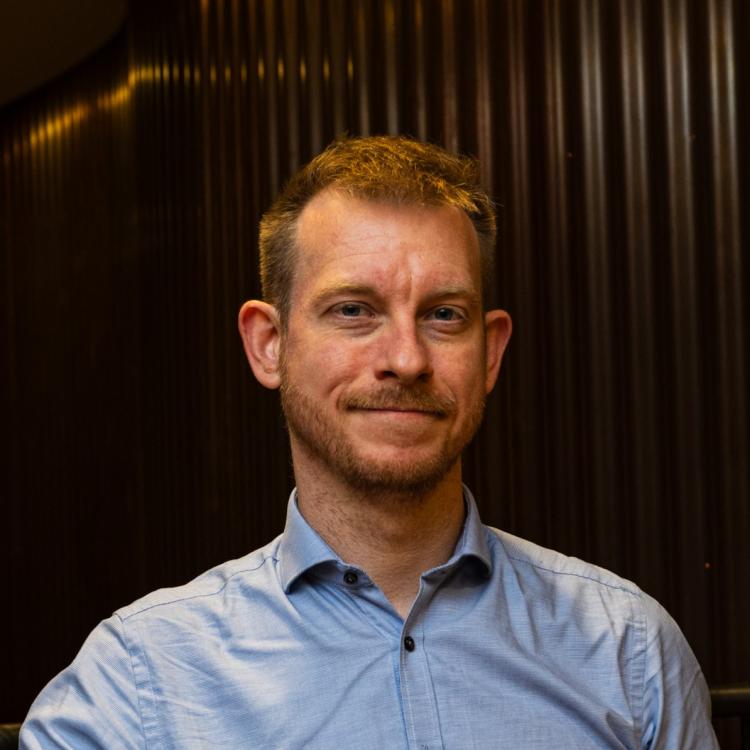
Christian Hendriksen, Associate Professor
Nada Sanders
Pietro Micheli
december 2026
The Bodily Enactment of Accounting: A Study of Results-Based Management in an NGO
In: Accounting, Organizations and Society. 117, 0361-3682, 16 p.
Journal article
oktober 2026
Artificial Intelligence in Public Procurement: Aligning Operational Capacity, Legitimacy, and Public Value
In: Journal of Business Logistics. 47, 0735-3766, 10 p.
Journal article
Education (Panel content)
Our contribution to programmes and courses
Through our broad portfolio of courses, we develop the next generation of leaders and specialists across Economics, Management, Supply Chains, and Digital Transformation. Our teaching is closely connected to five primary research areas: Operations Management, Managerial Economics, Performance Management, Supply Chain Management, and Innovation Management.
Our courses combine foundational disciplines such as Accounting, Finance, and Performance Management with emerging topics like Business Analytics, Digital Business, Sustainable Supply Chains, and Innovation in Healthcare and Bio-Business. In this way, we integrate research-driven insights with practical applications to prepare students for impact in organizations and across global value chains.
We provide students with both theoretical insights and practical tools to analyse, design, and transform organisations and global value chains. By combining strategic perspectives, operational know-how, and sustainability considerations, our teaching empowers graduates to create value, drive organisational change, and manage complex international contexts. In addition, our vibrant PhD community plays a key role in advancing research and enriching our learning environment, fostering collaboration and innovation across academic and industry boundaries.
In this way, our programs not only reflect the strengths of our research but also equip students to meet today’s business challenges and prepare them to lead tomorrow’s transformations.
“Joining the Department of Operations Management has been one of the best decisions I’ve made. I’m grateful for the continuous support from my supervisors, colleagues, and our inspiring PhD community — all of whom have helped me grow and reach higher goals.” Yanan Li
PhD Fellow at Department of Operations Management

Department of Operations Management Diploma programmes

HD1

HD2 Maritime

HD2 Business

HD2 International Business
HD2 Supply Chain Management
Department of Operations Management Bachelor Programmes
The Department of Operations Management contributes with both teachers and course supervision to a wide range of bachelor programmes at CBS’ Faculty of Economics and Business Administration, providing students with a strong foundation in operations, supply chain management, and business processes.
HA i erhvervsøkonomi

HA(it.) - erhvervsøkonomi og informationsteknologi

HA(mat.) - erhvervsøkonomi og matematik

HA(kom.) - erhvervsøkonomi og virksomhedskommunikation

BSc in Business Administration and Sociology

BSc in International Shipping and Trade

BSc in Business Administration and Service Management
Department of Operations Management Master Programmes
The Department of Operations Management contributes with both teaching and thesis supervision to multiple master’s programmes at CBS, supporting advanced learning and research within operations management, performance management, and related fields.

MSc in Economics and Business Administration in Supply Chain Management

MSc in Business, Language and Culture - Business and the Global South (Business and Development Studies)

MSc in Economics and Business Administration in General Management and Analytics
MSSc in Organisational Innovation and Entrepreneurship