Major grant for interdisciplinary research centre on quantum technology
What happens when quantum technology moves from being a scientific possibility to becoming part of society? Supported by a DKK 50 million grant from the Carlsberg Foundation, a new interdisciplinary research centre involving researchers from Copenhagen Business School and the University of Copenhagen will explore this question

Quantum technology is often described as one of the technologies that could change the world. But while researchers are working to move the technology from the laboratory into practical applications, one essential question remains open:
How are practices, markets and forms of governance around quantum technology shaped and developed – and how can we best navigate the opportunities and uncertainty that come with it in the future?
The new research centre, Crafting Quantum: From Scientific Promise to Societal Pathways, will help answer questions like these.
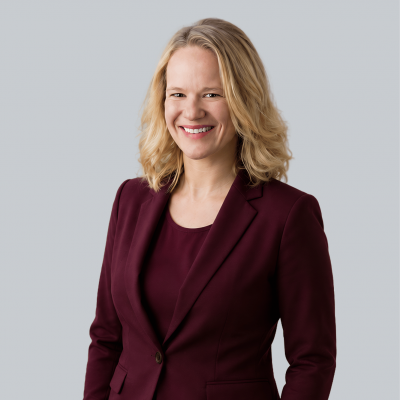
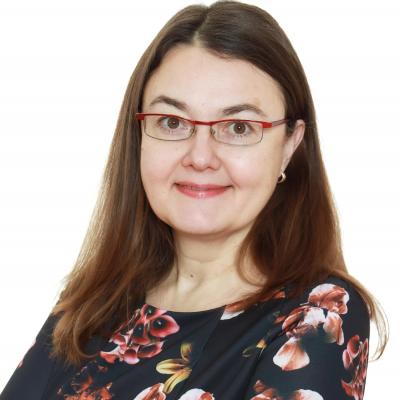
Backed by DKK 50 million in funding from the Carlsberg Foundation over the next six years, the centre will be led by Professors Christina Lubinski and Silviya Svejenova from Copenhagen Business School, together with Professor Christian Borch from the University of Copenhagen.
“We are excited and grateful for this rare opportunity to study quantum while its uses, meanings and wider implications are taking shape. The centre will build an interdisciplinary research community spanning organisation studies, history, sociology and the arts in sustained dialogue with quantum scientists, practitioners and policy makers. Together, we will advance the understanding of how frontier technologies can be crafted – creatively and responsibly, into societal pathways,” says Silviya Svejenova.
“Once a technology has become part of everyday life, it can be difficult to see all the decisions, assumptions and interests that helped shape it. With quantum technology, however, we have an opportunity to follow this development while the future is still open” Christina Lubinski
Professor
The future is still open
The purpose of Crafting Quantum is not to investigate the physics behind quantum technology. Instead, the researchers will focus on what happens when scientific breakthroughs encounter businesses, investors, policymakers and society at large.
“Quantum technology is highly technical, but what it becomes is not simply a technical question. Technologies acquire meaning and value through organisations, markets, regulation, public debate and the narratives we create about what they can make possible,” says Christina Lubinski.
According to the researchers, what makes quantum technology particularly interesting is that many of its future applications have yet to be determined. This is precisely what makes the present moment so important.
“Once a technology has become part of everyday life, it can be difficult to see all the decisions, assumptions and interests that helped shape it. With quantum technology, however, we have an opportunity to follow this development while the future is still open,” Christina Lubinski explains.
The technology is developing rapidly, while its applications as well as its broader societal significance remain subject to considerable uncertainty.
“At this formative stage, quantum technology is being shaped not only in laboratories, but also through labels, stories, images and choices that influence what it may become. Art-based inquiry can make these abstract futures, and their possible pathways into society, tangible and discussable, helping us understand how different possibilities come to be seen as credible, valuable or risky,” says Silviya Svejenova.
Among other things, the centre will investigate how markets emerge around quantum technology, how businesses and policymakers navigate uncertainty, and how expectations and ideas about the technology’s potential influence decisions being made today.
DKK 50 million enables a long-term perspective
The grant is part of an extraordinary DKK 150 million funding initiative launched by the Carlsberg Foundation to mark its 150th anniversary.
The funding will support three new interdisciplinary research centres, each receiving DKK 50 million over six years. In addition to Crafting Quantum, centres focusing respectively on artificial intelligence and human cognition and on ecosystem restoration will also be established.
For the researchers behind Crafting Quantum, the long-term funding means they can build a dedicated research environment around a field that is still evolving.
“The six-year horizon gives us the opportunity to follow quantum while the field itself is developing, rather than taking a snapshot of it at one moment, says Christina Lubinski.
Over the six-year period, the researchers will collaborate across disciplines and with stakeholders in Denmark’s quantum ecosystem.
“Denmark offers an unusually rich setting for this research, combining the historical legacy of Niels Bohr with a rapidly developing ecosystem of quantum research, start-ups, investment and public policy. The ambition is not simply to conduct a series of individual studies, but to create a research community capable of following these developments over time.”
The Carlsberg Foundation’s anniversary grants were awarded through an open competition aimed at ambitious basic research spanning the natural sciences, social sciences and humanities.
Facts: Crafting Quantum
- Full name: Crafting Quantum: From Scientific Promise to Societal Pathways
- Grant: DKK 50 million over six years
- Leadership: Professor Christina Lubinski and Professor Silviya Svejenova, Copenhagen Business School, and Professor Christian Borch, University of Copenhagen
- Disciplines: Organisation studies, history, sociology
- Funder: The Carlsberg Foundation
- Background: The centre is one of three new interdisciplinary research centres receiving a combined DKK 150 million as part of the Carlsberg Foundation’s 150th anniversary celebrations.