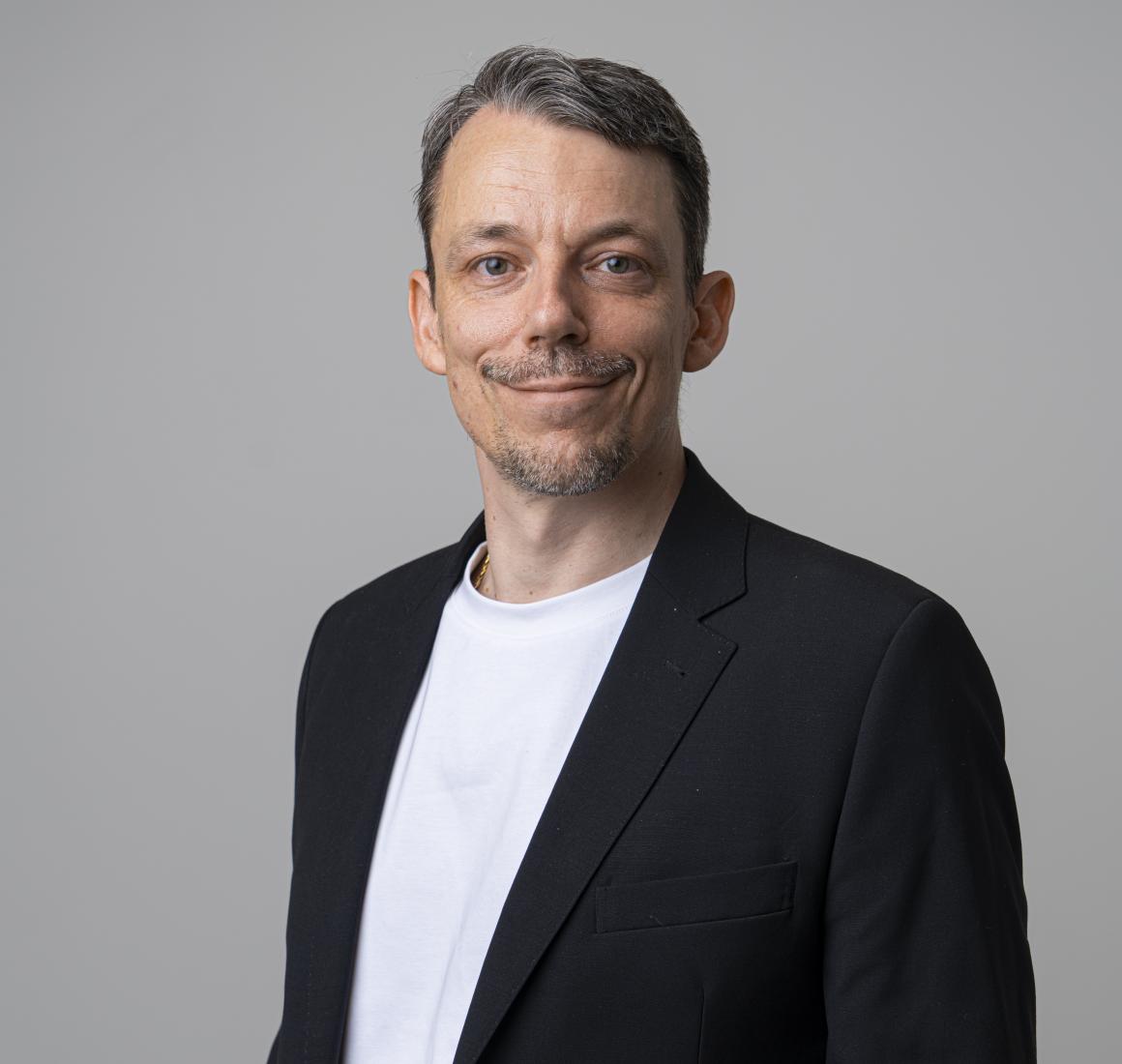
Former German Vice Chancellor Robert Habeck joins CBS as Professor of Practice
He stood at the centre of Europe’s energy crisis. Now he will bring his frontline political experience into CBS’ efforts to understand and respond to a new geopolitical reality

When Russia invaded Ukraine in February 2022, Europe’s dependence on Russian energy suddenly became more than a matter of trade. Instead it became a matter of security.
Few people experienced that more directly than Robert Habeck.
As Germany’s Vice Chancellor and Federal Minister for Economic Affairs and Climate Action, he played a central role in the political effort to reduce Europe’s largest economy’s dependence on Russian gas while keeping the green transition on track.
Now, the former German political leader is joining Copenhagen Business School as a Professor of Practice.
At CBS, Habeck will contribute to the university’s work on geopolitics and business security through the Geopolitics and Business Security initiative and the Geopolitics, Geoeconomics and Business Research Cluster.
The aim is to bring experience from the rooms where major decisions are made into research, teaching and collaboration with businesses.
Geopolitics has moved into the boardroom
Over the past few years, the conditions under which businesses operate have changed fundamentally.
Geopolitics is no longer something companies can leave to foreign ministries and policy analysts. The war in Ukraine, the rivalry between the United States and China, fragile supply chains and competition over energy, technology and critical raw materials have become part of the strategic reality facing businesses across Europe.
For Robert Habeck, the energy crisis that followed 2022 is just one example of a much broader development.
“The energy crisis after 2022 was very threatening. And yet it was a local crisis. Over the last three years, however, confidence in global markets has eroded overall. It is no longer certain that the global market for energy, but also for raw materials, the international trading order and technical exchange, will function,” says Robert Habeck.
According to him, Europe therefore finds itself at a decisive turning point. A continent that has built its prosperity on global trade and economic interdependence must now come to terms with the fact that economic relationships have also become strategic relationships.
“There is no longer such a thing as ‘pure trade policy theory’. Everything has become part of a geopolitical struggle” Robert Habeck
Professor of Practice på CBS
Europe must turn uncertainty into strength
This is precisely the reality that CBS wants to help future leaders navigate.
As trade policy, energy security and technological development become increasingly shaped by geopolitical interests, businesses must also rethink the decisions they make.
“There is no longer such a thing as ‘pure trade policy theory’. Everything has become part of a geopolitical struggle,” says Robert Habeck.
Yet, in Robert Habeck’s view, this new uncertainty is not only a threat. It is also an opportunity to build new capabilities:
“Europe needs its own technologies, a certain degree of resilience in raw materials, energy efficiency, electrification, innovation in general. And politics will have to create the right framework conditions for this, or it will fail.”
The challenge, therefore, is not to retreat from globalisation but to understand its new conditions, he says:
“There is no reason to mope; instead, we must analyse the risks and turn them into market opportunities.”
Research and politics have more in common than you might think
Moving from the centre of European politics into academia may seem like a dramatic shift. But for Robert Habeck, the transition feels more natural than many might expect.
Since leaving politics, he has been affiliated with the Danish Institute for International Studies (DIIS) as a Senior Analyst. In his view, research and politics share a common purpose: understanding complex developments, analysing risks and making informed decisions about the future.
“For me, practical politics – making decisions, taking responsibility – and reflecting on the underlying factors and broader trends has never been a contradiction. In that sense, the balance has simply shifted.”
By joining CBS, Robert Habeck brings more than an analytical understanding of Europe’s geopolitical challenges. He brings first-hand experience of managing them in real time.
According to Morten Frederiksen, Dean of Research, Innovation and Societal Impact at CBS, this is exactly the kind of experience that can deepen both research and its relevance to society.
“One of the strengths of a university is its ability to combine rigorous research with insights from practice. Robert Habeck has been directly involved in navigating some of the defining geopolitical and economic challenges facing Europe. His experience and global outlook will contribute significantly to our research on geopolitics, geoeconomics and business security, while also strengthening the dialogue between research, business and society.”
Follow CBS' research
Read more from CBS
Green light: CBS launches two new programmes in AI and finance
When companies adopt robots, they often grow and hire more people