China controls critical supply chains - but Europe cannot produce everything itself
China dominates supply chains that the European industry cannot do without, however, the solution is not to bring all production back to Europe, a CBS researcher argues

Rare earth elements are used in everything from wind turbines and electric vehicles to advanced electronics and defence technology, and Europe is currently highly dependent on China in this area.
According to the EU Commission, 98% of the EU's demand for permanent magnets based on rare earth elements is met through imports from China.
At the same time, this dependency is not only about where the raw materials are mined. When they are refined, processed and turned into finished components, production becomes even more concentrated, and this raises a question that has moved steadily higher up the political agenda in the EU: At what point does a dependency become so critical that it justifies using state aid and other far-reaching policy measures to create European alternatives?
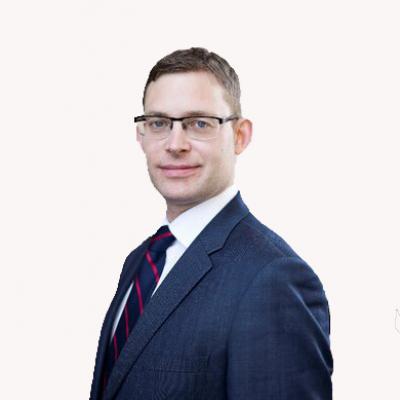
That is the question Malthe Munkøe, part-time lecturer at Copenhagen Business School, seeks to answer more systematically in a new analysis published in the journal Intereconomics.
“In my article, I argue that we should be prepared to use more far-reaching policy tools in areas where diversification and substitution strategies are not realistically capable of delivering the greater degree of independence we are seeking,” says Malthe Munkøe.
Two questions should determine where the EU takes action
Europe depends on products and raw materials from countries outside the EU across a wide range of sectors.
However, that does not mean all dependencies are equally critical or that the solution necessarily is to move production to Europe.
Malthe Munkøe suggests that the EU should take a more systematic approach based on two questions:
Can supply be diversified, allowing the product to be sourced from other countries?
Can the product be substituted, meaning it can be replaced with another material, product or technology?
If a product can relatively easily be sourced from alternative suppliers, the solution may be to diversify imports or make new trade agreements. If it can be substituted, investing in research and developing alternatives may be the better option.
If neither option is realistic, the case for more interventionist measures – such as state aid, strategic stockpiles, 'Buy European' requirements or support for new production – becomes much stronger.
“There are many areas where we depend on third countries, and that will continue to be the case. We cannot try to produce everything ourselves through state aid or every other possible policy tool. We need to focus on specific areas that are strategically important,” says Malthe Munkøe.
This is not only because public funding is limited. Several of these policy tools also come with economic costs and may make products more expensive.
“I am particularly thinking about the use of taxpayers' money, but also about protectionist measures. Protectionism can reduce economic efficiency, which is why economists have generally viewed it with scepticism,” says Malthe Munkøe.
Diversification and substitution already form part of the European Commission's analyses. Malthe Munkøe's contribution is therefore not the criteria themselves but rather linking them more systematically to the choice of policy instruments.
“My contribution is to build on that starting point and outline a clearer framework that more explicitly matches policy instruments with these different circumstances,” says Malthe Munkøe.
Magnets are among the most difficult cases
According to Malthe Munkøe, rare earth elements and permanent magnets are an example of a value chain where both diversification and substitution are particularly challenging.
Rare earth elements can be found and mined in several parts of the world, including Europe, however, they must then go through several stages of processing before they can be used in products such as permanent magnets.
“The challenge is very much that downstream processing is highly concentrated. The further up the value chain you go, the more geographically concentrated it becomes. As a result, you may find yourself in a situation where the finished product is available almost exclusively from China, even though mining itself is geographically more diversified,” says Malthe Munkøe.
For example, the European Commission states that China refines 100% of the rare earth elements used in permanent magnets, while 98% of the EU's demand for the magnets themselves is met through Chinese imports.
China's export restrictions in 2025 demonstrated how quickly such concentration can have serious consequences.
After China introduced restrictions in April on a range of rare earth elements and products based on them, exports fell sharply, and several European automotive suppliers were forced to temporarily shut down factories and suspend production.
At the same time, permanent magnets are difficult to replace in sectors including defence and high-tech manufacturing.
“This is an example of a value chain where substitution is extremely difficult and diversification is equally challenging. If you imagine a scenario where access disappears entirely, it is difficult to see how things would end well,” says Malthe Munkøe and continues:
“In cases like this, I would argue that we should consider the more far-reaching tools in the policy toolbox, for example, state aid to help establish an alternative value chain,” says Malthe Munkøe.
Can Europe build an alternative?
The EU has already begun diversifying supply and expanding production capacity within Europe.
Through the Critical Raw Materials Act, the EU has established benchmarks for 2030. The EU aims to extract at least 10% of its annual consumption of strategic raw materials, process at least 40% and recycle at least 25%. At the same time, no more than 65% of the EU's annual consumption of a strategic raw material at any relevant stage of processing should come from a single country outside the EU.
However, developing new mines, refineries and production facilities requires both investment and time.
“A great deal can be achieved over time, but it is difficult to identify strong alternatives and diversify supply overnight. 2030 is not a long time horizon when you consider how long projects and major infrastructure developments typically take, so it requires an ambitious approach backed by concrete action,” says Malthe Munkøe.
Part of the current dependency has an economic explanation.
Malthe Munkøe points out that the United States previously had a significant rare earth industry, but production was relocated, partly because importing was more cost-effective. Mining and processing can also have considerable environmental impacts.
Building alternative value chains therefore requires not only access to raw materials but also processing capacity, know-how and competitive production.
Semiconductors, energy and AI are the next test
Malthe Munkøe also highlights microchips, semiconductors and energy supply as areas that already play a central role in the EU's discussions on economic security.
The same questions can also serve as a starting point in software and artificial intelligence: Are there realistic alternatives, and can European companies remain competitive without access to certain technologies?
However, Malthe Munkøe stresses that the framework does not provide a definitive answer as to which industries the EU should support.
“These are extremely difficult questions, and I would not claim that the framework provides all the answers, but it is a good place to start: Can we substitute? Is supply diversified? Or are we heavily dependent on specific suppliers and systems without genuinely viable alternatives?” says Malthe Munkøe.
About the researcher
Malthe Munkøe is an External Lecturer at the Department of Organization at Copenhagen Business School. His research interests include political economy, international political economy and public policy, with a particular focus on industrial policy, digital regulation and policymaking in Denmark and the EU. Alongside his position at CBS, he works as a team leader at the Danish Ministry of Foreign Affairs.