Grants: Can good taste give you power?
What does the elite like? Are there loopholes in our current customs rules? When does money make us willing to help others? And how do you measure something that never happened? Four CBS researchers have each been awarded grants worth millions of Danish kroner by the Danish Council for Independent Research




Does the Danish elite prefer Prada, Puccini and prosecco? And if we divide the elite into groups such as a cultural elite and an economic elite, do the two groups have the same tastes? And how do they compare with those of the rest of the population?
“It is important to understand whether the elite uses cultural taste to justify its status, influence and power.” Christoph Ellersgaard
Associate Professor
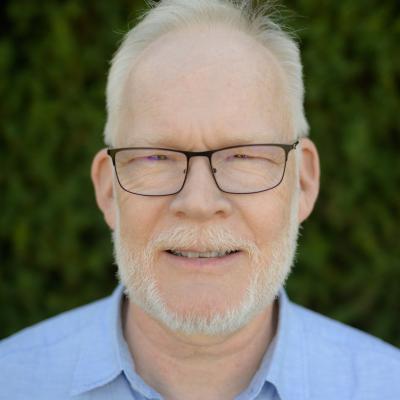
Christoph Ellersgaard, Associate Professor at CBS, has received DKK 3.4 million to investigate the cultural taste of the elite and what it means for social inequality in Denmark today.
“It is important to understand whether the elite uses cultural taste to justify its status, influence and power. And if it does, it is also important to find out how. We already know that taste can both create divisions and bring people together in the wider population, but we do not know whether it creates divisions or common ground between the elite and the population. Nor do we know what dynamics taste creates within the elite itself,” says Christoph Ellersgaard.
Mads Meier Jæger, Professor of Sociology at the University of Copenhagen, and Ea Hoppe Blaabæk, Associate Professor of Sociology at Aarhus University, will be key partners in the project.
Can companies choose a classification that means lower customs duties?
When goods are imported, they must be placed in a specific category. The category can determine how much customs duty a company must pay and which requirements the goods must meet. But what happens if the same goods can be placed in several different categories?
This makes it possible for companies to strategically choose a classification that results in lower customs duties or fewer requirements, which can reduce government revenue, distort competition and make trade policy less effective.
A team of CBS researchers led by Professor Ari Kokko will investigate this very issue. He has received DKK 3.2 million for the project ‘(Re-)Classification in International Trade’.
The researchers will map the extent of reclassification and study the strategies companies use as well as the consequences for the economy. This knowledge could help customs authorities and policymakers design rules that are more difficult to circumvent through strategic classification.
When does money make us help more – or less?
It may seem obvious to reward extra effort with money. But when the purpose of that effort is to help others, research shows that money can increase effort, reduce it or have no effect at all. This creates a dilemma for NGOs, companies, platforms and public services when they want to motivate people to help.
With DKK 2.8 million in funding for CBS from the Danish Council for Independent Research, Professor Lars Bo Jeppesen and his colleagues will investigate when payment increases or reduces effort in tasks intended to benefit others. Their hypothesis is that the effect depends on how much people believe their efforts benefit other people.
If a task appears to provide only a small benefit to others, modest payment can make it seem like a poorly paid job and reduce effort. If the task appears highly beneficial, money may complement the willingness to help and increase effort because the payment is perceived as support rather than wages. In an emergency, however, payment may seem inappropriate.
The theory will be tested in a laboratory experiment involving a total of 1,000 participants. The results will shed light on when money encourages people to try to benefit others – and when it backfires.
Professor to address statistical challenge
How do you measure something that never happened? Professor Ralf Wilke from CBS has received DKK 3.6 million to find a solution to this problem.
For example, if researchers want to investigate how long it takes an unemployed person to find a job, a problem arises if that person leaves the labour market first. Researchers can then no longer know when the person would otherwise have found a job.
The problem becomes particularly difficult because the information researchers are missing is not necessarily missing at random. People who leave the labour market may, for example, differ from those who continue looking for work. This can produce a misleading picture of cause and effect.
The project therefore aims to make it possible to investigate more reliably which factors cause particular events to occur sooner or later. The methods could be used by researchers in fields including social science, biostatistics and engineering.
Facts
- The Danish Council for Independent Research is a public research funding body under the Ministry of Higher Education and Science.
- Its purpose is to support independent research and promote the development of new knowledge that will help lay the foundations for the society of the future.
- It processes approximately 4,000 applications each year and awards around DKK 2 billion in research grants across all academic disciplines.