No company is an island
A new geopolitical analysis from CBS shows that Danish companies have significantly strengthened their internal resilience. The next challenge lies in the connections between them – and in the ability to make security a shared project across business and government.


For many years, Danish companies could plan on the basis of a fundamental assumption of stability. Markets were expanding. Trade was becoming freer. Risk could be managed through diversification and insurance.
That assumption has changed.
The war in Ukraine, economic sanctions, trade restrictions, cyberattacks and threats to critical infrastructure have moved geopolitics from the periphery to the centre of strategic decision-making. It is no longer only about diplomacy and defence policy. It is about operations, security of supply, investment and competitiveness.
A new analysis from Copenhagen Business School (CBS) maps how Danish companies are handling this new reality. With more than 150 respondents and in-depth interviews at board and executive level, the study paints a picture of a business community that has markedly strengthened its internal resilience.
“The key point is that we are not dealing with a temporary crisis,” says Anja Dalgaard-Nielsen, Vice Dean for Geopolitics & Business Security at CBS.
“We are in a more enduring situation characterised by lower predictability and more systematic pressure – including against economic and civilian targets. That requires a different way of thinking about strategy.”
"These are quite extraordinary times"
In this interview, Professor & Vice Dean Anja Dalgaard-Nielsen and Associate Professor Andreas Wieland speak on the current geopolitical climate and what to consider when navigating through turbulent times and polycrisis.
Resilience Starts in the Boardroom
The analysis shows that Danish companies prioritise what CBS terms “getting one’s own house in order”. This is where companies themselves believe they are strongest.
The concept covers more than technical security measures. It means senior leadership actively integrating geopolitical risk into strategy and governance – and allocating the necessary resources.
“At board and executive level, resilience must become part of strategic management. You need robust business continuity plans, you need to have tested them, and you must be able to document your risk management. It has become part of a company’s licence to operate,” says Dalgaard-Nielsen.
Security has thus moved up alongside financial governance and compliance. Investors, partners and authorities increasingly expect companies to demonstrate that they can withstand and manage disruption.
This is a strength. Many companies have taken responsibility and significantly upgraded their internal preparedness.
But the analysis also shows that resilience now extends beyond the individual organisation.
Collective Vulnerability
When companies assess their ability to coordinate with authorities and business partners, the score drops. Cross-sector collaboration appears to be the weak point.
This is a crucial insight. Hybrid threats rarely strike in isolation. They move through value chains, infrastructure and digital networks. A single breach can create ripple effects.
“We are generally good at optimising our own organisations,” says Dalgaard-Nielsen.
Here lies a structural dilemma. Internal resilience can be managed and financed by the individual company. Systemic resilience requires coordination, trust and clear frameworks – across sectors and between government and business.
The analysis suggests that this is precisely where the next step for Danish business must be taken.
Three Strategic Positions

Business Opportunity
View crises as strategic openings. They work proactively to identify new markets and opportunities arising from shifting power dynamics. Robust operations serve as the foundation for growth.
If they fail to adapt, they risk losing momentum to more agile competitors.
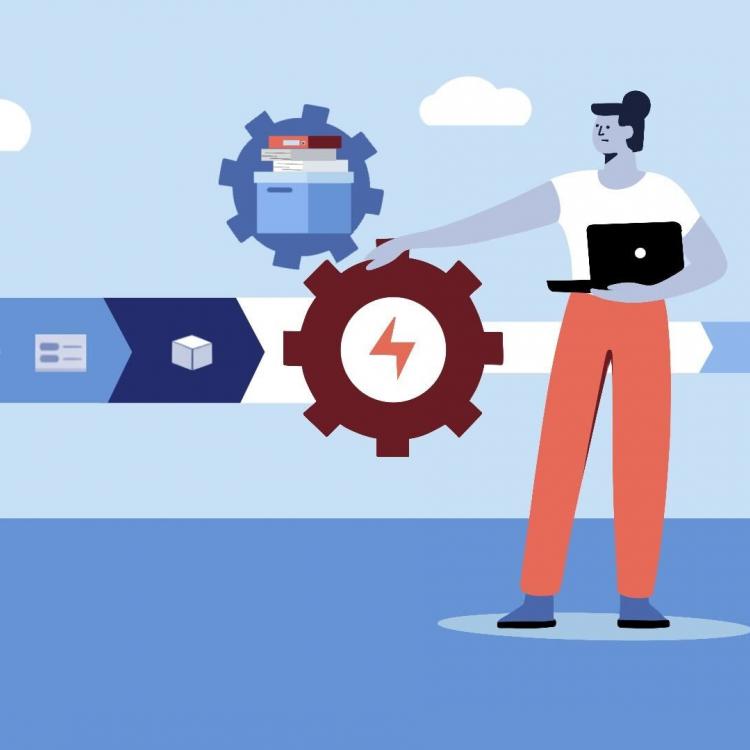
Business Continuity
Focusses on ensuring that essential societal functions can be maintained under pressure. Often operating in critical infrastructure and utilities. They have established security organisations and tested contingency plans. If they do not have flexible frameworks in crises, even strong preparedness can be hampered by regulatory inertia.
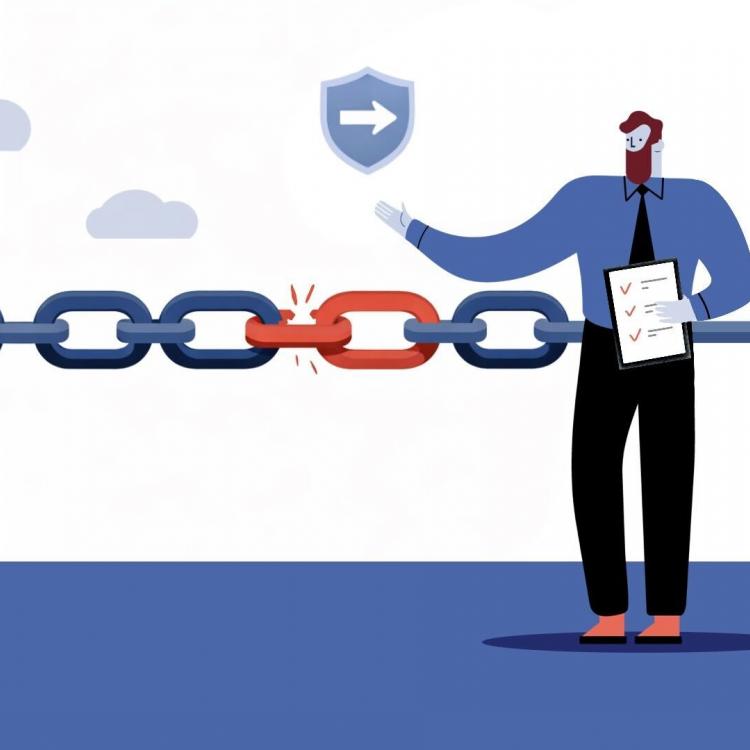
Business Security Guidance
Typically smaller firms with limited capacity, are aware of the threats but call for clear and operational guidance.
If they fail to raise their level, they risk becoming the weakest link in the value chain.
The segmentation shows that Danish business is far from homogeneous – and that policy measures should therefore be differentiated.
“Small companies need concrete and straightforward guidance. Larger and critical companies need dialogue about framework conditions and decision-making authority in crises. One approach does not fit all,” says Dalgaard-Nielsen.
The Framework for Crisis Management
When a crisis strikes, structure and speed are decisive. Companies within critical infrastructure in particular point out that uncertainty about decision-making authority can cost valuable time.
“There must be clarity about who can grant exemptions from which rules in a crisis. Rapid clarification can be decisive in maintaining operations and limiting damage,” says Dalgaard-Nielsen.
This is about preparation. Rules that function in stable times must be manageable under pressure. Decision-making pathways must be thought through. Roles must be clear.
Scenario exercises and joint training can strengthen both relationships and operational capacity. Resilience is built before the crisis – not in the middle of it.
Resilience as a Shared Project
The analysis also highlights the potential of stronger cooperation between companies.
“Large companies possess significant capacity. They can actively contribute to strengthening overall resilience – for example through shared resource pools or by sharing specialised expertise,” says Dalgaard-Nielsen.
Resilience increasingly functions as a collective good. When one part of the system weakens, others are affected. Industry communities can therefore serve as platforms for knowledge-sharing, joint monitoring and access to specialised competences.
At the same time, the relationship between government and business is changing. Authorities must create clear and predictable frameworks. Companies must engage actively in the shared task. Cooperation must be operational – not merely dialogue-based.
A Realistic Picture – and a New Phase
The study is based on companies’ own assessments.
“Self-assessment gives us an indication of the situation, not definitive answers. But it is a sound starting point for dialogue and further work,” says Dalgaard-Nielsen.
Overall, the picture is sober. Danish business has significantly strengthened its internal resilience. Security occupies more space in the boardroom than before. The next phase is about translating internal strength into systemic resilience – making collaboration, coordination and shared capacity an integrated part of strategy.
The Decisive Point
Geopolitics has become part of the business foundation. It affects access to markets, supply chains and capital. It shapes competitive conditions here and now.
Danish companies have taken the first steps by strengthening their own organisations. The decisive test will be whether they – together with the authorities – can build a more coherent and effective system around themselves.
In an age of hybrid threats, no company stands alone. Resilience is not only about keeping one’s own house in order. It is about how strongly that house is connected to the rest of the city.
“It is cumbersome to collaborate across organisations and sectors. But it is also here that it becomes clear how strong we actually are – how much capacity and how many resources we collectively possess,” concludes Anja Dalgaard-Nielsen.
Keep reading
Let go of control and lead with agility in uncertain times
Your gateway to more knowledge
Did you find this content interesting? Sign up for our newsletter and gain access to more of our research findings and events.
With the world’s grand challenges awaiting us, we need to continuously evolve, gain new knowledge and insights, and upskill.
Dive into a world of knowledge by signing up below. You will get:
- Personal event invitations
- Pertinent research-based insights on business and society
- Information about the next intakes of our Executive Education programmes and courses
KEEP LEARNING

HD2 Supply Chain Management