New rules, same people: How Iceland’s financial elite survived the banking collapse
Iceland’s banks were liberalised, privatised, nationalised and sold again. Yet close networks between politicians and financial figures repeatedly survived these reforms through more than a century, according to new research from Copenhagen Business School

On the evening of 6 October 2008, Iceland’s Prime Minister addressed the nation. He ended his speech with three words that were almost unthinkable in Icelandic political discourse: “Guð blessi Ísland.” God bless Iceland.
In the days that followed, the country’s three largest banks collapsed. Together, they accounted for around 97 per cent of the banking sector’s assets. The government had to intervene to rescue domestic banking operations.
In just a few years, the banks of a small country had grown into international financial institutions. Between 2003 and 2007, their combined assets increased from roughly the equivalent of Iceland’s annual gross domestic product to more than nine times that amount. When international funding dried up, the system collapsed.
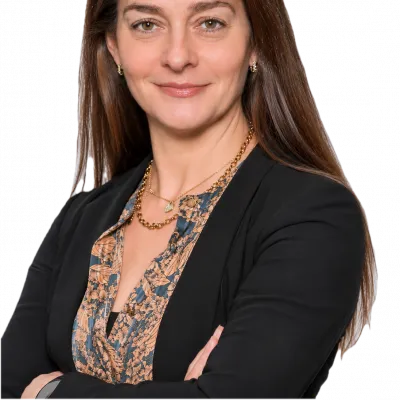
This is the scene that Catherine Batt, Assistant Professor at the Department of Accounting at Copenhagen Business School, uses to introduce her new study of Iceland’s banking system from 1885 to 2025.
The study, Banking on Power: Political Capitalism and Institutional Fragility in Iceland’s Banking System, 1885–2025, published in the academic journal Enterprise & Society, shows that repeated changes to bank ownership and regulation did little to dismantle the networks that influenced the banks.
“Power found new ways to operate through ownership stakes, management positions and connections between banks, businesses and politicians,” Catherine Batt explains.
When she began mapping the people behind these networks, she was surprised by their extent.
“I had lived in Iceland for 22 years and knew that elite networks existed. But when I sat down and started connecting the individuals, it was really striking just how many connections there were.”
The same names kept appearing
Her original research question, however, was quite different. She wanted to investigate how banks’ accounting and governance practices had evolved following the financial crisis.
To do so, she examined parliamentary documents, official investigations and banks’ annual reports, mapping 216 board members and senior executives between 1998 and 2025.
Along the way she noticed that the same names kept appearing across different positions and banks, as well as in business and politics.
This prompted her to take a closer look at who these individuals were and how they were connected.
“It was time-consuming, but not particularly difficult to map the connections between individuals, where they had studied and their political affiliations. It was possible because Iceland is such a small country.”
She found that although ownership structures had changed on paper, many of the people in positions of power and senior positions remained the same.
Some of the connections ran through universities, while several individuals in these circles had backgrounds in the same political youth organisation.
This continuity became particularly clear when Catherine Batt examined the management of Landsbanki following its privatisation in 2003. Of the 12 executives under the new private owners, five had held management positions at the same bank five years earlier, when it was still state-owned. The two most senior newcomers came directly from Búnaðarbanki, the other state-owned bank, which was privatised that same year.
“It can be difficult to scrutinise a bank critically when you are also hoping to get a job there. It is hard to be tough on your potential future employer” Catherine Batt
Assistant Professor at the Department of Accounting at Copenhagen Business School
Banking and politics were closely intertwined
In Iceland’s early banking system, lending and politics were closely intertwined. Banks were expected to finance the country’s development, but loans and management positions also formed part of the distribution of political power. The ties between banking and politics were close, and as Catherine Batt describes it, Iceland was governed by three political parties, each with its own bank. According to the study, as late as the 1960s, five of the 60 members of parliament also held senior positions in the country’s major banks.
From the 1980s onwards, the system was liberalised, and by the early 2000s, the major banks had been privatised. The state withdrew as an owner, while several former executives remained in their positions or moved between banks.
Connections also influenced who was eligible to buy the banks. During the sale of Landsbanki, the requirement for banking experience was broadened to include experience in financial markets and access to useful contacts. As a result, a buyer without actual experience of running a bank could qualify partly on the strength of their network.
One of the study’s central findings is that reforms can create new opportunities for those already in power. Influence shifted from state ownership and political appointments to private ownership groups, board positions and connections between banks and their borrowers.
The next employer was sitting across the table
These connections also influenced where the banks’ money ended up. Major shareholders and their affiliated companies were also among the banks’ largest borrowers.
One example from 2008 illustrates how bank financing could help a major shareholder retain their ownership stake. Two Icelandic banks, Kaupthing and Glitnir, jointly provided around EUR 400 million to companies linked to one of Kaupthing’s largest shareholders.
The financing enabled the companies to repay a foreign lender. This prevented the lender from taking possession of the Kaupthing shares that had been pledged as collateral for the debt. The shareholder retained their stake, while the Icelandic banks assumed the credit risk.
Catherine Batt emphasises that the connections and loans do not, in themselves, constitute evidence of illegal activity.
“Being part of a network does not in itself mean that someone has done anything wrong. Most of what I describe was entirely legal, and that is precisely what makes it difficult.”
In the study, she also draws attention connections involving the authorities responsible for keeping the banks in check. Catherine Batt found that many employees who left the financial regulator went on to work for firms it supervised, including the banks themselves.
“Working at the regulator gave you an opportunity to show the banks how capable you were,” Catherine Batt explains.
A job as a regulator could therefore become a stepping stone to the next position. The bank that an employee was supposed to question critically and, if necessary, take action against could simultaneously be the organisation where they hoped to continue their career.
As Catherine Batt points out, this created a potential conflict of interest:
“It can be difficult to scrutinise a bank critically when you are also hoping to get a job there. It is hard to be tough on your potential future employer.”
Banking operations could not be put on hold
Following the collapse, Iceland’s banking sector was rebuilt, and the financial regulator was given greater powers. Catherine Batt highlights that Iceland introduced significant changes. The new banks were smaller and funded more conservatively, while international experts were brought into the central bank and onto bank boards.
At the same time, day-to-day banking operations had to continue, often with many of the same people. Payments and banking services could not simply be put on hold while the country recruited new employees. In a small society, the pool of people with the necessary experience was limited.
“In their defence, you could also argue that running a bank requires knowledge and expertise. That probably helps explain why the same people stayed. But it made it difficult to bring new people into that circle,” she says.
According to Catherine Batt, this practical necessity explains much of the continuity immediately after the collapse. It does not, however, fully explain what happened later, when domestic networks once again gained greater influence after the immediate crisis had passed.
Denmark needs its own investigation
It is natural to ask whether similar connections exist in Denmark. Catherine Batt is cautious about drawing parallels.
“I cannot say whether there are similarities because I have not studied the Danish networks. But I think it would be very interesting to investigate whether a similar network exists, or whether the size of the country means that things look different,” she says, while emphasising that the broader lesson about independence extends beyond Iceland.
“History shows how important it is to maintain distance between politicians, regulators and financial institutions if you want a healthy and resilient financial system. This became particularly visible in Iceland because of the country’s size, but I believe it also applies to larger countries,” she concludes.
About the study and the researcher
Assistant Professor, Department of Accounting, Copenhagen Business School.
Catherine Batt researches bank governance, crises and institutional change, including the historical development of Iceland’s banking system. She lived in Iceland from 1998 to 2020.
About the study
The study traces Iceland’s banking system from 1885 to 2025 and draws on parliamentary documents, official investigations, banks’ annual reports and information about their management, among other sources. The historical analysis sheds light on connections and mechanisms; it does not measure the networks’ independent contribution to the banking collapse.
Catherine Batt: ’Banking on Power: Political Capitalism and Institutional Fragility in Iceland’s Banking System, 1885–2025’. Enterprise & Society, 2026.