New grant: Quiet or loud geopolitics?
Small countries cannot use threats to gain influence, so they must find other ways. Taking a Danish project as his starting point, CBS Associate Professor Jacob Hasselbalch will study the quiet geopolitics that takes place far from the headlines

Trade wars, military conflicts and rivalry between major powers are putting the green transition under pressure, but small countries such as Denmark and Sweden have another weapon besides tariffs and military power: knowledge.
When the Scandinavian countries put that weapon to use, it does not necessarily happen in grand settings with the press looking on or through displays of power. It happens behind closed doors, in negotiations between technical expert committees and among civil servants, diplomats and companies.
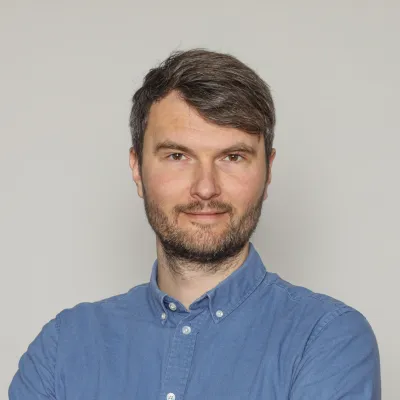
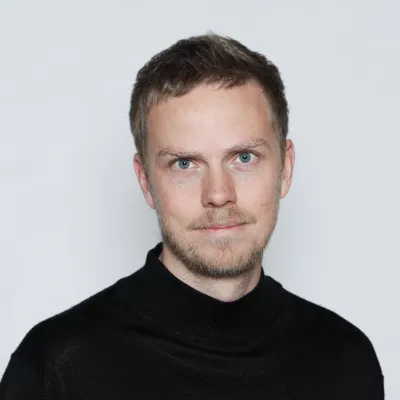
This less visible side of international politics is the focus of the Quiet Geopolitics project, in which CBS Associate Professor Jacob Hasselbalch and Assistant Professor Søren Lund Frandsen will work with researchers from Lund University. The researchers have received a total of DKK 4.7 million from Riksbankens Jubileumsfond.
“The project is based on the idea that geopolitics can be both quiet and loud. Loud geopolitics is conflict-driven and gets a lot of media attention: trade wars, disrupted oil supplies and war. We focus on the quiet negotiations that take place behind the scenes,” says Jacob Hasselbalch.
Small countries need different weapons
“Denmark and Sweden both have a strategic interest in working with new, important countries around the world. ” Jakob Hasselbalch
Associate Professor
The project takes as its starting point a world in which the international rules of the game are under pressure. Geopolitical conflicts, unstable markets and political opposition can make investment more uncertain and make it harder to keep the green transition on track.
This is a particular challenge for small, open economies such as Denmark and Sweden. They depend on international markets and are home to companies with much to lose if the green transition slows down.
“Denmark and Sweden cannot threaten other countries with a trade war or military force. Instead, we can use our expertise, particularly in green technologies and industries, to reach good agreements with strategically important partners around the world,” says Jacob Hasselbalch.
The researchers call this strategy quiet geopolitics.
Wind turbines, electricity grids and Danish interests
The researchers will study two international partnerships.
At CBS, Jacob Hasselbalch and a postdoctoral researcher will examine a partnership between Denmark and Brazil covering areas such as wind energy and electricity grids. Danish and Brazilian authorities are working together on a number of highly technical issues.
How should wind energy auctions be designed? How should electricity markets be regulated? And how can large amounts of wind energy best be integrated into the electricity grid?
Denmark has a wind industry that depends on other countries continuing their green transition. Collaboration on regulation and technical solutions can therefore support Brazil’s green transition while creating better conditions for Danish technology and companies.
“This is very much an expert-driven agreement between Danish and Brazilian civil servants and diplomats, who are working together to create the best conditions for scaling up wind energy and integrating it into the electricity grid,” says Jacob Hasselbalch.
Denmark and Sweden in the same boat
The researchers from Lund University are studying a similar partnership between Sweden and India. The focus here is on industrial transition and fossil-free steel.
The comparison makes sense because Denmark and Sweden are in the same position in many ways. Both are small economies with considerable technical and scientific expertise in the green transition and companies with a strong interest in seeing the transition continue around the world.
Brazil and India, however, are large, growing economies with increasing economic and geopolitical importance.
“Denmark and Sweden both have a strategic interest in working with new, important countries around the world. This could help create alternatives to a world order dominated by either the United States or China,” says Jacob Hasselbalch.
The project will provide new insights into how the green transition can move forward in a changing geopolitical world order.
Facts about the grant
- Riksbankens Jubileumsfond is an independent Swedish foundation.
- Sveriges Riksbank, Sweden’s central bank and the world’s oldest central bank, established the foundation to promote and support academic research in the humanities and social sciences.
- CBS is the only non-Swedish university to receive funding in this round.
About the researcher
- Jacob Hasselbalch is an Associate Professor at the Department of Organization at CBS.
- His research is in the fields of political economy, climate change and the green transition.
- He focuses on green economic planning, the role of expert knowledge and professional networks as well as alternative ways of organising the economy.