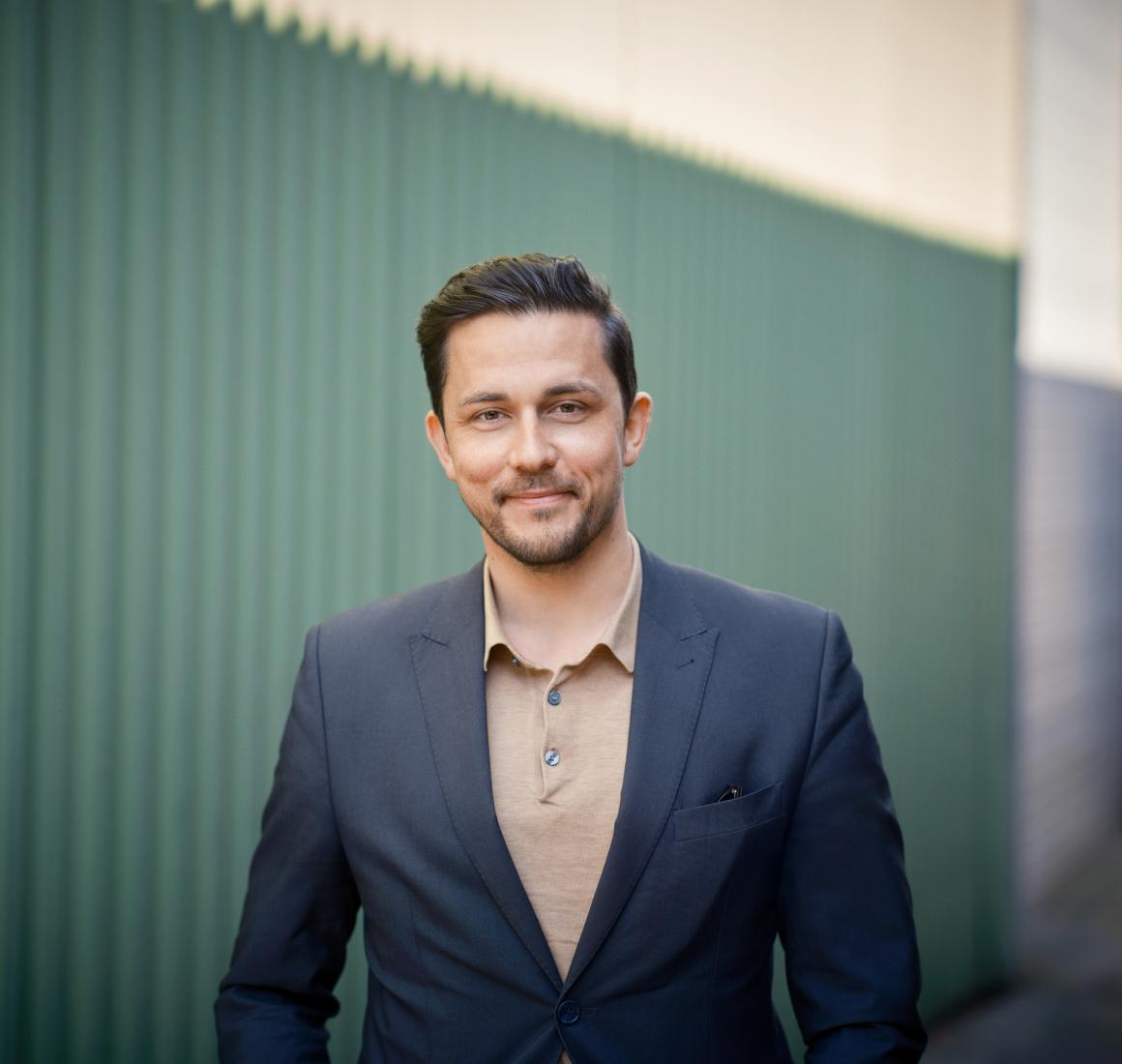
From classroom to competition: representing CBS on the RSM Impact stage
When David Buitrago entered the investment competition in Rotterdam, he wasn’t just pitching a strategy; he was exploring how finance can unlock real change for underserved regions. The experience became a defining part of his CBS MBA journey.
Jose David ‘David’ Buitrago arrived in Denmark just weeks before beginning his Full-Time MBA, bringing with him a clear sense of purpose. And within his first few months at Copenhagen Business School, that purpose would take him beyond the classroom and on to an international stage, representing CBS at the Rotterdam School of Management Impact Investing Competition.
For David, the competition was more than an academic challenge – it was an extension of the values and motivations that had brought him to Copenhagen in the first place.
A purpose rooted in Colombia
Born in Bogotá, Colombia, David has long been driven by a desire to help advance development in Latin America. “People in my region are really hard-working and want better opportunities, but for whatever reason these haven’t come along,” he says. “I’ve always been motivated by the idea of helping Latin America and understanding how I can contribute to creating those opportunities.”
Finding the right fit
It was CBS’s reputation, combined with Denmark’s status as a global leader in renewable energy, that convinced him this was the right place to build the expertise he needs. “CBS offers this combination of clear values and a focus on sustainability. It’s the sweet spot that can help me learn how to support development in Latin America,” he explains. “The financial returns are key, but the environmental and social impacts are equally important; it requires a holistic view. As leaders, that responsibility matters.”
When the school shared the opportunity to join the RSM Impact Investing Competition, David immediately appreciated its relevance. “Impact investing made a lot of sense to me. In Latin America, the financial risk can be high. Impact investing can be a solution – a way to drive development while balancing risk and return,” he says. “Sustainable infrastructure and impact-oriented firms can play an important role in supporting development in Latin America. I really liked the idea of understanding the impact investing ecosystem and working on a case that aligns with the future of emerging markets.”
A challenging case
The structure of the competition required teams to work intensively on a case study sent roughly a week before the event. David and his teammates – five CBS MBA students bringing expertise across environmental science, stakeholder management, and finance – were tasked with developing a financing and impact strategy for a proposed green steel plant.
The complexity of the assignment quickly became clear. “The case was very challenging because it required a full picture: what types of debt the company should take, who the potential partners were, the [investment] instruments, how it would be profitable, where the plant was located, and what are the local stakeholders,” David explains. “It reflected the real challenges companies face when transitioning to sustainable facilities.”
Teamwork under pressure
Working collaboratively was crucial. “Impact investing requires more than one angle. It’s financial, but it’s also social and environmental. Our team brought different ideas and backgrounds, and that’s what allowed us to crack the case.”
Once the written submission was complete, the team travelled to Rotterdam for the live competition. Friday was dedicated to talks from industry experts across Europe’s impact investing ecosystem – partners, fund managers, academics, and corporate leaders. And for David, hearing directly from these players emphasised the momentum in the field: “Listening to the private sector and seeing how this is becoming a priority for their investments was extremely relevant.”
On the Saturday of the competition, the team presented their investment pitch to a jury of industry professionals. David and his team were struck by how deeply the judges interrogated not just the financial modelling, but the social and environmental dimensions of the proposal. “They were very interested in the mitigation plans – not just the numbers,” he says. “They’re conscious that it’s about the impact on communities and the environment and how to move forward responsibly. That really impressed us.”
That feeling turned out to be mutual and the judges were unequivocal in their praise for the CBS entry. “They said we had by far the best capital structure,” David says. “They liked the level of detail, and they noticed we had a Plan B for a key aspect – something most teams didn’t do.” The team finished a very creditable fourth in the competition.
Learning, connection and purpose
David describes the competition as a turning point – one that has broadened his understanding of impact investing and validated his ambitions for the future.
“Personally, I’m interested in helping to bridge global investor capital with the sustainable development opportunities emerging across Latin America.” David Buitrago
Current MBA Participant

Throughout the event, three themes repeatedly surfaced for David: the value of international networks, the evolving priorities of the private sector, and the importance of blended finance. Meeting participants from universities across Europe created an environment of shared curiosity and diverse perspectives. “It was super enriching to connect with people who have the same interests but come from different backgrounds,” he says.
At the same time, the exercise reinforced a critical insight: large-scale impact projects rely on collaboration. “The way to finance these projects is not from a single source,” David explains. “It’s a mix of private institutions, multilaterals, and public organisations. That blend is key to long-term sustainable impact.”
A message to the next cohort
David is enthusiastic about what the competition offers future CBS participants. “It’s a life-changing opportunity,” he says. “You learn, you connect, and you grow as a person. And you see how sustainability and finance can genuinely work together.”
He also urges students not to self-select out of applying – even if the field feels unfamiliar. “Some classmates didn’t apply because they thought they weren’t experts, but this topic needs a lot of different perspectives. It’s okay if you know nothing. Just getting exposed teaches you a lot, and you can bring new ideas to the table,” he says. “Whoever is interested should definitely give it a try.”
David’s experience is part of our MBA Impact & Sustainability series, celebrating how CBS participants and alumni are helping shape more responsible approaches to business and investment.
Read more MBA Stories
U.S. Grad Unlocks Sustainability Career With MBA From Copenhagen Business School
How An MBA Landed Me A Job With One Of The Biggest Danish Pharmaceutical Companies
Reflections from 2025, Looking Ahead to 2026 - Insights from CBS MBA Faculty
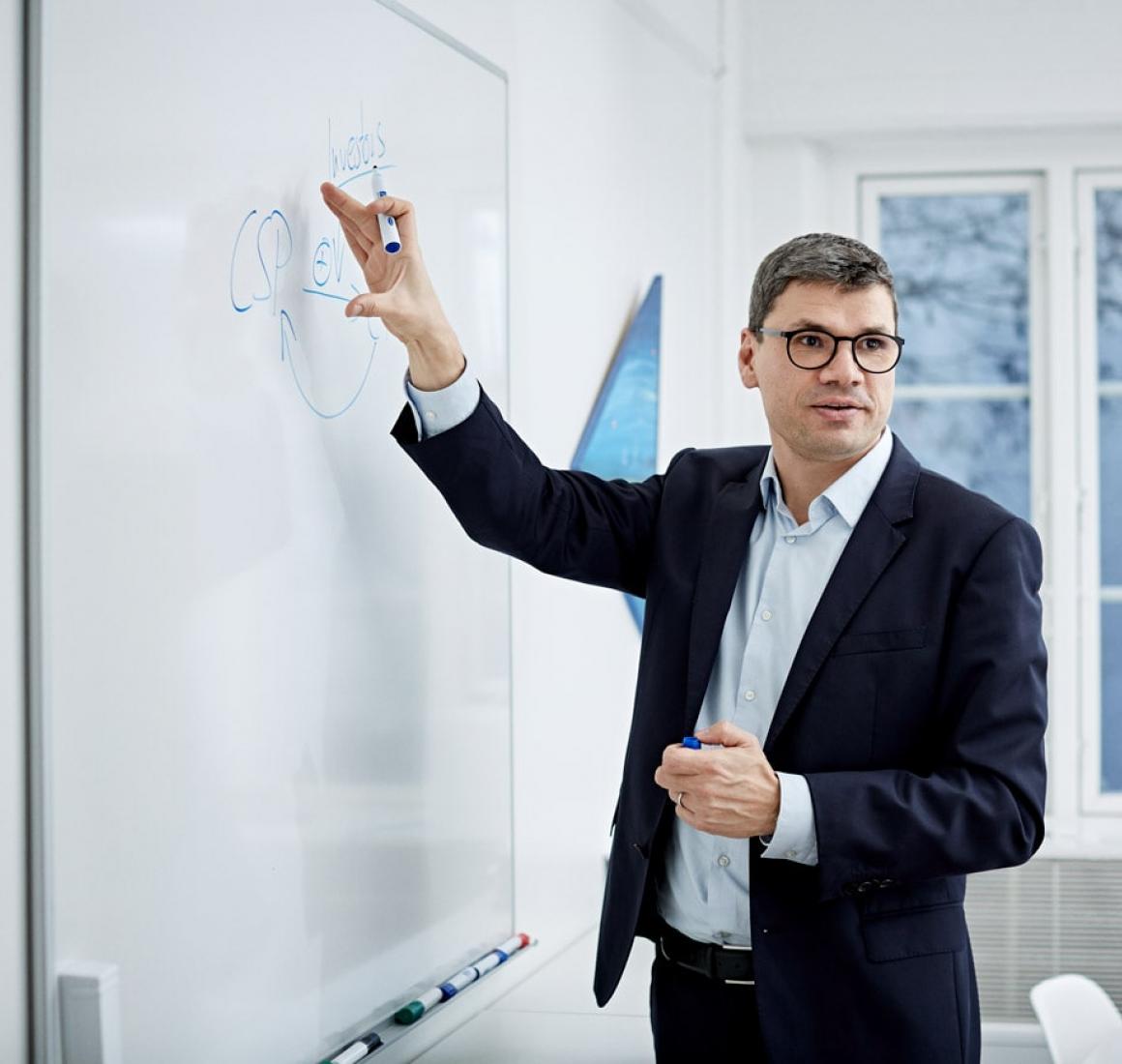
Record Result: Copenhagen Business School’s Full-Time MBA maintains Top 100 position in the Financial Times Global MBA Ranking 2026, for 3rd consecutive year
Discover more.
Explore other programmes and courses
Executive Certificates
Executive MBA
Executive MBA in Shipping and Logistics