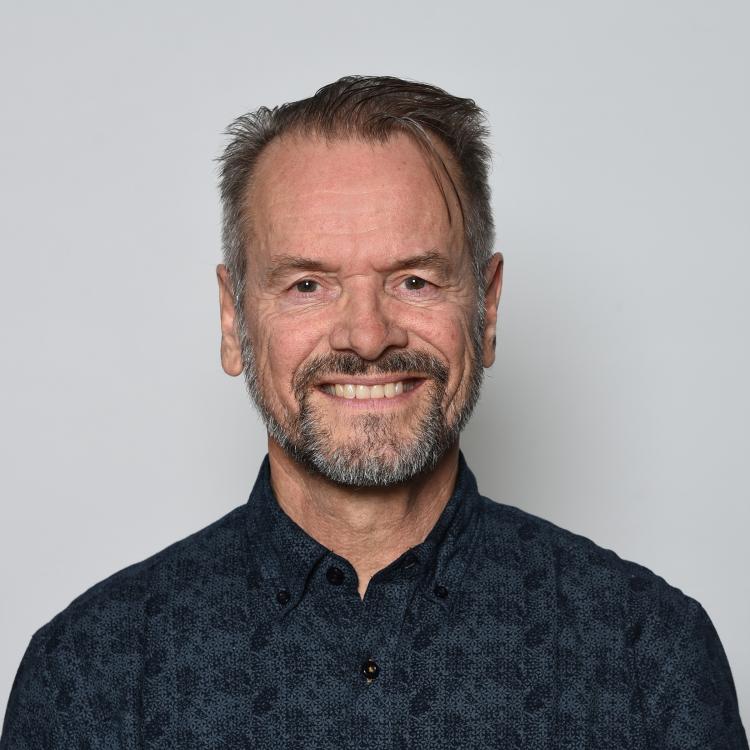
Frans Bevort
Associate Professor
Primary research areas
Contextual studies of HRM-practice and the development of the HR profession
Managing and organizing professional work (in the age of AI)
How managers become managers
I study how people make sense of their institutional context in organizations and how this affects their behavior and opportunities to create better work, collaboration and business
I want to inspire organizations to create better and more productive by understanding and seeing the tensions and opportunities in different logics present
I want, specifically, to contribute to making the HR-profession able to use the position it has to develop the human organization
I want to help making management of people a proper profession
I find that organizations often underestimate the importance of managing people and this leads to all sorts of problems, like toxic work environments, stressful and psychological unsafe workplaces as well as gross underutilization of human potential
My vision is that organizations and HR-professionals become much better at creating productive and innovative organizations with high levels of human development and well-being
I am a researcher who used, many years ago, to be a (HR-) manager. The transition from one kind of professional to another has been a central theme in my research. I did not enter research to become a glorified academic practitioner. I am a proper researcher who likes to do proper research.
On the other hand, having been on “the other side”, inspires in me a fundamental respect for the complexity that practitioners face every day. This is also why I love e.g. doing executive education, doing podcasts for Børsen about management dilemmas, or developing a paradox management tool for managers.
From working as an HRM-practitioner to researching HRM, is a case in point of my impact profile. I think HR-students might find my approach somewhat academic, and this on purpose. We cannot learn students to do HRM at CBS, but we can teach them to think more analytically about HRM. And this is important, because this makes them much more confident and grounded when they enter the world with a view to developing and changing it.
My interest in how the implementation of AI changes professional work and identities has a similar grounding. AI will come to meddle with the basic professional knowledge and tasks we use to build our identities, and therefore, we have to know how to remain in the driver's seat.
Recent research projects
PregAI – implementering af AI-støttet triage af gravide der ringer til akut-telefon
Now a new project – PregAI – will develop an AI solution that will ensure that women receive more precise and effective help when they contact the healthcare system, even when they have difficulty explaining their symptoms in Danish. Innovation Fund Denmark is supporting the project with 9 million kroner.
Innovation foundation Denmark
New ways to implement psychosocial work environment interventions
Funder: Tryg fonden
Investigating the distinctive features and resilience of human resource management in the Nordic countries: A longitudinal and cross-national study
Funder: Riksbankens Jubileumsfond
Links
Personal LinkedIn page
The Cranet-survey – the largest and oldest HRM-survey world wide
Link to the PnO-research group at Department of organization, CBS,
“At PnO, we explore the human side of organizations. Our mission is to produce original, practice-oriented research that speaks directly to today’s organizational challenges. By staying close to everyday challenges and experiences in organizations, we aim to create knowledge that not only deepens academic understanding but also has a meaningful societal impact and drives change.”
See the full purpose on the page.
PnO-LinkedIn link
AI and professional services (APS)
Standing HRM-track at the Nordic Academy of Management
Lederens Dilemma, podcast on Børsen
The format is like the talk-show at the Danish Public Radio known as “Sara and the monopoly” where real world dilemmas are discussed by seasoned bosses and a management researcher. I had the latter role. I would not mind doing similar tasks in the future
However, the podcasts are in Danish.