The future of work sets new demands: How leaders can prepare themselves for a new era
Artificial intelligence and a new geopolitical reality will shape organisations and businesses. These challenges call for a different and more forward‑looking style of leadership, says Professor Jesper Rangvid. He explains how the Executive MBA programme at CBS equips leaders to translate this new reality into practice.

When Professor and Associate Dean for the Executive MBA at CBS, Jesper Rangvid, looks ahead to developments in the labour market over the coming years, two phenomena stand out as particularly decisive for the scope of action available to leaders: the rapid evolution of AI, and a global geopolitical upheaval.
“We are entering quite a wild technological transformation,” Rangvid says.
Artificial intelligence will become an integrated part of production, decision‑making processes and organisational structures. According to the Professor, it is “one of the greatest leadership challenges” of the coming years.
Added to this is a new geopolitical situation, with the United States turning inward and China actively expanding its influence abroad – a shift that means global supply chains and markets as we know them can no longer be taken for granted.
“To be able to structure and make strategic decisions – and to implement them – will therefore be absolutely crucial for the leaders of the future. To do that, you need to understand the risks and opportunities that lie ahead. That is the foundation for navigating the challenges and opportunities of tomorrow,” explains Jesper Rangvid.
“On our EMBA, we do not train leaders to programme AI. What matters is the ability to implement artificial intelligence strategically.” Jesper Rangvid
Professor and Associate Dean for CBS Executive MBA

Leaders do not need to be experts
For leaders, the future is therefore not about becoming technical specialists, but about understanding the consequences of the changes that, according to Rangvid, are the most important for leaders to work with:
“On our EMBA, we do not train leaders to programme AI. What matters far more is being able to implement artificial intelligence strategically by developing the skills to distribute tasks, engage colleagues in the process, integrate the technology and understand what it means for one’s business or organisation.”
The ability to manage complexity using artificial intelligence will thus be crucial:
“AI offers new opportunities for data‑driven decision‑making, but at the same time the major structural trends are shifting at different speeds,” says Rangvid, before continuing:
“How do you navigate in the short term while building an organisation that remains robust in the long term? That is an important element of our EMBA,” he explains.
When it comes to understanding geopolitical developments, the programme also gives you a solid foundation:
“As a leader, you don’t need to be an expert on geopolitics, but you will gain better insight into the global risks and opportunities,” he says.
Examinations take their starting point in the participant
Completing the CBS Executive MBA does not simply result in a diploma with a CBS stamp. A defining feature of the programme is that each participant continually works with concrete challenges from their own organisation.
Rangvid explains it like this:
“All examinations are based on the participants’ own realities. This means that they are not only learning theories – they are applying them directly in practice.”
In this way, the programme becomes not just an academic exercise but a training ground for the leadership of the future.
Read more EMBA stories

Leaders are upskilling at the heart of the Fifth Industrial Revolution

The 5th industrial revolution in full swing - business leaders prepare
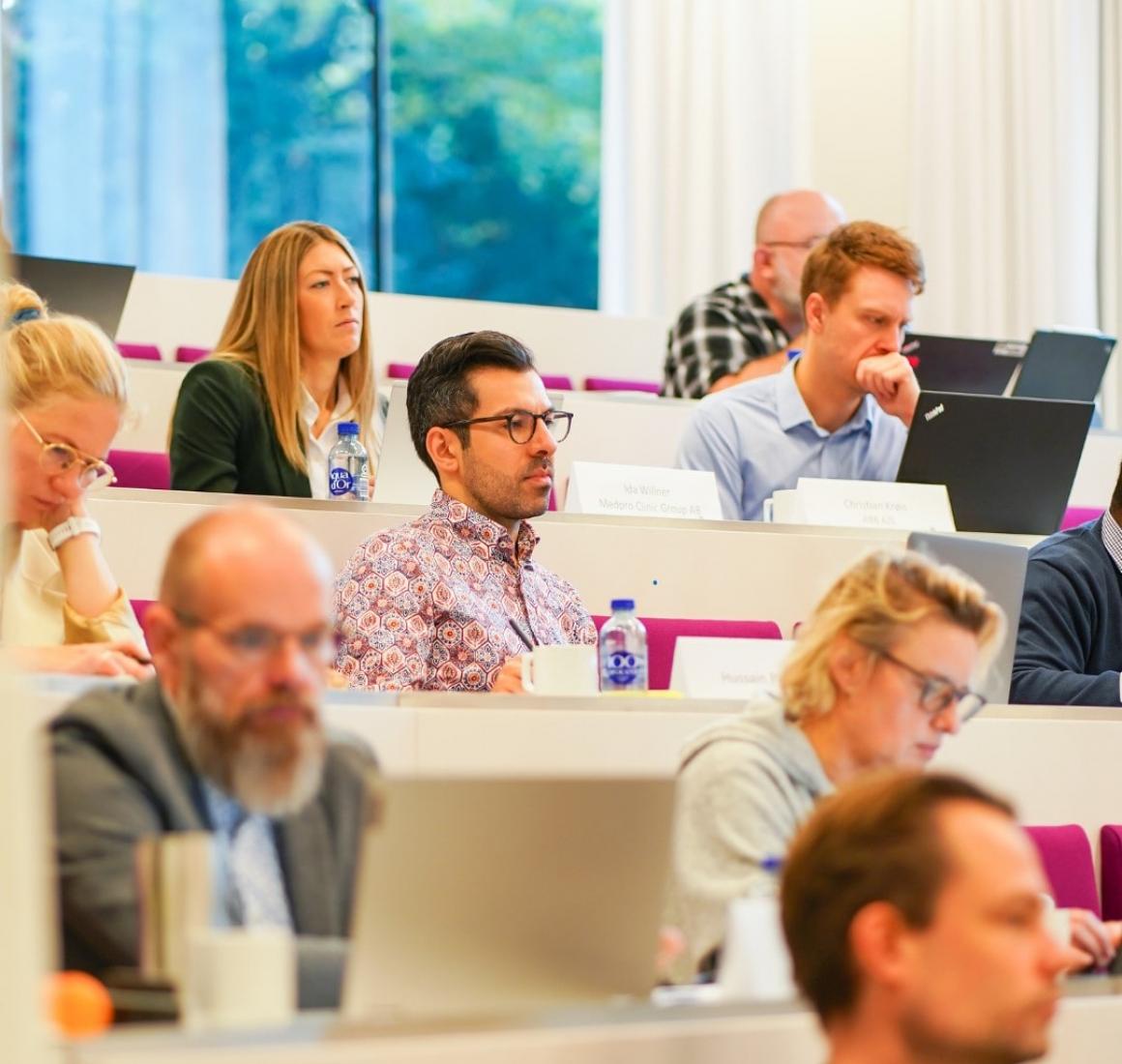
The CBS EMBA: A World-leading Programme that Attracts Top Talent
Integrated Strategy Project – bringing everything together
Discover more.
Explore other programmes and courses

Executive Certificates
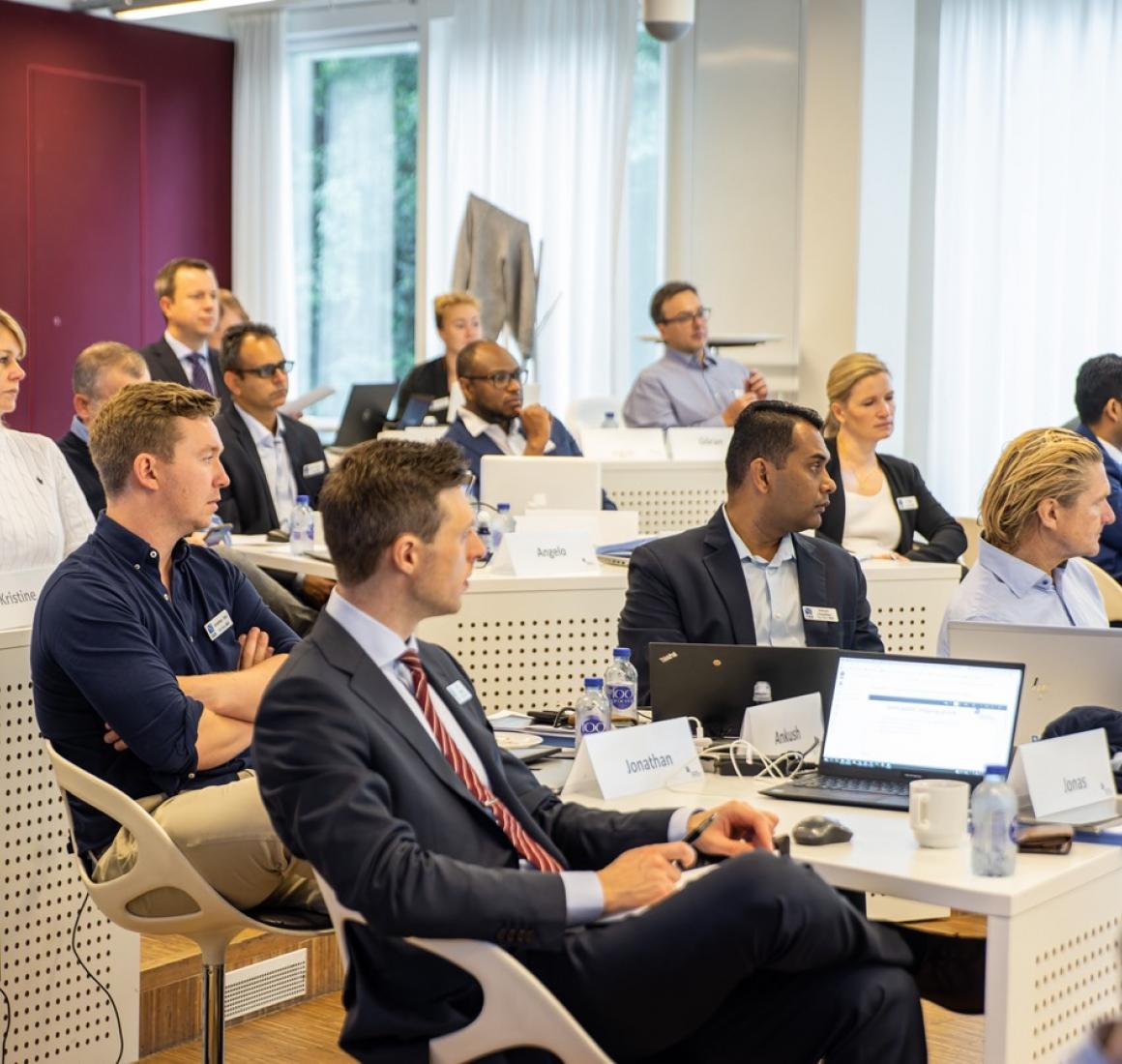
Executive MBA in Shipping and Logistics

Full-time MBA