Department of Economics
Department of Economics at Copenhagen Business School is an international and dynamic academic community. We are recognized for business-relevant economic research that addresses pressing societal challenges, and for bringing this knowledge into the classroom through research-based teaching and critical dialogue.

About the department (Panel content)
Who we are
80+ Colleagues
8 Primary thematic focus areas
2 Research Centers


Our primary thematic focus areas are:
Behavior, Incentives and Economic Design;
Quantitative/Empirical Methods and Data Science;
Energy, Environment and Resources;
Firm Behavior, Innovation and the Functioning;
Welfare: Education, Health Care and Pensions;
Globalization, Migration and Urbanization;
Growth, Unemployment, and Inflation;
The Future of Work

We make a difference
What we work on
- Focus on business-relevant and policy-driven research
- Core teaching areas: microeconomics, macroeconomics, and quantitative methods
- Key topics: pensions, energy infrastructure, inequality, innovation, behaviour and labor, among others
- Home to PeRCent and Copenhagen School of Energy Infrastructure
Our ambition and societal role
- Create research that informs public debate and decision-making
- Contribute to solving long-term economic and societal challenges
- Educate globally minded leaders through research-based teaching
- Be among leading economics departments in a European business school context
Societal Impact
Research creates impact in many ways. Hear our researchers reflect on how their work addresses real-world challenges and contributes to society beyond the university.
About us
Strategy
We aim to be internationally recognized for our rigorous research, impactful teaching, and public engagement. We promote innovation and support excellence in research and dissemination. Our collegial work environment prioritizes diversity, free speech, and mutual respect. We invest in high-quality infrastructure to support learning, research, and outreach, and we actively reward academic excellence in hiring and promotion. We value collaboration, mentorship, and collective contribution to departmental life.
Information for part time teachers
We have gathered practical information relevant to external lecturers, including:
- teaching at CBS and pedagogical resources
- CBS platforms and online resources
- courses and exams
- working hours and time registration
- salary and payment
- competence development and the mandatory Learning to Teach course
- department-specific policies for external lecturers
For an overview and links to the relevant systems and resources, visit the CBS page for external lecturers.
Management Team / Department Forum
Our management team consists of Head of Department Alexander Sebald, Vice-Head of Department Dario Pozzoli, and Head of Secretariat Torben Timmermann.
The Department Forum comprises representatives from each employment group. The Forum meets regularly to discuss key departmental matters. It plays an important advisory role, ensuring that diverse perspectives are heard in decision-making processes. Current members of the Department Forum are:
- Head of Department Alexander Sebald (chair)
- Employee Representative for academic staff David Jinkins (deputy chair)
- Teaching and Communications Coordinator Tatjana Mastilo (for the administration)
- Professor Dolores Romero Morales
- Associate Professor Anette Boom
- Assistant Professor Enrico Maria Camarda
- PhD Fellow Flora von Mikulicz-Radecki
Culture and Collaboration
We foster a culture of openness, respect, and shared responsibility. All members—faculty, staff, and students—are encouraged to engage in departmental life, collaborate across disciplines, mentor colleagues, and recognize each other’s achievements. We believe this inclusive environment fuels innovation and impact.
Department Seminars
Department of Economics hosts a weekly seminar series with external speakers on Mondays and internal Brown Bag seminars on Thursdays. The schedule of upcoming presentations can be found on our research page.

Centres at the department
Department of Economics houses two research centres
Pension Research Centre
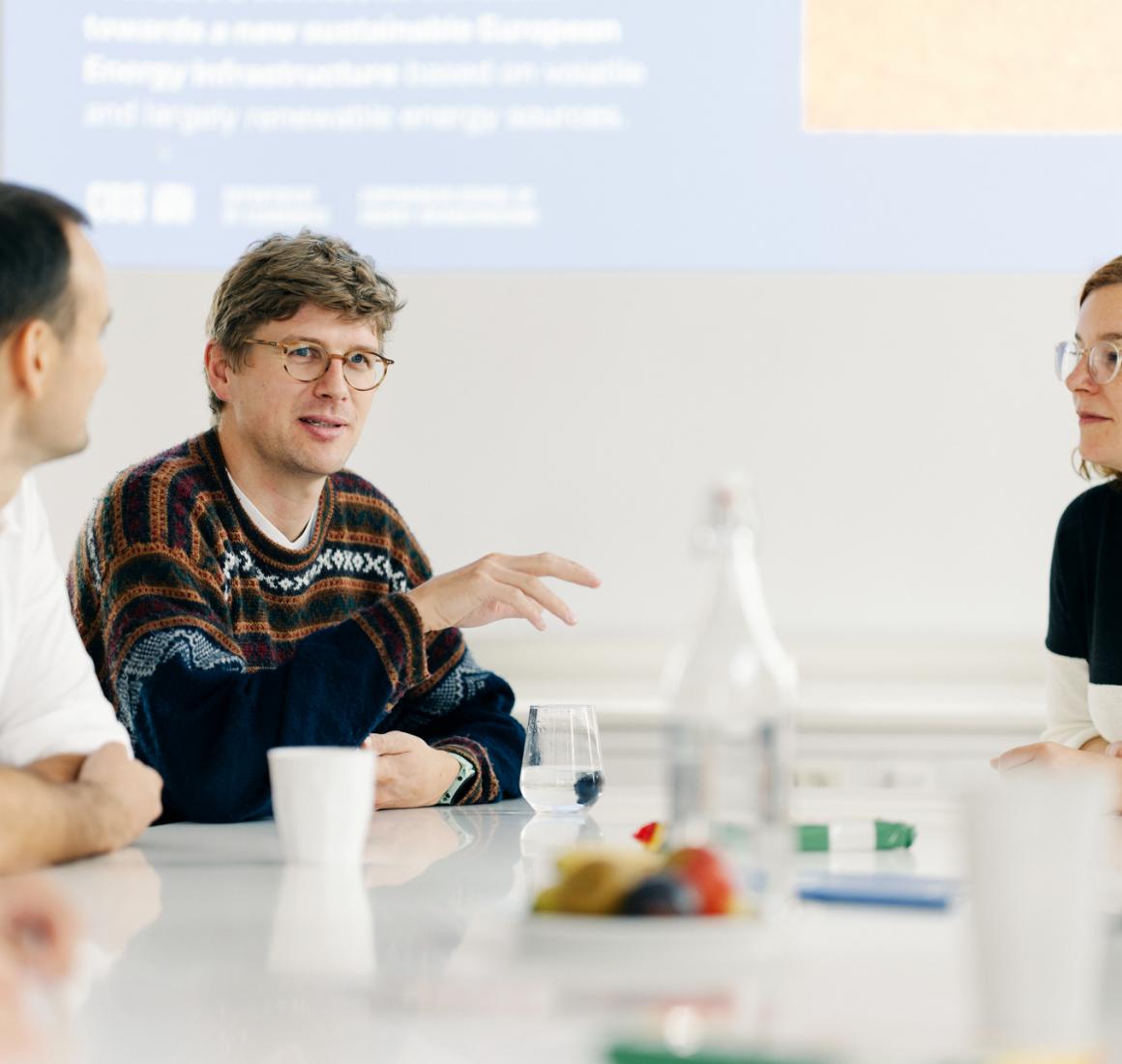
Copenhagen School of Energy Infrastructure (CSEI)
Research and publications (Panel content)
Our research
Department of Economics conducts research in microeconomics, macroeconomics, and quantitative methods, with a strong focus on business-related and policy-relevant issues. Our goal is to create rigorous, high-impact knowledge that informs public debate, guides decision-making, and supports responsible economic development.
We address key societal challenges such as pension systems, energy infrastructure, inequality, and economic resilience. Through research centres like PeRCent and the Copenhagen School of Energy Infrastructure, we contribute to evidence-based solutions in areas critical to society’s long-term sustainability and well-being.
Department Seminars
September 9, 2026
Speaker: Jos van Ommeren Title: Homelessness and urban density
September 14, 2026
Speaker: Juanna Schrøter Joensen, University Of Chicago. Title: Field of Study and Future Fertility
September 21, 2026
Speaker: Diego Puga, CEMFI Title: City buzz: Face-to-face interactions and the urban environment
August 31, 2026
Speaker: Anders Humlum, Booth School of Business. Title: Integrators: The Firm Boundaries of Capital-Skill Complementarity
August 24, 2026
Speaker: Felix Pretis, University of Victoria. Title: Reverse-Engineering Success: Evaluating Policy Impacts Without Prior Knowledge
Brown Bag Seminars
September 3, 2026
Speaker: Natalia Khorunzhina, CBS Title: Intergenerational mobility in welfare: wages and amenities
September 10, 2026
Speaker: Christopher Busch, Ludwig-Maximilians-Universität München Title: Individual Careers and Household Income Inequality
August 27, 2026
Speaker: Daniel Borowczyk-Martins, CBS Title: Employer-to-employer Mobility and Wages in Europe and the United States
September 24, 2026
Speaker: Atte Pudas, Aalto University Tilte: TBA
Publications
See all publicationsOctober 2026
Exploring Preferences of Forest Ecosystem Services Across the EU
In: Ecosystem Services. 81, 2212-0416, 12 p.
Journal article
Andrew David Harold Stratton
Silvia Baralla
Alexandru Giurca
Dalila Frasson

Lasse Læbo Matthiesen, Postdoc
Silvija Krajter Ostoić
Rastislav Raši
Jan Schmidt
Dijana Vuletić
Gerhard Weiss
Ivana Zivojinovic
Niels Strange
Jette Bredahl Jacobsen
September 2026
Corporate Earnings Announcements and Stock Market Bubbles
In: Economics Letters. 268, 0165-1765, 7 p.
Journal article
Elie Bouria
Ufuk Can
Oguzhan Cepni
Rangan Gupta
September 2026
Climate Risks and Forecastability of US Inflation: Evidence From Dynamic Quantile Model Averaging
In: International Review of Economics & Finance. 110, 1059-0560, 22 p.
Journal article
Jiawen Luo
Shengjie Fu
Oguzhan Cepni
Rangan Gupta
Our primary thematic focus areas
Behavior, Incentives and Economic Design
Behavior, Incentives, and Economic Design (BIED) is an interdisciplinary research group that investigates how individual preferences and beliefs form and determine behavior, and how individuals respond to incentives.
Quantitative/Empirical Methods and Data Science
We develop and apply innovative concepts and techniques in operations research, econometrics and experimental economics. Using ML/AI, LLMs, microeconometrics, experiments, optimization, revealed preferences and benchmarking, we rigorously address firms’ economic decisions and tackle issues in e.g. energy, health, innovation, and inequality.
Energy, Environment and Resources
We research sustainable development to realise the green transition, focusing on energy and environmental economics and policy. Our work focuses on European energy transformation, markets and regulation, renewables, and energy in the global south. Supported by EU/Nordic funds and industry, we provide research-based teaching and engage stakeholders.
Firm Behavior, Innovation and the Functioning
We study how firms innovate, grow, and respond to regulation, digitalization, climate risks, and market changes and in which way firms’ responses change the market outcomes for competing firms and consumers. Combining theory and data, we explore topics in entrepreneurship, productivity, energy transitions and housing.
Welfare: Education, Health Care and Pensions
We study societal challenges and the role of public policy in addressing them, focusing on: (1) demographic change and aging-related costs; (2) gender and socioeconomic inequality in work, health, education, and welfare; (3) education-job mismatches and welfare labor supply; (4) public/private provision of public goods.
Globalization, Migration and Urbanization
We explore the socioeconomic consequences of globalization, migration and urbanization, which reshape cities and societies. Our work addresses pressing issues such as rising income inequality, automation’s impact on prosperity, and gentrification’s effects on residents. We deliver research that advances academic knowledge and informs policy.
Growth, Unemployment, and Inflation
This focus area examines growth, unemployment, and inflation, exploring their drivers and impacts on individuals, firms, and institutions. Using theoretical and applied methods, we study the key forces that are shaping the dynamics of such variable, in order to deliver research relevant to Nordic and global societies."
The Future of Work
We conduct research on labor markets, employment, and policy impacts, as well as the impact of new technologies, addressing issues such as income inequality, the gender pay gap, productivity, and climate change. Our focus includes job matching, wage determinants, skills shortages, entrepreneurship, and self-employment.
Externally funded projects
Luigi Butera, Sapere Aude Grant: (DKK 6.19 million, 2021)
Luigi Butera, Sapere Aude Grant: “The 'Beliefs Lab': Understanding the Evolution and Impact of Beliefs on the Economy” (DKK 6.19 million, 2021)
Annaig Morin, DFF-2 Grant, (DKK 6.18 million, 2025)
Annaig Morin, DFF-2 Grant: “The Gender Career Gap: An Analysis of Occupational Segregation and Career Progression”, (DKK 6.18 million, 2025)
Cedric Schneider, Rockwool Foundation Grant, (DKK 8.18 million, 2021)
Cedric Schneider, Rockwool Foundation Grant: “Digitalization: Jobs, Firms and Households” (DKK 8.18 million, 2021)
Tooraj Jamasb, Horizon Europe Grant, (DKK 6.75 million, 2023)
Tooraj Jamasb, Horizon Europe Grant: “Ports as Energy Transition Hubs” (DKK 6.75 million, 2023)
Education (Panel content)
Our contribution to programmes and courses
Core teaching and programme involvement
Department of Economics plays a key role in CBS’s full-time and part-time programmes by delivering high-quality teaching in microeconomics, macroeconomics, and quantitative methods. Our faculty contribute to both undergraduate and graduate levels, as well as MBA and HD programmes, ensuring a strong theoretical and analytical foundation across a wide range of study lines.
Electives, minors and teaching innovation
The department offers around 30 electives and two dedicated minors, reflecting our commitment to flexible, specialized learning. We also contribute to pedagogical development through new teaching formats, online modules, and data-driven approaches, supporting CBS’s ambition grounded in research-based teaching.
Bachelor programmes
Our department contributes to a wide range of bachelor’s programmes, offering students a solid foundation in both theoretical and applied aspects of economics:
HA i erhvervsøkonomi

HA i projektledelse
HA(mat.) - erhvervsøkonomi og matematik

HA(kom.) - erhvervsøkonomi og virksomhedskommunikation

HA(jur.) - erhvervsøkonomi og erhvervsjura
HA(psyk.) - erhvervsøkonomi og psykologi
Graduate Programmes
At the graduate level, we participate in a range of programmes that go beyond the fundamentals to offer students deeper insights and expertise in economics:

MSc in Economics and Finance - Advanced Economics and Finance

MSc in Economics and Finance - Applied Economics and Finance

Cand.merc.(mat.) – erhvervsøkonomi og matematik
MSc in International Business and Politics
MSc in Business Administration and Information Systems

MSc in Economics and Business Administration in General Management and Analytics
Executive programmes, HD and Summer University
In addition to our bachelor’s and graduate teaching, our department also contributes to a variety of courses offered through Executive Programmes, HD studies, and the Summer University, providing learners at all stages with opportunities to enhance their knowledge of economics
Summer University
Being a PhD student
Our PhD students thrive in a vibrant, research-driven environment with strong training, close supervision, and excellent placements. We offer study in all major areas of economics and support a dynamic, international community of over 15 PhD candidates.

Our PhD programmes
Our department offers a strong international research environment, close supervision by leading scholars, and excellent career prospects. We have an active and supportive PhD community consisting of students working in fields such as applied microeconomics, behavioral economics, and economic theory
PhD students benefit from structured coursework, vibrant research seminars, and opportunities for international exchange. With a collaborative culture and a proven track record of successful placements, our department is an excellent choice for aspiring researchers.
Impact and career paths for our PhD students
Career paths (Panel content)
Our PhD graduates often follow academic career paths, with many securing assistant professorships at universities in Denmark and abroad. Recent placements include Pontificia Universidad Javeriana, University of the Faroe Islands, and other international institutions.
Others begin with postdoctoral positions at leading research environments such as CEBI, University of Copenhagen; Stockholm School of Economics; NOVA Lisbon; and IRB Barcelona. Some also contribute to policy-oriented research at institutions like Bruegel. These outcomes reflect our department’s strong academic profile and global recognition.
Placements of our recent PhD candidates (Panel content)
The list shows the first academic placement of our students after finishing the PhD program at the Department of Economics and includes graduates from the year 2020 and onwards.
Name |
Year |
Institution |
Position |
| Oskar Arnt Juul | 2026 | University of Tübingen | Postdoctoral Researcher |
| Jinhong Wu | 2025 | Technical University of Denmark (DTU) | Postdoctoral Researcher |
| Raphaël Huleux | 2024 | CEBI, University of Copenhagen | Postdoctoral Researcher |
| Kseniia Kurishchenko | 2024 | Institute for Research in Biomedicine (IRB), Barcelona | Postdoctoral Researcher |
| Julian Fernandez-Mejia | 2024 | Pontificia Universidad Javeriana | Assistant Professor |
| Tim Maurer | 2023 | NHH Norwegian School of Economics | Postdoctoral Researcher |
| Frederik Bjørn Christensen | 2023 | Stockholm School of Economics | Postdoctoral Researcher |
| Trondur Møller Sandoy | 2023 | University of Faroe Islands | Assistant Professor |
| David Pinkus | 2023 | Bruegel | Affiliate Fellow |
| Anne Sophie Lassen | 2022 | CBS | Postdoctoral Researcher |
| Chenyan Lyu | 2022 | Heriot-Watt University, Edinburgh Business School | Postdoctoral Researcher |
| Stefano Tripodi | 2022 | NOVA Lisbon | Postdoctoral Researcher |
| Myriam Marending | 2022 | NOVA Lisbon | Postdoctoral Researcher |
| Laila Kærgaard Starr | 2022 | University of Copenhagen | Academic Employee |
| Mathias Fjællegaard Jensen | 2021 | Oxford University | Postdoctoral Researcher |
Other placements:
| Sigurdur Pall Olafsson | 2024 | Ministry of Finance and Economic Affairs of Iceland | Director General, Department of Economic Affairs |
| Oguzhan Cepni | 2023 | Central Bank of the United Arabic Emirates | Senior Economist |
| Mette Franck | 2023 | 3Shape | Data Analyst |
| Jeanette Walldorf | 2023 | Danish Ministry of Children and Education | Special Advisor |
| Marcela Galvis Restrepo | 2022 | DEAS Group (Real Estate Asset Management & Property Management) | Data Scientist |
| Anita Eskesen | 2021 | Danish Utility Regulator | Senior Advisor |
| Friedrich Bergmann | 2020 | Vivid Economics in London | Consultant |
| Thorsteinn Sigurdur Sveinsson | 2020 | Central Bank of Iceland | Economist |
| Filipe Bonito Vieira | 2020 | KPMG | Senior Consultant |
PhD Scholarships in Economics
Job Market Candidates
2025/2026
None at the moment
PhD programmes within economics
What We Offer
- International-level research training
- Courses in micro, macro & econometrics
- Active participation in department life
- Strong academic supervision
- Frequent seminar & workshop exposure
- Proven track record of top-tier placements
Support & Culture
- PhD students in a dynamic, inclusive community
- Mentoring, peer support, and annual retreats
- Encouragement to publish and present
- Access to the Danish Graduate Program in Economics (DGPE)
- Open, collaborative, and ambitious research environment