Transforming Personal Finance: The Rise of ESG Investing and Financial Influencers
Household finance remains a dynamic and increasingly relevant area of study, reflecting its vital role in understanding the economic well-being and financial decision-making of individuals and families.

The growing accessibility and importance of sustainable investing, alongside the rise of financial influencers, are key trends that are reshaping how households manage their financial resources. This article delves into these trends, focusing on the expanding influence of Environmental, Social, and Governance (ESG) investing and the powerful role of financial influencers, or "finfluencers," on retail investment behaviors.
New Drivers of ESG Growth: The Role of Wealth and Personal Experience
Environmental, Social, and Governance (ESG) investing has rapidly become a dominant force in global financial markets. Over the last decade, there has been a clear shift toward responsible investing, driven by an increasing awareness of the social and environmental consequences of financial choices. At the forefront of this shift is Assistant Professor Fatima Zahra Filali Adib from CBS, whose research provides fresh insights into the growing prominence of ESG investing, especially among individuals and households.
Filali Adib's research draws on Danish registry data, revealing that ESG investments are not only shaped by altruistic motives but are also strongly influenced by personal wealth and individual experiences. In particular, her work highlights a key factor that has yet to receive widespread attention - the perception of ESG as a "luxury good." This insight, developed in collaboration with fellow researchers Steffen Andersen, Kasper Miesner Nielsen and Dmitry Chebotarev, suggests that individuals with greater financial resources tend to allocate more of their wealth to ESG investments. As income rises, the desire to invest responsibly - whether for moral reasons or personal satisfaction - becomes a more prominent part of the decision-making process.
“ESG investing is a luxury good,” Filali Adib explains. “As people become wealthier, they start seeing investing responsibly as an extension of their personal identity, rather than just as a financial decision.”
"Households are not naive customers who invest randomly"
CBS Assistant Professor Fatima Zahra Filali Adib and Chief Portfolio Manager at Nykredit Asset Management Andreas Østerheden speak on the shift towards ESG-investing and share their advice for managing your portfolio in times of uncertainty. The interview was recorded at the CBS Executive Education and Center for Big Data in Finance event 'Trends in Household Finance - From ESG to Finfluencers'.
The growing accessibility of ESG options, combined with a sense of moral responsibility, has led many investors to reallocate their portfolios toward greener, socially responsible assets. Filali Adib’s research reveals that wealthier individuals are more likely to make such investments, not necessarily because of financial advisors or banks driving their decisions but rather as an opportunity to "do good". In this context, ESG investments are often perceived as a way to balance financial returns with societal benefits, making them a central component of sustainable wealth-building.
“The more money people have, the more necessary they find it to invest responsibly,” she adds. “It’s a clear luxury effect - people with greater wealth have the ability to be more selective with their investments, and ESG fits the bill perfectly.”
Beyond wealth, personal experiences also play a significant role in shaping ESG investment behaviors. Filali Adib’s research finds that exposure to environmental issues (specifically pollution-related illnesses) can have a profound impact on investors’ choices. For instance, parents whose children have suffered from pollution-related (namely respiratory) health problems are more likely to shift their investments toward green stocks and away from brown energy ones. In her analysis, Filali Adib compares families in similar economic situations, emphasizing that the key differentiating factor in their investment decisions is whether their child was hospitalised for an illness tied to environmental factors.
“It’s fascinating to see how personal experiences, like the illness of a child, can drive investment decisions,” Filali Adib reflects. “It shows how intertwined health, environment, and finance are. People are not just thinking about returns; they’re thinking about their values and their lived experiences. And sometimes, those experiences change their behavior in ways that don’t strictly make sense from a financial perspective but are deeply personal.”
This finding reveals how personal experiences, often rooted in health concerns, can drive significant shifts in investment preferences, with families opting to reduce holdings in harmful industries like oil and gas while increasing investments in sustainable alternatives. Filali Adib’s work highlights the nuanced relationship between personal experience, health, and financial decisions, emphasizing the broader societal impact that individual investment choices can have.
“The link between pollution and disease is well-established,” she notes. “And when parents experience this firsthand, they don’t just passively react - they actively seek change, even if it’s through their financial choices.”
About the researcher
Fatima Zahra Filali Adib
Fatima Zahra Filali Adib is an Assistant Professor of Finance at Copenhagen Business School. Prior to that, she obtained her PhD in finance at INSEAD. Her research interests are predominantly in empirical corporate finance and household finance. She is interested in understanding how firms’ corporate governance policies are affected by investors preferences (e.g. ESG) and by their investors’ base (e.g. institutional shareholders).

Financial Influencers and Their Impact on Retail Investment
Another trend that has recently garnered attention in household finance is the rise of financial influencers, or "finfluencers." These individuals, often active on social media platforms, have become central figures in the retail investment landscape.
Assistant Professor Yingjie Qi from CBS has conducted research with fellow researcher Isaiah Hull examining the influence of finfluencers on retail investors across four Nordic countries. Her study sheds light on how these influencers shape the investment decisions of their followers, revealing a powerful and often unrecognised force in modern financial markets.
Qi's research delves into the central question: How much do financial influencers actually affect their followers’ investment decisions?
Through a combination of unique data from a social trading platform and detailed network analysis, Qi provides compelling evidence that these influencers can significantly alter the behavior of retail investors. Unlike traditional financial advisors, finfluencers leverage their social networks to shape investment decisions, making their influence particularly potent.
"People don’t just watch influencers, they act," Qi explains. "They take money from their own accounts to follow advice, and that's a huge shift. It’s one of the first studies to show that this ‘skin in the game’ actually matters in the context of financial advice. It’s no longer just passive consumption of content… it's active decision-making."
The true impact of these influencers is most evident when followers make selling decisions. While there is modest influence on buying. This observation challenges the conventional belief that retail investors make independent decisions, revealing instead how social dynamics and peer influence are at play in the retail investment sphere.
“We often assume that retail investors act independently, but that’s not the case,” Qi states.
About the researcher
Yingjie Qi
Yingjie Qi is an Assistant Professor at Copenhagen Business School with a PhD in Finance from the Stockholm School of Economics.
Her research interests are banking, corporate finance, financial intermediation, and household finance.

One of the most important takeaways from Qi's research is the structure of influence within the social trading community. By constructing a network of 38,000 users, Qi demonstrates that centrality (how connected an individual is within the network) correlates strongly with their influence over others. Influencers with high centrality in the network are able to shape market movements and sway the decisions of thousands of retail investors. The findings highlight the importance of credibility and connectedness in determining the reach of financial advice within these digital communities.
"Think of Elon Musk – he has a huge influence even on topics outside of his expertise, simply because of his position and connectedness in society. The same is true for influencers in the financial world. “Qi adds.
Qi’s research also uncovers important insights about the characteristics of influencers. Many finfluencers are male, engage in high-frequency trading and emphasize rational, long-term investment strategies.
Interestingly, Qi’s research shows that female followers tend to more influenced than their male counterparts. This trend suggests that gender may play a critical role in the effectiveness of financial advice, a dynamic that could reshape the landscape of financial influence moving forward.
Qi’s research shows that followers who follow fewer influencers tend to be more influenced by the advice of those they do follow. These individuals are more likely to act on the recommendations of a trusted influencer, amplifying the impact of the influencer's advice.
The power of financial influencers extends beyond individual portfolios. Qi’s analysis of transaction data, including stocks, bonds, cryptocurrencies, and derivatives, shows how the actions of retail investors, driven by influencer advice, can ripple through financial markets, affecting broader price movements and market trends. By quantifying the price impact of influencer-driven investments, Qi’s research provides a deeper understanding of the growing influence of social media and online communities on financial markets.
“This is not just about individual portfolios; it’s about market-wide effects,” Qi states.
“When the right financial influencer makes a recommendation, the ripple effect can be seen across markets. Their impact is real and sizable."


A Convergence of Trends
Both ESG investing and the rise of financial influencers highlight how new social dynamics are shaping the financial landscape.
“These two trends are intersecting in interesting ways,” Filali Adib concludes. “As more retail investors turn to influencers for advice, we’re seeing more individuals interested in sustainable investing. The growing role of social media and influencers is helping drive ESG investing into the mainstream.”
The future of household finance is likely to be defined by a blend of these trends: the increasing adoption of ESG principles in retail investing and the expanding reach of financial influencers. As these forces continue to evolve, they will reshape not only how individuals manage their finances but also how financial markets operate and how societal values are reflected in investment portfolios.
Denne viden blev delt til et CBS Executive Education event
Udforsk vores events her.Hos CBS Executive Education skaber vi et fællesskab, hvor fagfolk kan udvikle sig gennem hele deres karriere. Vores arrangementer tager fat på virkelighedens udfordringer og samler mennesker på tværs af brancher og generationer for at lære, udveksle idéer og skabe reel forandring.

Læs mere
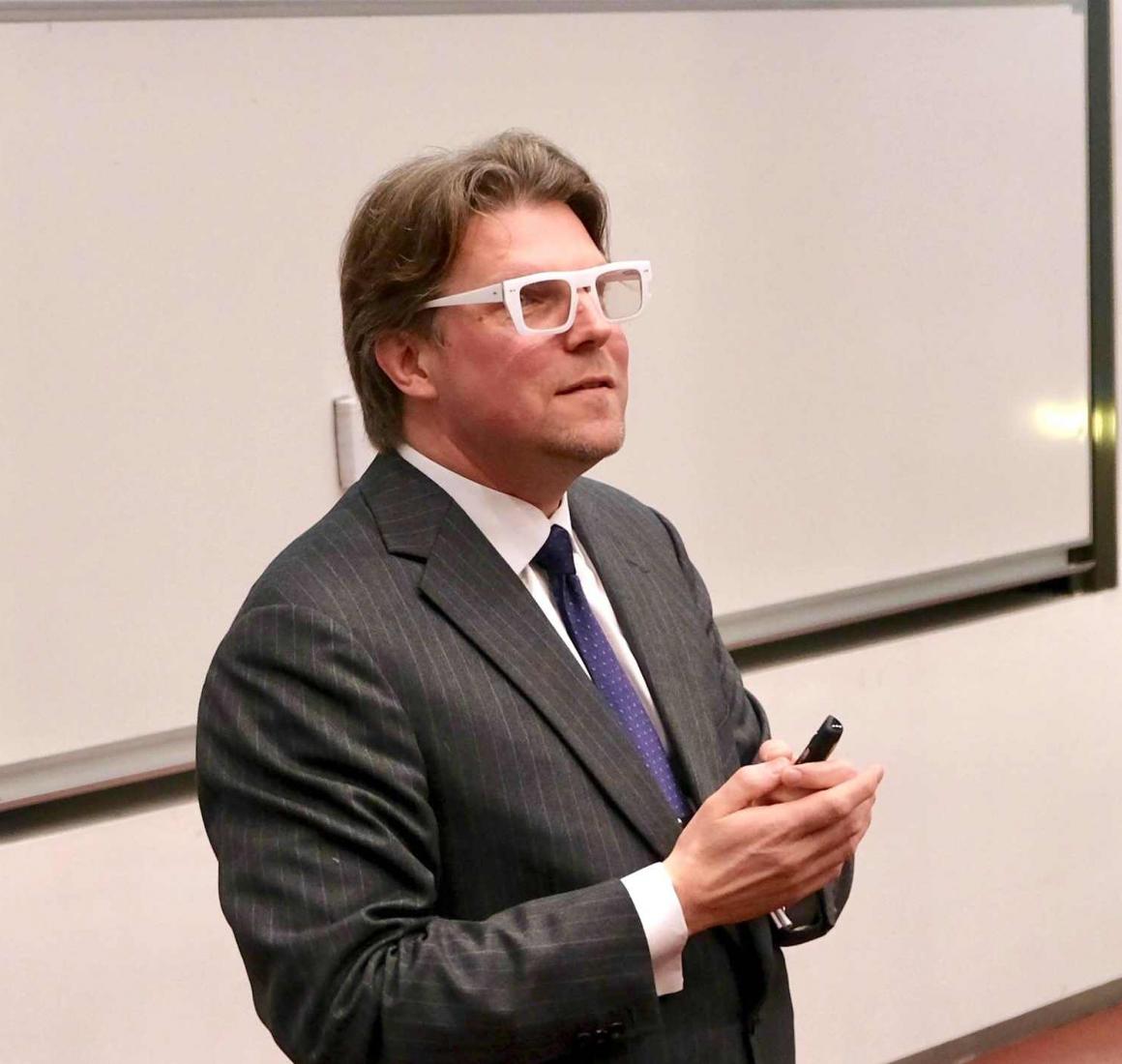
ESG Dynamics – Balancing Principles and Responsible Finance
Kristjan Jespersen, a leading figure in sustainability, navigates ESG complexities at Copenhagen Business School and in corporate roles. Explore here insights…

At lede med naturen: Hvordan?
Virksomheder skifter fokus fra at minimere skade til aktivt at skabe værdi for naturen. Net-positiv biodiversitet bliver et centralt mål: ikke kun at begrænse…

SMV'ers forurening: "Vi ved alt for lidt"
Selvom små og mellemstore virksomheder står for en stor del af affaldsproduktionen, ved vi meget lidt om deres miljøpåvirkning. Et nyt forskningsprojekt vil…
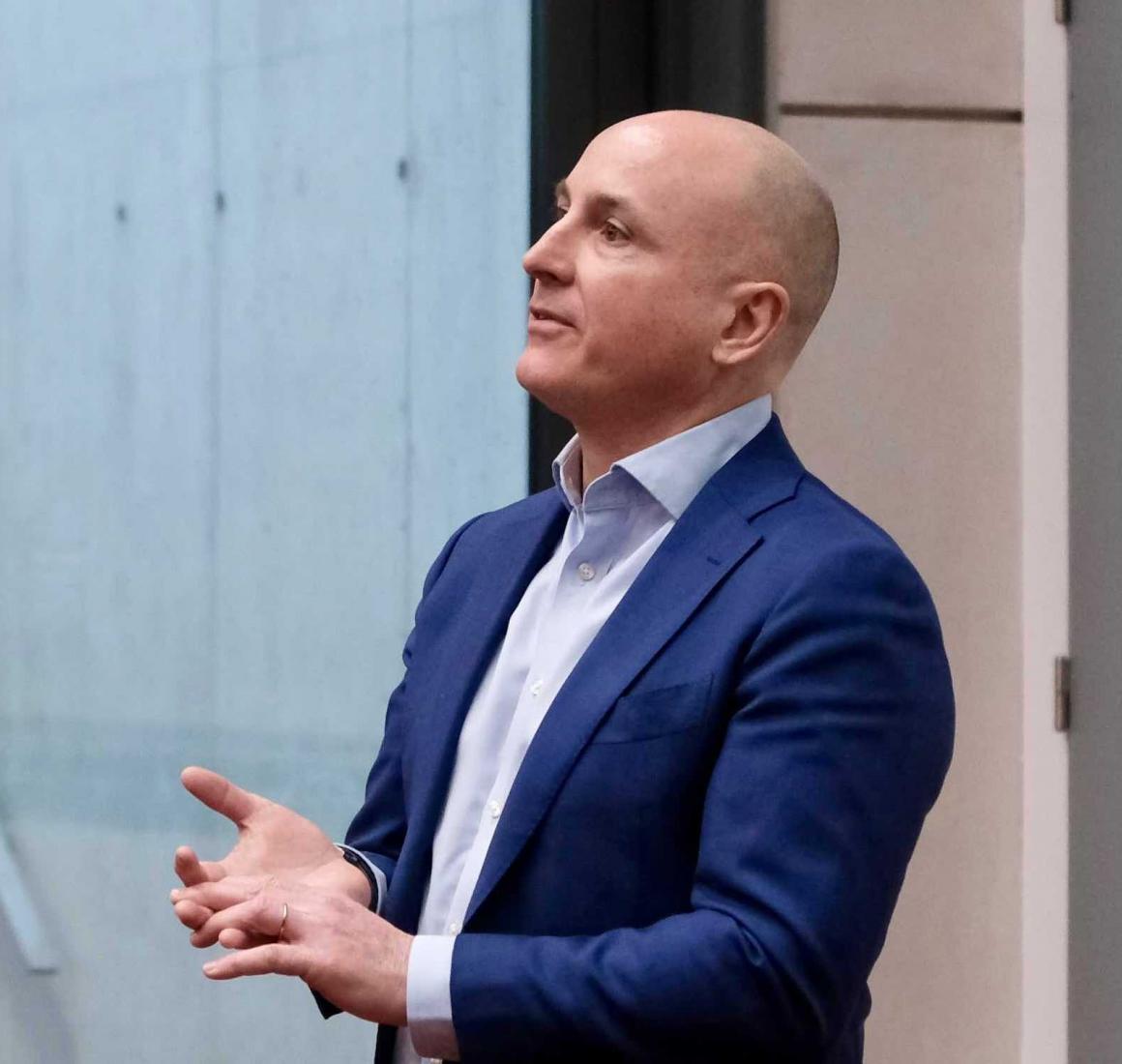
Corporate ESG Reporting Standards in Scandinavia – “Danish Companies Emerge as the Least Prepared”
Simon Taylor, Senior Director and Co-Founder of Position Green, discusses the evolving ESG landscape, emphasising the need for reliable corporate data. The…
Your gateway to more knowledge
Did you find this content interesting? Sign up for our newsletter and gain access to more of our research findings and events.
With the world’s grand challenges awaiting us, we need to continuously evolve, gain new knowledge and insights, and upskill.
Dive into a world of knowledge by signing up below. You will get:
- Personal event invitations
- Pertinent research-based insights on business and society
- Information about the next intakes of our Executive Education programmes and courses
Lær mere

Executive MBA
CBS EMBA’s unique programme design and real-world applicability provides the platform for you to navigate a turbulent global business environment and become a…

Master of Management Development
Uddannelsen er for dig, der ønsker 100 procent fokus på at udvikle dit personlige og faglige lederskab til at skabe innovative og holdbare forandringer i din…

Risikostyring i finansielle virksomheder
Få hele værktøjskassen til styring af risici.