Danish Firms Trail in Readiness for New European ESG Standards
Simon Taylor, Senior Director at Position Green, highlights the growing gap in ESG preparedness as Danish companies, especially smaller ones, struggle to meet evolving European Sustainability Reporting Standards (ESRS). While leading European firms advance, Danish businesses lag behind.
Simon Taylor, Senior Director and Co-Founder of Position Green, once again highlights the widening gap in ESG preparedness, with a focus on the critical data that companies must now provide under evolving regulations. Findings from the latest ESG100 Report reveal that while leading European companies are advancing steadily towards European Sustainability Reporting Standards (ESRS) compliance, Danish firms, particularly smaller ones, continue to struggle with meeting the stringent requirements.
Shifting from Compliance to Strategy
Taylor encourages the urgent need for businesses to go beyond mere compliance and integrate sustainability into their core strategies.
“Too many companies see this as a tick-box exercise, when in reality, these reporting standards should form the foundation of corporate strategy.”
As investors and analysts increasingly rely on ESRS data to inform their evaluations, the quality and context of that data have become more crucial than ever. The EU Taxonomy, Sustainable Finance Disclosure Regulation (SFDR), and the Corporate Sustainability Due Diligence Directive (CSDD) are reshaping the landscape. These frameworks aim to redirect private investment towards sustainable activities, thereby driving meaningful corporate action.
“The EU has committed to reducing emissions by at least 55% by 2030, and achieving this will require trillions of euros in private investment. Reliable, comparable and consistent data from corporates is essential to guide this investment."
"Danske virksomheder bliver nødt til at investere mere"
The ESG100 report analysed ESRS preparedness among the top 100 listed companies in Denmark, Sweden, Norway respectively, and companies in the STOXX All Europe 100 index. The findings revealed significant disparities between the countries:
- Danish companies were the least prepared, meeting only 44% of the ESRS criteria on average, compared to 71% among companies in the European top 100. “This reflects a real challenge for Denmark, particularly for its smaller companies, which lack the resources to keep up with larger competitors.”
- Denmark outperformed its Scandinavian peers in linking executive pay to emissions targets, with more companies incorporating emissions reductions into CEO compensation. “When a company ties executive pay to emissions targets, it signals that sustainability is truly embedded in their corporate strategy.”
- Danish companies lag behind in reporting on Scope 3 emissions and biodiversity efforts, both critical areas under ESRS. “It’s concerning that only 56% of the top 100 listed Danish companies report on Scope 3 emissions, especially considering the growing investor focus on supply chain transparency.”
To learn more and access the ESG100 report, please click here.
Human Rights and Supply Chains – A Blind Spot for Scandinavia
Human rights due diligence, driven by the Norwegian Transparency Act, is gaining momentum in Norway, but Denmark and Sweden are falling behind.
“There’s a clear pattern here: regulation drives real change. Without mandatory requirements, companies are unlikely to prioritise human rights reporting.” Simon Taylor
Additionally, supply chain reporting remains a weak point for Scandinavian companies. Only 43% of Danish firms conduct supplier audits. “This is a governance blind spot for many companies, and it’s something that will need to change as ESRS regulations come into full effect.”
Notably, 97% of companies in the EU100 conduct supplier audits, highlighting a major gap between Danish and EU counterparts.
From Whistleblowing to Strategic Importance
Taylor references a case study from Arla, one of the first companies to publish an ESRS sustainability statement for FY2023. Arla experienced a 284% increase in whistleblowing reports after launching its system, which highlighted the importance of companies properly contextualising their data.
“When data like this emerges, it’s essential for companies to provide strategic context. Otherwise, these figures can be misinterpreted and potentially damage corporate value.”
Standardised reporting now makes it clear when companies are omitting important disclosures, such as biodiversity or human rights issues.
“In the past, companies could selectively disclose information, but now it’s very obvious when they are not reporting on key material topics. This could result in downgrades from investors and analysts.” Simon Taylor
A Strategic Imperative
As regulatory pressures intensify, Taylor stresses the importance of viewing ESRS not just as a compliance exercise, but as a strategic imperative.
“The companies that embrace ESG as part of their DNA will thrive in the next decade, just as those that adapted early to AI have.”
With the first ESRS-compliant reports due in early 2025, and many companies already feeling pressure from investors, Danish firms must urgently improve their reporting capabilities.
“Denmark needs to catch up, particularly smaller businesses that are struggling with limited resources.”
Nature-related disclosures are gaining momentum, with the Task Force on Nature-Related Financial Disclosures (TNFD) becoming an important part of corporate reporting. Yet only 31% of Danish companies have a nature policy in place, compared to 72% of European companies. This is an area that will need immediate attention as investors become more attuned to biodiversity and ecosystem impacts.
The future promises to be challenging for Danish companies, but as Taylor points out, “ESG is no longer optional; it’s the new normal. Companies that fail to prioritise transparency and sustainability will be left behind, and the consequences will ripple far beyond the boardroom."
Om taleren
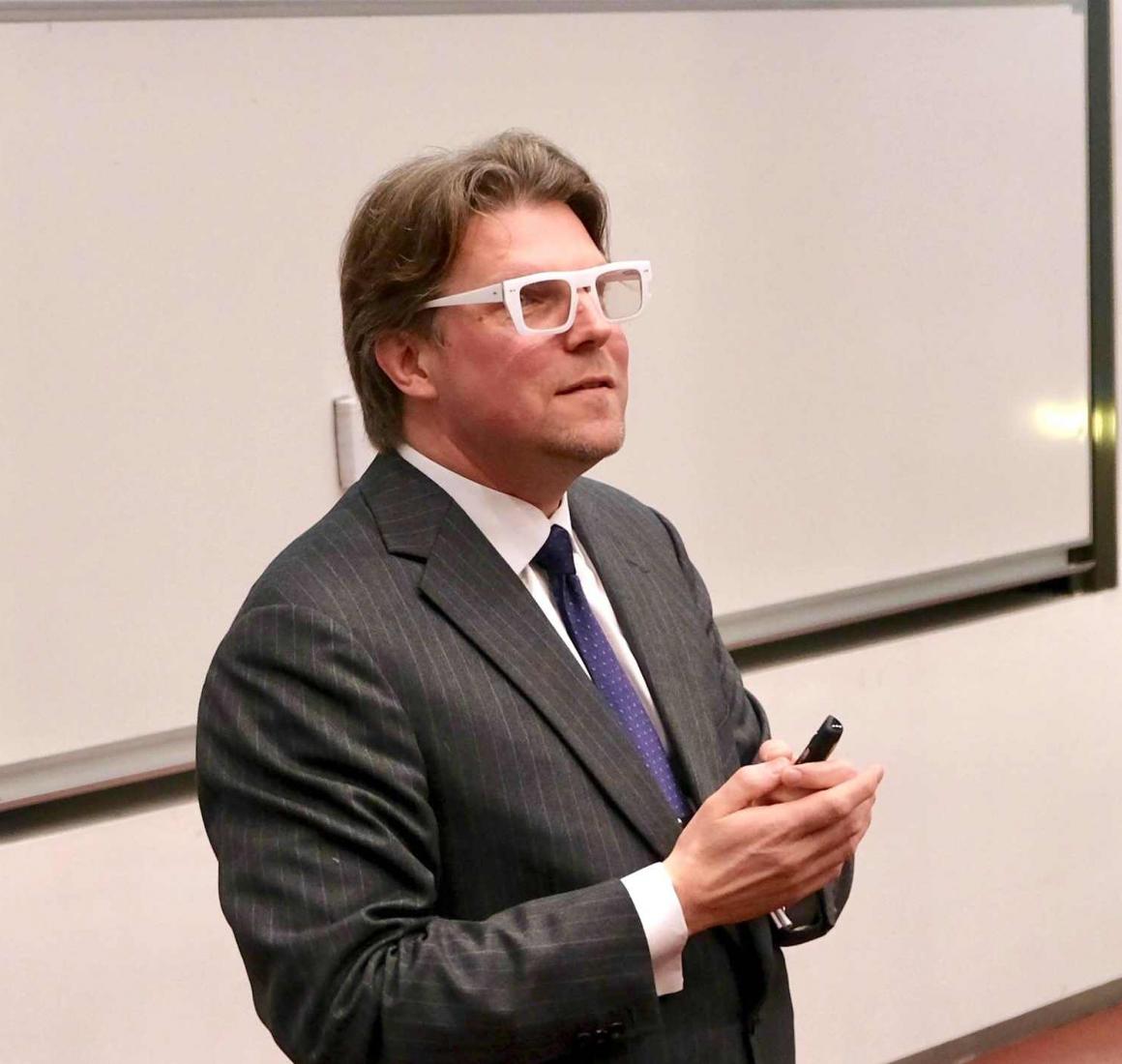
Simon Taylor
Simon Taylor er Senior Director og Co-founder af Position Green, en virksomhed dedikeret til at hjælpe organisationer med at opbygge robuste og bæredygtige operationer. Position Green gør dette gennem en blanding af ESG-software, dyb sektorviden og rådgivningsekspertise. Med en baggrund i politik har Simon arbejdet som konsulent i Singapore og Hong Kong samt haft roller i store banker.

Denne viden blev delt til et CBS Executive Education event
Udforsk vores events her.Hos CBS Executive Education skaber vi et fællesskab, hvor fagfolk kan udvikle sig gennem hele deres karriere. Vores arrangementer tager fat på virkelighedens udfordringer og samler mennesker på tværs af brancher og generationer for at lære, udveksle idéer og skabe reel forandring.

Læs mere
ESG Dynamics – Balancing Principles and Responsible Finance

Corporate ESG Reporting Standards in Scandinavia – “Danish Companies Emerge as the Least Prepared”

Det kræver en fælles indsats: En ny fødevarestrategi for et bæredygtigt fødevaresystem

Ansvarligt ejerskab er nøglen til bæredygtighed i erhvervslivet

CBS-forsker: ”EU bliver klemt mellem USA og Kina, og gør vi ikke noget drastisk, vil det koste på velfærden”
Din vej til mere viden
Fandt du dette interessant? Så tilmeld dig vores nyhedsbrev og få adgang til endnu mere af vores forskning og til vores events.
CBS Efteruddannelse adresserer de store samfundsudfordringer og giver dig mulighed for at lære gennem undervisning og events, som bygger på forskning tæt forbundet med din hverdag.
Udfyld formularen og få:
- Personlige invitationer event invitationer
- Adgang til vores nyeste forskning, når det udkommer i form af artikler, podcast, video
- Mere viden om vores efter- og videreuddannelse
Lær mere

ESG- og bæredygtighedsrapportering

Introduktion til ESG og ESG-rapportering

Executive MBA