Center for Big Data in Finance (BIGFI)
Center for Big Data in Finance (BIGFI) is a Center of Excellence established by the Danish National Research Foundation.

About (Panel content)


About us
The Center for Big Data in Finance (BIGFI) will seek to generate a fundamentally new understanding of finance based on the rapid increase in available data combined with the revolution in data science and computing power.
The center has a unique opportunity to combine leading experts on financial markets with leading experts on economic agents such as households and financial institutions. BIGFI works with the broadest global market data across asset classes and with the deepest data available anywhere in the world — including complete Danish register data, regulatory data, and proprietary data from two major financial institutions.
BIGFI aims to create a global hub for research on big data in finance by merging these large agent-based and market-based datasets and by integrating research across markets and agents.
Our research sheds new light on financial markets’ role in promoting stability and economic activity, on replication crises in finance, on the role of financial markets in the green transition, on the use of machine learning in finance, on households’ obstacles to financial security, and on how social networks affect financial markets.
“At BIGFI we aim to build a global hub for finance research that uses the broadest and deepest data available to generate new insights into markets, institutions, and households.” Lasse Heje Pedersen
Director of the Center for Big Data in Finance

Funding
BIGFI is a Center of Excellence funded by the Danish National Research Foundation. Launched January 1, 2023; six-year grant with a possible four-year extension.
Vacant positions
BIGFI regularly announces opportunities for students and PhD candidates:
- PhD Scholarships: Each year BIGFI invites applications for PhD scholarships with a special focus on big data in finance. Calls are published early in the year with a deadline at the end of February.
- Research Student Assistants: BIGFI also employs student assistants to support its research activities. These positions are intended for students with strong analytical skills and an interest in finance and data. There are currently no vacant positions.
Contact & find us
Center for Big Data in Finance (BIGFI)
Department of Finance
Copenhagen Business School
Solbjerg Plads 3
Building A, 4th floor
2000 Frederiksberg
Center Coordinator: Ida Listh (il.fi@cbs.dk)
BIGFI is most easily accessed via the elevator by the CBS book store.
Stay informed
Annual highlights
People (Panel content)
Center members at BIGFI
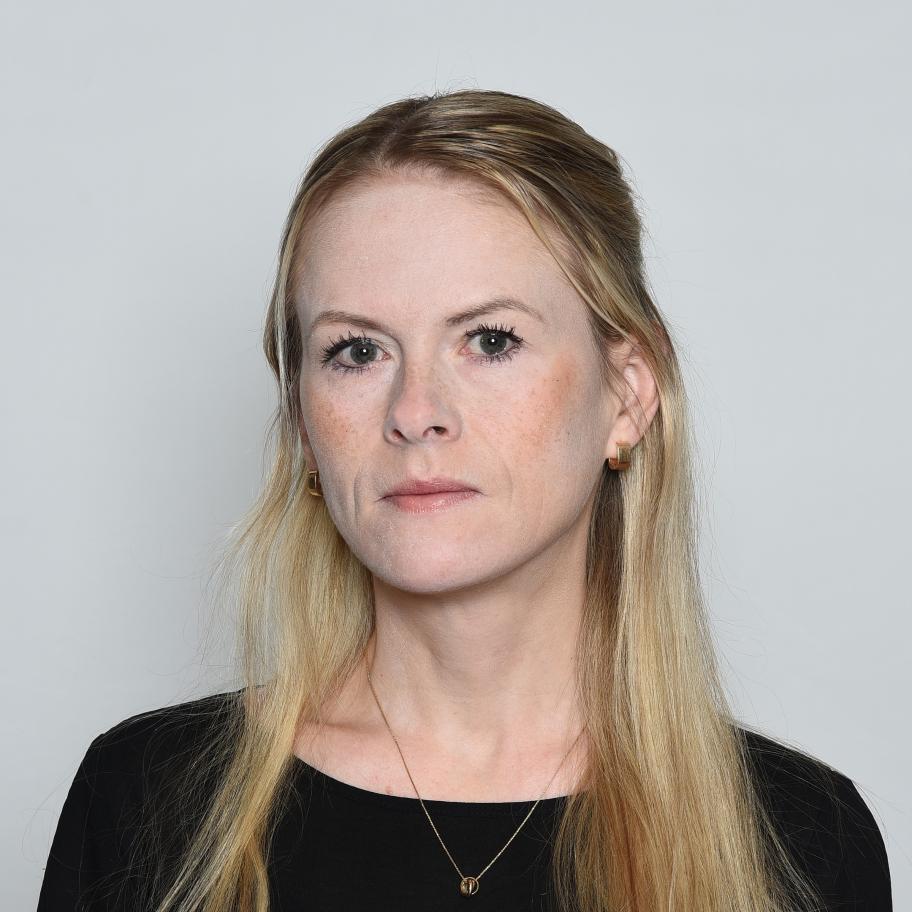
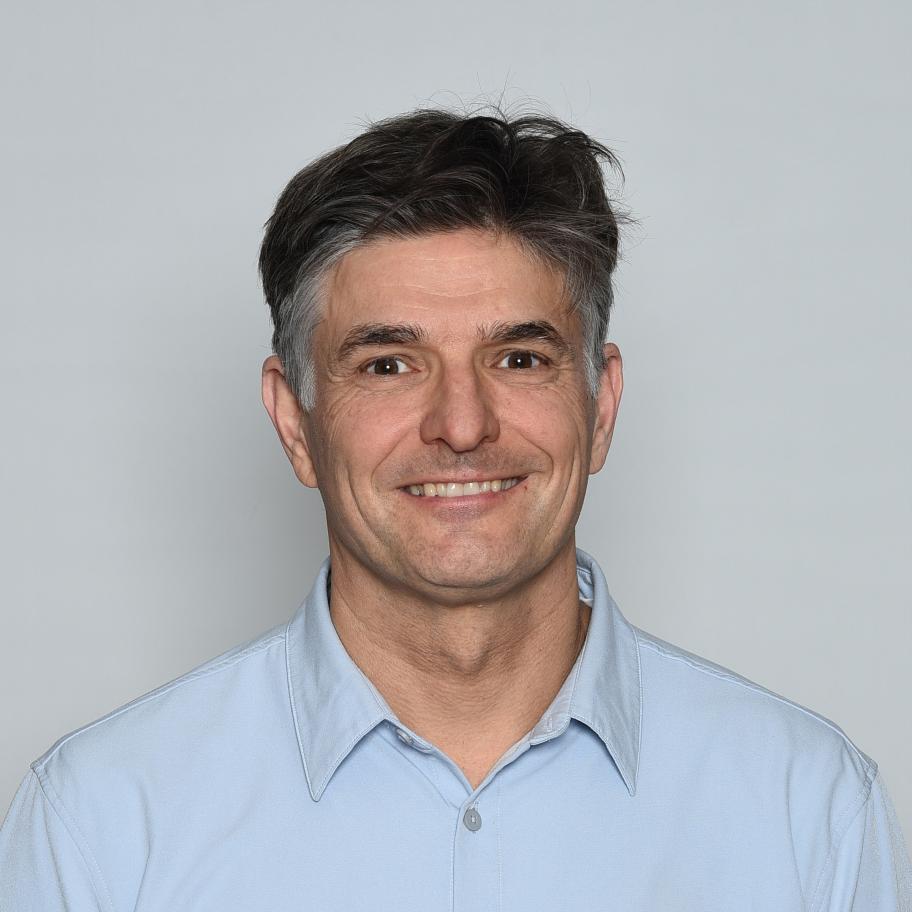
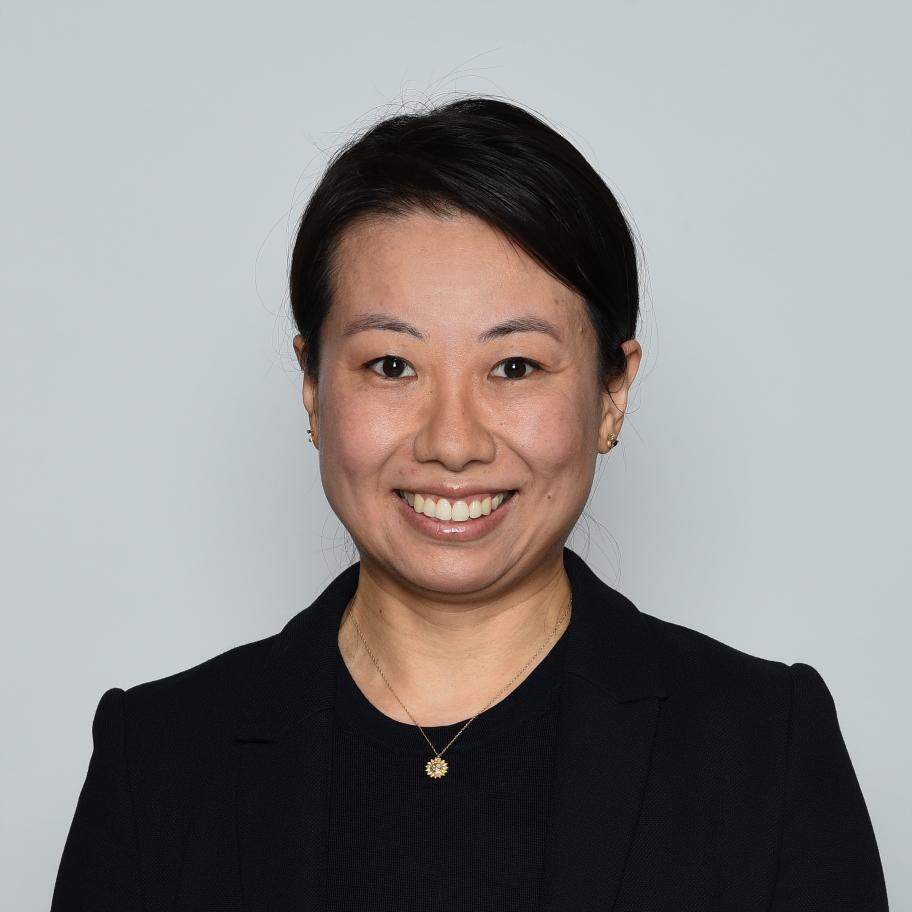
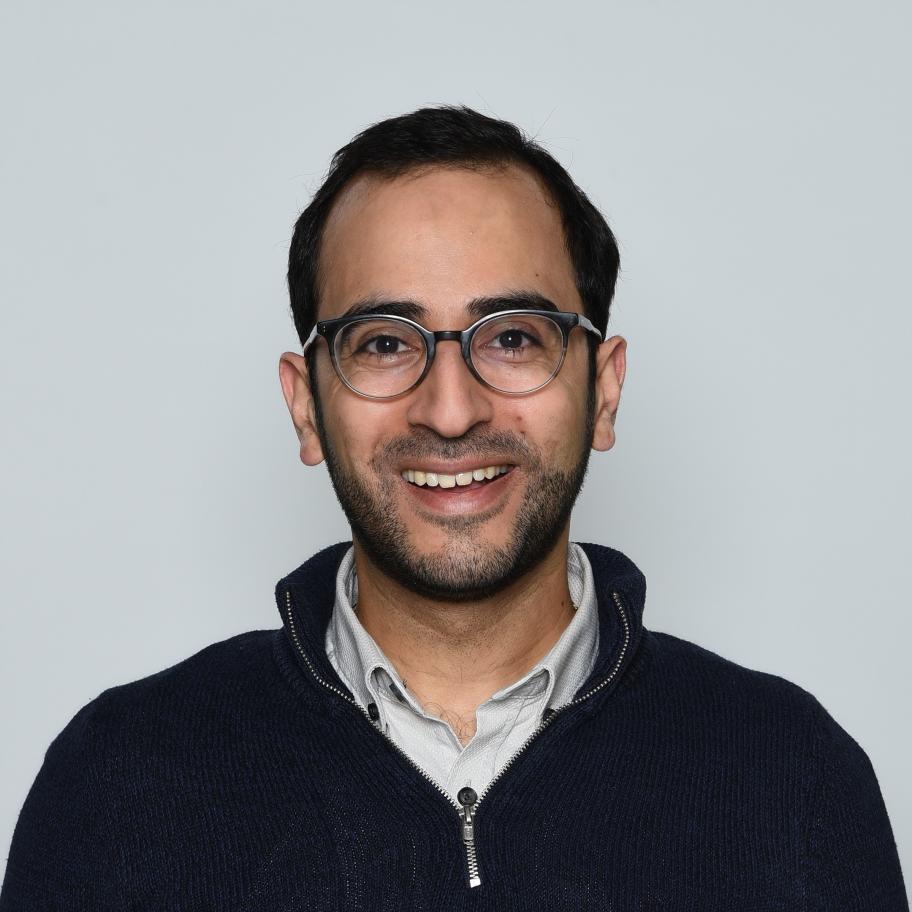
The center members at BIGFI include professors, assistant professors, PhD students, external professors, and student assistants who all contribute to the centre’s research and activities.
The alphabetical list below presents all center members.







Other center members at BIGFI
Theis Ingerslev Jensen, Associate Member
Kim Peijnenburg, Associate Member
Ask Selmer, Data Manager
Annette Vissing-Jørgensen, Associate Member
Visitors
Below is a list of researchers who have visited BIGFI.
Jakob Ahm Sørensen
Bocconi University (July 2026)
Darrell Duffie
Stanford Graduate School of Business (June 2026)
Andrei Shleifer
Harvard University (June 2026)
Richard H. Thaler
University of Chicago Booth School of Business (May 2026)
Francesca Bastianello
Booth School of Business University of Chicago (March 2026)
Jakob Ahm Sørensen
Bocconi University (December 2025)
Ben Knox
Federal Reserve Board (November 2025)
Simon Gilchrist
New York University (October 2025)
Niels Joachim Gormsen
University of Chicago Booth School of Business (March 2025)
Gianluca de Nard
University of Zurich (November 2024)
Thummim Cho
Korea University (October 2024)
Paul Rintamäki
Aalto University (September 2024)
Matilde Faralli
Imperial College London (July–August 2024)
Tobias Wiest
University of St. Gallen (February–August 2024)
Magnus Dahlquist
Stockholm School of Economics (January–June 2024)
Jakob Ahm Sørensen
Bocconi University (January 2024)
Niels Joachim Gormsen
University of Chicago Booth School of Business (December 2023)
Francisco Gomes
London Business School (November 2023)
Allan Timmermann
University of California San Diego (August 2023)
Davide Tomio
Darden School of Business, University of Virginia (August 2023)
Jakob Ahm Sørensen
Bocconi University (August 2023)
Konstantin Milbradt
Kellogg School of Management, Northwestern University (March 2023)
Stay informed
Research (Panel content)
Publications
2025 (Panel content)
A modified wild bootstrap procedure for Laplace transforms of volatilityA modified wild bootstrap procedure for Laplace transforms of volatility. Ulrich Hounyo, Zhi Liu, Rasmus T. Varneskov, Economics Letters, Vol. 247, Article 112177.
Is Capital Structure Irrelevant with ESG Investors?, Peter Feldhütter, and Lasse Heje Pedersen, The Review of Financial Studies, Vol. 38(8), pp. 2362–2385
2024 (Panel content)
Homeownership Decisions in the Bust. Marcel Fischer, Natalie Khorunzhina, Julie Marx, Journal of Real Estate Finance and Economics, Vol. 69(3).
Do Option Characteristics Predict the Underlying Stock Returns in the Cross-Section? Andreas Neuhierl, Xiaoxiao Tang, Rasmus T. Varneskov, Guofu Zhou, Management Science, forthcoming.
The Ostrich in Us: Selective Attention to Personal Finances. Arna Olafsson, Michaela Pagel, Review of Economics and Statistics (ReStat), forthcoming.
Equity Return Expectations and Portfolios: Evidence From Large Asset Managers. Magnus Dahlquist, Markus Ibert, Review of Financial Studies, Vol. 37(6), pp. 1887-1928.
Big Broad Banks: How Does Cross-selling Affect Lending? Yingjie Qi, Review of Finance, forthcoming.
How Integrated Are Credit and Equity Markets? Evidence from Index Options, Pierre Collin-Dufresne, Benjamin Junge, Anders B. Trolle, Journal of Finance, Vol. 79(2), pp. 949-992.
Misfortune and Mistake: The Financial Conditions and Decision-making Ability of High-Cost Loan Borrowers, Leandro Carvalho, Arna Olafsson, Daniel Silverman, Journal of Political Economy, 132(9), pp. 3173-3213.
Pricing of Sustainability-Linked Bonds, Peter Feldhütter, Kristoffer Halskov and Arthur Krebbers, Journal of Financial Economics, Vol. 162, Article 103944
The Co-holding Puzzle: New Evidence from Transaction-Level Data, John Gathergood, and Arna Olafsson, Review of Financial Studies, forthcoming.
Broken Promises, Competition, and Capital Allocation in the Mutual Fund Industry, Simona Abis, and Anton Lines, Journal of Financial Economics, Vol. 162, Article 103948.
2023 (Panel content)
Debt Dynamics and Credit Risk, Peter Feldhütter, and Stephen Schaefer, Journal of Financial Economics, Vol. 149(3), pp. 497-535.
Is There a Replication Crisis in Finance? Theis Ingerslev Jensen, Bryan Kelly, and Lasse Heje Pedersen, Journal of Finance, Vol. 78(5), pp. 2465-2518.
Principal Portfolios, Bryan Kelly, Semyon Malamud, and Lasse Heje Pedersen, Journal of Finance, Vol. 78(1), pp. 347-387.
BIGFI DataHub
The BIGFI DataHub provides access to financial databases and unique datasets — from global markets to Danish registers.
Explore the DataHub
Events (Panel content)
Upcoming events

Stay informed
Past events
A Fireside Chat with Nobel Laureate Richard Thaler
On May 11, 2026, BIGFI welcomed Nobel Laureate Richard H. Thaler (The University of Chicago Booth School of Business) for an open event on behavioral economics, decision-making, and human behavior. The event brought together students, researchers, professionals, and members of the public to engage with one of the founding figures of behavioral economics.
The program featured a fireside chat moderated by Niels Joachim Gormsen (DNRF Chair Professor of Finance, BIGFI and CBS). Drawing on insights from his latest book The Winner’s Curse (written with Alex Imas), Thaler reflected on how the behavioral “anomalies” identified in his early research continue to shape the understanding of economic decision-making today.
The discussion covered topics including nudging, incentives, behavioral biases, and the practical implications of behavioral economics. Thaler also shared advice for students pursuing academic careers, emphasizing the importance of curiosity, creativity, and exploring research areas that remain underdeveloped.
The event concluded with questions from the audience and provided a unique opportunity for the CBS community to engage directly with one of the most influential economists of the past decades.
Big Data in Asset Management 2025 by AQR and BIGFI
On November 20, 2025, AQR and BIGFI hosted Big Data in Asset Management 2025, a full-day conference exploring the impact of big data and artificial intelligence on modern asset management. The programme brought together leading academics, policymakers, and industry practitioners to discuss machine learning in investment, asset pricing, regulatory developments, and allocator perspectives.
Speakers included BIGFI Center Director Lasse Heje Pedersen, Svetlana Bryzgalova (London Business School), Bryan Kelly (Yale School of Management and AQR), Ben Knox (Federal Reserve Board), Marina Niessner (Indiana University – Kelley School of Business), Jesper Berg (Copenhagen Business School), William Dunning (Simmons & Simmons), Owen Lamont (Acadian Asset Management), John Liew (AQR), Roberto Giuffrida (AQR), Kari Vatanen (Elo Mutual Pension Insurance Company), Ingrid Albinsson (AP2 Board), Michael Flycht (PKA), Antti Ilmanen (AQR), Tobias Moskowitz (Yale School of Management and AQR), and Daniel Whitehouse (AQR).
The conference concluded with a reception, providing participants with an opportunity to continue discussions and strengthen connections across academia and industry.
Quantative Finance - BIGFI and FinanceLab
On May 12, 2025, BIGFI and FinanceLab co-hosted an event on Quantitative Finance at Copenhagen Business School. The event brought together academia and industry to explore how rigorous financial research translates into real-world practice.
The programme featured a talk by BIGFI Center Director Lasse Heje Pedersen, who shared insights on his career, the development of BIGFI, and the interaction between academia and practice in quantitative finance. Oliver Hellum, BIGFI PhD student, presented his research and spoke about his motivation for choosing BIGFI as a research environment. Henrik Nygaard Jensen (Danske Bank Asset Management) discussed his career path and addressed a relevant topic within quantitative finance from an industry perspective. The event also featured an engaging Q&A session, fostering dialogue between students, researchers, and practitioners.
CBS Capital Four Credit Day 2025
On May 21, 2025, BIGFI and Capital Four hosted CBS Capital Four Credit Day 2025, bringing together leading academics and industry practitioners for a full day of discussions on developments in corporate credit markets. The programme explored timely topics including credit covenants, sudden stop risk, macro credit arbitrage, securitisation reform, and the convergence of credit, insurance, and private capital markets.
The event opened with welcome remarks from BIGFI Center Director Lasse Heje Pedersen and Sandro Näf (CEO, Co-Founder and Portfolio Manager, Capital Four). Academic presentations were delivered by Boris Vallée (Harvard Business School), Daniel Streitz (University of Jena; Halle Institute for Economic Research), and David Lando (BIGFI and CBS). Industry perspectives were shared by Søren Willemann (Barclays), William Perraudin (Risk Control Limited), and Henrik Matsen (Henry Costa Partners).
The afternoon featured panel discussions on the convergence of private capital markets and insurers with Fahim Rashid (Rothesay), Robert ter Weijden (Athora Netherlands), and Joe Cantwell (26North), moderated by Sandro Näf, as well as a session on navigating alternative credits with Keith Brakebill (Russell Investments), Mads Skaaning Jensen (PKA), Florian Kramer (Allianz Investment Management), and Per Svensson (AP4), moderated by Torben Skødeberg. The programme also included an interview with Lars Rohde, former Governor of Danmarks Nationalbank, conducted by Sandro Näf, and concluded with reflections by David Lando and Sandro Näf.
The event provided a forum for dialogue between research and practice, highlighting current challenges and opportunities in global credit markets.
CEPR Household Finance Conference
On 7–9 May 2025, BIGFI co-hosted the CEPR European Workshop on Household Finance 2025 in Copenhagen, bringing together leading researchers, policymakers, and practitioners to discuss new research in household finance. The workshop was held at the Central Bank of Denmark and the Carlsberg Venue and featured presentations, panel discussions, and policy dialogue across three days.
The conference opened with a Research, Policy and Practice session on impact investing and the role of pension funds and sovereign wealth funds, featuring welcome remarks by Michael Haliassos (Goethe University Frankfurt and CEPR) and an introductory address by Steffen Andersen (Nationalbanken, CEPR and BIGFI). The panel, moderated by Mette von Sicard (Nationalbanken), included Ulrik Nødgaard (Nationalbanken), Kasper Ahrndt Lorenzen (PFA Pension), Adair Morse (UC Berkeley), and Lasse Heje Pedersen (CBS and BIGFI).
Across the academic sessions, research was presented by Camilla Skovbo Christensen (London School of Economics), Oksana Smirnova (London Business School), Jan Mazza (European University Institute), Miguel Oliveira (Nova School of Business and Economics), Paymon Khorrami (Duke University), Juhana Siljander (Imperial College London), Akash Raja (CBS), Purnoor Tak (London Business School), Raymond Kluender (Harvard Business School), Sheisha Kulkarni (University of Virginia), Ciaran Rogers (HEC Paris), and Clara Martinez-Toledano (Imperial College London), with discussions led by distinguished scholars from leading European and international institutions.
The workshop concluded with closing remarks following sessions on trading behavior, consumer constraints, and capital markets. Local organisers were Steffen Andersen (Nationalbanken, CEPR and BIGFI) and Julie Marx (CBS and BIGFI). The event provided a forum for cutting-edge research and dialogue at the intersection of household finance, policy, and financial markets.
How Should Europe Finance Its Future? A Discussion with the EU Commissioner
On March 24, 2025, BIGFI and CBS hosted How Should Europe Finance Its Future?, a discussion with Maria Luís Albuquerque, EU Commissioner for Financial Services and the Savings and Investments Union. The event brought together around 100 CBS students to engage in a timely conversation about Europe’s investment needs and long-term financial strategy.
In her presentation, Commissioner Albuquerque addressed how Europe can finance the green and digital transitions, strengthen defence capabilities, and enhance competitiveness. The discussion explored potential funding channels, including EU-wide debt, the mobilisation of pension funds, and increased private savings across Member States.
The session was followed by a moderated discussion led by BIGFI Center Director Lasse Heje Pedersen and Jesper Rangvid (CBS), covering topics such as Europe’s competitiveness relative to the US and China, the development of a single European capital market, pension and savings reforms, and regulatory simplification. The event concluded with an informal reception, providing an opportunity for continued dialogue between students and speakers.
BIGFI x Executive Education: Trends in Household Finance
On January 28, 2025, BIGFI and CBS Executive Education hosted Trends in Household Finance – From ESG to Finfluencers, exploring how sustainable investing and social media are reshaping household financial decision-making.
Fatima Zahra Filali Adib (BIGFI and CBS) presented research showing that ESG investing is often perceived as a “luxury good,” with wealth and personal experiences influencing households’ portfolio choices. Yingjie Qi (BIGFI and CBS) shared insights on the growing impact of financial influencers on retail investors, demonstrating how social networks shape trading behaviour and market outcomes. Andreas Østerheden (Nykredit Asset Management) contributed an industry perspective on ESG investing and portfolio management.
The event highlighted how sustainability trends and digital influence are transforming household finance and investment behaviour.
BIGFI Conference - Central Banking and Big Data
On November 14, 2024, BIGFI hosted the BIGFI Conference on Central Banking at CBS, bringing together leading researchers to discuss data-driven insights on central banking, finance, and monetary policy.
The conference featured keynote lectures by Annette Vissing-Jørgensen (BIGFI and Federal Reserve Board), who presented Balance Sheet Policy Above the Effective Lower Bound, and John H. Cochrane (Stanford University), who delivered a keynote on inflation. The programme included presentations by Sebastian Infante (Federal Reserve Board), Andrew Y. Chen (Federal Reserve Board), Tobias Berg (Goethe University Frankfurt), Emanuel Mönch (Frankfurt School of Finance & Economics), and Niels Joachim Gormsen (University of Chicago Booth School of Business), with discussions led by distinguished scholars from leading international institutions.
Across the day, participants examined topics such as central bank reserves, cross-sectional return predictability, quantitative easing and housing markets, global bond yields, and firms’ perceived cost of capital. The conference concluded with a reception, providing an opportunity for continued academic exchange and dialogue.
CBS Capital Four Credit Day 2024
On May 16, 2024, BIGFI and Capital Four hosted the third CBS Capital Four Credit Day 2024 at Copenhagen Business School, bringing together leading academics and industry professionals to discuss developments in corporate bond markets and credit investing.
The event opened with welcome remarks by Jens Dick-Nielsen (BIGFI and CBS) and Sandro Näf (Capital Four). Academic presentations were delivered by Lasse Heje Pedersen (BIGFI and CBS), Amit Goyal (University of Lausanne), Giorgio Ottonello (Nova School of Business and Economics), and Simon Mayer (Carnegie Mellon University), covering topics including corporate bond factors, return predictability, implementable bond portfolios, and non-bank lending. Antti Ilmanen (AQR Capital Management) shared insights on investing in a low expected return environment.
The programme also featured industry panels on portfolio challenges and alternative portfolio solutions with Erik Bennike (PensionDanmark), Erika Tikka (Keva), Sven Johannsen (HAPEV), Tim Cable (Vantage Infrastructure), Vincent Kravec (Commonfund), Henrik Olejasz Larsen (Sampension), and Kasper Ahrndt Lorenzen (PFA), moderated by Jesper Rangvid (CBS) and Torben Skødeberg (Capital Four).
The afternoon included a presentation by Oskar Harmsen (McKinsey & Company and QuantumBlack) on artificial intelligence as a new frontier in finance, followed by an interview with Allan Polack, conducted by Sandro Näf. The conference concluded with reflections by Lasse Heje Pedersen and Sandro Näf, providing a forum for dialogue between research and practice in global credit markets.
Nordic Fintech Symposium 2023
On September 26, 2023, BIGFI co-organised and co-funded the 4th Nordic Fintech Research Symposium 2023, marking the beginning of Nordic Fintech Week. The symposium was supported by Copenhagen Fintech as part of the Danish Ministry of Higher Education and Science’s National Position of Strength programme for Finans & Fintech, with the aim of strengthening knowledge sharing and collaboration between academia and industry.
The programme focused on the application of AI and machine learning in finance, including portfolio optimisation, sustainable investing, AI-powered trading, and quantum computing. Academic presentations were delivered by Semyon Malamud (EPFL), Lasse Heje Pedersen (BIGFI and CBS), Yan Ji (HKUST), Jing Huang (Texas A&M), Martin Elsman (University of Copenhagen), Jacob Sherson (Aarhus University and University of Copenhagen), and Allan Grønlund (Kvantify).
The symposium also featured a panel debate on Harnessing the Power of Big Data in Financial Markets, moderated by Bent Dalager (KPMG Global Quantum Hub), with panelists Allan Grønlund (Kvantify), Michael Kastoryano (IT University of Copenhagen), and Brian Huge (Saxo Bank).
The event was welcomed on behalf of the organisers by Thomas Krogh Jensen (CEO, Copenhagen Fintech) and Lasse Heje Pedersen (Professor and Center Director, BIGFI). The symposium provided a platform for cutting-edge research, dialogue, and new collaborations at the intersection of fintech, data science, and financial markets.
Advances in Financial Econometrics, a conference in honor of Torben G. Andersen
On June 9–10, 2023, BIGFI and collaborators hosted Advances in Financial Econometrics, a conference in honor of Torben G. Andersen, bringing together leading scholars in financial econometrics for two days of research presentations and discussion.
The conference opened with remarks by Peter Reinhard Hansen (University of North Carolina), Rasmus Varneskov (BIGFI and CBS), and Lasse Heje Pedersen (BIGFI and CBS). The programme featured presentations by prominent researchers including Tim Bollerslev (Duke University), Nicola Fusari (Johns Hopkins), Oliver Linton (University of Cambridge), Maria Gonzalez-Perez (Bank of Spain), Oleg Bondarenko (University of Illinois Chicago), Allan Timmermann (UC San Diego), Ying-Ying Li (HKUST), Andy Neuhierl (Washington University in St. Louis), Robert Korajczyk (Kellogg), Dacheng Xiu (University of Chicago), Neil Shephard (Harvard University), Andrew Patton (Duke University), Viktor Todorov (Kellogg), Nour Meddahi (Toulouse School of Economics), Steve Heston (University of Maryland), Dobrislav Dobrev (Federal Reserve Board), Luca Benzoni (Federal Reserve Bank of Chicago), Marcelo Fernandes (Sao Paulo School of Economics), Federico Bandi (Johns Hopkins), Robert Engle (NYU Stern), Nikolaus Hautsch (University of Vienna), and Francis Diebold (University of Pennsylvania).
Across the sessions, participants examined cutting-edge topics including volatility measurement, jump risk, high-frequency econometrics, asset pricing, macro-financial linkages, and robust inference in time series models. The conference concluded with closing remarks by Peter Reinhard Hansen and Rasmus Varneskov, celebrating Torben G. Andersen’s profound contributions to the field of financial econometrics.
CBS Capital Four Credit Day 2023
On May 11, 2023, BIGFI and Capital Four hosted CBS Capital Four Credit Day 2023 at CBS, bringing together academics and industry professionals to discuss developments in credit markets and investment strategies.
The programme opened with welcome remarks by Sandro Näf (Capital Four). Academic presentations were delivered by Anders B. Trolle (BIGFI and CBS), Greg Nini (Drexel University), Sergey Chernenko (Purdue University), Ralf Meisenzahl (Federal Reserve Bank of Chicago), and Martin Schmalz (University of Oxford), covering topics such as credit index derivatives, loan market dynamics, corporate bond liquidity, nonbank lending, and direct lending in European and US markets. Industry perspectives were provided by Clement B. Kjersgaard and Timo Kairi (Bain & Company).
The afternoon featured breakout sessions on distressed debt, CLOs, ESG integration, and the use of structured data in the investment process. Panel participants included Christopher Foley (Houlihan Lokey), Karen McMaster (Milbank LLP), Michael Beierholm (Capital Four), David Altenhofen (PensionDanmark), Sandeep Chana (S&P Global Ratings), Jim Wiant (Capital Four), Flemming Dose (Capital Four), Jan Ståhlberg (Trill Impact), Louise A. Jensen (PKA), Mads M. Borup (Capital Four), Graham Kellen (B-Flexion), Timothy Smith (Capital Four), and Ami Dogra (Capital Four), moderated by Capital Four partners including René Kallestrup, Torben Skødeberg, and Mikkel Sckerl.
The event concluded with an interview of Jan Ståhlberg conducted by Sandro Näf, followed by summary remarks from Torben Skødeberg and closing remarks by Sandro Näf, providing a forum for dialogue between research and practice in global credit markets.
BIGFI Opening Event
On March 2, 2023, BIGFI hosted its Opening Event at Copenhagen Business School, marking the official launch of the Center for Big Data in Finance. The event introduced the centre’s vision of advancing finance research through the use of large-scale data, data science, and computational methods.
The programme opened with remarks by Søren-Peter Olesen (CEO, Danish National Research Foundation), followed by a presentation of BIGFI by Lasse Heje Pedersen (Center Director, BIGFI and CBS). Kim Peijnenburg (EDHEC Business School and BIGFI) presented her research on forecast bias and household equity trading, and the keynote lecture was delivered by Tobias J. Moskowitz (Yale School of Management) on the opportunities and challenges of big data research in investments.
The event concluded with closing remarks by Nikolaj Malchow-Møller (President, CBS) and Lasse Heje Pedersen, followed by a reception. The opening event set the stage for BIGFI’s global research agenda at the intersection of finance, big data, and advanced analytics.
News (Panel content)

In the news
BIGFI members have been featured in Danish and international media. Below you can explore articles and mentions year by year.
2025 (Panel content)
| June 3, 2025 | Federation of European Securities Exchanges | Press release – For the first time, the FESE De la Vega Prize is awarded to two winners |
| May 6, 2025 | Financial Times |
|
| April 27, 2025 | Berlingske | Om få år skifter tusindvis af milliarder kroner hænder – det kan ændre spillepladen for investeringer |
2024 (Panel content)
| October 25, 2024 | Weekendavisen |
|
| October 23, 2024 | The Economic Times | How to generate alpha through dynamic hedging in periods of downtrend |
| May 26, 2024 | Børsen | Stjerneprofessoren har bygget bro mellem finansteori og praksis |
| April 15, 2024 | FinansWatch | Finansprofiler opfordrer til fokus på "ekstremt vigtigt valg" |
| February 5, 2024 | FinansWatch |
Professor stopper i pensionsbestyrelse
|
| January 15, 2024 | The Wall Street Journal | Forget Meme Stocks and Bitcoin. These Investors Are Hunting Quality. |
2023 (Panel content)
| December 12, 2023 | Børsen |
Hård kritik af Kraka-analyse bestilt af finanslobby
|
| September 15, 2023 | Financial Times |
The financial replication crisis revisited
|
| May 3, 2023 | Science Report | Nyt forskningscenter vil minimere risikoen for en ny finanskrise |
| March 6, 2023 | Børsen | CBS lancerer hidtil største satsning på finansforskning |
| March 6, 2023 | FinansWatch | CBS åbner forskningscenter med finans i fokus |
2022 (Panel content)
| June 9, 2022 | Børsen | Dansk topforsker får 59 mio kr til finansiel grundforskning |
| June 8, 2022 | ITWatch |
Nyt center vil grave dybt i data om finansverdenen
|
| June 8, 2022 | Science Report | Danmarks Grundforskningsfond støtter etableringen af 11 nye centre |
| June 7, 2022 | AMWatch | New financial research center to identify novel patterns in big data |
| June 7, 2022 | DNRF | The DNRF invests 625 mil. DKK in 11 new Centers of Excellence |
| May 6, 2022 | Institutional Investor | Was the ‘Bond King’ Great? |
Public outreach
Podcast (in Danish): Bankobligationer med Peter Feldhütter
On February 25, 2025, Peter Feldhütter participated in the podcast 'Rig på viden' (Rich in knowledge).
Professor Peter Feldhütter taler om obligationer udstedt af banker, og hvorfor de giver et højere afkast end andre virksomhedsobligationer.
Podcast (in Danish): Banks‘ risk with David Lando
On July 22, 2025, David Lando participated in the podcast Rig på viden (Rich in knowledge).
Professor David Lando explains why banks’ equity risk has not decreased after the financial crisis despite higher capitalization, how deregulation in the US in 2018 changed banks’ risk profile, and what this means for regulators. He also discusses what investors and supervisors should take away from these results.
Podcast: Will tax or finance get us to net zero?
On July 1, 2024, Lasse Heje Pedersen participated in the podcast VoxTalks Economics.
If we’re going to get to net zero in time, economists argue that carbon taxation alone is the best policy. But less than a quarter of emissions are subject to any carbon pricing. And even then, the price of carbon is far too low. So how much climate finance will it take to fill that gap to get us to a socially optimal solution? Lasse Heje Pedersen talks to Alissa and Tim about how he estimates the rate of exchange between the cost of capital and a carbon tax, and what that implies for policy.
Podcast (in Danish): Can we trust investment factor studies?
On June 18, 2024, Jens Dick-Nielsen participated in the podcast Rig på viden (Rich in knowledge).
Professor Jens Dick-Nielsen presents his latest research on whether there is a replication crisis in corporate bonds. Using a new method, he finds that 80% of the factor studies he examined cannot be replicated.
Podcast (in Danish): Green investments — does it pay off?
On March 2, 2024, Lasse Heje Pedersen participated in the podcast 'Videnskab fra vilde hjerner' (Science from wild minds).
In this episode, Professor Lasse Heje Pedersen from CBS talks about green and sustainable investments. He discusses whether such investments can pay off and which factors beyond returns should be considered. Drawing on theories and data analysis, he explores how green investments affect the economy and society. He also shares insights from his research in finance, where he uses mathematical models and empirical data to understand stock and bond prices and their impact on the real world.
Podcast (in Danish): Rig på videnskab.dk med Steffen Andersen
On January 23, 2024, Steffen Andersen participated in the podcast Rig på viden (Rich in knowledge).
This special edition was produced in collaboration with Videnskab.dk, where CBS Professor Steffen Andersen talks about behavioural economics.
Podcast (in Danish): Sustainable bonds = greenwashing?
On December 10, 2024, Peter Feldhütter participated in the podcast Rig på viden (Rich in knowledge).
In this episode, Professor Peter Feldhütter talks about his latest research on Sustainability Linked Bonds.
Video: How Integrated Are Credit and Equity Markets? Evidence from Index Options
Listen to Anders Trolle discuss his article, "How Integrated Are Credit and Equity Markets? Evidence from Index Options," published in the Journal of Finance.
The paper, coauthored with Pierre Collin-Dufresne (EPFL, Switzerland) and Benjamin Junge (Capital Fund Management, France), investigates the complex dynamics underlying financial markets, shedding new light on the interplay between credit and equity market factors and their impact on investment outcomes. With meticulous analysis and cutting-edge methodologies, the study contributes to our understanding of financial market behavior and provides valuable insights for both academia and industry professionals.
Video: Debt Dynamics and Credit Risk
Listen to Peter Feldhütter discuss his article, "Debt Dynamics and Credit Risk" published in Journal of Financial Economics.
The paper, coauthored with Stephen Schaefer, explores the intricate relationship between corporate debt policy and the pricing of corporate bonds. In the paper, Feldhütter and Schaefer empirically demonstrate that firms with low equity returns take on more debt in the short run and less debt in the long run compared to firms with high equity returns and integrate this novel insight into structural models of credit risk. They incorporate these debt dynamics into both standard diffusion models and advanced models with stochastic volatility and jumps, leading to more accurate predictions of credit spreads, particularly for short-maturity investment grade bonds. Their research contributes to a comprehensive understanding of corporate capital structure dynamics, challenging the conventional assumption of constant debt in structural models of credit risk.
Video: Is There a Replication Crisis in Finance?
Listen to Theis Ingerslev Jensen discuss his article, "Is There a Replication Crisis in Finance?" published in Journal of Finance.
The paper, coauthored with Bryan T. Kelly and Lasse Heje Pedersen, develop and estimate a Bayesian model of factor replication, which leads to different conclusions. The majority of asset pricing factors: (1) can be replicated, (2) can be clustered into 13 themes, the majority of which are significant parts of the tangency portfolio, (3) work out-of-sample in a new large data set covering 93 countries, and (4) have evidence that is strengthened (not weakened) by the large number of observed factors.
Video: Interview with Lasse Heje Pedersen, Director of the Center for Big Data in Finance
Listen to Lasse Heje Pedersen as he introduces the Center for Big Data in Finance and explains how the center aims to use large-scale data to gain deeper insights into financial markets.
By analyzing both individual-level data from Statistics Denmark and global market data, the center seeks to enhance understanding of how financial markets operate and support the green transition in a smart and effective way. With exclusive access to unique Danish datasets, the center holds a distinct advantage over many other research institutions worldwide.
Video: Interview with PhD student Theis Ingerslev Jensen
Listen to Theis Ingerslev Jensen shares insights from his PhD research and its significance in the field.
He reflects on how the Center for Big Data in Finance (BIGFI) played a role in shaping his career, both in terms of research development and securing his current position at Yale. Theis Ingerslev Jensen highlights the academic environment, the people, and the research infrastructure as key factors in his professional growth. He also offers valuable advice to current and aspiring PhD students on making the most of their PhD journey, staying motivated, and navigating challenges.
Click here to watch the video.
Stay informed
Courses (Panel content)
Courses at BIGFI
Asset Management and Hedge Fund Strategies (MSc)
Big Data Asset Pricing (PhD)
Faculty
Lasse Heje Pedersen and Christian Stolborg
Prerequisites
The course is designed as a first-year Ph.D. course. The prerequisites are knowledge of asset pricing theory and econometrics at a M.Sc. level and an ability to work independently with data using a programmatic computer language such as Matlab, R, or Python. Students must participate in the whole course and do all problem sets.
Aim
The aim of the class is to introduce Ph.D. students in finance and related fields to empirical asset pricing research methods using big data.
Corporate Finance (BSc)
Faculty
Markus Ibert
Learning objectives
- Identify, explain, discuss, and apply the core concepts, models, and methods
- Calculate, interpret, and compare financial statistics, prices, returns, and costs
- Elaborate, present, and discuss solutions for financial decision problems
Derivatives and Fixed Income (MSc)
Faculty
Peter Feldhütter
Learning objectives
- Understand and explain the payoff and risk properties of the main types of derivative securities
- Understand and explain how derivative securities can be used for risk management
- Understand, explain, and apply the central methods and models for the pricing of derivative securities
Derivatives and Risk Management (MSc)
Faculty
Peter Feldhütter
Prerequisites
This is a mandatory course for the MSc in Advanced Economics and Finance. It is assumed that students have knowledge similar to the entry requirements for the MSc in Advanced Economics and Finance. For spring courses knowledge similar to the content of the 1st-semester courses is assumed as well. The courses have 45 contact hours (lectures and exercises), and there is a high level of interaction between lecturer and students, and in general a high work load.
To sign up send a 1-page motivational letter, a 1-page CV, and a grade transcript to ily.stu@cbs.dk before the registration deadline for elective courses. You may find the registration deadlines on my.cbs.dk ( https://studentcbs.sharepoint.com/graduate/pages/registration-for-electives.aspx ).
Learning objectives
- Be able to analyze, price, and discuss the use of derivative securities
- Be able to analyze, discuss, and apply the concept of no-arbitrage and its limitations
- Be able to analyze, discuss, and apply interest rate risk and credit risk modelling concepts
- Be able to apply and analyze Value-at-Risk based risk measures
- Be able to analyze and discuss financial risk management in financial institutions
Empirical Finance: Fixed Income (PhD)
Faculty
Peter Feldhütter
Prerequisites
Knowledge of asset pricing, corporate finance and econometrics at a M.Sc. level is expected. Otherwise, the course is designed as a first PhD course in empirical finance.
The course is open for other participants with an adequate background
Aim
This course is a course on fixed income at the PhD level. The course attempts to lay the groundwork for students who will later do actual empirical research work in fixed income. It is therefore a hands on course where the students will have to perform analysis on actual data, and where the examples are chosen to illustrate the typical questions asked in finance research. The focus is on classic estimation methods, but the course will also, where relevant, outline recent developments.
Financial Econometrics (MSc)
Faculty
Rasmus Tangsgaard Varneskov
Learning objectives
The course will provide students with an understanding of how carry out econometric analysis within different subfields of finance. In particular, the students will obtain a toolbox consisting of knowledge of modern models, methods, and econometrics that are required for analyzing financial data
Prerequisites
Baseline knowledge of statistics, econometrics and asset pricing. Experience with coding is an advantage.
Financial Intermediation (MSc)
Faculty
David Lando
Learning objectives
The course introduces students to financial intermediation with a main focus on banking:
- Explain the assets, liabilities and key sources of risk of some main types of financial intermediaries, including banks, investment banks, pension funds, mortgage institutions, and insurance companies
- Explain the key roles performed by banks in an economy including the role in the domestic and international payment system, maturity transformation, screening and monitoring of borrowers, and in the implementation of monetary policy
- Explain and discuss the composition and riskiness of bank assets for a representative bank
- Explain different short-term and long-term funding sources of banks, including deposits, interbank loans, repos, commercial paper, medium term notes, covered bonds, contingent capital, equity, funding in foreign currency, FX swaps
- Understand a simplified version of the Diamond-Dybvig model
- Use a structural (Merton) model of credit risk to value debt and equity and use the model flexibly to analyze deposit insurance, risk taking incentives, etc.
- Explain the concept and importance of off-balance sheet commitments .Explain and discuss shadow banking
- Explain the rationale behind banking regulation and discuss whether higher capital requirements affect bank lending. Explain and discuss key concepts in financial regulation such as risk weighted assets, capital ratios, the leverage ratio, net stable funding ratio, liquidity coverage ratios
- Understand and apply the single factor portfolio credit risk model
- Explain securitization and apply the single factor model to pricing of tranches with different priority in asset securitizations. Understand and apply the mixed binomial model.
- Discuss cost of capital for banks and capital allocation within banks.
- Understand the tools of monetary policy applied by central banks and how they operate through the banking system. Discuss payment systems and settlement,Introduce the market for Eurodollars..
Finansiering (BSc)
Household Finance (MSc)
Faculty
Arna Olafsson
Learning Objectives
After having successfully participated in the course students ought to:
- Understand the core questions and results in household finance research.
- Understand the role of expectations in household finance and some key inputs in expectation formation.
- Know the evolution of household finance as field and what drove the rise of the field.
- Understand the role of behavioral biases in the financial choices of individuals and households.
- Know typical data sources used in household finance research.
- Know some of the stylized facts in household finance.
- Know the key puzzles in household finance.
- Understand what may drive the large gender gap in financial choices observed worldwide.
- Understand the role of intra-household financial decision making on the financial choices of household.
- Understand how financial technology may influence the financial choices of households and understand both the potential benefits and drawbacks for the financial wellbeing of households.
- Be able to identify compelling research questions in household finance and empirical approaches to address these.
- Be able to develop a high-quality research proposal suitable for thesis work.