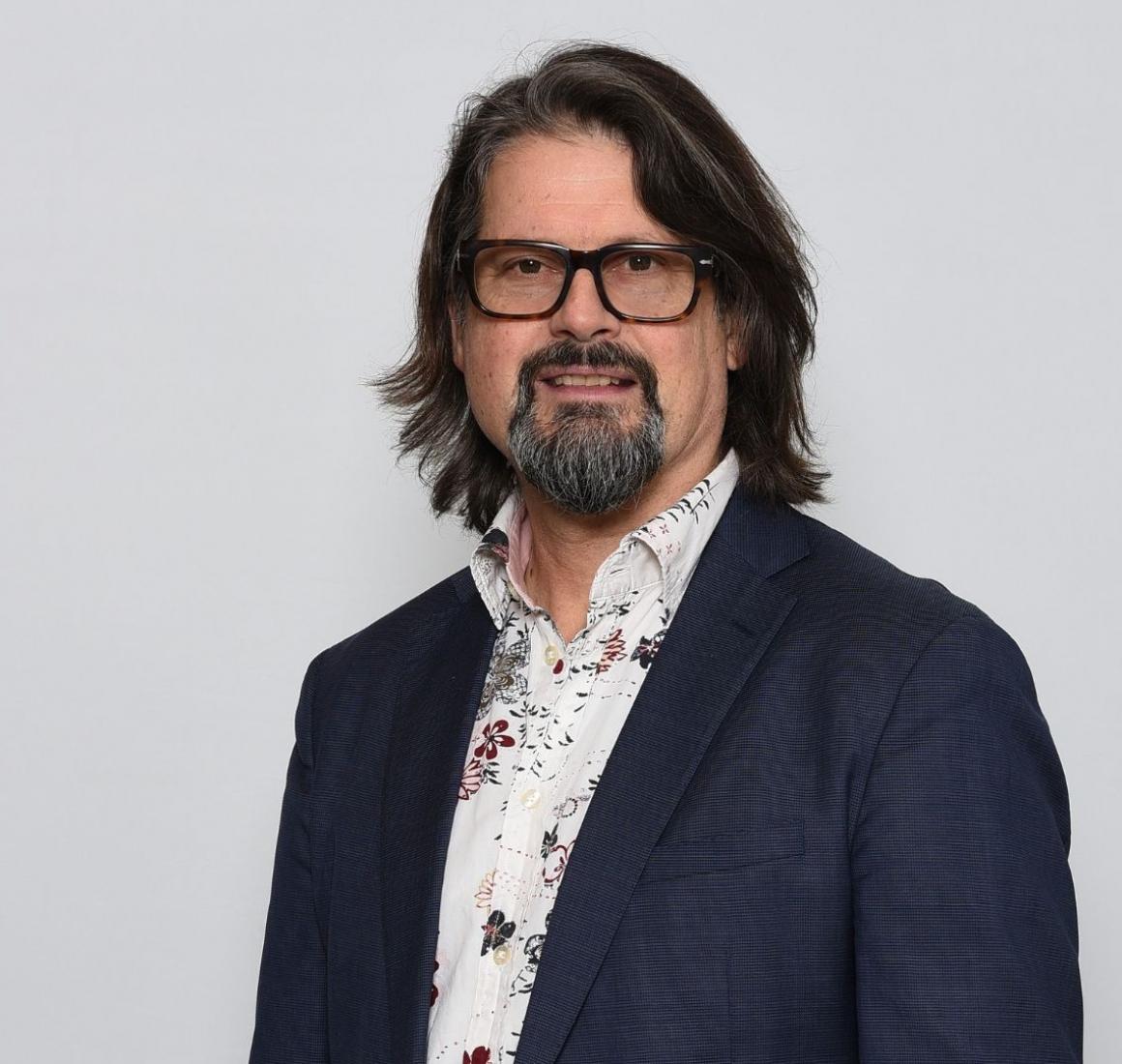
Top researcher returns to CBS to strengthen research in finance
After seven years at the University of Chicago Booth School of Business and with a major research grant, Niels Joachim Gormsen returns to CBS to study how capital costs shape corporate investment and the wider economy.

Financial markets can seem distant – something that unfolds on screens in New York and London.
But when a company decides whether to build a new factory, invest in green technology or pursue a risky innovation, it all starts somewhere else: with the price of capital.
How much does it cost to borrow? What returns do investors expect?
That number – the cost of capital – is one of the key driving forces in the economy. But it is hard to measure and, according to Professor Niels Joachim Gormsen, often misunderstood.
Since 1 September 2025, he has held the DNRF Chair at CBS with a grant from the Danish National Research Foundation, running until 31 August 2028.
A DNRF Chair is designed to boost and enrich Danish research by attracting and retaining international researchers.
After seven years at the University of Chicago Booth School of Business, a global epicentre for finance research, he is returning to CBS.
From CBS to Chicago and back again
Niels Joachim Gormsen studied economics and finance at CBS and later did his PhD at the Department of Finance.
Even back then, he was curious about how companies make good investment decisions in practice.
“When I learned about the theory, I thought: This looks easy on paper, but in reality, it must be incredibly hard for a company to figure out what the exact capital costs are and, by extension, which investments are the best.”
After his PhD, he headed to the University of Chicago Booth School of Business, which is the world’s leading hub for finance research. Several Nobel Prize winners in finance work there, and the research culture is ambitious and uncompromising.
“It is an amazing environment to be part of. It was remarkable when, on my first day, I realised my office was right next to Richard Thaler, who had won the Nobel Prize that same year and whose work I read enthusiastically as a student,” says Niels Joachim Gormsen.
In Chicago, he built a research programme to uncover the mechanisms linking capital markets, companies’ decisions and the development of society. Together with co-authors and around 30 research assistants, he collected data on publicly listed companies around the world, covering the past 20 years. The aim was to understand how companies think about capital costs and how that affects their investments, rather than how theoretical models predict they should.
Now he is bringing his experience and international connections back to Denmark. The grant makes it possible to recruit international researchers, including two postdocs from Chicago.
When models do not match reality
In economic theory, businesses should make investment decisions based on an accurate assessment of their cost of capital. If capital is expensive, firms should pursue only the most profitable projects. If it is low, firms should invest more.
But Niels Joachim Gormsen’s research shows that companies often assess and apply capital costs differently than the theory assumes.
“There is a significant gap between how companies actually invest and what our models predict. In practice, companies use the cost of capital in ways that don’t really fit with classic theory,” ” Niels Joachim Gormsen
Professor, Department of Finance
It is not a technical detail. In practice, capital costs are often measured with error, misunderstood or used inconsistently, and that can affect investments worth billions [NG1] globally. Projects that should be realised get dropped, while others are pursued even though they are not profitable.
“If companies systematically get their capital costs wrong, they do not invest optimally, and in the end, we all end up poorer. So, it is important to understand why companies’ views of their capital costs differ so much from our models, and whether these differences reflect errors.”
At the same time, economic policy can have a different effect than expected. When central banks change interest rates, analyses are built on certain assumptions about how businesses will react. But if the actual decision-making processes look different, the impact of interest rate policy can change too.
A world-class environment, right here in Denmark
Returning to CBS does not mean saying goodbye to the international research community. Quite the opposite.
CBS’ finance community is one of the strongest in Europe. At the Department of Finance, the researchers are among the best in the world, including Professor Lasse Heje Pedersen, who heads the centre of excellence BIGFI (Center for Big Data in Finance), which is recognised internationally for its groundbreaking research. Niels Joachim Gormsen becomes part of this environment and will be affiliated with the centre as part of building up a strong research programme in finance.
“It is a very strong environment. There is a culture of high ambitions and top-class research. I would love to help take that even further,” says Niels Joachim Gormsen.
His ambition is not just about research, but also about teaching.
“I hope we can change the way we teach the cost of capital. If we can give leaders better tools, it can directly influence how companies invest.”
From the back row as a CBS student to the office corridors in Chicago, and now back again.
In a way, the circle is complete.
But the ambition is bigger than ever.
Fact box
Niels Joachim Gormsen
Niels Joachim Gormsen is a DNRF Chair Professor of Finance at Copenhagen Business School and Neubauer Family Associate Professor of Finance at the University of Chicago Booth School of Business.
His research sits at the intersection between financial economics and macroeconomics and looks at how companies make investment decisions, how they see and use capital costs and how interest rates, economic shocks and asset prices affect companies as well as financial markets. A key focus is how companies’ real-world use of capital costs differs from economic theory, and what that means for investment and economic policy.
His research has won several international awards, including the Fama-DFA Prize, the Leo Melamed Prize for Outstanding Research in Finance (Chicago Booth) and the AQR Top Finance Graduate Award.
He has also been a consultant for the World Bank since 2024.
CBS newsletter
Read more
More stories
CBS receives major grant to boost collaboration with African universities
Why do men and women make different financial choices? CBS researcher receives prestigious EU grant to find the answer