Employees struggle with IT systems from four decades
Like a house without blueprints: A new study shows that employees in two of Denmark’s most digitalised agencies experience frequent IT breakdowns and complex systems that are difficult to navigate. Yet they still get the job done through improvised workarounds and a high degree of flexibility

Imagine a house built back in the 1980s. Since then, extra bathrooms and a living room extension have been added, a new kitchen, an upper floor, a modern glass veranda and a patio.
All of these additions were built by different craftsmen, in different styles and without shared blueprints.
When the residents move through their house, they pass through doors that do not fit, staircases that end abruptly and windows with different locking mechanisms that only work if you know them well.
Metaphorically, this is how employees in two of Denmark’s most digitalised agencies experience their working day.
Fragile systems
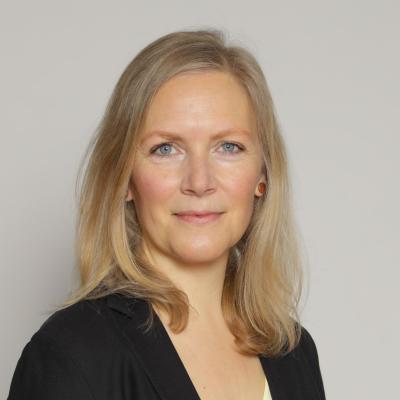
In a new study based on extensive ethnographic fieldwork at the Danish Agricultural Agency and the Danish Tax Agency, Associate Professor Anne Mette Møller from CBS has examined how frontline employees in the public sector work in an environment shaped by multiple overlapping digital systems.
Rather than focusing on a single IT system, the study shows how layers of digital solutions built up over time have created a complex and at times unstable digital infrastructure with consequences for employees as well as citizens.
“I was surprised how many different digital technologies employees have to operate in. It makes the systems fragile, and they regularly break down,” says Anne Mette Møller, adding:
“When we talk about digitalisation in the workplace, we tend to focus on new systems without really considering how they fit with all the technology we already have. We focus on the tree rather than the forest."
Challenging inspection visits
Agricultural inspectors are among the employees at the Danish Agricultural Agency who quite literally work in the field, meeting citizens face to face. Part of their work involves inspection visits when a farmer wants to convert land or have a subsidy application approved.
Inspectors must ensure that the farmer meets the relevant requirements, which may relate to EU regulations or specific Danish rules.
However, data on land parcels may be stored in one older geographic information system, information on subsidy schemes in a newer web module, communication with the citizen takes place in a third system and report writing in a fourth.
Or as Anne Mette Møller experienced it when she joined a visit:
Breakdowns create frustration
“The inspectors brought an iPad containing a large amount of data they needed. They also had GPS antennas to measure distances to boundaries, but sometimes they could not log into the systems,” she explains.
These meetings were already somewhat tense, as the decision could have major consequences for the farmer.
“So the breakdowns created significant frustration because the inspector felt he lost authority, and the farmer also became irritated,” the CBS researcher adds.
As a result, some inspectors chose in advance not to rely on the digital equipment and instead printed all inspection materials on paper.
“The foundation is fragile, because we have created a system where 30-40-year-old technology has to work together with new solutions.” Anne Mette Møller
Associate Professor
Up to ten different systems
In some cases, employees had to deal with as many as 10 different case processing systems.
At the Danish Tax Agency, where a large part of case processing takes place digitally without human involvement, citizens and companies can contact a unit if they have questions about a decision.
“It happens that employees are unable to find a useful answer because it is impossible for them to understand how the systems arrive at a decision. They do not find this reassuring for citizens or motivating for their own professional practice,” says Anne Mette Møller.
Employees take significant responsibility
She emphasises that most cases in both agencies run smoothly and that Denmark, as we already know, ranks among the leading countries when comparing digital development internationally.
“But it is also important to understand that the foundation is fragile because we have created a system where 30-40-year-old technology has to work together with new solutions,” says the CBS researcher.
As an additional challenge, she highlights that employees work in areas where legislation is constantly changing, which requires continuous adaptation of digital systems.
“Employees often take on significant responsibility and help develop alternative solutions. At the same time, this makes the systems even harder for others to navigate, especially because some solutions are digital while others are analogue,” Anne Mette Møller points out.
Recommendation: focus more on the challenges
During the fieldwork, which took her to newly planted forests, fields, cows, open-plan offices and computer screens, she was struck by how dependent the technology still is on employees and how many invisible working hours employees spend supporting the many systems.
“Among employees, a number of informal super users emerged within the different systems. If you have a specific problem, call Kim in Aalborg. Employees were very good at sharing knowledge,” says Anne Mette Møller, who also observed a high degree of flexibility.
“Some might come into the office planning to finish a number of reports, but then the system would be down. Instead, they chose to pick up their children early and continue working in the evening when the systems were running again. That flexibility was important and shows the loyalty of the employees.”
In the study, the CBS researcher recommends that management focus more on understanding employees’ challenges and avoid seeing them as complainers and instead view their solutions as practical strategies. She also highlights the importance of management understanding the consequences when IT systems are layered on top of each other.
The study
- ‘Inside the Digital State: Frontline Work in the Context of Digital Layering’ is published in Journal of Public Administration Research and Theory.
- The study includes more than 300 hours of observations across seven different units in the two agencies.
- Nearly 50 frontline employees and leaders were interviewed.
About the researcher
- Anne Mette Møller is Associate Professor at the Department of Organization at CBS.
- Her research focuses on public organisation and leadership.
- She has a particular focus on professional practice at the frontline.
- She also examines the role of management when political decisions are translated into practice in the interaction between citizens and the state.