Confirmation gifts help young Danes start investing
Confirmation gifts and payouts from children’s savings accounts open the door to the stock market for young people, and they typically stay there for years. However, a CBS researcher behind a new study on youth and money says that a change in the rules could bring many more young people into the stock market

Confirmation season has begun in Denmark. For many young people, it is not just a day of celebration with a speech from uncle Thormod and a Kahoot quiz from aunt Mette. It is also the beginning of a journey into the stock market.
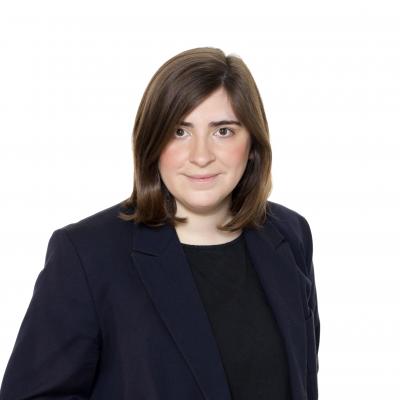
This is the finding of a new study by Johanna Sophie Jost, who researches personal finance at CBS.
In the study ‘First Fortunes: How Youth Windfalls Shape Stock Market Entry’, she examines how young people begin investing in shares, and in particular how cash gifts in their adolescence affect their decision to enter the stock market for the first time.
“In fact, there is no other point in life when such a large share of a specific age group become shareholders.” Johanna Sophie Jost
PhD student
Johanna Sophie Jost has also analysed extensive data from Danish registers. According to her, two one-off events typically pave the way into the stock market: confirmation and the payout of a child savings account.
Eight out of 10 have a child savings account
“In both cases, these are moments when many young people receive a larger one-off amount, and my study shows that these cash windfalls, as we call them, play a major role in when young people start investing,” says Johanna Sophie Jost.
In plain numbers, her data show that 4% of all young people who are members of the Church of Denmark at confirmation age buy shares that same year.
5% of all young people with a child savings account enter the stock market when that money is paid out.
“This is a very high figure, because eight out of 10 young people have a child savings account. In fact, there is no other point in life when such a large share of a specific age group become shareholders,” says the CBS researcher.
One in five young people invest
Compared with just 15 years ago, more 18 to 21-year-olds now invest. Today, one in five do.
Even so, Johanna Sophie Jost points out that there could easily be many more. When the special child savings account was introduced in Denmark in 1972, the focus was on saving rather than investing.
But Johanna Sophie Jost argues that while the rules for child savings accounts have barely changed in more than 50 years, investing has become much easier.
And with interest rates at around 1.5%, many children are effectively losing purchasing power.
Adjust the rules
She therefore recommends that politicians consider revising the rules for children’s savings, so that the focus shifts towards investment. One reason is that the time horizon is typically long (7-21 years).
According to the CBS researcher, the US has introduced a similar child investment product where investment is the only option.
And in the UK, there is an automatic move to an investment account at age 18, when a Junior ISA automatically becomes an adult investment account.
“A Danish version could be that the child savings account automatically converts into a share savings account when it matures,” says Johanna Sophie Jost.
She also points out that financial education for young people works best when it coincides with the moments when they can actually invest – namely around confirmation and when their child savings account is paid out. Schools, parents and banks should therefore adapt education and guidance to these specific events.
Child savings account:
- 80% of all Danish children have a child savings account.
- 5% of young people start investing in the year their child savings account is paid out. That is a high figure given that only around 30% of Danes directly own listed shares later in life.
-
63% of the young people who start investing in the payout year are still investing five years later.
Confirmation:
- 4% of children who are members of the Church of Denmark at confirmation age start investing in that very year.
- 73% of those who start around confirmation are still investing five years later.
Facts about the researcher
- Johanna Sophie Jost is a PhD student at the Department of Accounting at CBS.
- Her main research area is behavioural economics and how individuals and households make financial decisions about saving, borrowing, investing and insurance.