Chinese EV giants challenge the global car industry
A new study shows how Chinese companies like BYD and battery maker CATL have leapt ahead in key electric vehicle technologies, challenging established carmakers such as Tesla and Volkswagen

For many years, it was almost impossible for new companies to compete in the car industry. The technology behind petrol and diesel engines is complex, and the necessary know-how is cumulative and often tacit, giving established manufacturers a major head start. Western automakers, in particular, have built up more than half a century of experience.
But the transition to electric vehicles has changed the rules of the game.
In just a few years, two Chinese companies – BYD and the battery manufacturer CATL – have moved from being relatively unknown players to becoming some of the most influential companies in the global electric vehicle industry.
Today they are competing directly with established giants such as Tesla, Toyota and Volkswagen.
A new study from Copenhagen Business School examines how this shift happened.
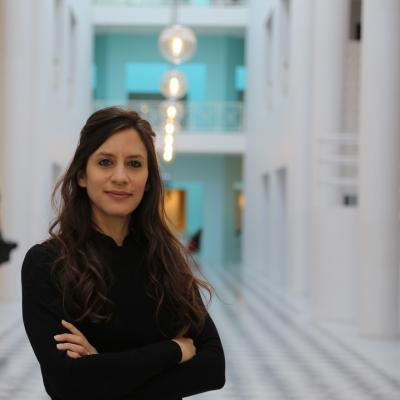
Lindsay Whitfield is a political economist who studies how countries build industries that can compete globally.
“The research shows that the rise of electric vehicles created what economists call a ’window of opportunity’. Because electric cars rely on different technology than traditional cars, many of the old advantages of established manufacturers suddenly mattered less,” she says.
This opened the door for new companies to catch up, and in some cases move ahead.
While many Western and Japanese carmakers were initially cautious about fully committing to electric vehicles, several Chinese companies invested heavily in the new technology.
The results are striking. In 2024 alone, BYD sold more than four million electric vehicles worldwide, significantly more than Tesla.
More than just government support
China’s leadership in electric vehicles is often explained by substantial government support. And the Chinese government has indeed played an important role.
For example, the government helped create early demand for electric vehicles through public procurement and later introduced subsidies that made it cheaper for consumers to buy electric cars. For a period, domestic battery producers were also protected from foreign competition.
But according to Lindsay Whitfield, this is only part of the explanation.
“Government policies were important, but they cannot stand on their own,” she says. “What really made the difference is that the companies invested heavily in technology and built up expertise over many years.”
In fact, the study shows that companies such as BYD and CATL started investing in battery technology already in the mid-2000s – long before the government’s largest support programmes were introduced.
Batteries are the key
One of the main reasons for the companies gained an edge lies in battery technology.
Batteries are the most expensive and technologically complex part of an electric vehicle. Companies that can develop better, cheaper and more efficient batteries gain a huge competitive advantage.
Chinese companies, especially BYD and CATL, already had experience with battery production from the consumer electronics industry, where batteries are used in products like phones and laptops. This meant that parts of the supply chain, including companies producing raw materials and battery components, were already in place.
“They were able to build on knowledge and production capacity in China that already existed. That gave them a head start,” Lindsay Whitfield
professor
At the same time, the companies actively collaborated with international firms and hired foreign experts to gain access to knowledge about how to build batteries for cars.
Today, CATL supplies batteries to a wide range of global car manufacturers, including Tesla, BMW and Volkswagen.
A new global balance of power
The rise of Chinese electric vehicle companies is not just a national achievement. It is changing the balance of power in the global car industry.
Within a decade, Chinese companies have moved from being suppliers in global value chains to becoming major competitors themselves. And this shift may signal a broader transformation in global industrial competition.
“It shows that it is actually possible to change the balance of power in global industries, but it requires long-term investment, strong technological capabilities and the right political framework,” says Lindsay Whitfield.
For her, the main lesson is that technological breakthroughs rarely happen by accident, but are instead the result of deliberate decisions made by both companies and governments.
“If we want to understand or replicate this kind of success, we need to look at how technology, companies and public policy interact,” Lindsay Whitfield says.
In other words, the future of the global car industry will not only be decided by who invents the next big technology, but by who is best at turning that technology into products, companies and global markets.
Lindsay Whitfield, professor at MSC, CBS
Five factors behind success
The study identifies five key factors that allow companies to catch up with – and surpass – their competitors:
- Technological knowledge
- Organisational capabilities
- Capital for investment
- Access to demand
- A strong local ecosystem of suppliers
It is the combination of these factors that explains the development.
About the study
- The study was conducted by Lindsay Whitfield (Copenhagen Business School) and Tobias Wuttke (Bard College Berlin).
- It is published in the scientific journal Progress in Economic Geography.
- The analysis is based on extensive empirical material, including academic research, industry reports, company data and journalistic sources.
- The study focuses on two companies – BYD and CATL – and compares their development with other Chinese EV and battery producers.
- The researchers analyse the companies’ technological development and strategies over time to understand how they became global leaders.
Follow CBS's research newsletter
Read more research from CBS

Digitalisation and AI
Artificial intelligence is already changing how we lead, organise and make decisions. At CBS, we explore the opportunities and the dilemmas – and we bring the…

“The future is loud”: The CBS Annual Celebration brought together business leaders, researchers and students around AI
More than 400 guests gathered in Ovnhallen on Friday evening as Copenhagen Business School hosted its annual celebration with artificial intelligence as the theme

Staten taler om at fjerne 30.000 årsværk, men det er slet ikke problemfrit at erstatte mennesker med ai-systemer
Regeringen vil give offentligt ansatte mere tid til kerneopgaven gennem brugen af kunstig intelligens. I det seneste udspil er det hele 30.000 årsværk, der…