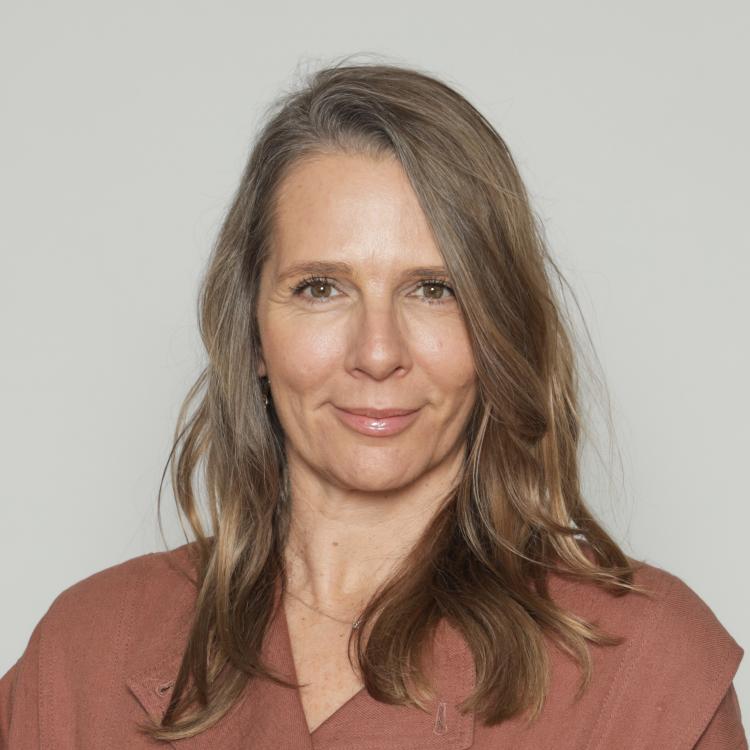
Kirstine Zinck Ped­er­sen

Associate Professor

Subjects
Change management Organisation Qualitative methods Public sector Health Sociology

Primary research areas

Healthcare organization

I examine the organization and governance of healthcare systems with a focus on how professional authority and ethics, bureaucratic structures, and managerial reforms interact. My research pays particular attention to how medical professionals negotiate roles and responsibilities under changing institutional conditions, and how these dynamics shape the delivery of care.

Organizational change and policy implementation

I study processes of change in the public sector, including healthcare reforms and broader organizational transformations of public institutions. By tracing how policies and managerial programmes are translated into practice and reshaped by professionals and managers, I show how organizational routines, bureaucratic ethos, and professional commitments mediate reform outcomes in often unpredictable ways.

Risk, safety, and resilience

I investigate organizational approaches to risk, crisis, and failure, focusing on how safety management and preparedness strategies are developed and enacted. My research examines the relation between, for instance, formalized safety procedures and the situated judgment of professionals, and how these different forms of practice shape organizational responses to uncertainty.

Discretion, expertise, and accountability

I investigate how discretion is practiced and structured in public organizations, and how it connects to evolving forms of expertise and accountability. My research examines how professionals and street-level bureaucrats navigate the tension between formal rules and practical judgment, showing how their authority is continuously reshaped by bureaucratic, ethical, and economic demands.

Reviving the classics

I draw on classical social theory, particularly Max Weber and John Dewey, to address contemporary challenges in organization and public administration research. By reviving these thinkers, I aim to highlight the enduring relevance of concepts such as bureaucracy, ethos, habit, and pragmatist learning, and to bring theoretical depth to current debates on professionalism and governance.

Public sector change, healthcare organization, and professional practice

My research is concerned with how public organizations interpret and implement reforms, manage risk and uncertainty, and organize professional work. Healthcare has been a primary focus, offering rich cases for examining how change initiatives are realized in practice and how their enactment produces unforeseen consequences. This perspective has informed earlier research projects on patient safety and cancer treatment, and currently a study on the somatic treatment of patients with mental illness, focusing on how organizational arrangements condition access to care. 

A recurring concern in my research is how professionals exercise discretion and expertise, and how professional roles, responsibilities, and routines are reshaped by governance regimes, organizational change, and risk management systems. Drawing on classical thinkers such as Max Weber and John Dewey, I bring theoretical depth to contemporary debates about healthcare governance, resilience, professional judgment and public sector change. 

This work sheds light on the challenges of reforming complex public organizations and demonstrates how professional judgment and expertise remains crucial for achieving appropriate organizational, practical, and ethical purposes and outcomes. 

Recent research projects

MENCA – Organizing Mental Illness and Cancer Treatment

Examines how organizational structures shape cancer treatment for patients with mental illness, addressing inequalities, treatment access, and ways to improve coordination and care (funded by the Danish Cancer Society).

Organizing Somatic Care for Patients with Mental and Social Vulnerabilities

Investigates how somatic care is organized for patients with mental and social vulnerabilities, identifying challenges and testing promising initiatives to improve coordination, flexibility, and equitable treatment (funded by Care Link Fonden).

Office as a Vocation

Study of the ethics of office in public service, examining its role in shaping official conduct and its relevance for contemporary public administration (funded by VELUX Foundations).

Cancer Pathways in a Psychosocial Perspective

Study of how cancer pathways reshape professional roles, responsibilities, and patient experiences by emphasizing time, standardization, and coordination (funded by the Danish Cancer Society).

Outside activities

Folkeuniversitetet (University Extension) , 2024–present

Giving public lectures on healthcare organization and professionalism on an occasional basis.
Folkeuniversitetets website

Master of Public Health, Copenhagen University , 2020–present

Teaching two modules on the course Patient Safety and Learning Culture (Patientsikkerhed og læringskultur).
Master of Public Health

Invited talks in the Danish public sector , 2010–present

Occasionally giving invited talks for healthcare organizations, municipalities, regions, and state agencies on e.g. public management, organizational change, and professional work.