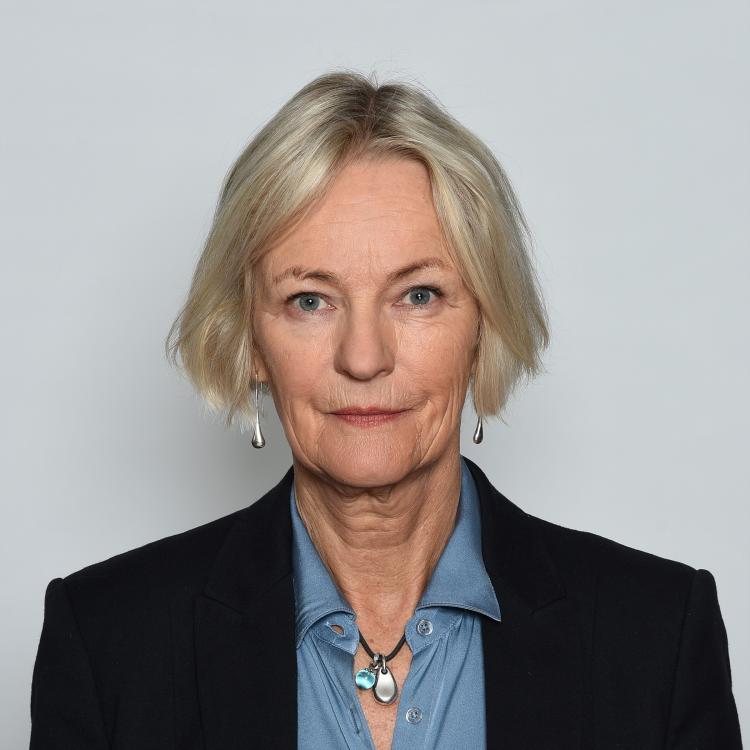
Majken Schultz
Professor
Primary research areas
How do organizations make distant futures actionable?
How do organizations pursue distant future goals under conditions of uncertainty and complexity?
How organizations develop and navigate different modes of future making and how they may connect in the stewardship of the future commons.
How can a temporal view be applied to central phenomena in organization and management? Such as climate change, the interplay between strategy and identity, and temporary organizations.
Leadership & organizing: The interdependencies between change and continuity in leading transformation processes.
How do organizations evoke their past for the future? How do organizations make use of their history, what is the importance of the historical embedding of purpose and how is it leveraged for the future.
My research topics have always been developed in close collaboration with practice.
My research has been developed in close collaboration with practice, where my theoretical interests were relevant and could bring novel and useful knowledge to the organizations I have studied. I have benefited from collaborating with, among others, Bang & Olufsen, LEGO Group, Carlsberg Group, Novo Nordisk, Arla Foods, and Ørsted. Opposed to much organizational research, the companies have not been anonymous, but have been engaged in challenging, elaborating, and disseminating the insights from the research.
While my early research was driven by questions of how organizations construct and renew meaningful cultures and identities in situations of transformation, additional insights were derived from how organizations struggled to translate between their internal and external stakeholders, most notably in my work on corporate branding, and the interplay between strategy and identity.
For the past 10 years, I have been curious about how organizations connect and leverage connections between their past and future, particularly as they pursue distant future goals. I explore these topics in the context of climate change, which is the most pressing issue of our time. There is a need for social science to inspire how companies can overcome pressures for short-termism and show how the green transition is realized. This is my current research agenda that is pursued through multiple types of contributions and channels.
Recent research projects
Making Distant Futures Actionable: Innovating for a Net Zero Future
2021-2025.
PI Professor Majken Schultz,
co-PI Professor Tor Hernes,
Assistant Professor Miriam Feuls,
Postdoc Sunny M. Xu,
postdoc Jonathan Feddersen.
PARTNER COMPANIES:
- Arla Foods
- Novo Nordisk
- Ørsted
INTERNATIONAL RESEARCH PARTNERS:
- Professor Tima Bansal, Ivey Business School, Western University, Canada
- Professor Raghu Garud, Smeal College of Business, Penn State University, US
- Professor Daniel Nyberg, University of Newcastle, Australia
- Professor Juliane Reinecke , Saïd Business School University of Oxford
- Professor Jennifer Howard-Grenville, University of Cambridge, UK
The industry has a critical role to play in creating a zero-carbon future both as providers of sustainable solutions and as problem solvers in their own industries. Companies are increasingly making commitments to distant future climate goals, which are becoming more comprehensive to include emissions, biodiversity, and waste. Yet, the solutions for how to reach the climate goals are still uncertain and even unknown. Companies are thus faced with the dilemma of moving towards ambitious goals without knowing the path leading toward those goals. Not acting is not an option. There is an urgent need to understand how companies make distant futures actionable, creating a path forward. This challenge is at the core of the Actionable Futures Project. The project studies Danish companies in different industries, which are among the early movers in the efforts to create a zero-carbon future. The companies comprise Ørsted in energy; Arla in foods, and Novo Nordisk in life-science. In each company, we study ongoing projects with the potential for reaching distant future climate goals such as how off-shore windfarms may create nature-based solutions in marine biodiversity; how animal-based farming may become regenerative across different local ecosystems; and how developing circular solutions for the recycling of medical plastic waste can become resourceful on a global scale.