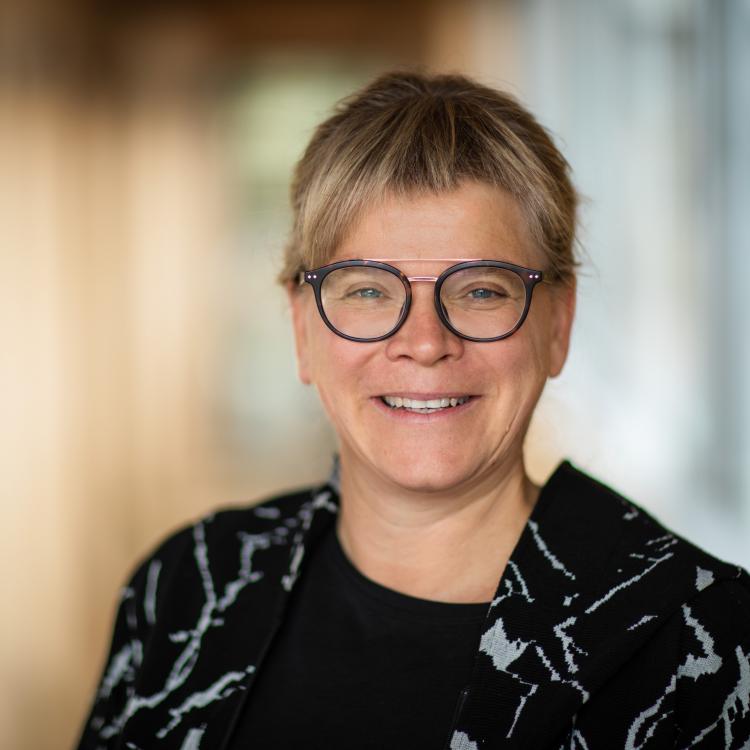
Kristina Dahlin
Professor mso
About
Primary research areas
My research helps: companies be more socially responsible; developing economies with up-skilling work force; the work-life balance agenda; and organizations to develop strategies for Diversity and inclusion.
I study technology, competition, and organizational learning in different combinations.
Radial technological changes
- What can firms do when new technologies change their competitive landscape?
In a study of the US tennis racket industry, I find that firms learn to adopt and respond to radical innovations coming from outsiders to the industry so that the time to include a version of the new technology diminishes over time.
How do firms keep old technology alive when new ideas appear?
- How can we measure technological novelty?
Analyzing over 400 papers using patents to capture how novel an invention is, we find that scholars use over 50 different measures that identify different inventions as the most novel ones, which poses a problem for the validity of findings. We propose a taxonomy and method for how to select better-fitting measures for different research approaches.
- Can we predict breakthroughs?
Looking across industries there appear to be three factors that co-occur before a highly novel invention appears. This paper outlines and tests these factors.
Failure learning
- Why are some organizations better and some worse at reducing failures?
The US freight rail industry has been extraordinarily successful in reducing accidents since 1975 and in a series of papers I explore what drives the progress, testing whether firms learn more from their own or from others’ accidents (both but in different ways) and under what circumstances they learn from others’ accidents: it requires third parties that collect, analyze and disseminate lessons from the industry. For the worst performers, legislation plays an added role in forcing them to adopt better practices.
- The importance of separating errors and failures.
We developed a model where we separate errors and failures and illustrate how errors without failures and failures without errors produce noise making failure learning difficult. The failure-error mismatch violates a common assumption that a failure requires that someone makes an error, and that errors usually lead to failures.
- How do regulations drive learning in high-risk industries?
Since firms learn at different rates, what is the best way to regulate slow learners? Continuing work on the rail industry, we deep-dive into the role of self-regulation versus legal regulations’ impact on learning.
Suffering at work:
- Why do some organizations drive their members to suicide?
This project is contrasting different mental health outcomes using registry data, testing if the same organizational factors drive burn-out, turn-over and suicide. We address the white area of suicide studies -- how work can trigger self-harm.
Network studies:
- How firms coordinate their activities to manage competition.
The cellular telephony standards war in the US ended up with two standards taking 50% each of the cellular markets, despite one of them, Ericsson, already having won the standard battle in Europe where it wa already in use. However, Qualcomm, the owner of a new and untested standard, CDMA, used an intense program of strategic alliances with suppliers and adopting phone companies to convince them to choose CDMA.
- Firms that meet in multiple markets often practice mutual forbearance; that is, avoid aggressive competition in one market since it can harm them in other markets. Semiconductor firms that are disadvantaged since they only operate in one product markets can compensate their greater vulnerability to competition by forming alliances with firms that are in many markets, getting access to protection through their partnership.
Publications
See all publications2025
Everybody Fails but Not Everybody Learns
Why Is It So Hard to Learn From Failures?
Kristina Dahlin, Professor mso
You-Ta Chuang
2025
Failure Learning
An Introduction
Kristina Dahlin, Professor mso
You-Ta Chuang