Research, Innovation and Organization (RIO) Group
The Research, Innovation and Organization (RIO) group is a collective of scholars at the Department of Organization (CBS) studying the organisation of research and innovation across public and private spheres.
About RIO Group
The Research, Innovation and Organization (RIO) group brings together scholars at the Department of Organization (CBS) who study how research and innovation are organised across public and private spheres. The group draws on approaches from Science and Technology Studies, organization theory, policy studies, and economic geography.
Changing conditions for research and innovation
The RIO group works from the understanding that the context and content of research and innovation are changing rapidly. This development raises fundamental questions about how research and innovation are organised in different institutional settings.
Activities and collaboration
The RIO group meets regularly to discuss ongoing research activities—such as working papers and preliminary findings—and to plan seminars, conference tracks, and advanced teaching formats, including PhD courses. Invited guests also take part in discussions on new scientific developments.
Current themes of interest
Current themes of interest in the RIO group include:
- Comparisons of research and innovation policies
- Inter-organizational dynamics of research and innovation
- Organizing research and innovation to address grand challenges
- The organisation of science and innovation and its relation to democracy
Research projects
Current projects (Panel content)
No active projects
There are currently no ongoing projects in the RIO Group. New projects will be added to this section as they begin.
Past projects (Panel content)
CAPACITOR: Public Actors’ Capacities in the Governance of Green Transitions
Project period: 2021 – 2024
The CAPACITOR project was funded by the Independent Research Fund Denmark and ran from 2021 to 2024. The project was carried out by researchers at Copenhagen Business School and Fraunhofer ISI in Germany.
Focus of the project
The project examined how public actors developed and used their organisational capacities when governing green transitions. Green transitions required the deployment and integration of new technologies in complex socio-technical systems, involving diverse stakeholders, new market and institutional conditions, and adapted standards and regulations.
Research questions and aims
The project focused on understanding which organisational capacities public actors possessed or lacked, how they used these capacities in governance processes, and which combinations of capacities were needed to achieve green transitions.
Members of the project
Professor Susana Borrás, CBS (PI and project responsible)
Associate Professor Stine Haakonsson, CBS
Associate Professor Trine Pallesen, CBS
Associate Professor René Taudal Poulsen, CBS
Assistant Professor Christian Hendriksen, CBS
Professor Jakob Edler, Fraunhofer ISI (Germany)
Collaborating with
Danish Maritime Authority
Bornholms Energi og Forsyning
Energibyen Skive
Global Wind Energy Council (GWEC)
International Advisory Board
Professor Rainer Kattel
Professor Dr. Marko Hekkert
Professor Karoline Rogge
Professor Taran Mari Thune
Professor Dr. Matthias K. Weber
Governing Green Finance in China
Duration: 3 years, December 2020 – December 2023
The project investigated the governance of green finance in China and examined the political, economic, and financial dynamics shaping this field.
Research focus
The project analysed how China’s governance approach differed from other countries, how it influenced policy issuance, and how it shaped the behaviour of financial institutions since 2016.
Overseas dimensions
The research also examined how Chinese green finance policies affected financial institution activities overseas.
Project leads
Lead: Mathias Lund Larsen
PhD Supervisors: Duncan Wigan and Stine Haakonsson
CO-GREEN
Project period: 2021 – 2024
CO-GREEN studied socio-technical controversies over wind turbine noise in the transition to renewable energy.
Research focus
The project explored how technical framings of the green transition intensified controversies and politicisation.
Approach and methods
The project used Science and Technology Studies, case studies, and co-creation workshops.
Members of the project
Julia Kirch Kirkegaard (PI)
Sophie Nyborg
Tom Cronin
Maja Horst
Isomorphic Difference: Familiarity and Distinctiveness in National Science and Innovation Policies
Project period: August 2018 – January 2022
This project investigated similarities and differences in national science and innovation policies in the USA, China, and Denmark.
Research focus
It compared policy objectives, instruments, incentives, and key topics, and analysed case studies to understand policy translation.
Participants
Alan Irwin (PI)
Signe Vikkelsø
Jane Bjørn Vedel
Julia Kirch Kirkegaard
Xiaobai Shen
Aixa Y. Alemán-Díaz
Xuan Li
Isomorphic Difference in China: A Case of Chinese Innovation Policymaking
(Project part of the above)
The project explored socio-technical controversies and isomorphic differences in Chinese innovation policymaking.
Empirical approach
It included ethnographic fieldwork on China’s Medium- to Long-Term Plans and a case study of Huairou Science City.
Participants
Julia Kirch Kirkegaard
Xuan Li
Xiaobai Shen
Advice in Science Policymaking: Technoscientific Knowledge(s) in Nanotechnology and Research & Innovation Policy in the United States (US)
Project period: June 2019 – June 2022
The project examined how advisory groups shaped nanotechnology policy under the US National Nanotechnology Initiative.
Analytical perspective
It investigated how science and innovation policy interacted with nanotechnology policy and analysed sociotechnical futures from an “isomorphic difference” perspective.
Project leadership
Lead: Aixa Y. Alemán-Díaz
PhD Supervisors: Alan Irwin and Signe Vikkelsø
Management and Organization of Innovation Partnerships
Project period: 2017 – 2020
The project examined the organisational characteristics and challenges of innovation partnerships.
Research focus
It compared partnerships funded by Innovation Fund Denmark and conducted an in-depth case study of the Enzyme Opti Partnership.
Participants
Signe Vikkelsø
Julie Sommerlund
Mikkel Stokholm Skaarup
Public-Private Innovation Partnerships: Value Creation in Smart Cities
Project period: 17 March 2017 – 17 September 2020
The project examined how Smart City partnerships created public value through collaboration between municipalities and technology companies.
Project setting
Conducted as an Industrial PhD hosted by Copenhagen Solutions Lab.
Project lead
PhD Fellow: Lasse Bundgaard
Supervisor: Susana Borrás
Studies of Policy Instruments and Policy Mixes for Innovation with Quantitative Text Analysis
Project period: September 2017 – March 2021
This project analysed innovation policy instruments using quantitative text analysis and machine learning.
Project leads
Lead: David Howoldt
Supervisors: Susana Borrás, Christoph Grimpe
Economic Competitiveness and/or Science in Society: The Role of Publicly Funded Research in the Private Sector
Project period: 2015 – 2017 (extended)
The project explored how companies valued publicly funded research beyond economic competitiveness.
Project lead
Jane Bjørn Vedel
The Socioeconomic Importance of Research-Based Education — The Role of Long-Term Grants in Public Research Institutions
Project period: 2017 – 2020
This project examined how long-term grants influenced organisational, epistemic, and educational practices in universities.
Participants
Jane Bjørn Vedel
Anders Sørensen
Fane Groes
Moira Daily
Staff at RIO
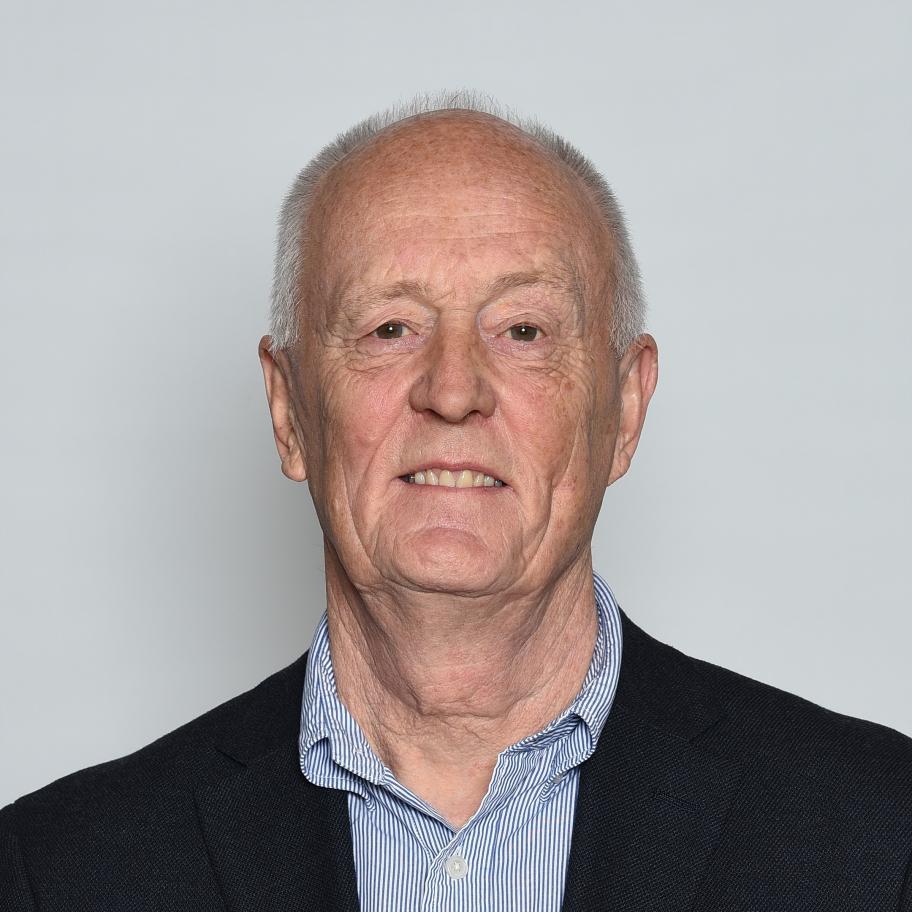

Other staff at RIO
Danyang He, PhD fellow
Postal and visiting address
Department of Organization
Copenhagen Business School
Kilevej 14A
DK-2000 Frederiksberg
Denmark
Phone: +45 3815 2815
E-mail: reception.ioa@cbs.dk
EAN: 5798009814821