NeuroLab
NeuroLab is a laboratory within the Department of Digitalization, which explores the relationship between digitalization, brain, and behavior.
About NeuroLab
Established in 2022 with the help of an Infrastructure Grant from the Carlsberg Foundation, NeuroLab studies a variety of topics at the intersection of digitalization and the brain sciences.
Topics include online collaboration, online altruism, privacy, and cybersecurity.
NeuroLab combines theories and methods from cognitive neuroscience with theories and methods from the social sciences, in particular the field of Information Systems.
Our goal is to perform research that can link individual behaviors and decisions with larger socio-technical patterns in digital environments.
Research and tools
Our research uses a range of neuroscience and neurophysiological tools, including eye tracking, electroencephalography (EEG), skin conductance, heart rate measurement, facial electromyography, respiration, and virtual reality (VR).
Neuroscience tools are combined with other competencies, including online experiments, big data analytics, and longitudinal field research.
NeuroLab’s research projects and publications
Research projects (Panel content)
Mood Synchronicity
Mood synchronicity is a new concept introduced to explore how communication media transmit affective states from one individual to another. Building on this concept, the project examines how shared mood influences different types of collaborative tasks. It focuses on how the characteristics of communication media mediate the relationship between shared mood and coordinated behaviours. The project includes multiple individual studies ranging from theoretical work to big data analysis and laboratory-based experiments.
Online Altruism
This project explores which types of emotional and social information can be communicated by fundraising campaigns on crowdfunding platforms to influence — and potentially bias — potential donors. In particular, it investigates how different types of crowdfunding campaign images affect cancer-related charitable giving online. The project combines methods such as laboratory studies, online experiments, and econometric analysis.
Techno-Cognitive Adaptation
As individuals interact with digital technologies, they continuously adapt both their behaviours and their awareness of technological capabilities. This project explores the cognitive changes that accompany these behavioural and technological adaptations.
Online Dating
Online dating has become a key way for people to meet and form relationships. This project investigates the design of dating technologies and the choices users make when engaging with them.
Green Futures
Sustainable consumption enables consumers to reduce their environmental impact and influence companies to offer greener products. This project examines consumer reactions to green alternatives across a variety of online contexts.
AI and Fake News
People often rely on images to support disputed claims online — as suggested by the phrase “Pictures, or it didn’t happen.” With generative AI making image fabrication easier, this project explores how AI-generated visuals affect the perceived credibility of news headlines.
Social Media and Self-Esteem
Social media platforms often encourage users to present idealised versions of their lives, portraying exaggerated happiness and success. This project investigates how viewing such content affects the self-esteem of social media users.
Publications (Panel content)
Gleasure, R., Conboy, K., & Jiang, Q. (2024) Techno-cognitive structuration: modelling the role of cognitive structures in technology adaptation. Journal of the Association for Information Systems.
Gleasure, R., Saigot, M., & Kanat, I. (2024). Let’s talk about it in the morning: how circadian rhythms moderate information-sharing on social media. Affective Science, Springerlink.com
Kensy Tziatziou, A., & Gleasure, R. (2024). How women’s engagement with Instagram posts that use edited images impacts their self-esteem and body perception. NeuroIS Retreat, Vienna.
Lie Duestad, L., Celine Foss, H., Toth, J., & Gleasure, R. (2024). Pictures or it didn’t happen! How the use of Generative AI images impacts the perceived believability of news headlines. NeuroIS Retreat, Vienna.
Saigot, M., Gleasure, R., & Constantiou, I. (2023). Understanding the Affective Layer of Online Collaboration: Toward a Media Affectivity Theory. Academy of Management, Boston.
Saigot, M., Gleasure, R., Constantiou, I., & Blicher, A. (2023). Media Naturalness, Emotion Contagion, and Creativity: A Laboratory Experiment among Dyads. NeuroIS Retreat 2023.
Alashoor, T., Blicher, A., & Gleasure, R. (2023). Take a Deep Breath and Tell Me All About It: An Experimental Study on the Effect of Breathing on Privacy Decisions. NeuroIS Retreat 2023.
Saigot, M., Gleasure, R., Constantiou, I., & Blicher, A. (2023). In or out of sync? A Psychophysiological Approach to Digital Collaboration. Social & Affective Neuroscience Society (SANS) 2023.
Blicher, A., Gleasure, R., Constantiou, I., & Clement, J. (2022). The Emotional Impact of Pictures when Crowdfunding for Healthcare: An Experimental Study. In: Proceedings of the 43rd International Conference on Information Systems (ICIS): Digitization for the Next Generation.
Blicher, A., Gleasure, R., Constantiou, I., & Clement, J. (2022). Getting to Grips with Online Altruism by Combining Quasi-Experiments and Controlled Experiments. Workshop on Information Systems and Economics 2022.
Saigot, M. (2022). Leveraging Affective Friction to Improve Online Creative Collaboration: An Experimental Design. In: Information Systems and Neuroscience - NeuroIS Retreat 2022: Conference Proceedings.
Blicher, A., Gleasure, R., Constantiou, I., & Clement, J. (2022). How Does the Content of Crowdfunding Campaign Pictures Impact Donations for Cancer Treatment. In: Information Systems and Neuroscience - NeuroIS Retreat 2022: Conference Proceedings.
Collaborators of NeuroLab



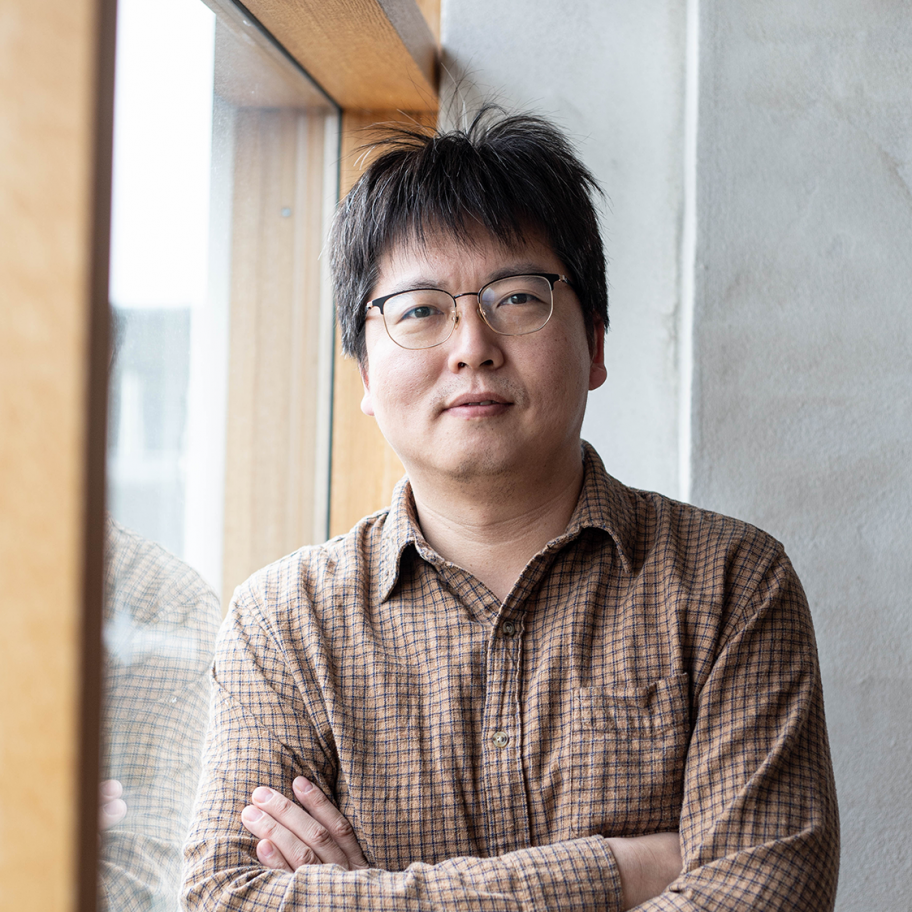
Other collaborators of NeuroLab
Kieran Conboy (Techno-Cognitive Adaptation)
Professor in the School of Business & Economics at the University of Galway, co-principal Investigator in the Lero Irish Software research centre, and incoming editor-in-chief of the European Journal of Information Systems.
Cecilie Meilby Jensen (IT and language)
Student Assistant for the NeuroLab at the Department of Digitalization. She is also a master’s Student in IT & Cognition at Copenhagen University. She has a bachelor's degree in Linguistics from Aarhus University.
E-mail: ceciliemeilby@gmail.com
Dr. Dezhi Wu (Robotics and embodied interaction)
Full professor in the Department of Integrated Information Technology and the Founding Director of the HCI and AI Research Lab (HI3 Tech Lab) at the University of South Carolina, Columbia, SC, USA.
E-mail: dezhiwu@cec.sc.edu
Tawfiq Alashoor (Online disclosure)
Assistant Professor at the Department of Digitalization at Copenhagen Business School.
E-mail: ta.digi@cbs.dk
Maylis Saigot (Mood synchronicity)
Teaching and Research Lecturer (Assistant Professor) in Business Information Systems at the University of Queensland.
E-mail: m.saigot@uq.edu.au
Angela Kensy Tziatziou (Online Dating)
Graduate of the Master's Student in Administration & Digital Business at Copenhagen Business School.
E-mail: anke22ab@student.cbs.dk
How we study the brain and behavior
These are the tools that power our experiments – get in touch if you want to know more.
Contact NeuroLab
Department of Digitalization
Copenhagen Business School
Howitzvej 60
Frederiksberg 2000
Denmark
E-mail: rg.digi@cbs.dk
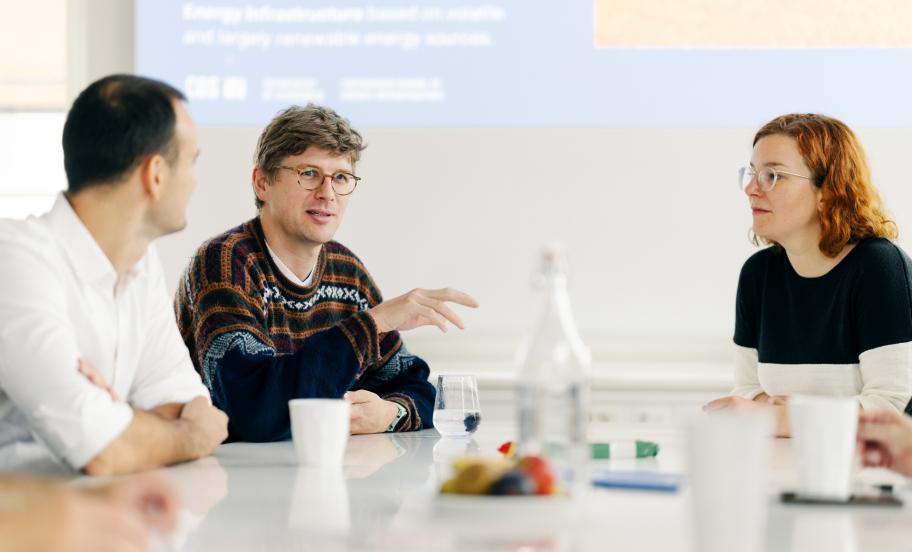
Participate in our research
Interested in how the brain responds to digital technologies? Create a profile and sign up to take part in one of our ongoing studies at NeuroLab.
We are currently running an experiment on online dating platforms, using eye tracking, galvanic skin response, facial expression analysis, and EEG
Duration: 45 minutes
Pay: Movie ticket (Nordisk Film Biografer)
Location: NeuroLab, Howitzvej 60, 1st floor
