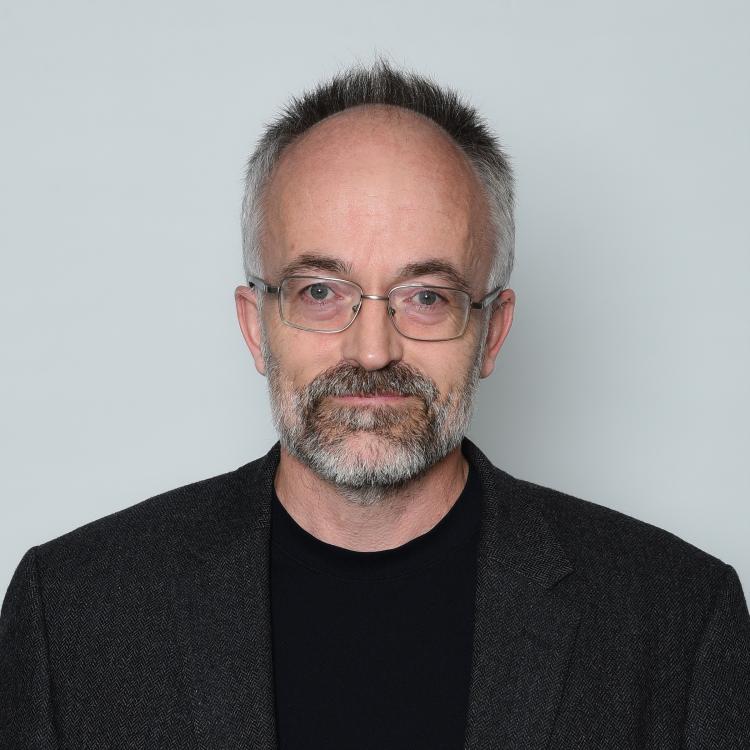
Esben Rahbek Gjerdrum Pedersen
Professor
Telephone
Office: +4538152741
Departments
Department of Management, Society and Communication
Room: DH.Ø.2.40
Sustainability
Circular economy
Management
Organisation
Innovation
Health
Primary research areas
Corporate Sustainability, Corporate Social Responsibility, and Circular Economy
Research focuses on how companies operationalise corporate sustainability within the organisation and in the relationships with key stakeholders. Examples of corporate sustainability initiatives include certifications, labels, standards, and reporting requirements. Of interest is how these new management ideas are negotiated between stakeholders and adapted to the specific organisational context.
Business Model Innovation and Change Management
Research focuses on how companies develop and implement new business models. Examples include sharing systems, recycling solutions, and health innovation. The research also includes analyses of barriers and success factors.
Cross-Sector Partnerships and Collaboration
Research focuses on how organisations from different sectors (state, market, civil society) work together to address social and environmental challenges.
Making Sense of Sustainability and Responsibility
My research focuses on how new management ideas are implemented in public and private organisations. Examples include corporate sustainability, corporate social responsibility (CSR), certifications, cross-sector partnerships, lean management and health innovation. The research often addresses some of the internal and external factors explaining why the actual implementation often diverge from the original intentions.
Recent research projects
Balancing Boundary Tensions in Corporate Sustainability Work
The aim of this project is to examine how organisations balance boundary tensions in corporate sustainability work. The project is based on the assumption that organisational boundaries have a distinct influence on the processes and outcomes of corporate sustainability work. Corporate sustainability is by definition a holistic and cross-disciplinary concept, which require practitioners to work within, and/or carefully crossing, demarcation lines between people (e.g. commercial vs. sustainability logics), functions (e.g. sustainability vs. finance), hierarchical layers (e.g. management vs. employees) and systems (e.g. sustainability accounting vs. traditional accounting). Therefore, corporate sustainability will be difficult in organisations characterised by impermeable organisational boundaries (also known as ‘silos’). The Project is funded by the Danish Research Council/DFF.
SECreTour
SECreTour is a large research consortium that aims to promote community-based and community-centred tourism in rural areas in Europe. The project is funded by the European Commission. The CBS research team focuses e.g. on identifying cultural business models that can promote the new forms of rural tourism.
Links
We have developed two massive open online courses (MOOCs) that disseminate the findings from our research. The MOOCs can be found on the learning platform Coursera.
MOOC on Sustainable Fashion
The MOOC on Sustainable Fashion broadens the learner’s knowledge on sustainable fashion, sustainable business models, circular economy and related concepts. Moreover, the learner will understand the challenges and opportunities brands face when they try to create or transition into sustainable business models.
Sustainable Fashion
Business Models for Sustainability
The Learner will get an introduction to the rich literature on sustainable business models. Moreover, the learner will acquire tools to analyse and develop strategies for sustainable business model innovation. The Course contains video lectures, expert interviews, and inspiring case examples.
Business Models for Sustainability
Outside activities
Fonden Mental Sundhed, 2020–2024
Board Member
FIERS, 2018–2020
Board Member
Region Zealand, 2018–2023
Consultant
Riksbankens Jubileumsfond, 2026–ongoing
Member of the Flexit programme's working group