Geopolitics: Africa remains on the sidelines
The old world order is crumbling, creating space for new alliances. But in that game the world’s second-largest continent is poorly positioned.

Africa is not a global power, and there are no signs that this will change anytime soon. The 54 African countries are too different, many have weak economies, and their governments are politically unstable.
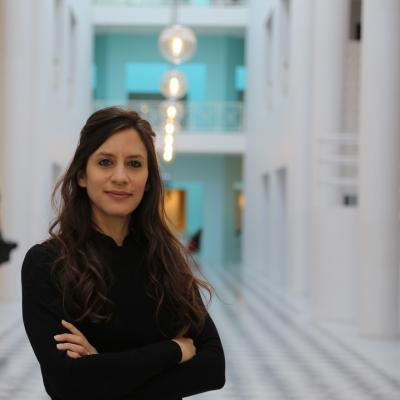
That is the assessment of CBS Professor Lindsay Whitfield. She does research into economic development and history – including in Africa – and has recently returned from a research stay in Cape Town, South Africa.
“It is a mistake to think of Africa as one single entity” Lindsay Whitfield
Professor
Some analysts have suggested that the shifting global order and new alliances could offer Africa an opportunity to take on a more prominent role. The continent is rich in resources and is estimated to hold around 30 percent of the planet’s mineral reserves. According to the UN, Africa’s population is also growing so rapidly that in just 25 years, one in four people in the world will live there.
“But it is a mistake to think of Africa as one single entity. It is 54 different countries with even more languages and ethnic groups. The countries do not share a common history either. There is a big difference between having been colonised by France, England or Portugal,” says Lindsay Whitfield.
A SMALL ROLE IN A BIG STAGE
Whitfield has followed economic and political developments in Africa for decades, and she questions the narrative that the continent is on its way to a stronger position in global affairs. She does emphasize, however, that North Africa includes countries with big economies such as Egypt and Morocco. Morocco has government industrial policies related to electric vehicles and green hydrogen, and it is trying to leverage Europe’s interest in those sectors to its own economic advantage.
“But in general, most African economies are weak, and they struggle with high levels of inequality and corruption. And in geopolitics, your power depends on your position in the global economy and your alliances with other countries. That is why African countries remain marginalised on the international stage,” says Lindsay Whitfield and adds:
“When a country is under economic pressure, it is tempting to enter into bilateral agreements rather than act as a united continent. Just look at the challenges Europe is facing. And African countries are still in the process of building sustainable states. That makes it easy for major powers to play groups off against each other and pressure governments into submission.”
According to the CBS professor, this is one of the main reasons why Africa has been unable to use its resources strategically or unite in challenging economic powers elsewhere in the world.
REVENUE DOES NOT EQUAL PROSPERITY
“Each country depends on the export of raw materials, whether from agriculture or mining, and that makes them vulnerable. They sell their natural resources to secure political survival. But the processing takes place outside Africa, so the revenues do not generate jobs or reduce inequality,” explains Lindsay Whitfield.
This also applies to Africa’s largest formal democracy, Nigeria. The country is one of the continent’s biggest oil producers. But oil sales mostly take place on the black market, where corruption is rampant. As a result, the revenues do not go towards hospitals or schools – instead, they increase inequality and unemployment.
Similarly, the Democratic Republic of the Congo – Africa’s second-largest country – accounts for about 70 percent of the world’s cobalt production, a key component in electric car batteries. But revenues from cobalt and other valuable minerals have mostly ended up in the hands of a small elite and foreign companies, while local communities often live in poor conditions.
Many people work in dangerous, unregulated mines, and conflicts which also involves Rwanda – particularly in the eastern part of the country – have intensified due to the struggle for control over resources. Mining has also led to environmental destruction and social tensions, and the country still relies heavily on international humanitarian aid.
SOUTH AFRICA STILL HAUNTED BY ITS PAST
In South Africa, where Lindsay Whitfield is currently based, the country is still dealing with the legacy of apartheid.
South Africa is arguably the most modern society in Africa, with income from mining, car manufacturing and tourism, but according to the country’s ministry of agriculture, nine percent of the population – primarily white farmers – still own around two-thirds of the land.
Efforts to redistribute land have sparked strong protests from the white population and culminated this spring when 59 white South African farmers were granted refugee status in the United States. This happened during a visit from South African president Cyril Ramaphosa to then US president Donald Trump. Despite protests from Ramaphosa, Trump insisted that white South Africans were victims of genocide.
Overall, the United States has significantly reduced its development aid to Africa and is expected to focus instead on signing individual agreements with selected countries regarding specific raw materials.
GREAT POWERS, DIFFERENT APPROACHES
The EU has a long-standing tradition of promoting Western cultural values in its partnerships with African countries. This approach has been met with strong resistance in Africa, and Denmark is now in the process of breaking away from it.
“I do not think Europe will play a significant role in Africa in the years to come” Lindsay Whitfield
Professor
In recent years, Russia has increased its presence in Africa, primarily by offering military support in unstable regions. The country has also offered university placements to African students.
China, on the other hand, has pursued the most long-term strategy on the continent and has gained access to several of Africa’s key mineral resources. Through its Belt and Road Initiative, China has built large parts of Africa’s infrastructure, and unlike the West, neither China nor Russia demands compliance with human rights or democratic principles.
In simplified terms, one might say that Russia sells security, China delivers infrastructure, and the West raises its finger in warning. In any case, the influence of Western countries has weakened – a fact highlighted in March 2022, when many African countries abstained from voting on a UN resolution condemning Russia’s invasion of Ukraine.
“I do not think Europe will play a significant role in Africa in the years to come. The focus will likely be on how to curb the flow of African refugees. Africa will probably look elsewhere – possibly to China and the Middle East,” says Lindsay Whitfield.
About the researcher
- Lindsay Whitfield is a professor at CBS.
- She conducts research in economic development and history.
- Her work includes analysing the challenges and opportunities facing countries in sub-Saharan Africa in relation to 21st-century industrialisation.
- Read more
Facts about Africa
- Africa has the youngest population in the world. In 25 years, one in three young people in the world aged 15–25 will be African.
- Africa is particularly vulnerable to climate change.
- The EU is Africa’s largest trading partner, but over the past 20 years, the EU’s share of trade with Africa has dropped by a quarter.
- China’s share of Africa’s trade has quadrupled over the same period.
Parts of Denmark's Africa-strategy
- Increasing its diplomatic presence in Africa
- Building equal partnerships and becoming the preferred partner of African countries
- Seeking new green strategic partnerships with influential African countries across the continent