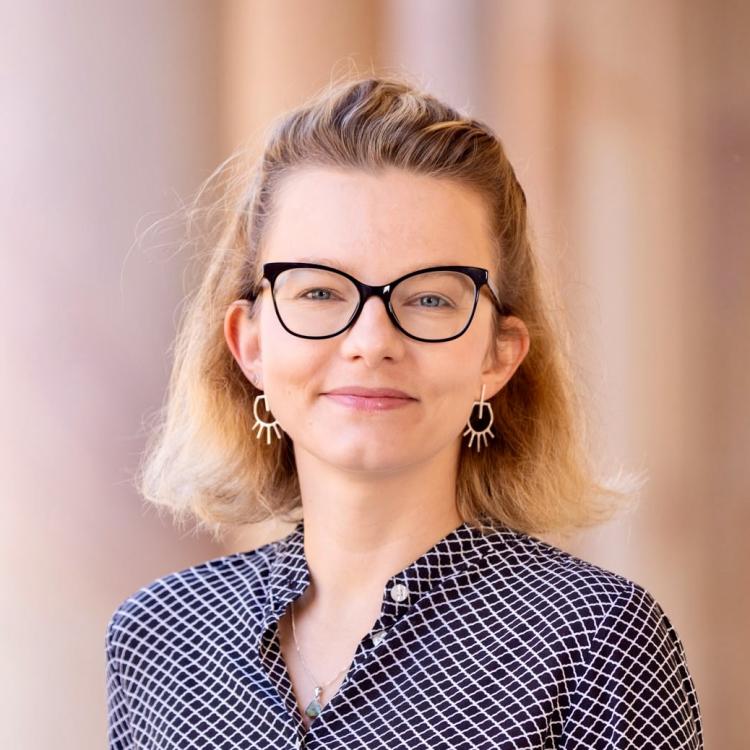
Karolina Mikołajewska-Zając
Postdoc
About
Primary research areas
Investigating organizing for responsible digitalization
I am a Maria Skłodowska-Curie Postdoctoral Fellow at the Department of Digitalization, researching how societies respond to platform dominance and the systemic effects of this heterogeneous organizing. Empirically, I am investigating platform-enabled overtourism and the complex changes in urban ecosystems it gives rise to.
My work contributes to understanding how collective action and data practices shape the future of the digital economy. Grounded in information ecology, systems thinking, and organization theory, my research supports stakeholders engaged in developing resilient responses to platform dominance. It aims at informing EU-wide debates on responsible digitalization.
The current work builds on my research into the co-evolution of digital platforms and their environments, which was published in Organization Studies, Information, Communication & Society, and The European Journal of Social Theory, among others. I am committed to open-access and critical organization inquiry and I serve as a member of the editorial collective at ephemera. theory & politics in organization.
Publications
See all publicationsAugust 2023
Escaping Wonderland

Emil Husted, Associate Professor
Karolina Mikołajewska-Zając, Postdoc
Yousra Rahmouni Elidrissi
This Maria Skłodowska-Curie project investigates how societies respond to platform dominance and the broader implications of such second-order organizing for the future of the digital economy.
Using the case of platform-enabled overtourism in the EU, the research investigates a spectrum of organized responses – from local initiatives to transnational efforts – with a particular focus on the emergence of collective action, the barriers it faces, and the ways digital data are used and circulated among diverse social actors.
The project challenges the notion that the future of the digital economy is shaped solely by high-level negotiations between keystone platforms and regulatory bodies like the EU. Instead, it adopts a holistic perspective on resilience-oriented organizing, examining how interventions by multiple stakeholders interact and produce both intended and unintended systemic effects.
This research is part of my broader commitment to responsible digitalization. Its main objectives are to:
1) Document and theorize systemic efforts to counter the negative effects of platform dominance;
2) Advance novel theoretical contributions in the field of information ecology / digital ecology;
3) Empower stakeholders engaged in organizing for digital resilience;
4) Inform EU-wide debates on responsible digitalization.