Centre for Business and Development Studies (CBDS)
CBDS is an interdisciplinary research centre exploring how business, governments, and civil society shape inclusive and sustainable development in the Global South.

About (Panel content)
About us
The Centre for Business and Development Studies (CBDS) at the Department of Management, Society and Communication (MSC) is an interdisciplinary research centre founded in 2005. Today, it is recognised as one of the leading international environments for research on business and development.
CBDS conducts critical, engaged, and theoretically grounded research on the roles of business, government, and civil society in fostering inclusive and sustainable development in the Global South. The centre provides knowledge and expertise not only to academia, but also to policymakers, businesses, industry associations, and civil society organisations.

Research focus
CBDS staff members address a wide range of issues, including:
- Local firm strategies and capability-building in developing countries
- Multinational corporations, global value chains, and their role in development
- Late industrialisation and industrial policy
- Corporate social and environmental responsibility in emerging economies
- Human rights and local communities
- Entrepreneurship and innovation
- Business engagement in humanitarian interventions
- Business sustainability and climate change
Teaching engagement
CBDS contributes to research-based teaching, particularly through the MSc in Business, Language and Culture – Business and the Global South (formerly MSc in Business and Development Studies), where students are trained to think critically and act responsibly in business and professional contexts.
Policy & outreach
Beyond academia, the Centre provides knowledge and expertise to policymakers, businesses, industry associations, and civil society organisations.
Follow us
Partnerships
African Industrial Policy in the 21st Century (AIP21) network
The AIP21 network brings together scholars to share research and develop new agendas for green and resilient industrial policy in Africa. The network focuses on understanding the continent’s major development challenges and informing strategies for social and economic transformation.
The steering committee members are based at Copenhagen Business School, the University of Johannesburg, and the African Centre for Economic Transformation in Accra, Ghana.
AIP21 researchers work on industries, value chains, and technologies across African countries and study how power, policy, and sustainability interact in the process of industrialisation.
Centre for Competition, Regulation and Economic Development (CCRED)
The collaboration between CBDS and the Centre for Competition, Regulation and Economic Development (CCRED) at the University of Johannesburg was established in 2019. It connects two institutions with strong research and teaching traditions in areas such as digitalisation, sustainability, inequality, and industrial development.
The partnership includes joint research projects, seminars, and lectures, and explores how Industry 4.0 technologies, digitalisation, and sustainability management are reshaping global value chains.
Institute of Development Studies (IDS)
CBDS and the Institute of Development Studies (IDS) at the University of Sussex collaborate through a virtual seminar series launched in 2020. The seminars explore key issues at the intersection of business and development and present work by researchers from both institutions.
The collaboration aims to share ideas, build joint proposals, and co-author publications. It also supports joint conference panels and the development of special journal issues and working papers.
Makerere University Business School (MUBS)
The collaboration between CBDS and Makerere University Business School (MUBS) in Uganda began in 2009 and has grown over time. It started with research on youth entrepreneurship and now includes joint teaching activities.
Since 2011, CBDS and MUBS have co-organised the elective course Field Study: Entrepreneurship and Private Sector Development in Uganda for CBS students. The course combines field research, collaboration with MUBS students, and lectures by faculty from both institutions.
CBDS and MUBS also work together on research and publications related to SMEs, social entrepreneurship, microfinance, and fintech.
Business and the Global South – Field study course
A flagship course of the MSc in Business, Language and Culture – Business and the Global South (formerly Business and Development Studies) program is the elective course Field Study: Entrepreneurship and Private Sector Development in Uganda, where 30 selected students travel to Uganda for three weeks to do field research together with students from Makerere University Business School in Uganda. During this course, students get the opportunity to apply theories and methods from business and development studies to a practical situation and to strengthen their intercultural skills.
Insights from the field trip (Photo credits: ©Alessandra Chiofalo)


Listen to our Podcast
Discover new perspectives on business and development in the Global South, featuring researchers and practitioners from CBDS.
Stay informed
People (Panel content)
Staff at CBDS
CBDS brings together researchers working on business, sustainability, and development across CBS and international partner institutions. The list below includes all staff members affiliated with the centre, ordered alphabetically.
Centre Directors:
Maria Figueroa, Director of the Centre
Jacobo Ramirez, Director of the Centre




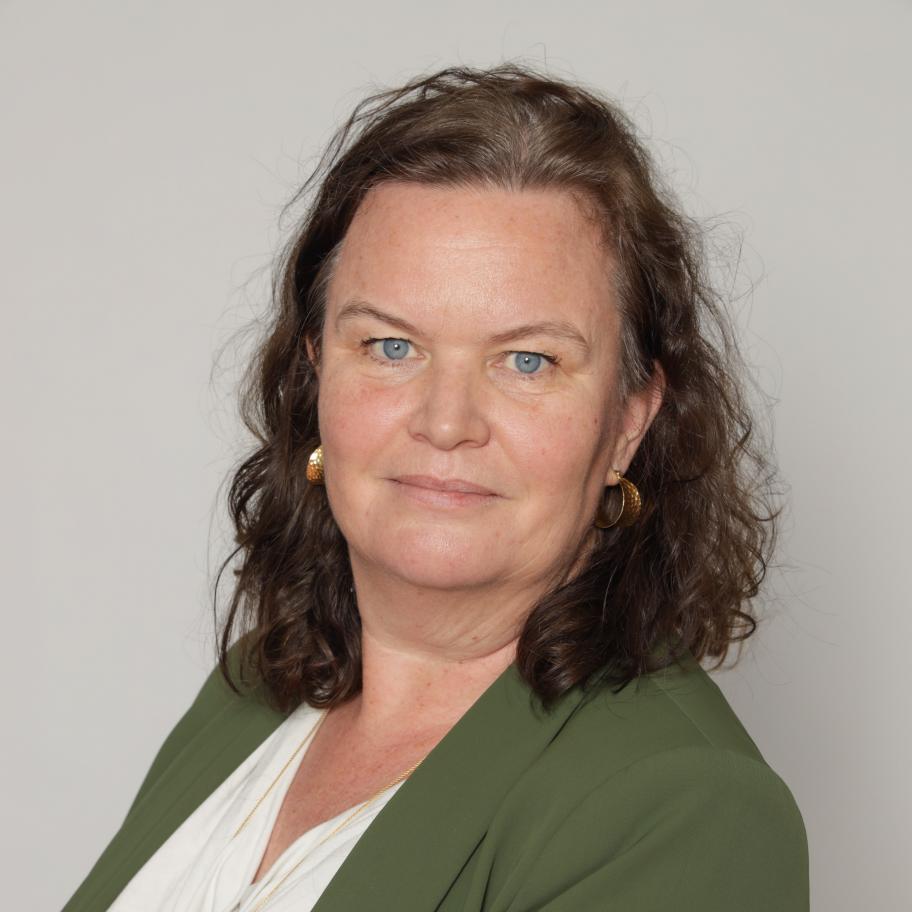








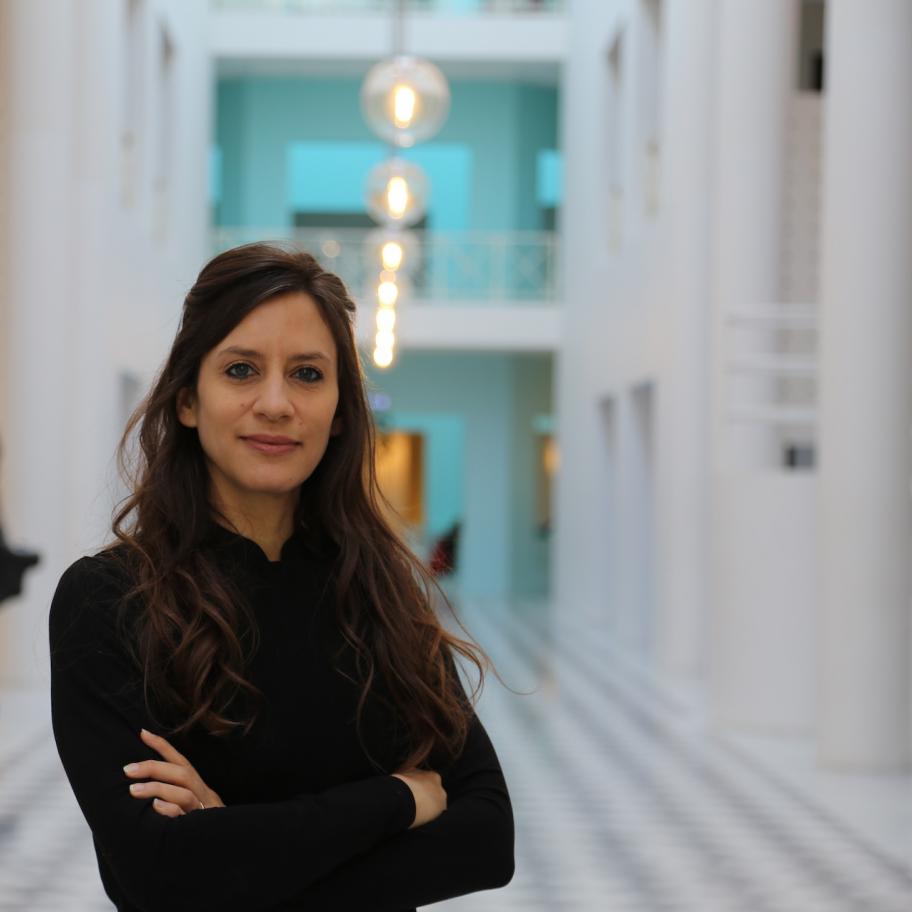
Other staff at CBDS
Neil M. Coe, Adjunct Professor
Amanda Haarman, PhD fellow
Johanna Jarvela, Visiting Fellow
Jakob Lutz, PhD fellow
Suhyon Oh, PhD fellow
Charles Tackney, Associate professor emeritus
Peter Wad, Associate professor emeritus
Shyamain Wickramasinghe, Visiting Fellow, CBDS
Stay informed
Research (Panel content)
Research at CBDS
CBDS research combines empirical depth and theoretical engagement across a wide range of projects and publication series. The centre publishes original research through the CBDS Working Paper Series and CBDS Policy Brief Series, and hosts numerous projects exploring business and development across the Global South.
Explore our work below:
LATEST WORKING PAPERS
Emerging African Hydrogen Geographies and Situated Affordances of Resilience Aspirations: A Roadmap for Research Agendas, Boamah, F. (2026) || (CBDS Working Paper No. 2026/1)
Europe’s Emerging EV Battery Industry: The Interplay Between Firm Strategies and Government Industrial Policies, Whitfield, L., Maile, F., & Wuttke, T. (2026) || (CBDS Working Paper No. 2026/2)
Find the full CBDS Working Paper Series further down this page.
Projects
FRONTIERS
FRONTIERS explores frontiers along two dimensions: frontiers of sustainability governance; and frontiers for natural resource use and extraction for the green transition – with an emphasis on minerals, thereby advancing a third. Working across several aspects of social science and their application in a technical and natural scient context, we push the interdisciplinary and transdisciplinary research frontier for a comprehensively sustainable transition towards low-carbon societies.
Principal investigator: Karin Buhmann
Funding body: Carlsberg Foundation
Circular Economy and Sustainable Development in the Bangladeshi Garment Industry (CREATE), 2022-2027
The global fashion industry must move from the linear take-make-waste system to a circular system, because making more clothes using virgin resources will not keep us within planetary boundaries of water use, CO2 emissions, use of chemicals and generation and disposal of waste. CREATE examines the circularity shift in apparel global value chains and the challenges and opportunities it presents to Bangladesh’s apparel export industry. It investigates how Bangladesh can restructure its textile and apparel industry not only to retain its position in the emerging circular apparel global value chains, but also use the new textile economy to drive green industrialization processes that create more jobs, higher incomes and stimulate innovation.
Co-investigator: Lindsay Whitfield
Funding body: Danida Fellowship Centre
Environmental Maritime Governance in Kenya: Policy, Practice and Prospects for the Abatement of Shipping Air Emissions (EMG-K), 2022-2024
Kenya faces the challenge of facilitating economic development via its growing maritime trade while protecting the global climate and local air quality. The EMG-K project explores Kenya’s environmental maritime governance for the abatement of emissions of greenhouse gases and air pollutants from ships from the perspective of policymaking and policy practice. The project examines Kenya’s engagement in policy making in the United Nation’s International Maritime Organization (IMO), which regulates shipping’s air emissions via the MARPOL Convention. EMG-K also studies the implementation and enforcement of IMO MARPOL Convention’s Annex VI in Kenyan ports. The project suggests ways to strengthen Kenya’s maritime governance, and supports Kenya’s efforts to mitigate climate change and improve local air quality.
Principal investigator: René Taudal Poulsen
Co-investigators: Hannah Elliott, Stefano Ponte, Hans Krause Hansen
Funding body: Danida Fellowship Centre
Hotspot of Multiple Stressors: Research-based Management of the Gulf of Guinea (HOTSPOT 2), 2022-2025
HOTSPOT2 is a collaborative and interdisciplinary project combining expertise in marine environment and anthropogenic stressors, coastal degradation and fisheries management, and livelihoods and mobility. This three-year project investigates the causes and consequences of degradation on Ghana’s coastal environment. The project is led by the Danish Technical University in Denmark (DTU) with CBS co-leading a workpackage on livelihoods and mobility in collaboration with University of Cape Coast in Ghana and Loughborough University in England.
Co-investigator: Thilde Langevang
Funding body: Danida Fellowship Centre
Paradoxes of Climate Smart Coffee (PACSMAC), 2021-2025
PACSMAC will analyze the prospects for climate-smart coffee using a multidisciplinary approach, helping address sustainable development and climate change. Facing increasing temperatures, precipitation changes and new disease and pest threats, coffee farmers are testing new planting techniques and genetic varietals, activities that are attracting interest from other actors in the coffee value chain (VC). PACSMAC will study how Global Value Chain (GVC) structures affect opportunities for and benefits from climate adaptation and mitigation in the coffee sector in Ethiopia and Tanzania, addressing three questions:
1. How might climate change itself, alongside the mitigation and adaptation efforts intended to address it, affect the governance of coffee VCs originating in Ethiopia and Tanzania? 2. How do these changes affect the distribution of value along the chain, upgrading opportunities and farmer livelihoods? 3. How might these changes reshape the geography of coffee production and forest cover? Contact: Kristjan Jespersen
Funding body: DANIDA FFU
Partners: CBS, University of Dar es Salaam, Jimma University, ESADE University, Lafayette College
Project investigator: Kristjan Jespersen
Making Oceans Count in the Nordic Financial System
Finance is well positioned to support healthy oceans in the Nordics via its capital allocation. Making economic activities with negative impacts on ocean health more costly via a higher risk rating in credit assessments would send a clear signal to the market. However, first Nordic financial service institutions (FIs) need to gain an awareness of how their investment and credit decisions contribute to major Nordic ocean risks such as, but not limited to, eutrophication and fish stock depletion. The project will follow the money of major Nordic FIs calculating the ocean impacts per invested krone and translating it into financial value at risk and carbon at risk. Quantifying ocean risks into negative impacts on the business and carbon commitments will help to drive oceans into financial decision-making practices of Nordic FIs. The project will not stop at ocean risks but will facilitate an innovation process for the design of new ocean positive financial products and services.
Contact: Kristjan Jespersen
Partners: CBS, WWF Denmark, Green Digital Finance Alliance
Climate Change and Global Value Chains in Bangladesh, 2021-2025
This research and capacity building project will investigate how the garment/textile value chains connecting Europe/Bangladesh are being reconfigured in response to climate change. Our research will answer the following questions: How are the garment/textile value chains connecting Europe/Bangladesh being reconfigured in response to climate change, and what are the consequences for economic, social, and environmental upgrading in the garment/textile industries of Bangladesh? The main research objective is to create insights into the actors pushing for decarbonization and value chain resilience efforts in the garment/textile industries of Europe/Bangladesh; the drivers behind their engagement; the scope of their practices, experimentation, and collaboration; and the consequences for economic, social, and environmental upgrading in Bangladesh.
Principal investigator: Peter Lund-Thomsen
Funding body: Danida Fellowship Centre
Power and Inequality in Global Production Systems (PIPS)
Global inequalities are growing and have become widely recognized as major challenges. A main driver of inequality has been the globalization of production which yielded new winners and losers within and across nations. Massive participation of global South actors in value chains and production networks has not led to a significant increase in value-added within these countries, despite expectations of the contrary. As inequality in the distribution of value added between actors in the global South and in the global North persists, new efforts have been directed in understanding how to reduce these inequalities. PIPS contributes new knowledge on about how value chain actors exercise power and what kinds and combinations of power they yield. Existing research has focused on identifying bargaining power asymmetries without examining how other forms of power may underpin, challenge or undermine bargaining power across value chains and in time. PIPS applies and further develops a new theory of power in global value chains to address these limitations.
How do different combinations of power shape the functioning of global value chains in time? When and in what circumstances do these combinations yield increasing or decreasing inequalities along global production systems? What policies and interventions can be learned in view of taming existing inequalities?
Empirically, PIPS analyzes two global value chains within the agro-food sector: Chile and South Africa. These two countries have similar production conditions but divergent outcomes. In both countries, international trade plays an important role, and the agro-food sector contributes to important diversification venues away from overdependence on extractive industries. Their climatic conditions (Central region in Chile, Western Cape region in South Africa) and portfolio of agricultural products is similar, making them competitors for a range of processed and fresh products. Yet, their trajectories in seeking to improve domestic value addition have been widely divergent, with Chile succeeding and South Africa failing.
PIPS examines power dynamics in these value chains over time, focusing on two out of their top three agro-food export industries: table grapes and wine. In the table grapes value chain, the two countries provide a relatively uniform counter-seasonal fresh product to retailers in the global North, with quality playing a relatively less important role in power relations along the value chain. In wine, the two countries provide a large quality portfolio of a processed product, with quality differentials playing a key role in power relations. This comparison allows for an examination of how different forms of power affect bargaining power over time, and thus how they affect inequality in the distribution of value added along the two chains.
Pincipal Investigator: Stefano Ponte
Funding body: Independent Research Fund Denmark
Creating and Capturing Value in the Global Apparel Industry, 2020-2025
Global apparel buyers are looking to Sub-Saharan African countries as the last ‘cheap labor’ frontier for labor-intensive apparel production given that Asia’s dominance in apparel exports is set to decline, driven by increases in production costs and a turn to higher technological sectors and domestic markets. The shift of apparel production to SSA could be a win-win situation for global buyers and African governments, firms and workers: finding new low cost sourcing locations, and spurring inclusive industrialization and growth in SSA countries. Yet, evidence from other regions with apparel export industries shows that export firms face high competitive pressures and that jobs are characterized by very low wages and problematic working conditions. AfricaApparel asks whether Ethiopia and Kenya can harness the opportunities of participating in the apparel global value chain to drive industrialization that is sustainable both from the perspective of supplier firms and workers.
Principal investigator: Lindsay Whitfield
Funding body: Danida Fellowship Centre
Private-sector Engagement in Humanitarian Action (HUMAC)
Website: https://www.cbshumac.org/
HUMAC focuses on business-humanitarian collaboration in different crisis contexts to understand how humanitarian initiatives that involve private-sector firms can be organized in an ethical, effective, and sustainable manner. In doing so, HUMAC aims to generate urgently needed research-based knowledge and theoretical insights into the organizational dynamics, complications, and solutions of business-humanitarian collaboration.
Contact: Verena Girschik
Everyday Humanitarianism in Tanzania, 2019-2024
Everyday Humanitarianism in Tanzania (EveryHumanTZ) is a joint research project being conducted by researchers from public Universities from Denmark and Tanzania aiming to explore and understand the practices of everyday humanitarianism and the attitudes that ground them. The project is based at Copenhagen Business School and at the University of Dar es Salaam, also including Roskilde University, University of Copenhagen and London School of Economics.
Principal investigator: Lisa Ann Richey
Funding body: Danida Fellowship Centre
Advancing Creative Industries for Development in Ghana (ACIG), 2019-2024
Creative Inries for Development in Ghana (ACIG) is a collaborative and interdisciplinary research project investigating the dynamics of creative work and creative entrepreneurship in Ghana. Focusing on performing arts, film, fashion design and visual arts industries, a team of researchers from Copenhagen Business School, Loughborough University and University of Ghana works closely with private sector creative businesses and policy stakeholders to co-produce original empirical and theoretical knowledge on creative industries in an African context.
Project investigator: Thilde Langevang
Funding body: Danida Fellowship Centre
RSPO and NUDGE
This research is conducted as a collaboration between the Roundtable on Sustainable Palm Oil (RSPO) and Copenhagen Business School. The aim is to study the potential for behavioral economic interventions along the sustainable palm oil value chain, more popularly known as “nudging.” This research will, first, identify points in the value chain where cognitive biases impede the uptake of the standard and, second, develop plans for the use of randomized controlled trials to test the effects of nudges on uptake.
Contact: Kristjan Jespersen
The Hidden Cost of Global Supply Chains
The project aims to go beyond the traditionally investigated economic benefits of global supply chains, and explore the rather less well understood - but growing - environmental and social costs. It is based on a global, collaborative partnership between journalists and governance scholars, and holds potential for unique knowledge translation and mobilization. Hidden Costs has signed partnership agreements with The New York Times, PBS FRONTLINE, Toronto Star, Canadian Broadcasting Corporation, NBC News, and Smithsonian Channel. These partners will provide additional funding and support for reporting projects, and will distribute the content, which will include documentaries, newspaper series and digital projects. The project will culminate in a traveling exhibit staged in two shipping containers – built in collaboration with the National Film Board of Canada – which will travel around North America to key hubs of global commerce. (Global Reporting Centre)
Contact: Stefano Ponte
The Regulation of International Supply Chains (RISC)
RISC has three objectives: it will 1) identify attributes of effective governance of Occupational Health and Safety (OHS) – and social sustainability more widely – in the Bangladesh (BD) ready-made garment (RMG) industry; 2) provide new academic and practical knowledge on the governance of social sustainability in international supply chains; and 3) contribute to local capacity-building and solutions for OHS and social sustainability in BD.
Contact: Jeremy Moon
Mind Science in Society of Innovation
This project endeavors to focus on the discovery of how to use experience based co-created innovation for engaging with future markets. To address this objective we have initiated a project on co-creating experience based innovation and created a network around Europe and the world, with several planned activities. You can learn more about the project on its website here.
Contact: Sudhanshu Rai
The Indian Space Research (ISRO) Innovation Story, the Mars Program
The overall objective and relevance of this research is that low cost innovation is not enough to sustain long term innovation if it is not coupled with high quality and high impact innovation. We will use frugal innovation literature and its manifestations as the scaffolding within which we conduct our investigation of high quality, high impact low cost (HQ-HI-LC) innovations in India. We conjecture that ISRO’s MOM program has shown the way how to engage with HQ-HI-LC innovation; a term we have coined for the purposes of our argumentation.
Contact: Sudhanshu Rai
The Nature of Indian Innovation: A Look at Non-Industrial Production Systems
This project is about exploring the nature of Indian innovation. "The nature" implies the mental ability of non-industrial creators of products that rely on their experience. This is usually training which has been handed down from generations to address the current needs in a manner that supports their growth of their creation. The endeavor is to study 15 non-industrial production systems across India to ascertain the nature of Indian innovation. The researchers in the first leg have studied the diamond cutting and polishing industry which is skill based and is an art handed over and honed over generations. While this kind of art has been recently organized into industrial production systems, the skill and art remains a kind of fluid knowledge which needs to be practiced to be learnt. Similarly such kind of non-industrial production system will be under review across India. This in short is the nature of Indian innovation project.
Contact: Sudhanshu Rai
Women Entrepreneurship in the Bamboo Value Chain of South Asia
This project is a three-year in-depth-study of women's entrepreneurship in the bamboo value chains of India in the states of Assam, Odisha, Meghalya, and Madhya Pradesh. Involved researchers include Peter-Lund Thomsen, Søren Jeppesen and Uzma Rehman as well as Lauren McCarthy, Royal Holloway, London in addition to our Indian colleagues Sukhpal Singh, Shikha Bhattacharjee and Falak Jalali. The study examines the reasons why and the processes through which women become micro-entrepreneurs at the base of the bamboo value chains in India. The study is part of a collaborative initiative with the Foundation for micro, small, and medium-sized enterprises in New Delhi that seeks to promote the production of sustainable bamboo in India. The project is funded by the EU-Switch Asia program.
Contact: Peter Lund-Thomsen
Completed projects
Multi-stakeholder Initiatives in the Cotton Value Chains of South Asia
The overall objective of this research project is to analyze:
(i) how multi-stakeholder initiatives (MSI) for sustainable cotton production are formulated, implemented, and monitored in the cotton value chains of South Asia; and
(ii) whether the processes through which MSIs are institutionalized in South Asia make any difference to the income, work, and environmental conditions of cotton farmers and on-farm workers in this region.
These objectives will be achieved through the development of a theoretical framework that analyzes the processes through which sustainable cotton MSIs emerge, how they are institutionalized in different institutional contexts in the developing world, and how a variety of global forces (MSIs in global value chains (GVCs)) and local forces (national institutional contexts, local industrialization strategies, and the agency of workers/farmers) co-determine cotton producers’/on-farm workers’ income, work, and environmental conditions in developing countries. The framework is then applied to a comparative study of the evolution of the world’s largest sustainable cotton MSI – the Better Cotton Initiative - and its effects in South Asia (India and Pakistan).
Contact: Peter Lund-Thomsen
Commodifying Compassion, 2017-2023
Today’s marketplace is inundated with products supporting humanitarian causes that promise to give aid to beneficiaries, provide ‘good feelings’ to consumers and promote the brands of corporations and humanitarian NGOs. The commodification of humanitarianism (turning people and causes into marketable things) is thus linked to the privatization of help (replacing public donors with private philanthropy) with significant and as of yet poorly understood consequences. Commodifying Compassion will explore these dynamics in three different contexts where humanitarianism has been a realm traditionally dominated by the state (Denmark), the church (Italy) and the market (United States). The overall objective of Commodifying Compassion is to understand how ‘helping’ has become a marketable commodity and how this impacts humanitarianism symbolically and materially.
Principal investigator: Lisa Ann Richey
Funding body: Danish Council for Independent Research
New Partnerships for Sustainability (NEPSUS)
The NEPSUS research and capacity building project assembles a multidisciplinary team to analyze sustainability partnerships in three key natural resource sectors in Tanzania: forestry, wildlife and coastal resources. In each of these sectors, we assess whether co-management with local communities and private and civil society actors, and putatively more participatory processes in the governance of renewable resources, result in more equitable and sustainable livelihoods and environmental outcomes.
Contact: Stefano Ponte
SUSTEIN
SUSTEIN will focus on localized translations of transnational sustainability standards in Kenya, United Arab Emirates and corporate headquarters in Europe to advance our understanding of the global value chain of certified tea. Our theoretical aim is to go beyond the idea of global value chain by way of deploying the novel concept of infrastructure. This will allow the project to better comprehend the recursive loops and contingent causes and effects in global value chains.
Contact: Martin Skrydstrup

CBDS Working Paper Series
Papers published in the CBDS Working Paper Series.
Latest (2026) (Panel content)
Emerging African Hydrogen Geographies and Situated Affordances of Resilience Aspirations: A Roadmap for Research Agendas, Boamah, F. (2026) || (CBDS Working Paper No. 2026/1)
Europe’s Emerging EV Battery Industry: The Interplay Between Firm Strategies and Government Industrial Policies, Whitfield, L., Maile, F., & Wuttke, T. (2026) || (CBDS Working Paper No. 2026/2)
2025 (Panel content)
Rethinking Economic Upgrading in Apparel GVCs: Value Capture Through Strategic Partnership in Product Innovation Cycles, Maile, F., & Whitfield, L. (2025) || (CBDS Working Paper No. 2025/2)
Supplier Value Firm Capture Trajectories in Global Value Chains: Which Complementary Assets Matter?, Maile, F., & Whitfield, L. (2025) || (CBDS Working Paper No. 2025/1)
2024-2022 (Panel content)
Incumbent Advantage, Barriers to Entry, and Latecomer Catch-up in the Global Automotive Industry, Whitfield, L., & Wuttke, T. (2024) || (CBDS Working Paper No. 2024/3)
Greening Apparel Global Supply Chains: Green Fiber Technology Companies and Their Challenges With Commercializing New Technologies, Whitfield, L., & Maile, F. (2024) || (CBDS Working Paper No. 2024/2)
The Four Major Forms of IPRs, Innovation and Economic Development by Latecomers: Patents, Utility Models, Trademarks, and Industrial Designs, Lee, K. (2024) || (CBDS Working Paper No. 2024/1)
Sustainability in the South African Wine Industry: Status, Opportunities and Challenges, Nair, R. D., Chisoro, S., & Ponte, S. (2023) || (CBDS Working Paper No. 2023/3 // CCRED Working Paper)
Working Conditions in Madagascar’s Apparel Industry: Comparing Export and Domestic Market Firms, Whitfield, L., & Marslev, K. (2023) || (CBDS Working Paper No. 2023/2)
State Upgrading in Global Value Chains and Production Networks: A Conceptual Note, Bezuidenhout, A., & Jeppesen, S. (2023) || (CBDS Working Paper No. 2023/1)
Current Capabilities and Future Potential of African Textile & Apparel Value Chains: Focus on West Africa, Whitfield, L. (2022) || (CBDS Working Paper No. 2022/3)
The Business Case for the Sustainable Development Goals: An Empirical Analysis of 21 Danish Companies' Engagement with the SDGs, Hansen, M. W., Gundelach, H., & Johnson, E. T. (2022) || (CBDS Working Paper No. 2022/2)
Going Against the Tide: Towards Binding Environmental Regulation of Mining in Chile, Jarvela, J. & Aho, L., (2022) || (CBDS Working Paper; Nr. 2022/1)
2021-2020 (Panel content)
Value Chain Dynamics and Variegated Institutional Environments: Inclusion and Upgrading of Women-owned Bamboo Micro-enterprises
Lund-Thomsen, P., Rehman, U. & Jeppesen, S., 2021,
(CBDS Working Paper; Nr. 3, Bind 2021).
The Institutional Context of Humanitarian Helping in Contemporary Italy
Profeta, A., Richey, L. A. & Atal, M. R., 2021,
(CBDS Working Paper; Nr. 2021/2).
La transición hacia energía renovables en México: Oportunidades y desafíos respecto a las empresas y derechos humanos
Ramirez, J., 2021,
(CBDS Working Paper; Nr. 2021/1).
Beyond Compliance and Cooperation? Rethinking Corporate Social Responsibility in Global Value Chains in the Age of COVID-19
Lund-Thomsen, P. & Ramirez,J., 2020,
(CBDS Working Paper; Nr. 2020/4).
The Political Economy of Competition, Regulation and Transformation: Black Economic Empowerment (BEE) and Quota Allocations in South African Industrial Fisheries
Vilakazi, T. & Ponte, S., 2020,
(CBDS Working Paper; Nr. 2020/3).
The FDI-led Growth Regimes of the East-Central and the South-East European Periphery
Ban, C. & Adascalitei, D., 2020,
(CBDS Working Paper; Nr. 2020/2).
Saving the World by Doing Business? A Background Paper on the Role of the Private Sector in Danish Aid
Olwig, M. F. & Schou, J. A., 2020,
(CBDS Working Paper; Nr. 2020/1).
‘Not Every Time Is the Right Time for Real-time Marketing': Branding in the COVID-19 Pandemic
Atal, M. R. & Richey, L. A., 7 aug. 2020,
(CBDS Research Briefing; Nr. 1/2020).
2019-2015 (Panel content)
Swaziland: The Garment Industry in its Economic, Political and Social Context
Jeppesen, S. & Bezuidenhout, A., 2019,
(CBDS Working Paper; Nr. 4, 2019).
Lesotho: The Garment Industry in its Economic, Political and Social Context
Jeppesen, S. & Bezuidenhout, A., 2019,
(CBDS Working Paper; Nr. 2019/3).
Tropical Heat: 'Creating Demand in Growing Markets'
Upadhyaya, R. & Wamalwa, H., 2019,
(CBDS Working Paper; Nr. 2).
Seven Case Studies of Tanzanian Food Processing Enterprises
Hansen, M. W., Langevang, T., Rutashobya, L. & Urassa, G., 2019,
(CBDS Working Paper; Nr. 1, Bind 2019).
Wind Energy Farms' Impacts on Environmental Justice and Human Rights
Ramirez, J., 2019,
(CBDS Working Paper; Nr. 1, Bind 2019).
Bridging Global Standard Requirements and Local Famer Needs: Implementing Parterns of the Better Cotton Initiative in Pakistan and India
Lund-Thomsen, P., Riisgaard, L., Coe, N. M., Singh, S. & Ghori, S., 2018,
(CBDS Working Paper; Nr. 1, 2018).
The Arrival of Chinese Investors in Denmark: A Survey of Recent Trends in Chinese FDI in Denmark
Xiwen, X. & Hansen, M. W., 2017,
(CBDS Working Paper; Nr. 2, 2017).
Internationalization Strategies of African Firms: A Survey of 210 Food Processing Firms from Tanzania, Kenya and Zambia
Schmidt, A. & Hansen, M. W., 2017,
(CBDS Working Paper; Nr. 1, 2017).
Processing Food for the Domestic Market: Entry Barriers for Food Processors to Supermarkets in Kenya
Thomsen, L., McCormick, D. & Kamau, P., 2017,
(CBDS Working Paper; Nr. 1, 2017).
From ’Do No Harm’ to Doing More Good: Extending the UN Framework to Connect Political CSR with Business Responsibilities for Human Rights
Jonsson, J., Fisker, M. & Buhmann, K., 2 nov. 2016,
(CBDS Working Paper; Nr. 26).
Fashioning the Future: Entrepreneuring in Africa’s Emerging Fashion Industry
Langevang, T., 2016,
(CBDS Working Paper; Nr. 25).
Coping with the African Business Environment: Strategic Response under Market and Institutional Uncertainty in the Tanzanian Food Processing Industry
Hansen, M. W., Langevang, T., Rutashobya, L. & Urassa, G., 2015,
(CBDS Working Paper; Nr. 24).
2014-2010 (Panel content)
The Impact of 'Narco-terrorism' on HRM
Ramirez, J., Madero, S. & Muñiz, C., 2014,
(CBDS Working Paper; Nr. 3, Bind 2014).
Successful Social Enterprises in Africa: Six Case Studies from Kenya
Thisted, K. P. & Hansen, M. W., 2014,
(CBDS Working Paper; Nr. 2, Bind 2014).
Entrepreneurs' Responses to Organized Crime and Violence
Ramirez, J., Gómez, S. M. M. & Muñiz, C., 2014,
(CBDS Working Paper; Nr. 1, Bind 2014).
What Makes MNCs Succeed in Developing countries? An Empirical Analysis of Subsidiary Performance
Hansen, M. W. & Gwozdz, W., 2013,
(CBDS Working Paper; Nr. 2013/1).
Understanding the Rise of African Business: In Search of an Analytical Framework
Jorem, K. T., Jeppesen, S. & Hansen, M. W., 2012,
(CBDS Working Paper; Nr. Working Paper nr. 2 2012).
Strategic CSR in Afghanistan: The Case of Roshan, An Afghan Telecommunication Company
Azizi, S., 2012,
(CBDS Working Paper; Nr. 1, Bind 2012).
Entrepreneurship Development in Africa: Report from a Workshop 6-8 September 2010
Schaumburg-Müller, H., Jeppesen, S. & Langevang, T., 2010,
(CBDS Working Paper; Nr. 12/2010).
2009-2007 (Panel content)
Malaysian Manufacturing Systems of Innovation and Internationalization of R&D
Chandran, V. G. R., Rasiah, R. & Wad, P., 2009,
(CBDS Working Paper; Nr. 11, Bind 2009).
Oligopolistic Competition and Foreign Direct Investment: (Re) Integrating the Strategic Management Perspective in the Theory of Multinational Corporations
Hoenen, A. K. & Hansen, M. W., 2009,
(CBDS Working Paper; Nr. 10, Bind 2009).
Into Africa: FDI with Chinese Characteristics
Crabtree, A., 2008,
(CBDS Working Paper; Nr. 9).
Outward foreign direct investment from India: Theory and Evidence
Hansen, M. W., 2008,
(CBDS Working Paper; Nr. 8, Bind 2008).
State-driven corporate social responsibility? Mediating offshore outsourcing and CSR in Malaysia
Wad, P. & Chong, S., 2008,
(CBDS Working Paper; Nr. 7).
Foreign Direct Investment in Africa: Searching for Impact in Mali and South Africa
Jeppesen, S. & Mainguy, C., 2007,
(CBDS Working Paper; Nr. 6, Bind 2007).
Firms in developing countries: A theoretical probe into the borderland of Business Studies and Development Studies
Hansen, M. W. & Schaumburg-Müller, H., 2007,
(CBDS Working Paper; Nr. 5, Bind 2007).
Outsourcing for Development: Towards a Developing Country Firm Perspective
Hansen, M. W., Schaumburg-Müller, H. & Pottenger, E., okt. 2007,
(CBDS Working Paper; Nr. 4).
Vietnamese Garment Enterprises After the Termination of the Multi-Fiber Agreement
Schaumburg-Müller, H., 2007,
(CBDS Working Paper; Nr. 3, Bind 2007).
Human Resource Development in the Knowledge Economy: A Model for Analysing the Progress of Knowledge Development in Developing Country Firms Jørgensen, S. L., 2007,
(CBDS Working Paper; Nr. 2, Bind 2007).
Evaluating "The Bottom of the Pyramid" from a Fundamental Capabilities Perspective
Crabtree, A., 2007,
(CBDS Working Paper; Nr. 1, 2007).
CBDS Policy Brief Series
Papers published in the CBDS Policy Brief Series.
Latest (2026) (Panel content)
Legitimacy in the Energy Transition: Shared Pathways Between Companies and the Wayúu People
Ramirez, J., Prouchet, L., Santamaría, C. G., Lutz, J., Vélez-Zapata, C., Medina, D. I. A., & Böhm, S. (2026)
Legitimidad en la Transición Energética: Caminos Compartidos Entre las Empresas y el Pueblo Wayúu
Ramirez, J., Prouchet, L., Santamaría, C. G., Lutz, J., Vélez-Zapata, C., Medina, D. I. A., & Böhm, S. (2026)
2025-2024 (Panel content)
Reforming the OIC’s Humanitarian and Relief Efforts – Strengthening Institutional Resilience and Triple Nexus Integration
Volkdal, C. P. (2025)
Reforming the OIC’s Role in Peace and Security – Institutional Gaps and Strategic Pathways
Volkdal, C. P. (2025)
The Triple Nexus Framework and Its Operationalization Across UN-Agencies
Volkdal, C. P. (2025)
Elite Giving in Everyday Humanitarianism
Kitula, L., Kragelund, P., Mukangara, D., Richey, L. A., & Sulley, C. R. (2025)
Everyday Humanitarianism in Disaster Response
Gissel, L. E., Hambati, H., Majamba, H., & Mlingwa, E. (2025)
Everyday Humanitarianism in Refugee-affected Areas
Msoka, R., Ruzibiza, Y., & Turner, S. (2025)
Deservingness and Support in Everyday Humanitarianism
Hambati, H., Justesen, M. K., Pantaleo, I., & Richey, L. A. (2025)
Strategies for Assessing Triple Nexus Initiatives and Integrating Peace Aspects – Insights from Niger
Volkdal, C. P. (2024)
2023-2022 (Panel content)
Potential and Pitfalls for African Industrialization in Chinese-built Standard Gauge Railways
Chen, Y. (2023)
Electric Vehicles and the Changing Automotive GVC: A Window of Opportunity for African Countries?
Wuttke, T. (2023)
Climate Change Mitigation for Late Industrialisers: The Role of Technology Intensity in Manufacturing
Avenyo, E. K., & Tregenna, F. (2023)
How China Came to Dominate the Global EV Lithium-ion Battery Value Chain: Lessons and Opportunities for Africa
Wang, X. (2022)
Current Capabilities and Future Potential of African Textile and Apparel Industries
Whitfield, L., & Triki, C. (2023)
Supporting E-mobility Start-ups in Africa: A Case Study of Ghana’s Solar Taxi Limited
Odoom, C., & Awuah, G. B. (2023)
Climate Change and Trade to the EU - Priority Sectors for Policy Intervention in South Africa
Bell, J. F., Goga, S., & Robb, N. (2023)
Lessons from Research on new Partnerships for Coastal Resource Conservation in Tanzania
Kweka, O., Katikiro, R., Minja, R. A., & Namkesa, F. (2022)
Forest Conservation Partnerships in Tanzania: Lessons Learned on Governance and Livelihood Impacts
Silvano, P., Olwig, M. F., Brockington, D., & Mwamfupe, A. (2022)
Sustaining Ecological and Livelihood Outcomes of Wildlife Conservation Partnerships in Tanzania
by Noe, C., John, R., & Brockington, D. (2022)
Stay informed
News & Events (Panel content)
CBDS News and Events


Explore the CBDS Blog
Read research-based insights on business, development, and sustainability written by CBDS researchers and international collaborators.
Visit the CBDS Blog