Department of International Economics, Government and Business
Where Business meets Politics

About the Department (Panel content)
Who we are
2 Principal focus areas
5 Research clusters
75+ Employees
Insights and Events


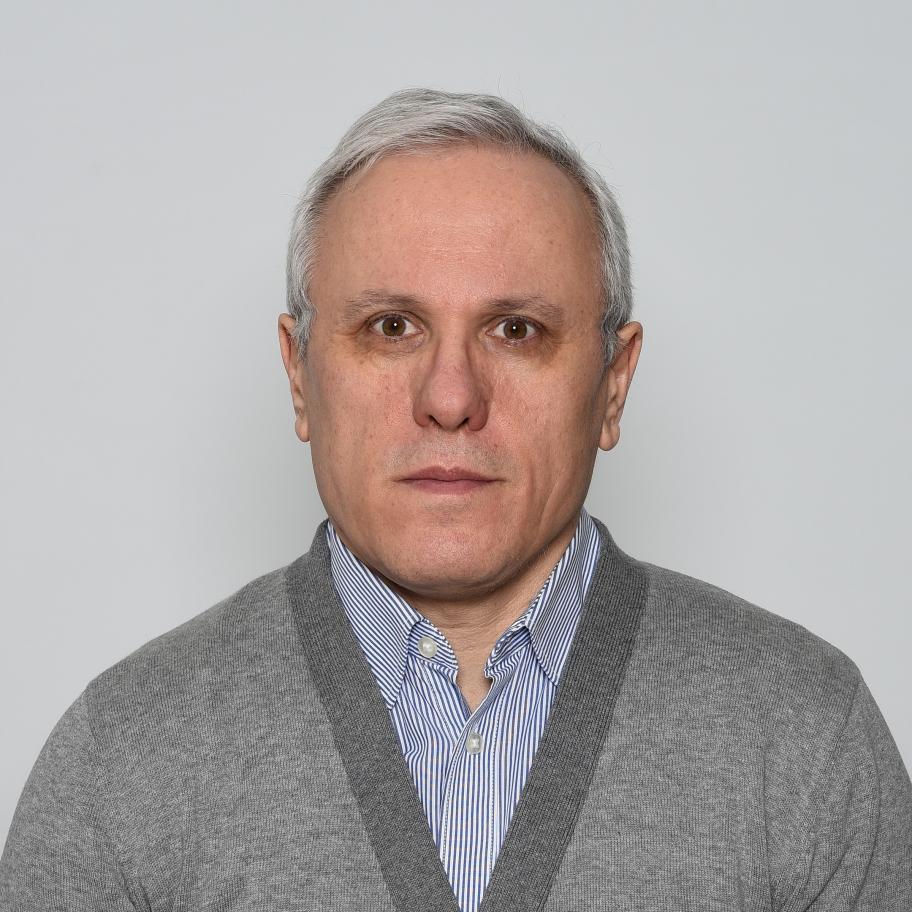
“We are creating a vibrant international hub for research and research-based education exploring international business, economics, and politics, as well as the intersection between them” Jens Gammelgaard
Head of Department
A Focus on Societal Challenges
Societal challenges are international or transnational in nature, most of them also involve, affect, and demand collaboration between a wide range of actors. As such, research on societal challenges ideally cuts across disciplines and different levels of analysis. Through a general thematic orientation towards societal challenges, EGB seeks to build and contribute to the development of a distinct and society-relevant research agenda, while leveraging the different disciplinary perspectives and a joint ambition for excellence at the department.
While societal challenges are inherently changing and dynamic, at present, research at the department resonates with five challenges in particular:
- Business and democracy
- Technological change and digital transformation
- Regulating societal challenges
- International Business in a complex world
- Global shifts, emerging markets, and the rise of Asia
About us
Principle focus areas
Business and Government
Political science and political economy research at the department focuses on the intersection between business and government and how relations between business and government affect and are shaped by the surrounding political, economic, and societal environment. Faculty apply advanced quantitative and qualitative methods to generate systematic knowledge about business-government relations. The focus is on theoretically grounded empirical research that improves our understanding of government and the relations between business and politics – with practical relevance for policy makers.
International Business
International management and international economics research at the department focus on the societal side of international business. Faculty combine an emphasis on methodological excellence with a drive for empirical impact and relevance and a keen sensitivity to the broader societal contexts in which multinational enterprise (MNE) activity is situated. To this end, International Business research at the department is informed by a range of theoretical and methodological traditions from international economics, and international management disciplinary fields.
Work environment
As a member of our staff, you will be welcomed into an open and exploratory research and educational environment. We have a high number of visiting researchers and seminars, incl. work-in-progress seminars to support collaboration and development of ideas. We also have social events throughout the year where the whole department gets together and puts academic discourse aside for a moment. Work life balance is a priority for us.
Being an External Teacher at EGB
Collaboration and outreach
SDC (Sino-Danish Center)
Members of EGB make a significant contribution, alongside colleagues from other CBS departments and Danish universities, to the work of the Sino-Danish Center for Education and Research. The SDC also offers double-degree PhD scholarships in conjunction with Danish universities.
ACDC
The Anti-Corruption Data Collective brings together leading journalists, data analysts, academics and policy advocates to expose and undermine corruption.
GLORAD
GLORAD is the Center for Global R&D and Innovation with offices in St. Gallen (CH), Kaunas (CEE), Copenhagen (DK), Shanghai (CN), Silicon Valley (USA), and Sao Paulo (LATAM).
Money in Politics Conference
The Money in Politics conference is organized annually by EGB. In 2026 it will be organized in collaboration with Princeton University.
How can I attend?
Research and Publications (Panel content)
Research profile
The department has two principal focus areas of research:
- Business and Government
- International Business
Business and Government is rooted in the disciplines political science and political economy.
International Business includes both the disciplines of international economics and international management.
EGB conducts research within these principal focus areas and their interfaces, and is uniquely positioned to generate research in the intersection of these two focus areas.
Through a general thematic orientation towards societal challenges, we seek to build and contribute to the development of a distinct and society-relevant research agenda. We do this while leveraging the different disciplinary perspectives and a joint ambition for excellence at the department.
Our principal focus areas support the development of interdisciplinary and transformative research projects in the context of societal challenges. Societal challenges are inherently complex. As such, research on societal challenges ideally cuts across disciplines and different levels of analysis. At present, research at the department resonates with two challenges in particular: (1) Geopolitical challenges; (2) Technological change and digital transformation, with an emphasis on AI. In a broader sense, we address societal challenges such as corruption, regulations, international conflicts and tensions, migration, populism, and ethical and unethical behavior of MNEs. se department.
Publications
See all publications2027
Strategic Risk Management: A Research Overview
Abingdon: Routledge, 130 p.
Book

Torben Juul Andersen, Professor
Johanna Sax
October 2026
Managerial AI Reliance in Multi-Decision Contexts: Navigating the Paradox of Cognitive Dissonance and Anticipated Workload in AI-Augmented Strategic Decision-Making
In: Long Range Planning. 59, 0024-6301, 18 p.
Journal article
Jelena Cerar
September 2026
CEO Aging and Investment Propensity: Experimental Evidence
In: Journal of Corporate Finance. 101, 0929-1199, 18 p.
Journal article
Steffen Brenner, Associate Professor
Jeppe Christoffersen, Associate Professor
Torben Juul Andersen, Professor

Thomas Plenborg, Professor
Research Clusters
Business and democracy
Research on Business and Democracy advances our understanding of challenges facing democratic and non-democratic governments. Research within this theme draws upon theory and methods in political science, political economy and international business to explore the ways in which democratic and non-democratic governments influence – and are shaped by – the public, businesses, markets, and public policy at the domestic and international level.
Technological change and digital transformation
Technological change and digitalization is a force that affects how we lead our individual personal and professional lives, how firms compete nationally and internationally, how industries change, and how society evolves. At EGB, we especially consider the international impact technological change has on business, government and economics.
Regulating societal challenges
Increasingly, ‘wicked’ policy problems have a cross-border and transnational dimension that affect governments, but also businesses and other societal stakeholders. This poses challenges and opportunities for regulators (where there is increased coordination at international and EU levels, but where most regulatory authority remains in national contexts), but also businesses and civil society organizations, that may intervene in setting agendas, lobbying and intervening in cross-border challenges.
International Business in a Complex World
The ‘International Business in a Complex World’ cluster focuses on internationally active firms and multinational enterprises. We address questions on how internationally active firms handle contemporary challenges through their organizational structures, strategies, and processes. These firms face multiple global pressures, including external stakeholder pressures that differ across home and host countries and pressures to align with national and global ethical standards, as well as a variety of different institutional frameworks.
Global shifts, emerging markets and the rise of Asia
The cluster global trading relations, patterns of governance and investment flows upon international business. Within this context it will pays particular attention to the character of development in east and south Asian markets and the challenges posed by globalizing and deglobalizing forces, but also consider business strategies, market processes, the role of the state and policy development more broadly.
Externally funded projects
The Business of Corruption: Why Business Elites Collude of Combat Political Corruption
The project commences in 2026 and runs for five years. The project examines why firms and top-level corporate decision-makers sometimes engage in corrupt transactions with political elites – and why they, at other times, push for transparent and programmatic market regulation. It does so in eight countries around the world with implications for anti-corruption tools for firms, politicians, and regulators.
Coordinator: Mogens Kamp Justesen (mkj.egb@cbs.dk)
Carlsberg Foundation
Amount: DKK 13,000.000.-
AGILE Work-Life balance
Achieving work-life balance: citizens, policies and firm perspectives
How do men and women prioritize between their work and leisure time? Why are men still underrepresented in taking parental leave? Does the new EU directive on parental leave balance work and leisure time for men and women? What company policies for work-life balance do employees want at their workplace? These questions will be addressed in the project, with the aim of developing a new theory on work-life balance.
The project comprises 5 interrelated Work-packages, as well as a seminar series. The project started in January 2025, and will run until January 2029.
Contact person Caroline de la Porte
Valuing Public Goods in a Populist World: A Comparative Analysis of Network Dynamics and Societal Outcomes
Governed by the rule of law, democratic states and institutions ensure fair and equal access to public goods. However, populism has gained momentum globally, challenging democracy and the rule of law. Driven by an in-group and out-group rhetoric, populists gain and maintain power by targeting institutions and interfering in creating and allocating public goods, in favour of particular groups. This creates countervailing pressures between the rule of law and populism, affecting the distribution of public goods. VALPOP aims to study how the creation and distribution of public goods are impacted by rule-of-law governance structures, populism, and societal networks of actors such as politicians, media organisations, and companies. Our analysis takes a network perspective, considering these actors’ interactions, collaborations, and potential collusions, to get a multi-dimensional view of how public goods are valued. The knowledge findings will not only help raise awareness of the role of societal networks and populism but also suggest measures that can strengthen the control mechanisms and civic engagement to safeguard the democratic governance of public goods.
Unlocking the Potential of Preferential Trade Agreements
Tariffs are once again at the center of public attention. At their core, tariffs are taxes levied on goods imported from abroad. Preferential Trade Agreements (PTAs) are bilateral treaties between countries designed to eliminate tariffs on each other’s goods. However, these tariff exemptions are not applied automatically; firms must actively claim them for each transaction. Research shows that many firms fail to access these benefits, missing out on significant potential tariff savings.
The project Unlocking the Potential of Preferential Trade Agreements aims to develop a tool that facilitates firms’ access to preferential tariff treatment. The project will build a comprehensive database of available benefits and the requirements needed to access them, automate workflows for claiming preferential treatment, and help firms optimize their tariff expenditures. In addition, the project’s outcomes will contribute directly to future research on firms’ interactions with trade policy instruments, including preferential trade agreements.
The project is supported by funding from Innovation Fund Denmark through the Innoexplorer program.
Who became a Nazi? A Structured Database of the Denazification Questionnaires from the U.S. Occupation Zone in Germany, 1945-1949
- What caused individual Germans to vote for and join Nazi organizations is still not fully understood, in part because current research relies on either aggregate quantitative or small-scale qualitative data. To address this gap, we collect individual longitudinal data from the Denazification Questionnaires (Fragebogen) that were distributed in the U.S. occupation Zone in Germany between 1945-1949. The Fragebogen contain detailed information about individuals’ past membership in Nazi organisations, retrospective voting records, academic and occupational histories, income, as well as other rich socio-demographics. The data will allow us to answer (1) which demographic groups voted for or joined the Nazi movement, (2) which life events (e.g. unemployment) caused individuals to become members in Nazi organizations, and (3) whether individuals benefited financially from their membership. The project provides new micro-foundations on the causes and consequences of political extremism and the backsliding of the Weimar Republic from democracy to dictatorship.
- Coordinators: Jan Stuckatz (js.egb@cbs.dk), Victor Gay (TSE & IAST), Selina Hofstetter (Univ. of Zurich), Mikkel Dack (Rowan Univ.)
- German DFG & French ANR, Franco-German Grant in Humanities and Social Sciences
- Amount: EUR 339,584 (January 2022 – May 2026)
Determinants and Consequences of Legislative Capacity
While elected representatives write policy, it is implemented by unelected bureaucratic agents with their own preferences. The distribution of power between the legislature and the bureaucracy is determined by the legislature’s capacity for ex-ante policy design and ex-post oversight. Parliaments around the world vary tremendously in their legislative capacity and thus de facto policy influence. Importantly, parliaments choose their own capacity by allocating resources necessary for legislative work. What determines how much capacity legislatures grant themselves? In this project, we first develop a formal theoretical model explaining the capacity choice of legislatures. We then create a new data set on legislative resources and capacity for the national parliaments of OECD member states and two subnational legislatures. We empirically investigate the determinants of capacity choices and their broader implications for democratic accountability.
The Corporate Revolving Door
What determines the functioning of the revolving door and what are its effects? The movement of public officials into firms consistently garners public attention. However, this “corporate revolving door” has mostly been studied in the U.S. This implies that we know little about how the revolving door works elsewhere and how institutions moderate its effects. We propose a preliminary theory of how a) institutions, b) the content of regulation, and c) regulatory uncertainty shapes the revolving door. We assemble the first big cross-national micro-level database of corporate revolvers to describe the functioning of the revolving door across 28 European countries. Moreover, we will field a survey experiment with businesspeople in 7 countries to causally investigate demand for revolvers and how firms use them. Finally, we will use unexpected deaths of corporate directors to assess the impact of revolvers on firm performance and how institutions moderate this effect.
- Coordinators: Benjamin Egerod (bcke.egb@cbs.dk) & Jan Stuckatz (js.egb@cbs.dk)
- Independent Research Fund Denmark, DFF Research Project 1
- Amount: DKK 3,162,875 (July 2025 – December 2027)
Tycoon Candidates: Why Wealthy Business Candidates Get Elected for Office and How it Matters
This project addresses a fundamental puzzle of electoral politics and its consequences for firms and public goods: Why do ordinary voters, including the poor, sometimes vote extremely rich business tycoons into political office? And does the election of tycoons matter for the firms they own and the voters they are supposed to serve? These questions are addressed in two related work-packages.
First, we examine sources of voter support for tycoons, focusing on perceptions of candidate competence, corruption, and the use of clientelism to mobilize voter support. We examine this using survey experiments in Ukraine and South Africa, where tycoons play a prominent role in politics.
Second, we zoom in on the effects of tycoon incumbency for the firms they own and for public goods provision. To examine this, we exploit a series of regression-discontinuity designs using data from closely contested national elections across democracies and from local elections in Ukraine and South Africa.
Scandinavia-Japan Sasakawa Foundation
We are hosting the danish section of this private Japanese foundation. The foundation supports exchange in education, research and culture between Japan and the Scandinavian countries by approx. 2 mill DKK yearly.
Visit the SJSF homepage for information on application procedures
Upcoming seminars and events
Recent seminars
Seminars by international guest speakers
17 June 2026, Jing Li (Otto Mønsted Visiting Professor, Copenhagen Business School): 'The Asset and Liability of Stateness Abroad: Public Purpose, Political Visibility, And Corporate Social Performance'
27 May 2026, Timm Betz (Washington University St. Louis): 'Strategic Reallocation: Corporate Responsens to Campaign Finance Reform'
20 May 2026, Jill Juergensen (University College London): 'Co-Development Along the Value Chain and the Adoption of Organizational Innovation'
13 May 2026, Margaret Roberts (University of California): 'How Government Control of Media Influences Large Language Models'
8 April 2026, Tony Fang (Stockholm University): 'Disruptive Vis-Á-Vis Consolidating Knowledge Production'
25 February 2026, Moira Nelson (Lund University): 'Bridging the Qualitative-Quantitative Divide: A Lexical Index of Expansionary Pension Policy Reform in Germany, Sweden, and the United Kingdom'
16 December 2025, Vincent Pons (Harvard Business School): 'The Effects of U.S. Protests on Public Opinion and Policymaking'
12 November 2025, Paul M. Vaaler (Carlson School of Management & University of Minnesota): 'Refugee Remittances and Transnational Entrepreneurship in Developing Countries'
6 November 2025, Anna Di Palma (Polytechnic University of Turin): 'Digitalization and Welfare State Centralization and Decentralization: The Case of Employment Assistance in Italy and Denmark
3 November 2025, Jesper Edman (Waseda University): 'Exotic Tales of Distant Lands: How Media Sentiment and Country Distance Influence U.S. Acquisition Flows'
22 October 2025, Vera Tröger (University of Hamburg): 'Better Representation, More Influence? Explaining Female Marginalization in German State Parliaments'
3 October 2025, James Kynge (Former Financial Times): 'Global Tech Wars - China’s Race to Dominate'
1 October 2025, John Ahlquist (University of California San Diego, CBS/EGB Visiting Otto Mønsted Professor): Private Welfare as Corporate Governance: Evidence from Employee Hardship Funds'
20 August 2025, Álvaro Zuniga-Cordero (University of Namur): 'Income Shocks, Economic Inequality, and Political Realignment: Voter Turnout and the Shift to a Multi-Party System in Costa Rica'
13 August 2025, Laurenz Tinhof (Wirtschaftsuniversität Vienna): 'A Value Capture Theory of Foreign Direct Investment'
23 June 2025, Selina Hofstetter (University of Zürich): 'Empowerment and Restraint – Evidence from Teenage Girls’ Clubs in Kenya'
11 June 2025, Axèle Giroud (Alliance Manchester Business School): 'MNEs’ Strategies for Societal Impact: Engaging with Disadvantaged Communities in Emerging Markets'
28 May 2025, Meg Rithmire (Harvard Business School): 'Varieties of Weaponizations: Firms and Strategic Goals in the US and China'
26 May 2025, David Fortunato (University of California San Diego): 'Representation and the Trade Roots of the Gender Pay Gap'
22 May 2025, Jingshu Du (EMLV, École de Management Léonard de Vinci): 'Competition or Collaboration? Organizational boundary setting and the dichotomous states "in" or "out"'
20 May 2025, Valentina De Marchi (Esade Ramon Llull University): 'From Research to Policy Impact'
6 May 2025, Leonhard Hummel (Technical University of Munich): 'Regulatory Spillovers and Green Trade - Firm-Level Evidence from the EU's CBAM'
30 April 2025, Kosuke Imai (Harvard University): 'Does AI help humans make better decisions? A statistical evaluation framework for experimental and observational studies'
Education (Panel content)
Our contribution to programmes and courses
EGB’s teaching takes place across CBS in the areas of international economics, government and business and addresses the challenges faced by firms, markets and states in a fast-changing world. Departmental faculty teach a range of programs: BSc in International Business, Bsc and Msc i International Business and Politics, minors in International Business Strategy and Risk Management,
and the graduate diploma program (HD) in International Business. We also contribute to teaching at the Sino-Danish Centre in China within the MSc in Public Management and Social Development program. In all its teaching work, the department is committed to participative, flexible and blended forms of learning that are of direct relevance to students and CBS’s other stakeholders.
Bachelor programs
We contribute to:

BSc in International Business
BSc IB gives you a broad understanding of business economics and strategy in a global context. You learn how companies identify opportunities, manage risks and adapt their strategies when doing business internationally.

BSc in International Business and Politics
The BSc IBP teaches you how economic and political forces shape a globalising world - and how companies adjust their business strategies and working methods to meet political challenges.
Master programs
We contribute to:

MSc in International Business and Politics
In the MSc IBP programme, you will explore how companies and governments influence each other. You will build solid business skills, work with real-world issues and gain the tools to understand global challenges from both an economic and political perspective.

MSSc in Public Management and Social Development
Study in Beijing and explore how public organisations and communities create sustainable solutions to real-world challenges with the MSSc in Social Sciences in Public Management and Social Development, a unique collaboration between CBS and the Sino-Danish Center.
Our PhD courses
For the most part, those taking a PhD within EGB are drawn from fields such as international business, political science or policymaking and their research projects address major challenges facing business and society more broadly across the different continents. EGB offers PhD courses considering theories, methodologies and other research challenges through its participation in a cluster of CBS departments (MOST). This cluster has a particular focus upon international business, politics, sociology, organizational studies, law, and digital transformation.
Learn more about being a PhD at CBS and EGB:
Nord IB
CBS PhD School
Routes to a CBS PhD
Contact the EGB PhD Coordinator Eddie Ashbee
Available PhD positions will be posted on the CBS job portal
The PhD scholars at EGB are central to the life of the department. We seek to ensure that they are given appropriate guidance and feedback on their research project whilst at the same time they make an important contribution to our collective work and activity.

Career path for our PhDs
EGB PhD scholars have gone on, after the successful completion of their PhD, to pursue research and teaching careers in the university sector, join supranational organizations such as the World Trade Organisation, or are recruited by thinktanks. Others take up work in a range of occupations including the mass media, government, and consultancies.
Your supervisor and PhD coordinator at EGB will be in dialogue with you throughout you PhD about your career goals and how your dissertation can best support the placement you aim for post-graduation.
Interested in doing a PhD with us?
PhD courses within International Business and Business and Government
Criteria
For the most part, those taking a PhD within EGB are drawn from fields such as international business, political science or policymaking and their research projects address major challenges facing business and society more broadly across the different continents. Those offered a PhD position by EGB must also be registered and accepted as a student by the CBS PhD School.
EGB offers PhD courses considering theories, methodologies and other research challenges through its participation in a cluster of CBS departments (MOST). This cluster has a particular focus upon international business, politics, sociology, organizational studies, law, and digital transformation.
There is always very strong competition for full-time PhD positions when they are advertised (please see Jobs@CBS). We urge those who apply for posts with EGB to consider carefully the goals of the department and the disciplines that are represented. Although it will inevitably evolve over time we ask for a draft research proposal that identifies a problem or puzzle worthy of study and sets out some of the relevant theoretical and methodological issues that are likely to arise. Most PhD scholars will also be asked to contribute to CBS teaching programmes.
Application process
PhD positions will be announced on the CBS job page
When PhD positions become available, the advertisements will include details of online briefing sessions, so as to address practical questions about the application proposal and consider the research project ideas that might prove credible.
Previous PhD projects
EGB PhD research lies, for the most part, at the intersections between business and government and international business. Recent and current PhD fellows have considered questions and topics such as:
- The Chinese model of state-led development and AI technologies
- Local elections, gender and corruption in developing countries
- The economic and political effects of natural resource extraction
- The global footprints of MNCs
- The political economy of innovative startups
- Industry 4.0 ecosystems
- Political party funding regimes
- Knowledge management in pharmaceutical MNCs
- The relationship between commercial interests and the development agenda
- The extent to which free trade agreements are in practice utilized by firms
- Democracy and inequality
- Western policy responses to the east Asian developmental state