International students
Are you interested in studying at CBS? See all your options, learn more about Denmark and how to prepare for life in Copenhagen.
Why choose CBS?
Highly international environment
Broad range of academic fields
Many options
Introduction to Denmark
The Danish Lifestyle on Study in Denmark
Geography
So where is this little fairytale country of ours? Denmark is one out of the three countries of Scandinavia (including Norway and Sweden), and the smallest among the Nordic countries.
Denmark is situated in northern Europe between the North Sea and the Baltic Sea and between continental Europe and the Scandinavian Peninsula.
Area
The country’s total area is about 43,000 km². This includes 443 islands and the Jutland peninsula, which is part of continental Europe and has a 68 km territorial border with Germany.
Quick facts about Denmark
- Capital: Copenhagen (København)
- Population: 5,941,388 (2023)
- Language: Danish
- Currency: krone
- Electricity: 230V, AC (EU standard)
- Religion: Evangelical Lutheran (72%)
- Time zone: CET (Central European Time) or GMT+1
- Number of islands: 443
- Country phone code: +45
Danish language
Can you say ’Rød grød med fløde?’
Danish is the national language of Denmark. Schoolchildren begin learning foreign languages at the age of 6 (English), and German or French at the age of 11.
There is usually, especially among the younger generation, no problem in communicating in English.
The political system
Denmark is a constitutional monarchy and has a single chamber parliamentary system, supplemented with referendums.
Political parties
The voting age in Denmark is 18 years, and elections are decided by proportional representation with a 2% minimum. There are currently sixteen political parties represented in parliament including parties representing Greenland and the Faroe Islands.
With an app. 85% turnout (2022), Denmark can boast of high participation in parliamentary elections.
The Parliament
The Parliament (Folketinget) has 179 members, including two elected from the Faroe Islands and two from Greenland. Christiansborg Palace, in the city centre of Copenhagen, is the seat of the Parliament.
International cooperation
Denmark is a member of the European Union (member since 1973, but not the Monetary Union with the Euro), the United Nations, NATO, OECD, Schengen, OSCE, IMF, WTO and the Nordic Council.h an app. 85% turnout (2022), Denmark can boast of high participation in parliamentary elections.
Currency
The Danish currency is the krone (abbreviated kr. or DKK) and 1 krone is divided into 100 øre. As of June 2023, 1 euro equals 7.44 kroner.
Religion
Religious Freedom is a constitutional right in Denmark. The official religion of Denmark is Evangelical Lutheran and around 72% of the ethnic Danish population belongs to this religion.
The Danes have a very relaxed relation to their Christian upbringing. Numerous churches and places of worship belonging to other religious denominations than Evangelical Lutheran are located around Copenhagen.
Education
Education is compulsory for nine years from the age of 6 to 15 or 16. After this, a number of various upper secondary courses and higher educational programmes are available that qualify students for higher education such as university.
Free education
Education is government-funded, meaning it is free of charge and open to all. 42% of all Danes have a higher-level education, which is average among OECD countries.
The universities
The university sector offers undergraduate and graduate courses as well as doctorates. All teaching at these institutions must be research-based, which is a fundamental principl
Weather
Denmark has a temperate climate that varies under the marine influences of the Gulf Stream.
Due to Denmark’s northern geographical placement, you should expect short days in the winter from 9-16 around winter solstice and long days and bright nights in the summer from 4.30 - 22 around summer solstice).
Temperature
Average temperatures for Copenhagen in the summer are around 19-20 degrees celcius. Winters in Copenhagen have become milder, and a daytime temperature of 5 degrees celcius is normal.
Outdoor life
Being outdoors is an important part of enjoying life in Denmark, so be prepared and bring clothes that enable you to go outside and enjoy yourself regardless of the weather.
Life in Copenhagen
Copenhagen is a trendy, vibrant and sustainable metropolis with high living standards. The city offers a rich cultural life, a high standard in
housing, a unique bicycle culture, efficient public transport, plenty of green recreational areas and lots of things to see and do.
Participate in the many cultural events, enjoy Nordic cuisine and be inspired by Scandinavian fashion and design. The options are many and varied.
Copenhagen is a multicultural city and even if you live here for a short term, we are sure that you will get to intermingle with people from
around the world!

Leisure time
Work/life balance
For Danes, work and leisure are interlinked. A healthy work/life balance is very important to Danes, who believe that time for social activities or to explore other interests – whether creative, cultural or sports – is essential to personal fulfilment.
Outdoor life
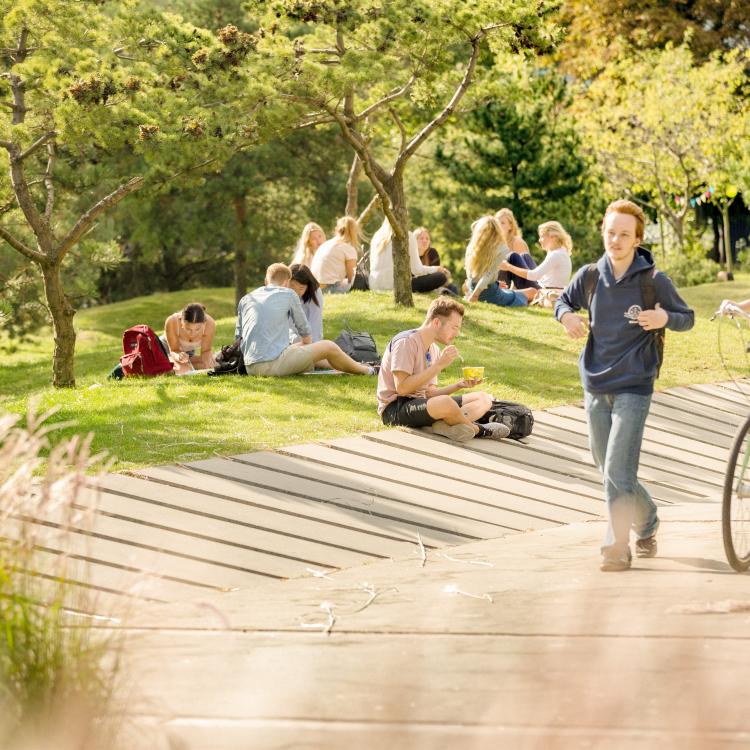
The Danes value spending long hours outside, and especially when the weather is nice, we come out of our houses. Being close to the seafront, taking a scroll or a swim in the sea or in the harbour baths, hanging out in parks, playing football or meeting for barbeques are all outdoor activities that Danes enjoy.
Leisure activities
Denmark offers an exciting range of leisure activities, such as theatres, operas, museums, concerts and festivals. There are trendy nightclubs and bars in and around Copenhagen city centre and quaint, traditional inns in the unspoiled countryside. In cinemas, films are usually shown in their original language with Danish subtitles.
Participating in different sporting activities is a great way to get to know people in Denmark, and you have many options available to you at CBS and in Copenhagen.
Restaurants and cafés
The eating establishments in Copenhagen range from expensive Michelin-starred restaurants serving haute cuisine to cozy side-walk cafes, which make great meeting places.
Holidays
| Holiday | Date |
|---|---|
| Holy Thursday | April 17 2025 |
| Good Friday | April 18, 2025 |
| Easter Sunday | April 20, 2025 |
| Easter Monday | April 21, 2025 |
| Ascension Day | May 29, 2025 |
| Whit Sunday | June 8, 2025 |
| Whit Monday | June 9, 2025 |
| Constitution Day | June 5, 2025 |
| Christmas Eve | December 24, 2025 |
| Christmas Day | December 25, 2025 |
| Second of day Christmas | December 26, 2025 |
| New Year's Eve | December, 31, 2025 |
| New Year's Day | January 1, 2025 |
Transportation
Copenhagen is an easy city to get around in, as public transport is convenient and safe. Copenhagen is built to be a safe city to bike in. So, while a car is an option, you may find that public transport or biking are easier ways to get around the city.
CBS campuses are all located close to the metro stops - so it is easy to get here.
Buses, metro and S-trains
Using bsues, metro and s-trains in Copenhagen is easy, as they run very frequently, and you can get far in a short time. Buying tickets is easy, as the ticketing systems is united in two apps that you can easily download and use on your phone.
Read more about travel and transport on Study in Denmark
Bicycles
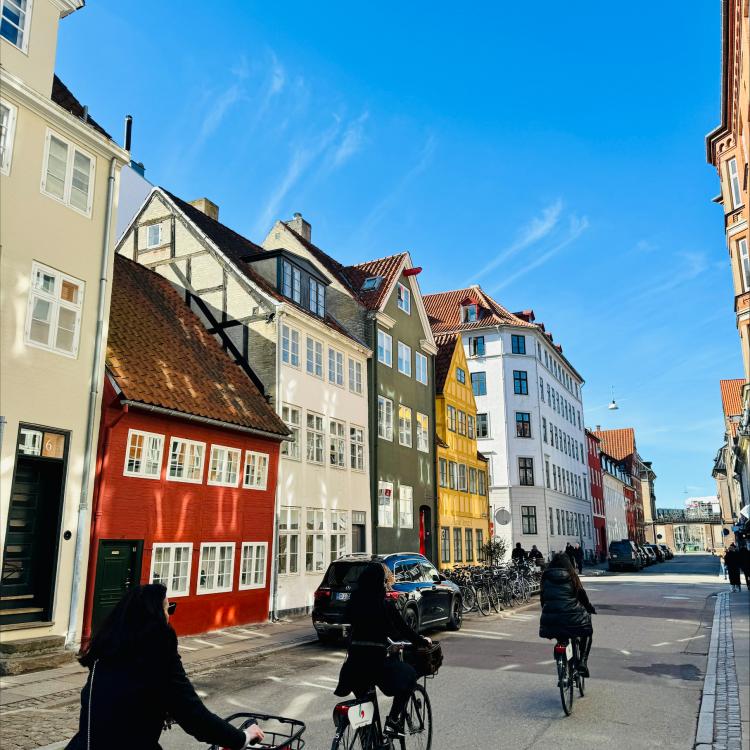
Bicycles are the most popular way to get around in Denmark.
Bike paths cut across Copenhagen, and all Danes are used to biking as a mean of transportation. You can easily rent a bike or buy a cheap second-hand bike.

Living expenses
Staying in Copenhagen is not exactly cheap. Living expenses vary according to personal requirements and standards.
You can get a broad idea of the monthly expenditures that you can expect to have on studyindenmark.dk
Create a budget
Creating a budget and being aware of your habits and how you spend your money is a good idea in order to not blow your budget.
Discounts and second-hand
Many shops offer student discounts if you show a valid student card.
Another option to save some money is to buy second hand. Copenhagen has a large number of second hand shops where you can buy everything you need from clothing to household items.
You can also buy books and bikes second-hand.
Student grants (SU)
As a foreign citizen, you have the possibility of applying for the State Educational Grant (SU). You apply for equal status under either Danish or EU law. This depends on which criteria you fulfil.
You cannot apply for SU before you:
- Have accepted your study place
- Are registered as a citizen in Denmark
- Have checked the rules that apply to your specific situation
Chech the rules and learn more about SU on the SU website.
Exchange student?
Exchange students are not able to apply for SU since it is only available for full-time students in a bachelor or master programme.
Finding a place to live
Copenhagen is a very popular city to live in, also for Danes. Finding affordable housing can be challenging. It can be particularly difficult to find a rental place in August and September due to the beginning of the academic year.
We recommend that you begin to find housing before you arrive in Copenhagen as it may take you 2-3 months to find a place to live.
More about accommodation
You have different options depending on what type of student you are:
Hear international bachelor students share how they found housing
Residence permit and registration
Who? (Panel content)
To study at CBS for a full semester or more, you may need to apply for a residence permit or an EU residence certificate.
Click on you citizenship and see what applies to you.
CPR
Danish law requires everyone staying in Denmark for more than 3 months to register with the Civil Registration System, CPR.
For Nordic or EU/EEA/Swiss citizens it is 6 months.

Nordic citizens (Panel content)
As a Nordic citizen, you do not need to apply for an EU residence certificate.
You only need to apply for a CPR number if you are staying more than 6 months.
Read more at the website of the official Nordic cooperation at: norden.org.
EU/EEA citizens (Panel content)
As an EU/EEA citizen staying in Denmark for longer than 3 months, you must apply for a residence certificate.
Learn more and apply online on New to Denmark
Non-EU/EEA citizens (Panel content)
As a non-EU/EEA citizen staying in Denmark for longer than 3 months, you need a residence permit.
We recommend all students to apply for a residence permit before arrival (from abroad).
However, if your citizenship and your home university allow you to travel to Denmark without a residence permit and visa, you can choose to apply after you arrive in Denmark.
Questions?
If you have questions about residence permit or certificates, you are welcome to contact:
- Bachelor student: Contact bachelor programmes
- Master student: Contact master programmes
- Incoming freemover or exchange student: Contact Exchange
Applying
How to apply?
Full degree student
As a full degree student, you must apply online.
Once we have received your tuition fee payment, we will initiate the application process and provide you with a login to continue the application. You receive further information together with your letter of acceptance.
Read about how to apply on New to Denmark
Exchange student or freemover
If you are an exchange student or freemover, you can apply:
- before arrival: at a Danish diplomatic mission or an application centre in the country where you are residing,
- after arrival in one of SIRI's branch offices (if your citizenship allows it).
You apply by using the form we send to you. You cannot apply online. We will send you detailed information in due time.
Read more about how to apply New to Denmark
Apply before arrival
If you need to apply for a residence permit, you need to obtain it before entering Denmark unless your citizenship will allow you to travel visa-free to Denmark.
Visa requirements
See a list of countries with a visa requirement and visa-free countries on New to Denmark
Apply at least 2 months in advance
The Danish Agency for International Recruitment and Integration, SIRI, has a service goal of 60 days to reach a decision from the date they receive a fully completed application.
Make sure your application is complete
If you submit an incomplete application, it will take a lot longer before a decision is reached, which means you may not be able to travel when planned.
CBS has no influence over Danish diplomatic missions or SIRI, and we cannot speed up the process for any student who applies late or submits an incomplete application.
Apply after arrival
You can choose to apply for the residence permit after arrival in Copenhagen - but only if your citizenship allows you to travel to Denmark without a visa.
See a list of countries with a visa requirement and visa-free countries on New to Denmark
Pros:
The benefit of applying after arrival is
- you will not have to travel potentially long distances to submit biometric information and the application.
- It can be done conveniently in Copenhagen.
- You will only be required to pay one application fee.
Cons:
The drawbacks to applying after arrival is that it willpostpone the process of registering at your Danish address and obtain a Danish social security number, CPR number.
CPR numbers are only issued to residents who are due to stay in Denmark for more than three months.
Having a residence permit is a prerequisite for getting a CPR number.
If you receive your residence permit at a time when you have less than 3 months left of your stay in Denmark, you will not be able to get a CPR number. If the process takes a long time you might not be able to get a CPR number at all.
No CPR number?
The CPR number gives you access to health care, to opening a bank account, receiving salary and many other things in Denmark. CBS recommends that you apply for a CPR number as soon as you have arrived and received your residence permit.
If you do not have a CPR number:
- You must buy a private medical insurance for your time in Denmark
- You will not enjoy the other benefits
Application fees
As a non-EEA/EU student, you must pay two application fees in connection with the residence permit application, if you apply from abroad:
- A fee to the Danish diplomatic mission where you submit your application (the amount due depends on the consulate/embassy in question.
- A fee to The Danish Agency for International Recruitment and Integration, SIRI, in Copenhagen who processes your application. Read more about the fee to SIRI on New to Denmark
Summer University (Panel content)
If you are a student at CBS Summer University, you may need a short-term Schengen visa but not a student visa as you will be studying for less than three months.
Read more on International student at Summer University
Working in Denmark
Student job and work permit (Panel content)
Student job
It is common for students to have a part-time job while studying. It is a great way of getting to know the Danish business community and to create an invaluable network while making some money at the same time.
Most student work around 15 hours per week and many students have jobs that are relevant to their studies.
It can be a little bit more challenging finding a job if you do not speak Danish, so you should not base your budget on obtaining paid employment.
Finding a job
Getting a job within your field of study can also be difficult, even for Danes.
International students who do not speak Danish are most likely to find student jobs at restaurants, cafes, bars and hotels.
Another idea is contacting companies where your language skills or knowledge of your home country could be useful.
Some good places to start looking for a job is:
Work permit - Non-EU/EEA students (Panel content)
Work permit
If your are a non-EU/EEA citizens, you need to apply for a work permit. This applies to both student in a full degree and exchange students.
You may only undertake paid employment while you are enrolled at CBS.
There will be a maximum amount of hours that you are allowed to work
Read more about work permits on Workindenmark.dk
Student in a part-time programme
If you are studying in a part-time master programme, you can read more about working during your studies on Part-time master
Work permit - EU/EEA and Nordic students (Panel content)
Citizens of Nordic countries, EU/EEA and Swiss citizens do not usually need a work permit for normal student jobs.
You are also allowed to work in Denmark while you are here on exchange.
Student in a part-time programme
If you are studying in a part-time master programme, you can read more about working during your studies on Part-time master

Learning Danish
Danish is the national language of Denmark.
Most citizens in the Greater Copenhagen Area are relatively good at speaking English so you will probably not have difficulties communicating in English.
Danish in workplaces
Learning some Danish may make your time in Denmark easier. It is especially important if you are considering working in Denmark both during and after your studies, as the ability to understand and speak Danish is highly requested in most workplaces in Denmark.
One-week Danish language course
Before the semester starts, you can take a one-week Danish Crash Course for International CBS Students at Studieskolen, a language school in Copenhagen.
Read more and sign up on Studieskolen
Free language courses
Several external language schools offer Danish courses, but not all are free.
Danish language courses at either Studieskolen or UC Plus will be free for international students studying at CBS who have obtained a CPR-number.
Courses for CBS students
Studieskolen runs a special programme designed to fit the schedule of CBS students. The classes take place in central Copenhagen or at CBS.
How to sign up
For more information and sign up contact the language schools:
Danish courses for exchange students
CBS offers Danish language courses specifically for exchange students.
Find out more on Exchange student at CBS
Healthcare and emergency assistance
Free healthcare
In Denmark most healthcare services are financed by general taxes, and provided to almost all residents free of charge, including students. This is part of the strong social security in the country.
Free healthcare includes consultations and treatment at local doctors, emergency wards and public hospitals.
You will need to pay for prescription medication, dental treatments and certain special treatments yourself.
You will always be able to get medical treatment if an acute situation occurs. You just need to contact a general physician or call for an ambulance, if necessary.
Read more about health care in Denmark on Life in Denmark
Health insurance card - "the yellow card"
Once you are registered with a Danish CPR number you will receive a health insurance card – the so-called yellow card.
The card will be sent to you by post 2-3 weeks after you have registered with the Danish authorities. Make sure your name is on the mailbox.
The card is your documentation that you are entitled to free healthcare, and it will feature both the name and the phone number of your local doctor.
Students without a CPR number
You will not be able to have a blood test taken without a CPR number.
EU citizens:
You will be covered by your Blue EU-health card.
You will have to pay for the treatment yourself at first, and then you can be refunded by your home country afterwards.
Non-EU citizens:
You will have to pay for the treatment yourself at first, and then apply for a reimbursement from Udbetaling Danmark if you were entitled to have a CPR number at the time.
We recommend that you check your insurances from home and ensure that you are sufficiently covered by your own health insurance while staying in Denmark.
Take out your own health insurance
It may take 2-3 weeks from the day you register until you receive your health insurance card.
You are responsible for health insurance coverage for the period until your Danish health insurance card arrives.
For non-EU/EEA citizens
If you choose to apply for your residence permit after arrival in Denmark, it will postpone your registration for a CPR number and your health insurance card.
If you get your permit less than three months before the end of your stay, you will not get a CPR number and will therefore not get a health insurance card.
You should in this case make sure to have health insurance coverage for your entire stay in Denmark.
Insurance for transport
the ‘yellow card’ does not cover transport for you and your relatives in case of illness.
We recommend that you take out a health insurance that will cover this.
Emergencies and urgent help
Emergencies
If you are in an emergency and need an ambulance, the police or the fire services dial 1-1-2.
The call centre will make sure to send the help you need.
Urgent help with illness and injuries
If you need urgent help with illness or injuries outside the opening hours of your local doctor, you should contact the hotline at: 1-8-1-3.
When you dial 1-8-1-3 you will be put through to an experienced nurse or doctor for a phone consultation. If needed, they will guide you to the nearest hospital.
Please note: 1-8-1-3 is only for citizens in the Capital Region of Denmark.
Police
The Danish police is approachable and helpful, so do not be afraid to contact them for assistance if you need it.
The direct number for the police in Denmark is: 1-1-4
Read more about the police at politi.dk
What to study at CBS?
There are a number of ways that you can come to CBS to study. You can come for a full programme, for a semester, or just for a course. Depending on what you are interested in, your road to CBS will be different.