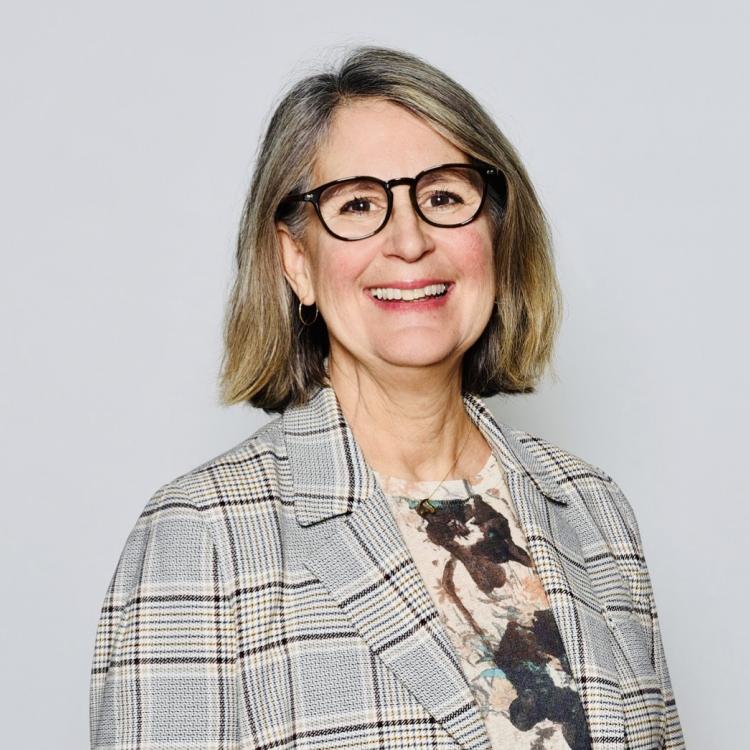
Lisa Ann Richey
Professor
Om
Primary research areas
Rethinking Help: Power, Markets, and Global Compassion
I study how humanitarianism and ethical consumption are shaped by markets, corporations, and culture. My work reveals how business, branding, and celebrity activism transform global “helping” into a profitable industry.
My research helps organizations critically evaluate corporate social responsibility, cause-related marketing, and ethical branding. I work with companies, NGOs, and governments to rethink how compassion is communicated and commodified.
With extensive fieldwork in the Global South, especially in Tanzania, South Africa and Uganda, I bring grounded insights into everyday humanitarian practices that challenge top-down, Western-led approaches.
As a professor, mentor, and public scholar, I aim to create more ethical, inclusive, and transparent models of global development.
Publications
See all publicationsmaj 2025
How the Institutional Context Creates a Neoliberal Politics of Aid
An Italian Case Study
Go to publicationmarts 2025
While Development Goes Down the Drain, Capitalism Profits From “Helping”
A Response to Ilan Kapoor and Gavin Fridell
Go to publicationBook Publications


Co-founded by the rock star Bono in 2006, Product RED exemplifies a new trend in celebrity-driven international aid and development, one explicitly linked to commerce, not philanthropy. Brand Aid offers a deeply informed and stinging critique of “compassionate consumption,” arguing that such campaigns advance the expansion of consumption far more than they meet the needs of the people they ostensibly serve.
PhD Supervision
I am interested in supervising ambitious and independent social science PhD projects on transnational helping, private-public partnerships, African politics, humanitarianism, and critical development studies.
I have supervised 14 PhD students from 8 different nationalities.
Current and most recent projects are:
Valentina Massone (2023-) ‘Humanitarianism Identity, activism and transnational benevolence among LGBT+ refugees and asylum seekers in Rome and Copenhagen’ (with Ninna Nyberg Sørensen as co-supervisor)
Lucas Kitula (2021-2025) ‘An Inquiry into Religion and Everyday Humanitarianism in Secular States: The Case of Tanzania’ (with Consolata Sulley and Nandera Mhando as primary co-supervisors), University of Dar es Salaam, Tanzania
Sophie Henriksen (2019-2024) ‘Corporate Humanitarian Aid in the Migration Crisis’ (with Sine Plambach as co-supervisor, DIIS), CBS winner of the Fonnesbech Prize for PhD Research.
Recent research projects
Everyday Humanitarianism in Tanzania
Funded by DANIDA through The Consultative Research Committee on Development Research (FFU) and Danish Fellowship Centre . Everyday Humanitarianism in Tanzania (EHTZ) is a joint research project between Denmark and Tanzania that delves into everyday humanitarianism in Tanzania.
The project focuses on how Tanzanians respond to crises outside formal humanitarian structures, challenging assumptions about aid predominantly flowing from the Global North. Through extensive fieldwork, EHTZ explores diverse acts of giving by ordinary citizens, aiming to understand their impact on local dynamics and the broader humanitarian narrative.
EHTZ uses both qualitative and quantitative approaches that are cutting edge within social sciences, including in depth fieldwork, surveys, and comprehensive survey experiments. A wide range of departments and researchers are involved to cover the scope of the project and to fully understand and statistically explain what motivates people to give humanitarian aid. The partnership with the University of Dar es Salaam builds on years of trust and is critical to all aspects, from the logistics, academic understanding, the deep knowledge of the case, and the implementation of data. A large part of the collaboration is centered around reciprocal capacity building, for example through knowledge sharing and co-authoring publications. The research process uses a decolonized approach that is rewarding across universities and builds an international network of trust and exchange. Moreover, it works toward decolonizing the concept of humanitarianism by recognizing how actions taken by ordinary citizens works as humanitarianism as well.
Commodifying Compassion: Implications of Turning People and Causes into Marketable Things
Today’s marketplace is inundated with products supporting humanitarian causes that promise to give aid to beneficiaries, provide ‘good feelings’ to consumers and promote the brands of corporations and humanitarian NGOs. Funded by the Danish Council for Independent Research (DFF), Commodifying Compassion researched how the commodification of humanitarianism (turning people and causes into marketable things) has been linked to the privatization of help (replacing public donors with private philanthropy) with significant and as of yet poorly understood consequences. Commodifying Compassion explored these dynamics in three different contexts where humanitarianism has been a realm traditionally dominated by the state (Denmark), the church (Italy) and the market (United States). The overall objective of Commodifying Compassion was to understand how ‘helping’ has become a marketable commodity and how this impacts humanitarianism symbolically and materially.
Research-based teaching
Links
Outside activities
Visiting Professor, Dept. of Cultures, Politics and Society, Univ. of Turin, Italy , 2025 -
Go to websiteSocietal Engagement in Popular Media , December 2025 -
Here’s our take from Al Jazeera English on whether the UNHCR needs lessons from a furniture dealer
It is the first time a business leader is proposed to such a high-profile UN position. And the nomination comes at a time when the UNHCR faces an unprecedented cash crunch, and with political pressures and anti-refugee sentiments increasing globally. Sweden’s move is not surprising. Since the fall of the Berlin wall, humanitarianism has involved partnerships with corporations—increasingly ‘doing good’ and ’doing well’ have become one and the same. But can a businessman save the UN refugee agency?
Societal Engagement in Popular Media , Februar 2026 -
In a new podcast, Professor Lisa Ann Richey shares insights from her research project on how compassion has become a marketable commodity – and what consequences this has for consumers, businesses, and humanitarian causes.
The project has examined developments in Denmark, Italy, and the US and shows, among other things, how the UN's global goals have made it easier for companies to take on the role of heroes in the narrative of sustainable development.
The podcast is produced by Mediecentralen on behalf of Danmarks Frie Forskningsfond (Danish Council for Independent Research).