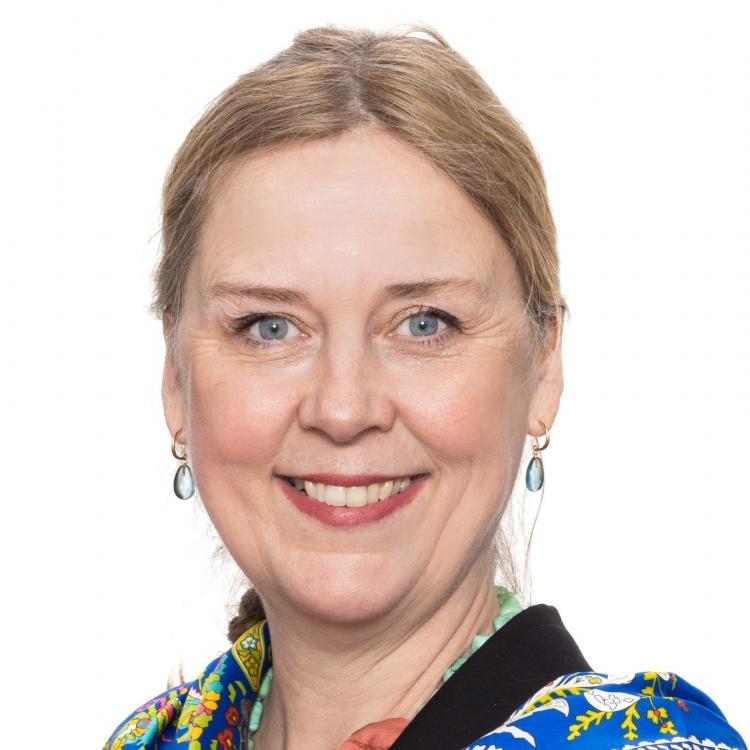
Camilla Sløk
Associate Professor
Telefon
Office: +4538153631
Departments
Institut for Organisation
Room: KIL/14.A-4.82
Management
Ledelse
Offentlig forvaltning
Etik
Filosofi
Primary research areas
Ethics and leadership
My research examines the relationship between responsibility and guilt in leadership, with particular attention to the ways in which leaders are often ascribed guilt, even when such attributions may be perceived by the leaders themselves as unjust. Rather than ‘guilt’, leaders prefer to frame negative incidents as errors. However, leaders frequently become the focal point of blame in organizational or societal contexts, not necessarily because of their direct culpability, but due to broader dynamics of accountability and public perception.
Responsibility and guilt in leadership
When organizations experience failure, such as flawed service delivery or inadequate intervention in cases involving the neglect of vulnerable citizens, public discourse often centers on identifying and holding a guilty party accountable. My research investigates the normative and practical expectations placed upon leaders in responding to such incidents, with particular attention to how responsibility is attributed, how blame is constructed, and how leaders are expected to navigate the tension between accountability, personal values, and crisis communication.
Errors and reconciliation in organizations
My research since 2012 has focused primarily on guilt and responsibility. I have found, that most leaders avoid the use of the wording "guilt" and rather prefer the concept of error. Error means that what happened was unintentional However, the manner in which leaders address errors has profound implications for trust, legitimacy, and organizational resilience. The development of reconciliatory processes after errors not only mitigates reputational damage but also cultivates organizational trust and psychological safety, both of which are essential for long-term adaptability and effectiveness.
Crisis communication related to accusations of guilt
In addition, my research explores crisis communication strategies as a means of responding to accusations of guilt and blame. This includes examining how leaders construct narratives to explain or contextualize their actions, how they engage in reconciliatory communication with affected stakeholders, and how they navigate the tension between accepting responsibility and resisting unfair attributions of guilt.
Expectations to care in leadership
Transformational leadership emphasizes care and consideration for employees and stakeholders. However, leaders are simultaneously expected to demonstrate care while also making difficult, and at times unpopular, decisions. My research is on how leaders navigate this tension, and the potential risks and consequences when care is absent in leadership practice. The risk is that the leader becomes detached from stakeholders.
I want to emphasize the existential dimension of leadership
My research helps:
Leaders to understand dilemmas, both professional and existential dilemmas
Leaders to deal with critique and accusations of lack of due responsibility and guilt
Leaders to understand expectations from employees to care from the leader
Awards:
HDO acknowledgment for excellent teaching, 2024
DSEB’s research dissemination award, 2018
Copenhagen University’s gold medal for best prize dissertation, 1996
Recent research projects
VELUX-Fonden - Det intuitive møde. Eksistens og etik i Bindeleddets ekspanderende arbejde med unge
With Professor Jacob Dahl Rendtorff; Ph.D. fellow Alexander Bruggisser
01/09/2024 → 01/09/2028
01/09/2024 → 01/09/2028
Ledelse i folkekirken (management in the Danish National Church)
Link to pageLinks
Podcast
I have created a podcast named Ansvarskanalen. I interview people that work within science, religion arts, and leadership. The podcast is available on Spotify
Link to podcast
YouTube channel
I have created a YouTube channel named Ansvarskanalen. I show small videoclips to use in teaching, particularly about politics and leadership or lack of leadership.
Link to YouTube channel